
In an era dominated by GPS, satellite navigation, and digital mapping, it’s easy to overlook the ingenious instruments that once guided humanity across vast oceans and unexplored territories. Among these, the sextant stands as a testament to human ingenuity and precision engineering – a cornerstone of celestial navigation technology that profoundly shaped global exploration and commerce. Far from being a mere relic, the sextant represents a sophisticated optical instrument that, for centuries, empowered mariners to determine their position on Earth with remarkable accuracy by observing celestial bodies. This article delves into the technological marvel that is the sextant, exploring its operational principles, historical impact, precision mechanics, and its enduring, albeit specialized, relevance in today’s high-tech world. It is a story of how a sophisticated gadget, born of scientific principles, revolutionized our understanding and traversal of the globe.
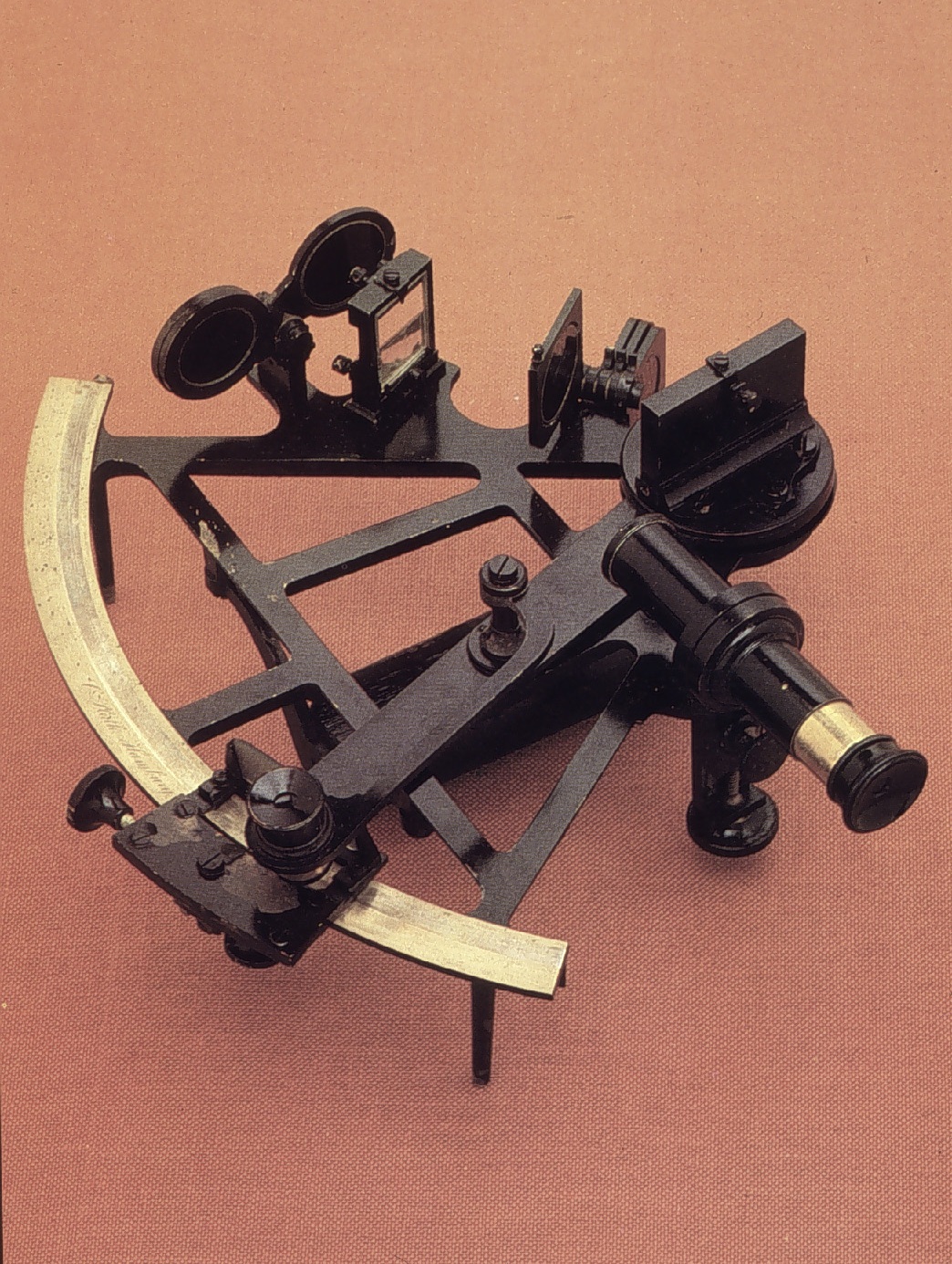
A Masterpiece of Celestial Navigation Technology
The sextant is not just an instrument; it is a portable observatory, meticulously designed to bring the distant heavens into a measurable relationship with the observer’s position. Its genius lies in its ability to measure angles with extraordinary precision, a capability critical for determining latitude and, in conjunction with accurate timekeeping, longitude.
The Fundamental Principle: Measuring Angles
At its core, the sextant operates on a beautifully simple yet profoundly effective optical principle: it measures the angular distance between two objects – most commonly, the visible horizon and a celestial body such as the sun, moon, or a star. Before the advent of modern electronics, accurately determining one’s latitude at sea was primarily achieved by measuring the altitude (angular height) of the sun at noon or a known star/planet above the horizon. The sextant’s design brilliantly facilitates this by employing a double-reflecting mechanism. This system allows the observer to simultaneously view both the horizon directly through a transparent portion of one mirror and the reflected image of a celestial body in another mirror, superimposed upon the horizon. By carefully adjusting a movable arm, the observer aligns the celestial body with the horizon, and the angular measurement is read directly from a finely graduated arc. This optical trick effectively “bends” the light path, allowing for the observation of two widely separated points from a single vantage, eliminating errors that would arise from attempting to sight two points sequentially.
Key Components and Their Technological Roles
A sextant is an intricate assembly of precisely manufactured components, each playing a vital role in its overall function and accuracy:
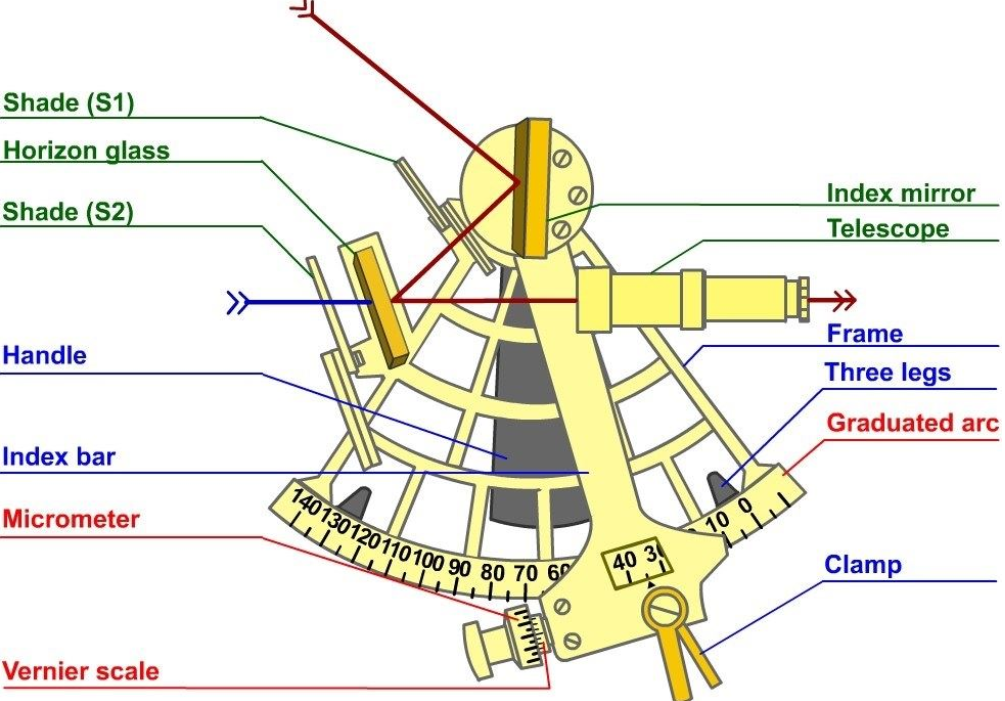
- The Frame: Typically made of brass or aluminum alloy, the frame provides a rigid, stable structure for all other components. Its durability and dimensional stability are critical for maintaining the instrument’s calibration and precision over time and in varying environmental conditions.
- The Graduated Arc (Limb): This is the heart of the measurement system. A finely divided arc, usually spanning 60 degrees (hence “sextant,” Latin for “one-sixth,” referring to one-sixth of a circle, though it can measure up to 120 degrees due to the double reflection), is etched with degree markings. The precision of these markings, often to within minutes or even seconds of an arc, is a testament to the manufacturing capabilities of its era and is paramount for accurate readings.
- The Index Arm: Pivoting around the center of the arc, the index arm carries the index mirror and the vernier scale or micrometer drum. Its smooth, backlash-free movement and secure clamping mechanism are essential for taking stable readings.
- The Index Mirror: Mounted on the index arm, this mirror rotates with the arm. It is a fully silvered mirror that reflects the light from the celestial body towards the horizon mirror. The flatness and optical quality of this mirror are crucial for minimizing distortion.
- The Horizon Mirror: This mirror is fixed to the frame and is partially silvered, allowing the observer to see the horizon directly through its unsilvered portion, while simultaneously reflecting the image from the index mirror through its silvered part. The precise alignment and optical characteristics of this mirror are vital for superimposing the two images accurately.
- The Telescope: A small monocular telescope, typically interchangeable, attaches to the frame. It magnifies the view, making it easier to see the horizon and the celestial body clearly, especially in dim light or for faint stars. Different magnifications allow for trade-offs between field of view and precision.
- Shades (Filters): Located in front of both the index and horizon mirrors, these tinted glass filters protect the observer’s eyes when viewing bright objects like the sun and reduce glare. They are crucial safety and functional features, allowing observation across a wide range of lighting conditions.
- Micrometer Drum and Vernier Scale: These precision mechanisms allow the observer to read the angle with extreme accuracy, often down to tenths of a minute of arc. The micrometer drum provides fine adjustment, while the vernier scale on older models offers interpolation between the main markings, embodying advanced mechanical precision for its time.
Together, these components form a sophisticated optical and mechanical system, designed for robustness, portability, and unparalleled accuracy in its intended application.
The Sextant’s Unrivaled Historical Impact on Exploration and Global Trade
Before the sextant, maritime navigation was largely an educated guess. The introduction of the sextant, evolving from the earlier octant, marked a watershed moment in human history, unlocking an unprecedented era of exploration, commerce, and global connectivity.
A Revolution in Maritime Technology
For centuries, navigators relied on rudimentary methods like dead reckoning – estimating position based on speed, course, and elapsed time – and rudimentary methods for latitude determination using cross-staffs or astrolabes, which were often inaccurate and difficult to use on a moving ship. Longitude was even more problematic, requiring extremely accurate timekeeping which wasn’t available until the development of reliable marine chronometers in the mid-18th century.
The sextant, refined from its predecessor the octant in the 1730s by John Hadley and Thomas Godfrey, offered a significant leap forward. Its design effectively eliminated errors caused by the ship’s motion, allowing for much more stable and precise sightings. With a sextant, a navigator could accurately determine their latitude by measuring the sun’s altitude at local apparent noon. When coupled with a chronometer set to Greenwich Mean Time, it became possible to calculate longitude by observing the time of local apparent noon or the altitude of other celestial bodies at specific Greenwich times. This combination of technologies provided navigators with the ability to fix their position with an accuracy previously unimaginable, transforming oceanic travel from a perilous lottery into a more predictable and repeatable endeavor.
Fueling Discovery and Commercial Expansion
The impact of this technological advancement was immediate and profound. Explorers like Captain James Cook utilized sextants and chronometers on his voyages of discovery in the Pacific, enabling him to chart vast new territories with an accuracy that astounded his contemporaries. His detailed maps and navigational techniques, underpinned by the sextant, laid the groundwork for modern cartography and significantly expanded European knowledge of the world.
Beyond exploration, the sextant revolutionized global trade. Safer and more reliable navigation meant ships could follow more efficient routes, reducing voyage times, insurance costs, and the risk of shipwreck. This directly fueled the growth of international commerce, facilitating the movement of goods, people, and ideas across continents. Naval powers leveraged this technological advantage to project influence globally, as their fleets could operate further and more effectively from home ports. Even aviation, in its nascent stages, saw the sextant adopted for celestial navigation before the widespread availability of radio navigation and eventually satellite systems. The sextant, therefore, was not merely a tool but a catalyst for geopolitical change, economic growth, and an explosion of scientific and geographical knowledge.

The Mechanics and Precision Engineering of a Sextant
Operating a sextant is a nuanced skill that combines an understanding of celestial mechanics with precise manual dexterity. The instrument itself is a marvel of precision engineering, requiring meticulous construction and calibration to ensure its accuracy.
Operating a Sextant: A Blend of Skill and Science
To take a reading, the navigator first selects appropriate filters to protect their eyes, especially when observing the sun. Holding the sextant vertically, they sight the horizon directly through the horizon mirror. With the index arm fully released, they then sweep the index arm down, bringing the celestial body (e.g., the sun) into view through the index mirror, superimposing its image onto the horizon. The key technique involves “rocking” the sextant to find the lowest point of the sun’s arc as it touches the horizon, ensuring a true vertical altitude measurement. Fine adjustments are then made using the micrometer drum until the lower limb (edge) of the sun just “kisses” the horizon line.
Once aligned, the reading is taken from the graduated arc and the micrometer drum, giving the observed altitude in degrees and minutes. This raw reading then undergoes a series of corrections – for index error, dip of the horizon, refraction, parallax, and semi-diameter of the celestial body – to arrive at the true altitude. This corrected altitude, combined with the precise time of observation and data from an almanac, allows the navigator to calculate their position. The process is a blend of scientific principles, requiring an understanding of atmospheric conditions and celestial movements, and practical skill, demanding a steady hand and keen eye.
Ensuring Accuracy: Calibration and Error Mitigation
The accuracy of a sextant reading depends not only on the observer’s skill but also on the instrument’s perfect calibration and precision engineering. Several potential sources of error must be accounted for:
- Index Error: This is a fixed error where the index and horizon mirrors are not perfectly parallel when the index arm is set to zero. It is identified by sighting the horizon or sun directly and observing if the reading is exactly zero; any deviation is recorded and applied as a correction to all subsequent readings.
- Perpendicularity (Side Error): Ensures the index mirror is perpendicular to the plane of the instrument. This is checked by observing the arc of the instrument in the index mirror; if the direct and reflected arcs form a continuous line, it’s correct.
- Side Error: Verifies the horizon glass is perpendicular to the plane of the instrument. This is checked by sweeping the index arm and observing the reflected image of a star; it should not pass above or below the direct image.
- Collimation Error: Ensures the telescope is parallel to the plane of the instrument. While less common in modern sextants, it was a critical check for ensuring accurate alignment of the optical path.
Each sextant is a product of meticulous craftsmanship, with frames designed to resist thermal expansion and contraction, mirrors polished to optical perfection, and scales etched with extreme precision. Regular checking and adjustment of these potential errors are part of the navigator’s routine, highlighting that the sextant is not a set-and-forget device but a precision instrument requiring ongoing care and understanding of its intricate mechanics.
The Sextant in the Digital Age: Legacy and Continued Relevance
With the advent of satellite navigation systems, the practical necessity of the sextant for primary navigation has largely waned. However, to dismiss it as obsolete would be to misunderstand its enduring value, both as a critical backup technology and an unparalleled educational tool.
A Niche, But Indispensable, Backup Technology
While GPS provides instant, highly accurate positional data, it is not infallible. Satellite signals can be jammed, spoofed, or simply unavailable in remote areas or during system outages. Solar flares, electromagnetic pulses (EMPs), or terrestrial system failures could render electronic navigation useless. In such scenarios, the sextant remains an indispensable, independent backup system for long-range voyages, particularly for military vessels, commercial ships on extended passages, and intrepid yachtspersons. Its reliance on fundamental celestial mechanics and robust, non-electronic components means it is immune to the vulnerabilities of digital systems. For these critical users, the ability to “shoot the sun” or “take a star fix” is not just a skill but a vital safety net, representing a robust, resilient form of navigation that transcends technological fads.
Educational Tool and Enduring Symbol of Navigational Mastery
Today, the sextant primarily serves as a profound educational instrument. Maritime academies and naval institutions around the world continue to teach celestial navigation using the sextant. Learning to use a sextant is more than just learning a procedure; it imbues students with a deep understanding of celestial mechanics, time, spherical trigonometry, and the Earth’s relationship to the cosmos. It teaches patience, precision, and problem-solving skills, fostering a holistic comprehension of navigation that simply pressing a button on a GPS unit cannot replicate.
Moreover, the sextant holds significant symbolic value. It represents humanity’s quest for discovery, mastery over the elements, and the intellectual achievement of navigating an immense, trackless ocean using only the stars and a precise timepiece. It is an icon of maritime heritage, evoking images of daring explorers and the romantic era of sail. Owning and understanding a sextant connects one to a lineage of navigators stretching back centuries, embodying a timeless commitment to navigational excellence.
Modern Interpretations and Future Insights
While the classic optical sextant remains largely unchanged in its core design, modern “digital sextants” have emerged, incorporating electronic displays and sometimes even basic computing capabilities to automate corrections and simplify readings. However, for purists and those valuing reliability over convenience, the traditional mechanical sextant often remains the preferred choice. The enduring principles behind the sextant – precise measurement of angles, optical reflection, and the application of spherical geometry to determine position – continue to inform and inspire advancements in optical sensing, autonomous navigation, and even space exploration, where celestial navigation still plays a role for deep-space probes. The sextant reminds us that the fundamental challenges of position-finding often require a blend of elegant physics and robust engineering, lessons that remain relevant even in our most advanced technological pursuits.
In conclusion, the sextant is far more than a historical artifact; it is a timeless piece of technology that pushed the boundaries of human exploration and enterprise. Its elegant design, meticulous engineering, and reliance on fundamental scientific principles solidified its place as one of the most impactful navigational gadgets ever conceived. While its role has evolved, its legacy as a precision instrument, an indispensable backup, and a powerful educational tool ensures that the sextant will continue to be admired and utilized, embodying the very essence of human ingenuity in the vast expanse of our world.
aViewFromTheCave is a participant in the Amazon Services LLC Associates Program, an affiliate advertising program designed to provide a means for sites to earn advertising fees by advertising and linking to Amazon.com. Amazon, the Amazon logo, AmazonSupply, and the AmazonSupply logo are trademarks of Amazon.com, Inc. or its affiliates. As an Amazon Associate we earn affiliate commissions from qualifying purchases.