
In the vast and intricate world of computing, where information flows ceaselessly and data is the new currency, understanding the fundamental building blocks is paramount. Among these foundational components, Read-Only Memory, or ROM, stands as a silent sentinel, a bedrock of stability ensuring that our devices spring to life and operate as intended. Far from being a mere relic of computing’s past, ROM remains a critical, albeit often invisible, component woven into the fabric of virtually every electronic device we interact with daily, from our smartphones and laptops to smart appliances and industrial control systems.
This article delves deep into the essence of ROM, dissecting its nature, tracing its evolutionary journey, and illuminating its indispensable role in the modern technological landscape. We will explore what makes ROM unique, how it differs from other forms of memory, and why its persistent nature is crucial for the reliable operation of countless devices. Understanding ROM is not just about appreciating a piece of hardware; it’s about grasping a core principle of digital stability and the ingenious ways engineers have crafted systems that reliably start and execute their most vital instructions, often before we even know they’re working.

The Fundamental Role of ROM in Computing
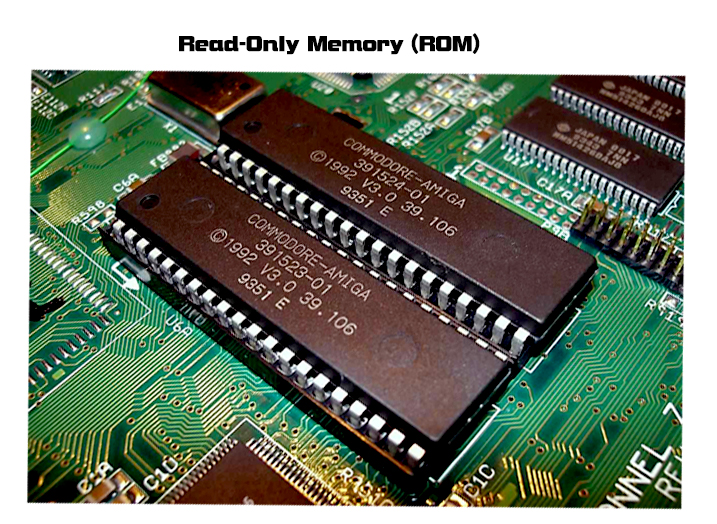
At its core, ROM is a type of non-volatile memory used in computers and other electronic devices. Its primary characteristic, as its name suggests, is that data stored on it can only be read, not easily modified or erased during normal operation. This inherent immutability makes it ideal for storing critical instructions and data that are essential for a device’s startup and fundamental functions.
Defining Read-Only Memory
Read-Only Memory is a class of storage media used in computers and other electronic devices. Unlike Random Access Memory (RAM), which is volatile and loses its contents when power is turned off, ROM is non-volatile. This means the information stored in ROM persists even when the device is powered down, making it the perfect candidate for housing the “boot-up” instructions that a computer needs to initiate its operating system. Imagine a computer waking up from a deep sleep: it needs to know the very first steps to take to get its components working and load the operating system. These initial, critical instructions are almost universally stored in ROM.
Historically, ROM was physically programmed at the manufacturing stage, making its contents truly unalterable. While modern iterations allow for some degree of re-programmability (as we’ll discuss), the core principle remains: ROM contains instructions that are not meant to change frequently, if at all, over the lifetime of the device. This provides a stable, reliable foundation upon which more complex software and dynamic operations can be built. Its purpose is less about temporary data storage and more about providing a permanent instruction set, safeguarding vital information against accidental corruption or deletion.
Distinguishing ROM from RAM
To truly appreciate ROM, it’s essential to understand its contrast with Random Access Memory (RAM). While both are vital components of a computer’s memory subsystem, their roles, characteristics, and underlying technologies differ significantly:
- Volatility: This is the most crucial distinction. RAM is volatile; it requires continuous power to maintain the stored information. As soon as the power is cut, all data in RAM is lost. Conversely, ROM is non-volatile; it retains its contents even when the power is off. This fundamental difference dictates their primary uses.
- Purpose: RAM serves as the computer’s working memory, holding data and program instructions that the CPU actively uses. It’s designed for rapid read/write operations, facilitating multitasking and dynamic data processing. ROM, on the other hand, stores static, permanent instructions essential for the device’s basic functions, such as the firmware needed to start the system.
- Speed: Generally, RAM is much faster than ROM for both reading and writing operations. Modern RAM modules are optimized for speed to keep up with the demands of high-speed processors. While ROM is fast enough for its specific purpose, its design prioritizes data persistence over raw speed.
- Writeability: RAM is designed for frequent and easy reading and writing. Its contents are constantly being updated by the CPU. Traditional ROM was “read-only,” meaning its contents were burned in during manufacturing and could not be altered. While modern ROM variants (like Flash memory) allow for electrical erasure and reprogramming, these operations are typically much slower and more complex than writing to RAM, and are intended for firmware updates rather than routine data manipulation.
- Cost & Capacity: RAM typically offers larger capacities and is more expensive per gigabyte than older, simpler ROM technologies. However, with the rise of Flash memory, the lines can sometimes blur, as Flash is both non-volatile and offers significant storage capacity at a relatively lower cost than volatile RAM.
In essence, RAM is the dynamic workspace where your computer thinks, while ROM is the unchangeable instruction manual that tells your computer how to start thinking. Both are indispensable, but they serve distinct and complementary roles in the architecture of any digital device.
Types of ROM and Their Evolution
The journey of ROM has been one of continuous innovation, adapting to the evolving needs of technology. From immutable, factory-programmed chips to sophisticated, electrically re-programmable memories, ROM has transformed significantly while retaining its core non-volatile characteristic.
Mask ROM (MROM)
The earliest and most basic form of ROM is Mask ROM (MROM). In MROM, data is physically encoded into the circuit during the manufacturing process by creating a “mask” that determines the connections of the transistors. Once manufactured, the data stored in a Mask ROM is absolutely permanent and cannot be changed or erased.
- Pros: Very high density, low cost per bit (especially in large volumes), extremely reliable and tamper-resistant.
- Cons: Inflexible – any design error requires a complete re-fabrication of the chip, leading to high initial setup costs and long lead times.
- Applications: Used in early computers, game cartridges (like those for the Nintendo Entertainment System), and embedded systems where the code is stable and produced in massive quantities. Its fixed nature meant that if a bug was found post-production, there was no way to fix it without replacing the entire chip.
Programmable Read-Only Memory (PROM)
The inflexibility of MROM led to the development of Programmable Read-Only Memory (PROM). PROMs are manufactured as blank chips and can be programmed once by the end-user or developer. This is typically done using a special device called a “PROM programmer” or “PROM burner.” The programming process involves selectively “burning” fuses (or anti-fuses) on the chip, creating permanent connections or disconnections that represent the data.
- Pros: Allows designers to program their own ROMs after manufacturing, offering more flexibility than MROM. Faster prototyping and development.
- Cons: Still “write-once” – once programmed, the data cannot be erased or modified. Any error in programming means the chip is discarded.
- Applications: Early embedded systems, microcontrollers, and situations where a custom ROM was needed in smaller quantities than MROM justified.
Erasable Programmable Read-Only Memory (EPROM)
EPROM introduced a revolutionary capability: the ability to erase and reprogram the memory. EPROM chips are identifiable by a small quartz window on the top of the chip package. To erase the data, the chip is exposed to strong ultraviolet (UV) light for a specific duration (typically 20-30 minutes). This UV light breaks down the electrical charges stored in the floating gates of the EPROM’s transistors, effectively clearing the data, allowing the chip to be reprogrammed.
- Pros: Reusability, allowing for correction of errors, firmware updates, and development iterations without discarding chips.
- Cons: Erasure process is slow and requires specialized UV light equipment. The chip must be removed from the circuit board for erasure.
- Applications: Prototyping, development, and small-to-medium production runs of embedded systems, BIOS chips in early PCs, and industrial control systems where firmware updates might be necessary but infrequent.
Electrically Erasable Programmable Read-Only Memory (EEPROM)

Building on EPROM’s re-programmability, Electrically Erasable Programmable Read-Only Memory (EEPROM) refined the process even further. EEPROM allows data to be erased and reprogrammed electrically, often byte by byte, without the need for UV light or removal from the circuit. This is achieved by applying a higher-than-normal voltage to individual cells.
- Pros: Electrical erasure (in-circuit programming possible), faster and more convenient erasure/reprogramming than EPROM, more granular control (byte-level erasure).
- Cons: Generally more complex circuitry and higher cost per bit than EPROM or PROM. Slower write speeds compared to RAM, and typically has a limited number of write/erase cycles (endurance).
- Applications: Storing configuration data in PCs (e.g., BIOS settings), embedded systems, smart cards, and automotive electronics where parameters might need to be updated periodically.
Flash Memory: The Modern Iteration
Flash memory is a derivative of EEPROM and represents the dominant form of non-volatile memory in use today. While technically a type of EEPROM (it uses similar floating-gate transistors and electrical erasure), flash memory differs by erasing data in large blocks or “pages” rather than individual bytes. This block-level erasure, combined with high density and relatively fast read/write speeds, makes it incredibly versatile.
- Pros: High density, lower cost per bit than traditional EEPROM, faster write/erase speeds (due to block operations), high endurance (though still finite), and compact size. Can be integrated directly onto microcontrollers.
- Cons: While much improved, still has a finite number of write/erase cycles. Block-level erasure can be less flexible than byte-level for certain niche applications.
- Applications: The ubiquity of flash memory is astounding. It’s found in solid-state drives (SSDs), USB flash drives, memory cards (SD cards, microSD cards), smartphones, tablets, digital cameras, and embedded systems as the primary storage for operating systems, applications, and user data. It has effectively replaced most older forms of ROM in modern devices.
Where is ROM Used? Essential Applications
The diverse types of ROM, particularly Flash memory, are integral to the functioning of nearly every electronic device in existence. Their non-volatile nature ensures that critical information remains intact, allowing devices to start reliably and retain essential settings.
Bootstrapping and BIOS/UEFI Firmware
Perhaps the most well-known application of ROM is in the bootstrapping process of computers. When you press the power button on your PC, it doesn’t immediately load Windows or macOS. Instead, a small, critical program stored in ROM (historically the BIOS – Basic Input/Output System, and now more commonly UEFI – Unified Extensible Firmware Interface) takes over. This firmware performs a Power-On Self-Test (POST) to check if essential hardware components are working, initializes the system, and then locates and loads the operating system from a storage drive.
- Why ROM? The BIOS/UEFI must be immediately available upon power-up, and its instructions cannot be lost or easily corrupted. Flash memory is now typically used for BIOS/UEFI, allowing for firmware updates to fix bugs or add compatibility for new hardware.
Embedded Systems and Microcontrollers
Embedded systems are specialized computer systems designed for a specific function within a larger mechanical or electrical system. Examples include control systems in cars, appliances (washing machines, microwaves), medical devices, industrial machinery, and IoT devices. Microcontrollers, which are tiny computers on a single integrated circuit, are the brains of many embedded systems.
- Why ROM? Embedded systems and microcontrollers rely heavily on ROM (often built-in Flash memory) to store their operating firmware and application-specific code. This ensures that the device can perform its dedicated function reliably from the moment it’s powered on, without needing external storage or a complex booting sequence. The code is often compact and doesn’t change, making ROM ideal.
Consumer Electronics
Almost every consumer electronic device contains ROM in some form. Your smart TV has firmware in ROM that allows it to power on, connect to the internet, and run its smart features. Your digital camera stores its operating software in ROM. Even simple devices like remote controls or calculators use ROM for their internal programming.
- Why ROM? For these devices, ROM provides the stable foundation for their basic operation. It’s non-volatile, so settings and core functionality aren’t lost when the device is unplugged or batteries die. Flash memory is especially prevalent here due to its cost-effectiveness, density, and ease of update.
Data Storage in Specialized Devices
While RAM handles active data, ROM, particularly Flash memory, has become the dominant medium for persistent data storage in many mobile and portable devices.
- Smartphones and Tablets: The entire operating system (Android, iOS) and all user applications are stored on internal Flash memory (e.g., eMMC or NVMe SSDs).
- USB Flash Drives and Memory Cards: These external storage devices are entirely built upon Flash memory, offering portable, non-volatile data storage.
- Solid-State Drives (SSDs): These have largely replaced traditional hard drives in modern computers, using NAND Flash memory to provide significantly faster and more durable storage for operating systems, programs, and user files.
- Why ROM? The need for durable, fast, and non-volatile storage in an ever-more mobile and data-intensive world has propelled Flash memory into this critical role. It provides the persistence of traditional storage with the speed and resilience that mechanical drives cannot match.
The Enduring Significance of ROM in Modern Tech
Despite its humble origins and often invisible presence, ROM continues to be an indispensable pillar of modern technology. Its characteristics drive fundamental aspects of device design and functionality.
Reliability and Data Persistence
The core value of ROM lies in its inherent reliability and data persistence. In a world where systems are expected to “just work,” ROM provides the immutable instruction set that ensures this reliability. Whether it’s the BIOS guiding a PC’s startup or the firmware governing an industrial robot, the non-volatile nature of ROM guarantees that these critical instructions are always there, uncorrupted, and ready to execute. This resilience is paramount for systems that require consistent operation, preventing catastrophic failures due to volatile memory loss.
Security Implications
ROM also plays a significant, though often understated, role in digital security. Because the boot-up firmware is stored in ROM, it can be the first line of defense against tampering. Modern secure boot technologies leverage the immutability of ROM-based firmware to verify the integrity of subsequent boot stages and the operating system. Any unauthorized modification to this critical boot code could be detected, preventing malicious software from taking control before the operating system even loads. While Flash ROM can be updated, these updates are typically protected by cryptographic signatures, ensuring that only trusted, authorized firmware can be installed.
Future Trends and Non-Volatile Memory
The evolution of ROM continues, albeit under new names and technologies. The relentless demand for faster, denser, and more energy-efficient non-volatile memory drives ongoing research into new memory types like MRAM (Magnetoresistive RAM), PCM (Phase-Change Memory), and ReRAM (Resistive RAM). These emerging technologies aim to combine the speed of RAM with the non-volatility of ROM, potentially blurring the lines even further and leading to “universal memory” architectures. Flash memory itself continues to advance, with technologies like 3D NAND pushing density and performance limits, securing its position as a cornerstone of data storage for the foreseeable future.
In conclusion, “What is ROM?” is a question that leads us to the very bedrock of digital existence. From the first spark of power that brings a computer to life, through the complex operations of a smartphone, and into the specialized functions of embedded systems, ROM, in its various forms, ensures stability, reliability, and security. It is a testament to the enduring genius of computer engineering, providing the silent, persistent foundation upon which the dynamic and ever-evolving world of technology is built.
aViewFromTheCave is a participant in the Amazon Services LLC Associates Program, an affiliate advertising program designed to provide a means for sites to earn advertising fees by advertising and linking to Amazon.com. Amazon, the Amazon logo, AmazonSupply, and the AmazonSupply logo are trademarks of Amazon.com, Inc. or its affiliates. As an Amazon Associate we earn affiliate commissions from qualifying purchases.