
The term “primordial soup” evokes images of a mysterious, bubbling cauldron from which life itself emerged. While scientifically grounded, this concept isn’t a literal pot of broth, but rather a compelling hypothesis that seeks to explain the origins of life on Earth. At its core, the primordial soup theory, also known as the “Oparin-Haldane hypothesis,” proposes that early Earth’s atmosphere and oceans, under specific energetic conditions, could have fostered the spontaneous synthesis of complex organic molecules from simple inorganic precursors. These molecules, it is theorized, then assembled into self-replicating structures, eventually giving rise to the first primitive life forms. This fascinating idea bridges the gap between geochemistry and biology, offering a framework for understanding how non-living matter might have transitioned into the living world we know today.

The Early Earth Environment: A Chemical Crucible
To understand the primordial soup, we must first reconstruct the conditions of early Earth. The planet, formed roughly 4.5 billion years ago, was a vastly different place from the one we inhabit today. The prevailing scientific consensus suggests that the early atmosphere was a reducing one, meaning it contained a high proportion of electron-donating molecules and a low proportion of oxygen. This is a critical distinction from our current oxygen-rich atmosphere, which would have oxidized and destroyed any nascent organic molecules.
Composition of the Early Atmosphere
The exact composition of the early Earth’s atmosphere is a subject of ongoing scientific debate, but several models are widely considered. A common scenario posits an atmosphere rich in:
- Water vapor (H₂O): Volcanic outgassing would have released vast amounts of steam.
- Methane (CH₄): A potent reducing agent.
- Ammonia (NH₃): Another key nitrogen-containing compound.
- Hydrogen (H₂): Providing readily available electrons.
- Carbon dioxide (CO₂): While not as reducing as methane, it would still have been a source of carbon.
Crucially, free oxygen (O₂) was virtually absent. This lack of oxygen is paramount because oxygen is highly reactive and would have quickly broken down any complex organic molecules formed. Instead, the reducing nature of the early atmosphere would have favored the formation and stability of organic compounds.
Energy Sources for Synthesis
For inorganic molecules to transform into complex organic ones, a significant input of energy is required. Early Earth provided several potent sources:
- Ultraviolet (UV) radiation: The Earth’s ozone layer, which shields us from harmful UV radiation today, was not yet formed. This meant that intense UV radiation from the sun would have bombarded the planet’s surface and atmosphere, providing ample energy for chemical reactions.
- Lightning: Frequent and powerful thunderstorms would have generated electrical discharges, acting as catalysts for molecular synthesis.
- Volcanic activity: The Earth was volcanically much more active than it is today. Volcanic eruptions released heat, gases, and minerals, all of which could have played a role in chemical transformations.
- Geothermal energy: Heat from the Earth’s interior would have also contributed to driving chemical reactions, particularly in hydrothermal vents on the ocean floor.
These energy sources acted upon the simple inorganic molecules present in the atmosphere and early oceans, driving them to form more complex organic molecules.
The Chemical Reactions: Building Blocks of Life
The core of the primordial soup hypothesis lies in the chemical reactions that could have occurred, converting simple inorganic substances into the building blocks of life. Scientists envision a series of steps, often occurring in aqueous environments, leading to the formation of essential biomolecules.
Formation of Monomers
The first step in this process would have been the synthesis of monomers, the small, repeating units that make up larger biological molecules. The most crucial monomers for life are:
- Amino acids: The building blocks of proteins, which perform a vast array of functions in living organisms.
- Nucleotides: The building blocks of nucleic acids like DNA and RNA, which carry genetic information.
- Fatty acids: Components of lipids, which form cell membranes.
- Simple sugars: Such as ribose and deoxyribose, which are part of nucleotides.
The Miller-Urey experiment, conducted in 1953 by Stanley Miller and Harold Urey, provided crucial empirical support for the primordial soup hypothesis. They simulated the proposed early Earth conditions by circulating a mixture of gases (methane, ammonia, hydrogen, and water vapor) in a closed system. They then subjected this mixture to electrical sparks, mimicking lightning. After a week, they analyzed the contents of the flask and discovered a variety of organic molecules, including several amino acids. Subsequent variations of the experiment, using different atmospheric compositions and energy sources, have yielded an even wider range of organic compounds, including nucleotides and simple sugars.
Polymerization: From Monomers to Polymers
Once monomers were formed, the next critical step was their assembly into polymers, larger and more complex molecules essential for life. This process, known as polymerization, involves linking monomers together in specific sequences.
- Formation of proteins: Amino acids polymerize to form polypeptides, which then fold into functional proteins.
- Formation of nucleic acids: Nucleotides polymerize to form DNA and RNA.
The conditions for polymerization in the early oceans are still a subject of research. Some proposed mechanisms include:
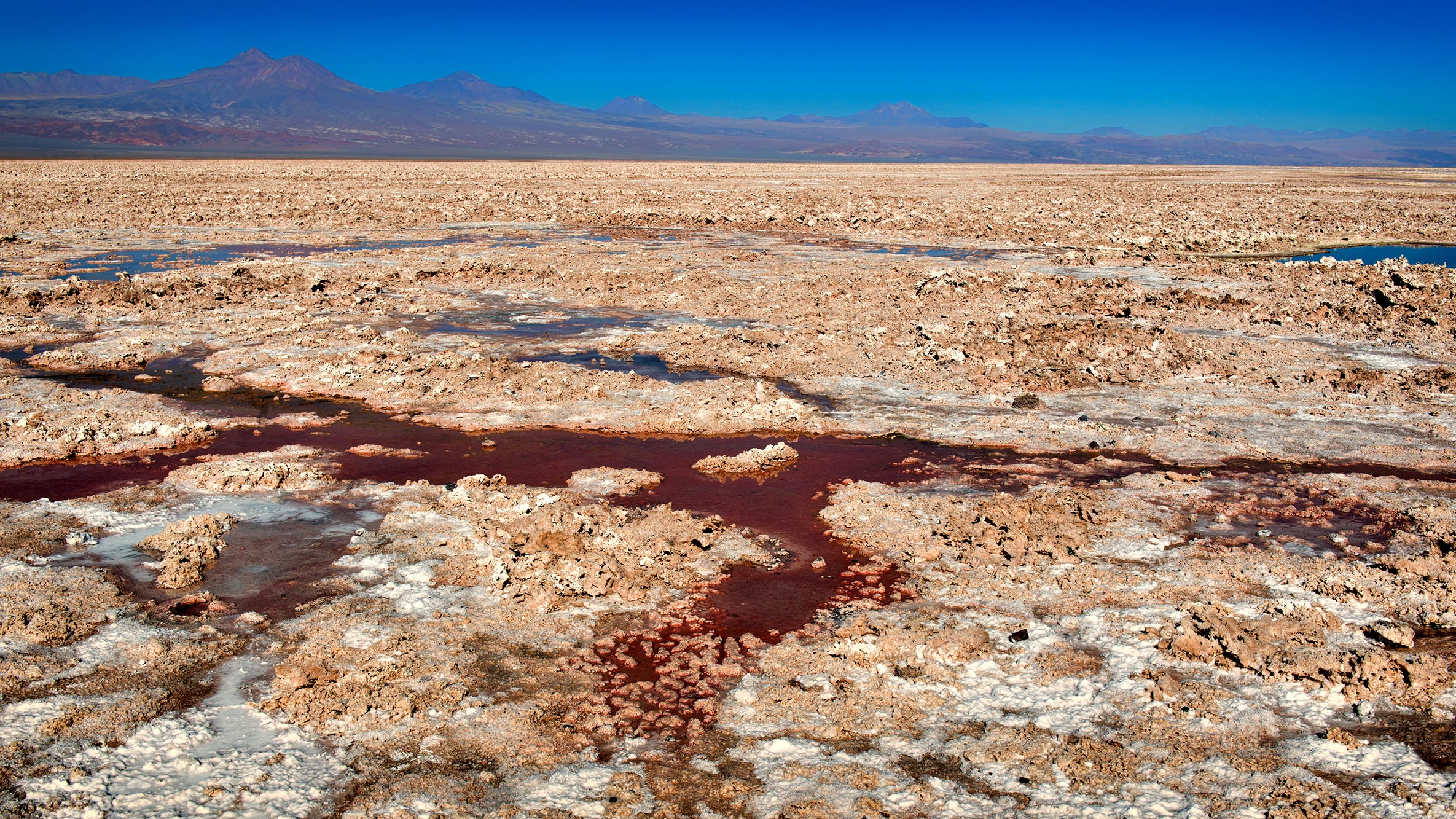
- Evaporation and drying: In shallow pools or on surfaces of clay minerals, repeated cycles of wetting and drying could have concentrated monomers and facilitated their dehydration, a necessary step for polymerization.
- Mineral surfaces: Clay minerals, in particular, are thought to have acted as catalysts, providing surfaces upon which monomers could accumulate and react, promoting polymerization.
- Hydrothermal vents: The high temperatures and chemical gradients associated with deep-sea hydrothermal vents are also considered potential sites for polymerization.
These complex organic molecules, formed through polymerization, represent a significant leap from simple inorganic matter towards the complexity of life.
From Soup to Cells: The Emergence of Self-Replication
The formation of complex organic molecules, while a monumental step, is not the entirety of the primordial soup story. The ultimate challenge is explaining how these molecules transitioned from being mere chemical products to the first self-replicating entities, the precursors to cellular life. This transition involves the development of a system capable of storing and transmitting information, as well as carrying out metabolic processes.
The “RNA World” Hypothesis
A leading hypothesis for the origin of life is the “RNA world” hypothesis. This theory suggests that RNA, rather than DNA, was the primary genetic material and catalytic molecule in early life. RNA possesses a unique dual capability:
- Information storage: Like DNA, RNA can store genetic information in its nucleotide sequence.
- Catalytic activity: Some RNA molecules, known as ribozymes, can act as enzymes, catalyzing biochemical reactions.
The RNA world hypothesis proposes that early life was based on RNA molecules that could both store genetic information and catalyze their own replication and other essential processes. DNA, being a more stable molecule, might have evolved later as a more efficient way to store genetic information, while proteins, with their greater catalytic diversity, eventually took over most enzymatic roles.
Encapsulation and Protocells
Another crucial step in the emergence of life is encapsulation – the formation of boundaries that separate the internal chemistry of a developing life form from its external environment. This is where the concept of protocells comes into play.
Protocells are believed to have been simple, membrane-bound structures that enclosed the replicating molecules. These membranes could have been formed from lipids, which are amphipathic molecules (having both hydrophilic and hydrophobic parts). In water, lipids can spontaneously self-assemble into spherical structures called vesicles or liposomes, forming a basic membrane.
These protocells would have provided a contained environment where:
- Concentration of molecules: Necessary reactants could be concentrated, increasing the efficiency of chemical reactions.
- Protection from the environment: The membrane could shield the internal components from disruptive external influences.
- Development of internal chemistry: A distinct internal chemical environment could evolve, allowing for the emergence of metabolic pathways and replication mechanisms.
The interaction between replicating molecules (like RNA) and self-assembling membranes is a key area of research. It’s theorized that as replicating molecules became more complex and efficient within these protocells, they would have gained a selective advantage, leading to the gradual evolution of more sophisticated life forms.
Modern Relevance and Ongoing Research
The primordial soup hypothesis, while a foundational concept, is not a static theory. It continues to be refined and expanded upon by scientists employing a wide range of disciplines, from chemistry and biology to geology and astrophysics. The quest to understand the origin of life is one of the most profound scientific endeavors, touching upon our fundamental understanding of existence.
Challenges and Future Directions
Despite the significant progress made, several challenges remain in fully elucidating the origin of life:
- The precise composition of the early atmosphere: While models exist, direct evidence is scarce.
- The efficiency of polymerization: Achieving the necessary chain lengths for functional polymers under early Earth conditions is still being explored.
- The transition from non-life to life: Bridging the gap between complex organic molecules and true self-replicating systems remains a significant hurdle.
- The role of specific environments: Whether life originated in shallow ponds, deep-sea hydrothermal vents, or other locations is a matter of ongoing investigation.
Future research will likely involve:
- More sophisticated laboratory experiments: Simulating even more complex early Earth conditions to observe the spontaneous formation of key biomolecules and self-replicating systems.
- Astrobiological studies: Investigating the potential for life to arise on other planets with similar conditions to early Earth, which can provide valuable comparative data.
- Computational modeling: Using advanced computer simulations to explore the vast landscape of possible chemical reactions and evolutionary pathways.
- Geochemical analysis of ancient rocks: Searching for fossilized evidence of early life and analyzing the isotopic signatures that could reveal the metabolic processes of the earliest organisms.
The “primordial soup” is more than just a catchy phrase; it represents a powerful scientific framework for understanding how inert matter could have given rise to the incredible diversity of life on our planet. It is a testament to the power of chemistry and physics to create complexity, and a continuous source of inspiration for scientific inquiry. The journey from a simple, inorganic world to a vibrant, living biosphere is a story still being written, molecule by molecule.
aViewFromTheCave is a participant in the Amazon Services LLC Associates Program, an affiliate advertising program designed to provide a means for sites to earn advertising fees by advertising and linking to Amazon.com. Amazon, the Amazon logo, AmazonSupply, and the AmazonSupply logo are trademarks of Amazon.com, Inc. or its affiliates. As an Amazon Associate we earn affiliate commissions from qualifying purchases.