
In the landscape of skilled trades, the North American Technician Excellence (NATE) certification stands as the premier credential for professionals in the Heating, Ventilation, Air Conditioning, and Refrigeration (HVACR) industry. While many view it simply as a technical validation, a deeper analysis reveals it to be a sophisticated financial tool. For the individual technician, it is an investment in human capital that yields significant dividends in lifetime earning potential. For the business owner, it is a risk management strategy that optimizes operational efficiency and profit margins.
Understanding the NATE certification requires looking beyond the mechanical components of a furnace or an air handler and examining the economic impact of professional mastery. In an era where the “blue-collar” sector is undergoing a massive financial transformation, NATE certification has become a critical benchmark for those looking to maximize their professional and personal wealth.
The Financial Value of NATE Certification: An Investment in Human Capital
In the world of personal finance, “human capital” refers to the collective skills, knowledge, or other intangible assets of individuals that can be used to create economic value for the individuals, their employers, or their community. Obtaining a NATE certification is one of the most direct ways an HVAC professional can increase their market value.
Boosting Individual Earning Potential
The primary motivator for pursuing NATE certification is often the immediate impact on a technician’s paycheck. Statistics across the industry consistently show that NATE-certified technicians earn significantly more than their non-certified counterparts. This “certification premium” exists because employers recognize that a certified professional requires less supervision and is more likely to perform the job correctly the first time.
When viewing your career through the lens of a side hustle or a long-term business endeavor, NATE certification acts as a barrier to entry for lower-skilled competition. By holding this credential, you move from a “commodity” labor pool to a “specialized” labor pool. In economic terms, this reduces the supply of labor available at your skill level, allowing you to command a higher price for your time.
The ROI of Professional Credentialing
Every certification requires an investment of time and money. To determine if NATE is a sound financial move, one must calculate the Return on Investment (ROI). The costs include exam fees, study materials, and the opportunity cost of the time spent preparing. However, when compared to the increased hourly wage and the potential for performance-based bonuses, most technicians find that the certification pays for itself within the first six months of attainment.
Furthermore, NATE-certified professionals are often the first in line for promotions to lead technician, service manager, or project estimator roles. These positions not only carry higher base salaries but often include profit-sharing opportunities and better benefits packages, further enhancing the individual’s financial security.
Business Finance and the Competitive Edge: Why Employers Pay a Premium
For HVAC business owners, employing NATE-certified technicians is not just a matter of pride; it is a calculated business finance decision. The HVAC industry operates on thin margins where a single mistake can erase the profit from multiple jobs. NATE certification serves as a hedge against these financial leaks.
Reducing Costly Callbacks and Operational Waste
In the HVAC service industry, “callbacks” (having to return to a job site because the initial repair failed) are the ultimate profit-killer. A callback involves the cost of fuel, the technician’s hourly wage, and the lost opportunity cost of not being at a new, revenue-generating job.
Studies have shown that NATE-certified technicians have significantly lower callback rates. By ensuring that systems are installed and repaired to the highest technical standards, businesses can keep their overhead low and their customer satisfaction high. From a business finance perspective, this efficiency allows a company to scale more rapidly, as its labor force is performing at peak optimization.
Leveraging Certification for Marketing and Consumer Trust
In the modern marketplace, trust is a currency. Consumers are increasingly savvy and often look for third-party validation before hiring a service provider. A business that can market itself as “NATE-certified” or “Employing NATE-certified professionals” can often charge premium rates.
This ability to command higher ticket prices directly impacts the company’s bottom line. It allows the business to transition from a “race to the bottom” on pricing to a value-based pricing model. When customers understand that they are paying for a certified expert who will ensure energy efficiency and system longevity, they are less price-sensitive. This creates a more stable and predictable cash flow for the business.
Navigating the Certification Process: Costs and Requirements
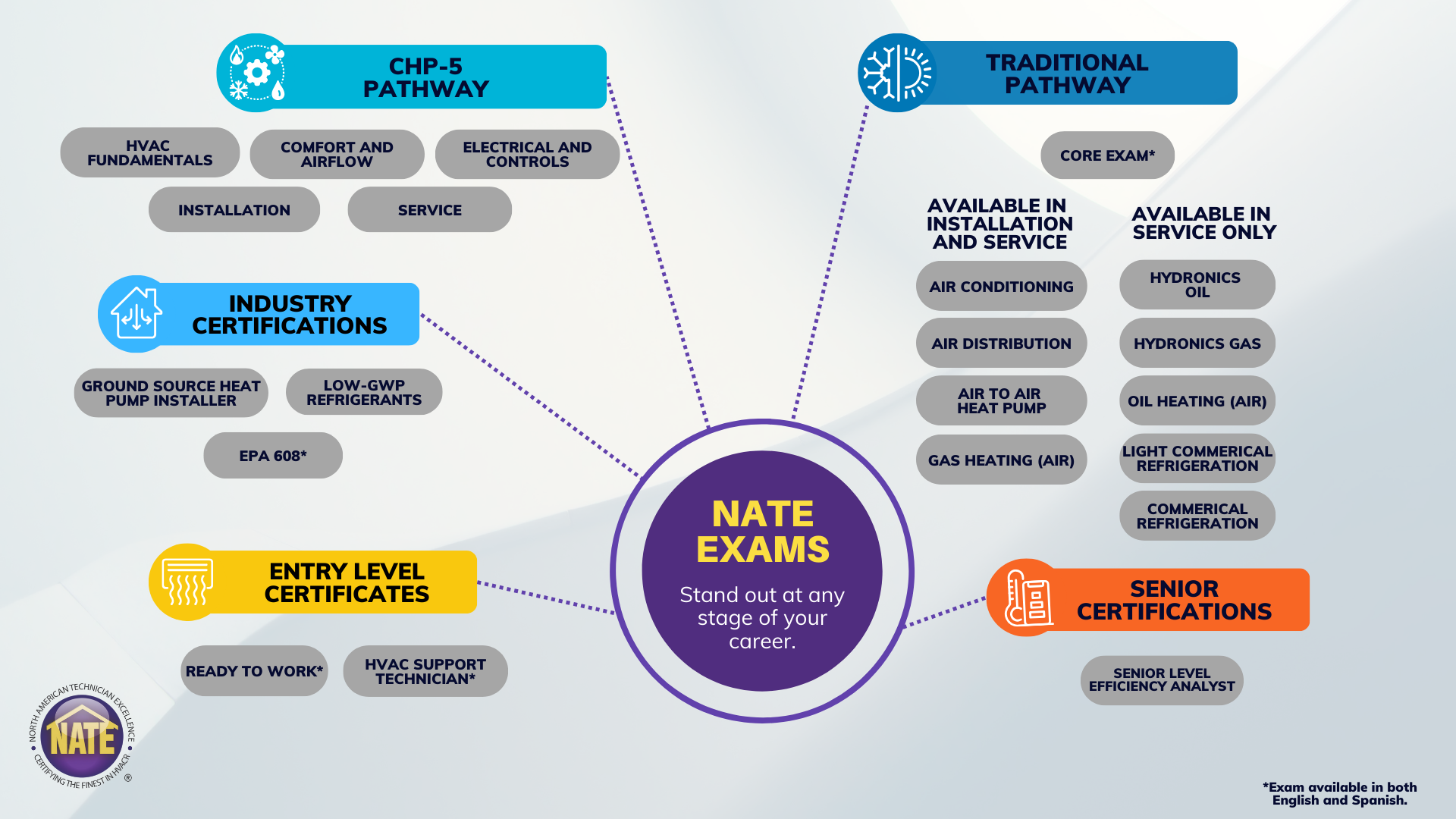
To treat NATE certification as a financial tool, one must understand the structural requirements and the associated costs. NATE offers a variety of pathways, ranging from “Ready-to-Work” certificates for those entering the field to specialized “Professional” certifications for seasoned experts.
Direct Costs and Preparation Expenses
The financial commitment to NATE begins with the exam fees. Depending on the testing provider and the specific exam, costs typically range from $150 to $300 per attempt. While some employers cover these costs as a business expense, many independent contractors or those looking to switch companies must budget for this out of pocket.
In addition to the exam fee, one must consider the cost of preparation. This includes:
- Study Guides and Textbooks: Ranging from $50 to $200.
- Preparatory Classes: Some trade schools or manufacturers offer NATE prep courses that can cost several hundred dollars.
- Continuing Education: NATE certification is not a one-time event; it requires recertification every two years through continuing education credits (CEUs) or by retaking the exam. This ongoing cost must be factored into one’s long-term financial planning.
Choosing the Right Specialization for Maximum Market Value
NATE offers certifications in several specialties, including Air Conditioning, Air Distribution, Heat Pumps, Gas Heating, and Hydronics. From a financial strategy standpoint, it is wise to choose a specialization that is in high demand within your specific geographic market.
For example, a technician in the southern United States may find the highest ROI in an Air Conditioning and Heat Pump specialization, while someone in the Northeast might see more financial gain by specializing in Gas Heating and Hydronics. Aligning your certification with market demand ensures that your skills remain a high-value asset in the local economy.
Long-Term Financial Planning: Scaling Your Career in the HVAC Industry
The ultimate goal of obtaining a NATE certification should be to leverage it for long-term financial independence. Whether you intend to climb the corporate ladder or eventually start your own mechanical contracting firm, this credential serves as a foundation for wealth building.
Moving from Technician to Business Owner
Many of the most successful HVAC business owners began as NATE-certified technicians. The discipline required to pass the rigorous NATE exams often translates well into the discipline required to manage business finances. Furthermore, having the “NATE” seal of approval makes it easier to secure business loans or attract investors, as it proves a foundational level of expertise and commitment to industry standards.
For those looking to start a side hustle, being NATE-certified allows you to market yourself as a consultant or a high-end specialized repairman. This can be a lucrative way to supplement your primary income, utilizing your specialized knowledge to solve complex problems that general handymen cannot touch.

The Future of High-Efficiency Tech and Premium Billing
As the global economy shifts toward energy efficiency and decarbonization, the financial landscape of HVAC is changing. High-efficiency systems, such as inverter-driven heat pumps and smart building controls, require a level of technical sophistication that is far beyond the average “parts changer.”
NATE recently introduced certifications like the “Low-GWP Refrigerant” exam to keep pace with environmental regulations. Technicians who stay ahead of these regulatory and technological shifts by maintaining their NATE credentials will be the only ones qualified to service the next generation of expensive, high-margin equipment. In the world of finance, being ahead of a trend is the best way to capture “alpha” or excess returns. By positioning yourself as a NATE-certified expert in emerging green technologies, you ensure that your income remains high even as the industry evolves.
In conclusion, the NATE certification is far more than a badge on a uniform. It is a strategic financial asset. For the individual, it is a key to higher wages and career mobility. For the business, it is a tool for operational excellence and brand premium. By understanding the costs, the ROI, and the long-term market trends associated with this credential, HVAC professionals can effectively use NATE certification to secure their financial future in an increasingly competitive economy.
aViewFromTheCave is a participant in the Amazon Services LLC Associates Program, an affiliate advertising program designed to provide a means for sites to earn advertising fees by advertising and linking to Amazon.com. Amazon, the Amazon logo, AmazonSupply, and the AmazonSupply logo are trademarks of Amazon.com, Inc. or its affiliates. As an Amazon Associate we earn affiliate commissions from qualifying purchases.