
The integration of Bluetooth technology into the automotive industry represents one of the most significant shifts in the history of vehicle cabins. What began as a niche solution for professional mobile users has evolved into a standard feature that dictates the modern driving experience. To understand when Bluetooth came out in cars, we must look back to the late 1990s, a period of rapid digitization and the beginning of the wireless revolution.
The Origin Story: Bringing Bluetooth to the Dashboard
The journey of Bluetooth in the automotive world began formally in 1999, though most consumers did not see the technology in a production vehicle until the 2000 model year. The credit for the first commercial application of Bluetooth in a vehicle goes to Chrysler.
The 1999 Breakthrough: Chrysler and the UConnect System
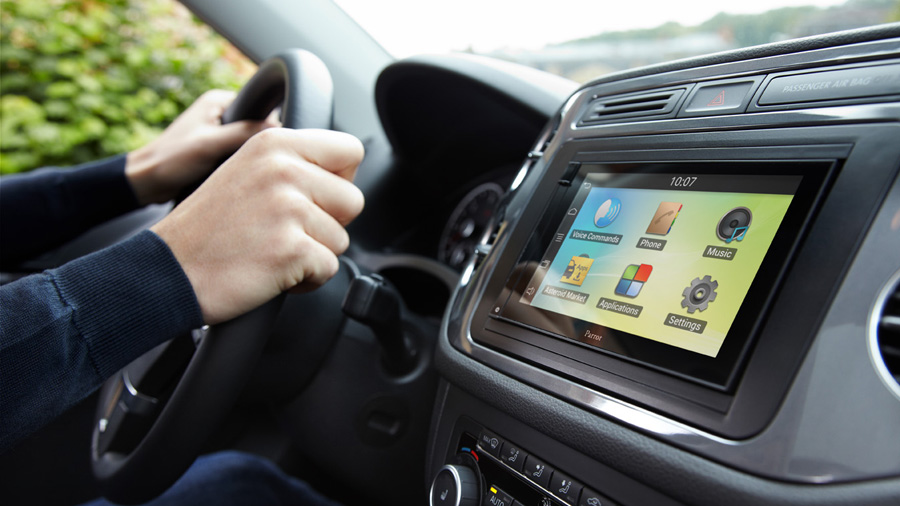
In December 1999, Chrysler announced that it would offer a dealer-installed Bluetooth system called “UConnect.” This was a revolutionary step for the time. Developed in partnership with Johnson Controls and based on the early Bluetooth 1.0 specifications, the system allowed drivers to link their mobile phones to the car’s audio system. While the first-generation hardware was rudimentary by today’s standards, it established the framework for hands-free communication that would eventually become a legal requirement in many jurisdictions.
Early Adoption Hurdles and the “Hands-Free” Mandate
The early 2000s were characterized by technical fragmentation. Early Bluetooth protocols were notoriously finicky; pairing a device often required multiple attempts, and the connection was frequently dropped. Furthermore, mobile phones with Bluetooth capabilities were expensive and rare. However, the push for automotive Bluetooth was accelerated not just by consumer demand for gadgets, but by burgeoning safety regulations. As states and countries began passing “Hands-Free” driving laws, automakers realized that wireless connectivity was no longer a luxury—it was a necessity for compliance and driver safety.
Technical Architecture: How Bluetooth Transformed the Driving Experience
To understand the impact of Bluetooth on cars, we must look at the software protocols that make it work. Bluetooth is not a single technology but a suite of “profiles” that define what a device can do.
Understanding the Hands-Free Profile (HFP) and Headset Profile (HSP)
The first iteration of in-car Bluetooth relied heavily on the Headset Profile (HSP) and eventually the more advanced Hands-Free Profile (HFP). These protocols were designed specifically for voice. They prioritized low latency for speech but had very narrow bandwidth. This is why, in early 2000s vehicles, you could make a phone call through the speakers, but you could not play music from your phone. The audio quality was “mono,” optimized for the human voice frequency range, which was insufficient for high-fidelity music.
The Leap to Audio Streaming: A2DP and AVRCP Protocols
It wasn’t until around 2004 to 2006 that we saw the introduction of the Advanced Audio Distribution Profile (A2DP). This was the technological “tipping point” for the automotive industry. A2DP allowed for the streaming of stereo-quality audio wirelessly from a device to the car’s head unit.
Coupled with the Audio/Video Remote Control Profile (AVRCP), drivers gained the ability to not only listen to music but also control it—skipping tracks or pausing—using the buttons on the steering wheel. This transition effectively killed the CD changer and the auxiliary cable, turning the car into a massive wireless speaker.
The Impact of Bluetooth on Modern Vehicle Engineering

As Bluetooth matured, it shifted from being an “add-on” peripheral to a core component of vehicle architecture. This integration changed how engineers designed the interior of the car, particularly the human-machine interface (HMI).
From Basic Gadgets to Integrated Infotainment Systems
In the mid-2000s, Bluetooth hardware moved from standalone modules tucked behind the dashboard to being integrated directly into the vehicle’s central processor. This allowed for better synchronization with other car systems. For example, modern cars can automatically lower the climate control fan speed when a Bluetooth call is active to reduce background noise—a level of integration that required deep software synergy between the Bluetooth stack and the vehicle’s Controller Area Network (CAN bus).
The Rise of Software-Defined Vehicles
Today, Bluetooth is a pillar of the “software-defined vehicle.” It serves as the primary handshake for more complex systems like wireless Apple CarPlay and Android Auto. While these systems often use Wi-Fi for high-bandwidth data (like video streaming for maps), they use Bluetooth for the initial discovery and “handshaking” between the phone and the car. This multi-layered wireless approach ensures that the connection is both stable and high-performing.
Security and Connectivity Challenges in the Wireless Cabin
As with any wireless technology, the introduction of Bluetooth into the automotive ecosystem brought new vulnerabilities. In the tech world, the “attack surface” of a car expanded the moment it began accepting wireless signals.
Bluebugging and Eavesdropping: The Digital Risks of Car Bluetooth
In the early days of automotive Bluetooth, security was often an afterthought. Researchers discovered that many cars used default PINs (like 0000 or 1234), making them susceptible to “Bluebugging.” This allowed hackers within range to access the vehicle’s microphone or download the driver’s contact list without authorization. Modern Bluetooth standards (4.0 and above) have implemented Secure Simple Pairing (SSP) and AES-128 encryption, which have significantly mitigated these risks, but the “Bring Your Own Device” (BYOD) nature of cars remains a point of scrutiny for digital security experts.
Pairing Conflicts and Signal Interference in the 2.4 GHz Spectrum
Technically, Bluetooth operates on the 2.4 GHz ISM (Industrial, Scientific, and Medical) band. This is a crowded frequency shared with Wi-Fi routers, microwaves, and other gadgets. In the confined space of a car, signal interference can lead to “jitter” or dropped connections. Automakers have had to design sophisticated antenna arrays—often hidden in the “shark fin” on the roof or within the dashboard—to ensure that the signal remains robust even when the cabin is filled with multiple devices all competing for the same frequency.
The Future of In-Car Wireless Technology
We are currently entering the fifth generation of Bluetooth technology, which promises to redefine vehicle connectivity once again.
Bluetooth Low Energy (BLE) and High-Resolution Audio
Bluetooth 5.0 and the subsequent iterations have introduced Bluetooth Low Energy (BLE). In the automotive context, BLE allows the car to stay “awake” and communicate with the owner’s smartphone without draining the 12V battery. This enables features like “Phone-as-a-Key,” where the car unlocks as the owner approaches. Furthermore, new codecs like Qualcomm’s aptX HD and Sony’s LDAC are pushing Bluetooth audio closer to wired “lossless” quality, satisfying even the most demanding audiophiles.
Beyond Bluetooth: The Synergy with Wi-Fi 6 and 5G
Looking forward, Bluetooth will likely evolve from being the sole connector to being a coordinator. With the advent of V2X (Vehicle-to-Everything) communication and 5G, the car is becoming a rolling data center. Bluetooth will continue to handle the personal “bubble” of the driver—connecting watches, phones, and even health-monitoring biometrics—while high-speed Wi-Fi and 5G handle the heavy lifting of autonomous driving data and cloud-based infotainment.
Conclusion
The answer to “what year did Bluetooth come out in cars” is technically 1999, but its story is one of continuous technological evolution. From the simple task of making a hands-free phone call in a Chrysler to the complex, encrypted, multi-device ecosystems of modern electric vehicles, Bluetooth has remained the most resilient and ubiquitous wireless standard in the world. As we look toward the future of autonomous and connected mobility, the “Blue Tooth” of Harald Gormsson continues to unite our digital lives with our physical journeys, proving that the most successful technologies are the ones that become so seamless we eventually forget they are even there.
aViewFromTheCave is a participant in the Amazon Services LLC Associates Program, an affiliate advertising program designed to provide a means for sites to earn advertising fees by advertising and linking to Amazon.com. Amazon, the Amazon logo, AmazonSupply, and the AmazonSupply logo are trademarks of Amazon.com, Inc. or its affiliates. As an Amazon Associate we earn affiliate commissions from qualifying purchases.