
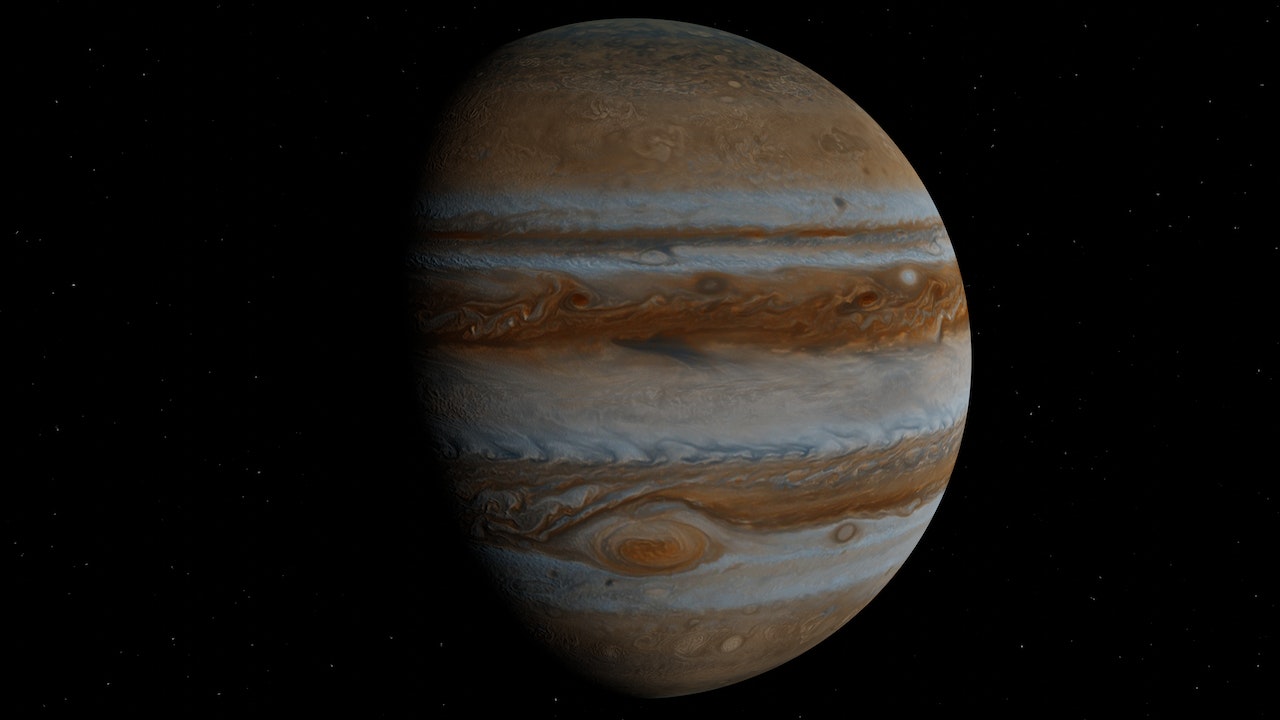
In the realm of celestial mechanics, Jupiter is often referred to as the “vacuum cleaner” of the solar system. Its massive gravitational pull protects the inner planets, including Earth, by intercepting or diverting stray asteroids and comets that might otherwise cause catastrophic extinction events. In the world of global technology, we have our own “Jupiters”—those massive, often unseen foundational infrastructures, cloud providers, and open-source ecosystems that hold the digital universe together.
When we ask, “What would happen if Jupiter disappeared?” in a technological context, we are not looking at the night sky. We are looking at the foundational “Keystone” technologies: the AWS instances, the Linux kernels, the global Content Delivery Networks (CDNs), and the AI foundational models that sustain our modern existence. If these tech giants or foundational layers were to vanish overnight, the resulting “digital asteroid strike” would be swift, merciless, and world-altering.
The Gravity of Infrastructure: Why One Failure Could Topple the Tech Stack
The modern tech ecosystem is built on a principle of abstraction. Developers rarely build from the ground up; instead, they build atop layers of existing services. This creates a “Jupiter effect,” where a few massive entities provide the stability and resources required for millions of smaller “planets” (startups, apps, and enterprise tools) to exist.
The Dependency Problem in Modern Software
In software development, the disappearance of a single foundational element—like a widely used NPM package or a core library—can cause global outages. We saw a microcosm of this with the “Left-pad” incident years ago, where the removal of a tiny bit of code broke thousands of web applications. If a “Jupiter-class” technology, such as the Python programming language or the Docker containerization engine, were to disappear, the software development life cycle would grind to a halt. The dependency trees that power modern AI and web apps are so deep that most organizations don’t even know the full extent of what they rely on until it is gone.
Cloud Dominance and the Single Point of Failure
We live in an era of extreme centralization. Three major cloud providers—Amazon Web Services (AWS), Microsoft Azure, and Google Cloud—hold the vast majority of the world’s data and processing power. If one of these “Jupiters” disappeared, it wouldn’t just mean your favorite streaming service goes down. It would mean the collapse of healthcare databases, the freezing of global logistics chains, and the erasure of digital identities. The “gravity” these providers exert is so strong that migrating away from them in a crisis is effectively impossible; there is simply nowhere else for that volume of data to go.
The Disappearance of the “Data Protector”: Security and Stability Impacts
Jupiter’s gravity doesn’t just hold things together; it acts as a shield. In technology, our “Jupiters” are the massive security frameworks and encryption standards that protect the integrity of the internet. If the organizations and tools that maintain the “Global Trust Root” were to vanish, the digital world would become a lawless frontier.
Cascading Failures in Microservices
Modern tech architecture favors microservices—breaking a large application into hundreds of tiny, interconnected parts. These parts communicate through APIs. If the central “Jupiter” service that manages these connections (like a primary Service Mesh or a dominant Identity Provider like Okta) disappeared, the result would be a “cascading failure.” Without the central authority to verify who is talking to whom, every individual microservice would go into a security lockdown or, worse, become an open door for exploitation.
The Vacuum of Digital Security
Consider the role of open-source maintenance. A significant portion of the world’s digital security rests on the shoulders of a few foundational projects like OpenSSL. If the “Jupiter” of open-source security vanished—meaning the contributors stopped and the codebases were deleted—the internet would lose its “atmosphere.” Within days, zero-day vulnerabilities that were previously shielded by constant patching would be exploited by automated AI bots, leading to a total compromise of global financial and personal data.

Rebuilding the Solar System: Shifting Toward Decentralization
If our “Jupiter” disappeared, the immediate aftermath would be chaos, but the long-term response would be an evolution in how we think about tech resilience. The tech industry is currently in a tug-of-war between the efficiency of centralization and the security of decentralization.
Edge Computing as the New Frontier
The disappearance of a central powerhouse would force a rapid transition to Edge Computing. Currently, we send our data to “Jupiter” (the cloud) to be processed. If Jupiter is gone, we must process data where it is created—on our phones, in our cars, and within local city grids. This shift would prioritize local autonomy over central efficiency. It would require a total rewrite of how apps function, moving away from “Cloud-First” to “Local-First” architectures. While this would be more expensive and complex to manage, it would create a more resilient “asteroid-proof” digital environment.
The Rise of Open-Source Resiliency
The loss of a major proprietary tech brand would likely spark a golden age for decentralized, open-source alternatives. If a proprietary AI giant vanished, the industry would be forced to rally around open-source models like Llama or Mistral, hosting them on sovereign hardware rather than relying on a single company’s API. This “democratization of gravity” would ensure that no single entity could ever again threaten the stability of the entire system by disappearing.
Lessons for the Future: Building a Post-Jupiter Architecture
The hypothetical disappearance of a major tech pillar serves as a critical thought experiment for CTOs, developers, and digital security experts. We have spent the last decade optimizing for speed and scale, often at the expense of redundancy.
Redundancy vs. Efficiency
In the “Jupiter” model of tech, we prioritize efficiency. Having one giant server farm is cheaper than having a hundred small ones. However, as the saying goes, “Efficiency is the enemy of resilience.” To survive the potential disappearance of a foundational service, enterprises must begin investing in multi-cloud and “cloud-agnostic” strategies. This means building software that can be lifted and shifted between providers with the flip of a switch. It is a more expensive way to build, but it is the only way to survive the “disappearance” of a market leader.
Preparing for the Next Tech Extinction Event
Digital security and tech trends suggest that we are moving toward an era of “Sovereign Tech.” Nations and large corporations are beginning to realize that relying on a “Jupiter” located in a different jurisdiction is a geopolitical risk. We are seeing a trend toward localized data centers, domestic software stacks, and diversified hardware supply chains. The goal is to ensure that even if the “Jupiter” of the Silicon Valley ecosystem were to vanish due to economic, political, or technical collapse, the local “Earths” would have enough gravitational stability to keep spinning.

Conclusion: The Necessity of Balance
If Jupiter disappeared from our solar system, Earth would eventually be bombarded by the very debris Jupiter once cleared. In technology, the disappearance of our foundational giants—the platforms, the frameworks, and the cloud providers—would leave us vulnerable to a vacuum of security and a total loss of functionality.
However, this vulnerability is a choice. By understanding our dependencies and the “gravitational” pull of the tools we use, we can begin to build a more distributed and resilient digital universe. The lesson of Jupiter is not just one of protection, but of balance. We must enjoy the benefits of large-scale tech infrastructure while ensuring that our digital lives do not orbit so closely that we are dragged down if that giant ever fades away. Resilience in the tech age means being prepared to survive in a world without “Jupiter,” ensuring that the lights stay on and the data stays safe, no matter what happens to the giants of the industry.
aViewFromTheCave is a participant in the Amazon Services LLC Associates Program, an affiliate advertising program designed to provide a means for sites to earn advertising fees by advertising and linking to Amazon.com. Amazon, the Amazon logo, AmazonSupply, and the AmazonSupply logo are trademarks of Amazon.com, Inc. or its affiliates. As an Amazon Associate we earn affiliate commissions from qualifying purchases.