
The landmark Supreme Court case Yick Wo v. Hopkins (1886) is often cited in discussions of equal protection under the law, fundamentally challenging discriminatory practices cloaked in seemingly neutral legislation. While its legal and constitutional significance is undeniable, its core focus, when viewed through the lens of finance, was the protection of an individual’s fundamental right to earn a living, operate a business, and accumulate wealth without arbitrary or discriminatory state interference. At its heart, Yick Wo was a powerful assertion of economic justice, demonstrating how regulatory environments can either foster or obstruct entrepreneurship and financial stability, especially for marginalized communities. This case underscored the critical link between legal rights and economic opportunity, setting a precedent that continues to resonate in modern business finance and discussions about inclusive capitalism.

The Discriminatory Ordinance: A Barrier to Earning a Livelihood
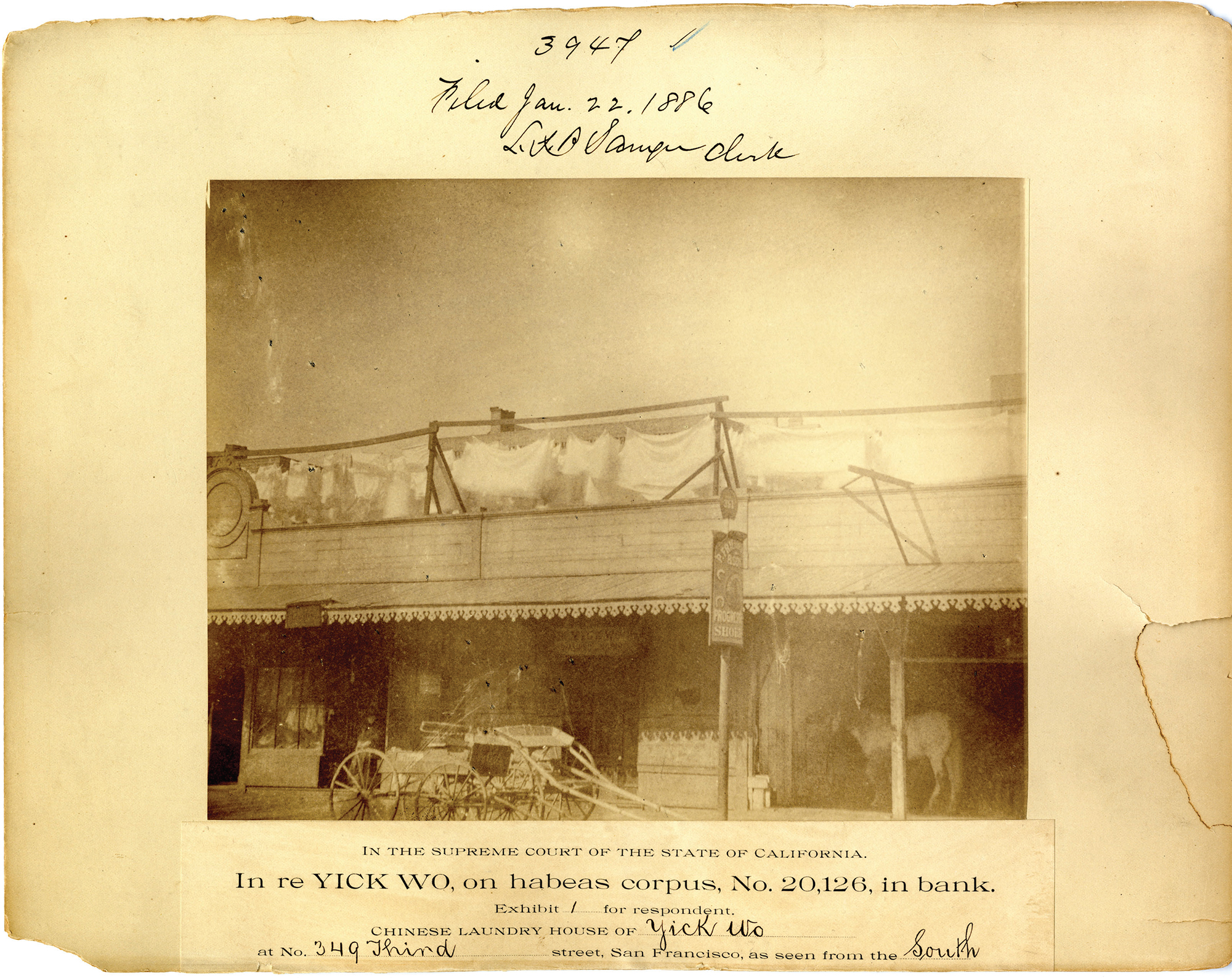
At the core of the Yick Wo case was a seemingly innocuous San Francisco ordinance that required all laundries operating in wooden buildings to obtain a permit from the city’s Board of Supervisors. On the surface, this regulation might appear to be a legitimate public safety measure, designed to prevent fires. However, its application revealed a clear and systematic pattern of discrimination that directly impacted the financial viability and very existence of numerous businesses.
The Laundry Business Landscape and Immigrant Entrepreneurship
In the late 19th century, laundry services were a burgeoning industry, particularly in rapidly growing cities like San Francisco. Chinese immigrants, facing significant social and economic barriers, often found entrepreneurship in the laundry sector to be one of the few viable avenues for economic independence. They invested their meager savings, countless hours of labor, and entrepreneurial spirit into establishing and operating these businesses, which served as essential sources of income for their families and communities. These laundries were not just places of work; they were crucial economic lifelines, representing a significant portion of the capital and labor invested by the Chinese immigrant community. Their success, however, also made them targets for nativist sentiment and economic protectionism from established businesses and segments of the white population.
Permit Denials: Targeting Specific Business Owners
The ordinance itself did not explicitly target Chinese immigrants. However, its enforcement painted a starkly different picture. The Board of Supervisors denied permits to virtually all Chinese laundry owners operating in wooden buildings – approximately 200 individuals, including Yick Wo – while granting permits to nearly all non-Chinese laundry owners operating under similar conditions. Specifically, 80 non-Chinese applicants received permits, while only one non-Chinese applicant was denied. This disparity was egregious and intentional. The effect was immediate and devastating: without a permit, these Chinese-owned businesses were deemed illegal, effectively stripping their owners of their ability to legally earn an income, serve their customers, and recoup their investments. This was not merely a bureaucratic hurdle; it was a deliberate economic blockade designed to push an entire segment of entrepreneurs out of the market.
The Financial Strain of Regulatory Discrimination
The financial implications for the affected Chinese laundry owners were catastrophic. They faced the immediate loss of their primary income source, threatening their personal financial stability and the livelihoods of their families. Beyond the direct loss of revenue, they also incurred sunk costs from their initial investments in equipment, property leases, and operational setup. The denial of permits meant these assets became functionally worthless for their intended purpose. Furthermore, those who chose to defy the ordinance and continue operating faced fines and imprisonment, adding legal costs and personal hardship to their financial woes. This regulatory discrimination created an uneven playing field, effectively confiscating the economic opportunities of one group while preserving them for another, all under the guise of public safety. It demonstrated how seemingly neutral regulations, when applied with discriminatory intent, can weaponize government power to destroy businesses and impede financial progress.
Legal Challenge and the Equal Protection Clause: Ensuring Fair Economic Play
Faced with the destruction of their businesses and livelihoods, Yick Wo and other Chinese laundry owners pursued legal recourse. Their challenge was a test of whether the U.S. Constitution truly guaranteed economic opportunity for all, regardless of race or national origin, or if it could be circumvented by clever legislative drafting. The heart of their argument rested on the newly adopted Fourteenth Amendment.
The Fourteenth Amendment and Business Rights
Ratified in 1868, the Fourteenth Amendment was primarily intended to secure rights for formerly enslaved people. Its Equal Protection Clause states, “nor shall any State deprive any person of life, liberty, or property, without due process of law; nor deny to any person within its jurisdiction the equal protection of the laws.” While “property” and “liberty” often evoke tangible assets or freedom from incarceration, they also implicitly encompass the right to pursue lawful callings, engage in contracts, and operate businesses – in essence, the freedom to earn money and build financial security. Yick Wo’s case asserted that the discriminatory enforcement of the San Francisco ordinance violated this fundamental right, treating Chinese business owners differently and unjustly from their non-Chinese counterparts. They argued that the right to operate a business was a form of property and liberty, protected by the Constitution from arbitrary state action.
Beyond Face-Value Neutrality: Uncovering Discriminatory Intent
The brilliance of the Yick Wo ruling lay in its willingness to look beyond the literal text of the ordinance. The Supreme Court acknowledged that the law itself, on its face, did not mention race or national origin. However, the Court meticulously examined the administration of the law. Justice Matthews, writing for the majority, famously stated that “Though the law itself be fair on its face and impartial in appearance, yet, if it is applied and administered by public authority with an evil eye and an unequal hand, so as practically to make unjust and illegal discriminations between persons in similar circumstances, material to their rights, the denial of equal justice is still within the prohibition of the Constitution.” This legal principle – that discriminatory effect can prove discriminatory intent even when the law is facially neutral – was revolutionary. It meant that governments could not use neutral-sounding regulations to achieve discriminatory economic outcomes. For business owners, it provided a critical defense against subtle forms of economic sabotage and unfair competition orchestrated by state authorities.
The Supreme Court’s Stance on Equal Economic Opportunity
The Supreme Court’s unanimous decision was a resounding affirmation that the Equal Protection Clause applies to all persons, not just citizens, and that it protects against arbitrary and discriminatory state actions that undermine economic liberty. The Court explicitly recognized that the right to pursue a lawful occupation and operate a business is a fundamental right that States cannot capriciously deny. By ruling in favor of Yick Wo, the Court not only invalidated the discriminatory application of the San Francisco ordinance but also sent a powerful message: governments cannot use their regulatory powers to create economic barriers for specific groups, especially when those barriers are rooted in prejudice. This decision was a vital step in ensuring that the playing field for business and financial endeavor remained, at least theoretically, level for everyone within a state’s jurisdiction, regardless of their background.
The Financial Ramifications of the Ruling: A Precedent for Business Equity
The Supreme Court’s decision in Yick Wo v. Hopkins had immediate and profound financial consequences for the Chinese laundry owners involved, and it laid the groundwork for future protections of economic equality for marginalized groups. It moved the needle on what “equal protection” truly meant for those striving to earn a living and build financial security.
Restoring Business Operations and Income for Yick Wo

For Yick Wo and the other Chinese laundry owners, the ruling meant an immediate reversal of their economic predicament. The San Francisco authorities were compelled to release those imprisoned for operating without permits and to cease their discriminatory practices. This allowed hundreds of businesses to resume operations legally, restoring their primary source of income. It meant families could once again provide for themselves, repay debts, and begin to rebuild any lost capital. The financial capital tied up in their businesses was reactivated, allowing for continued investment and growth. This was a direct, tangible financial victory, demonstrating how legal safeguards can directly translate into economic survival and opportunity for small businesses facing unjust regulation. The ability to generate income and operate legally restored their financial agency and capacity for wealth accumulation.
Deterring Future Economic Discrimination
Beyond the immediate relief, Yick Wo served as a powerful deterrent against similar forms of economic discrimination. Local and state governments, now aware that their regulatory practices could be scrutinized for discriminatory intent and effect, became more cautious. The ruling signaled that attempts to use ostensibly neutral laws to target specific ethnic or racial groups for economic disadvantage would likely fail constitutional muster. This made it more difficult for established business interests or prejudiced segments of the population to use governmental power as a tool for unfair competition or to suppress the economic rise of minority groups. In the context of business finance, it meant a greater degree of predictability and fairness in the regulatory environment, which is crucial for long-term investment and financial planning by entrepreneurs.
The Long-Term Impact on Minority-Owned Businesses
The Yick Wo precedent has had a lasting impact on protecting minority-owned businesses and ensuring a more equitable landscape for entrepreneurship. While discrimination certainly did not disappear overnight, the case established a critical legal tool for challenging arbitrary barriers to entry and operation. It reinforced the idea that access to economic markets and the ability to operate a business are fundamental rights tied to “liberty” and “property.” This principle has been invoked in subsequent civil rights cases aimed at dismantling discriminatory practices that hinder the financial progress and wealth creation of various minority groups. It paved the way for future legislation and judicial interpretations that sought to level the playing field, allowing a wider array of individuals to pursue economic opportunities and contribute to the overall financial health of the nation.
Yick Wo’s Legacy in Modern Business Finance and Regulatory Environments
The principles articulated in Yick Wo v. Hopkins remain highly relevant today, particularly in discussions about small business finance, regulatory burdens, and the pursuit of economic equity. Its legacy extends to how we understand the role of government in fostering or hindering inclusive economic growth.
Protecting Small Businesses from Arbitrary Regulations
In today’s complex regulatory landscape, small businesses and startups often face significant hurdles. While legitimate regulations are necessary, Yick Wo reminds us that these regulations must be applied fairly and without discriminatory intent. Modern examples might include zoning laws, licensing requirements, or even access to capital programs that, while facially neutral, could be administered in ways that disproportionately disadvantage certain groups. For instance, if a city’s permit process for food trucks disproportionately favors established, well-connected operators over new, immigrant-owned ventures, the spirit of Yick Wo would be directly challenged. The case emphasizes that true economic opportunity requires a regulatory environment free from arbitrary barriers that stifle innovation and entrepreneurship.
Promoting Inclusivity in Entrepreneurship and Wealth Creation
The case is a foundational pillar for promoting inclusivity in entrepreneurship. By safeguarding the right to operate a business, it supports the idea that anyone, regardless of background, should have the chance to build a livelihood and create wealth. This is crucial for addressing systemic disparities in financial well-being. When regulations or policies create unfair advantages or disadvantages, they directly impact who can start a business, who can secure financing, and who can ultimately succeed financially. Yick Wo argues for an economic system where access to markets and opportunities is based on merit and effort, not on prejudice or arbitrary governmental action, thereby contributing to broader societal wealth creation and reducing financial inequality.
Ongoing Challenges: Disparities in Access to Capital and Markets
Despite the precedent, challenges persist. Disparities in access to capital, discriminatory lending practices, and subtle forms of regulatory bias continue to affect minority and marginalized entrepreneurs. For example, studies still show that minority-owned businesses face greater difficulty securing loans, often receiving smaller amounts with higher interest rates, which directly impacts their growth potential and financial stability. These modern forms of “unequal hands” in business finance, while perhaps less overt than the San Francisco laundry ordinance, nevertheless produce similar discriminatory economic effects. The legacy of Yick Wo compels us to scrutinize such disparities and advocate for financial systems and regulatory frameworks that genuinely promote equal opportunity for all aspiring business owners.
Lessons for Entrepreneurs and Policy Makers in the Pursuit of Financial Justice
The lessons from Yick Wo v. Hopkins are timeless, offering vital insights for both entrepreneurs navigating the business landscape and policymakers crafting the rules that govern it. Its central message—that economic opportunity must be protected from discriminatory abuse—remains a cornerstone of financial justice.
Advocating for Fair Business Practices
For entrepreneurs, Yick Wo is a powerful reminder to be vigilant against discriminatory practices, whether from competitors or governmental bodies. It underscores the importance of understanding one’s rights and being prepared to challenge unfair regulations or their biased enforcement. Collective action, as demonstrated by Yick Wo and his fellow laundry owners, can be a potent force for change. Joining industry associations, advocating for transparent regulatory processes, and supporting organizations that fight for economic equity are all ways in which entrepreneurs can help ensure a level playing field for everyone. This advocacy directly protects their own financial interests and those of their peers.
Understanding Your Rights as a Business Owner
A crucial takeaway from Yick Wo for any business owner, particularly those from historically marginalized groups, is the importance of understanding the legal protections afforded to them. Knowing that the Equal Protection Clause can challenge not just overtly racist laws but also those administered with discriminatory intent provides a crucial legal shield. This knowledge empowers entrepreneurs to identify when they are being unfairly targeted and to seek legal counsel to protect their investments and livelihoods. The right to operate a business is intrinsically linked to the right to property and the pursuit of economic well-being, and these are fundamental rights worth defending.
The Role of Law in Shaping Economic Landscapes
For policymakers, Yick Wo serves as a stark warning about the potential for regulatory power to be misused. It emphasizes the responsibility of government to create and maintain an economic environment that fosters broad-based opportunity, rather than one that erects arbitrary barriers. This means designing clear, transparent, and equitably applied regulations, and establishing robust oversight mechanisms to prevent discriminatory enforcement. By ensuring that economic policies and regulatory frameworks are truly inclusive and fair, policymakers can unlock the full entrepreneurial potential of all citizens, leading to more robust economies and more widespread financial stability. The pursuit of financial justice, as embodied by Yick Wo v. Hopkins, is not merely about righting past wrongs, but about building an equitable and prosperous future for all.
aViewFromTheCave is a participant in the Amazon Services LLC Associates Program, an affiliate advertising program designed to provide a means for sites to earn advertising fees by advertising and linking to Amazon.com. Amazon, the Amazon logo, AmazonSupply, and the AmazonSupply logo are trademarks of Amazon.com, Inc. or its affiliates. As an Amazon Associate we earn affiliate commissions from qualifying purchases.