
In the grand tapestry of scientific inquiry, some questions serve as fundamental keystones, unlocking deeper understanding and paving the way for revolutionary advancements. “What value of l is represented by an s orbital?” is precisely one such question. While seemingly an abstract query from the realm of quantum chemistry, its answer holds profound implications for the very fabric of modern technology, particularly in fields like quantum computing, advanced materials science, and the burgeoning landscape of quantum-inspired AI. To truly grasp the future of innovation, one must first understand the foundational quantum mechanics that govern the universe at its most minute scales. This exploration delves into the precise meaning of ‘l’ and ‘s’ orbitals, and critically, how this foundational knowledge is indispensable for architects of tomorrow’s technological marvels.
Decoding the Quantum Realm: The Azimuthal Quantum Number (l)
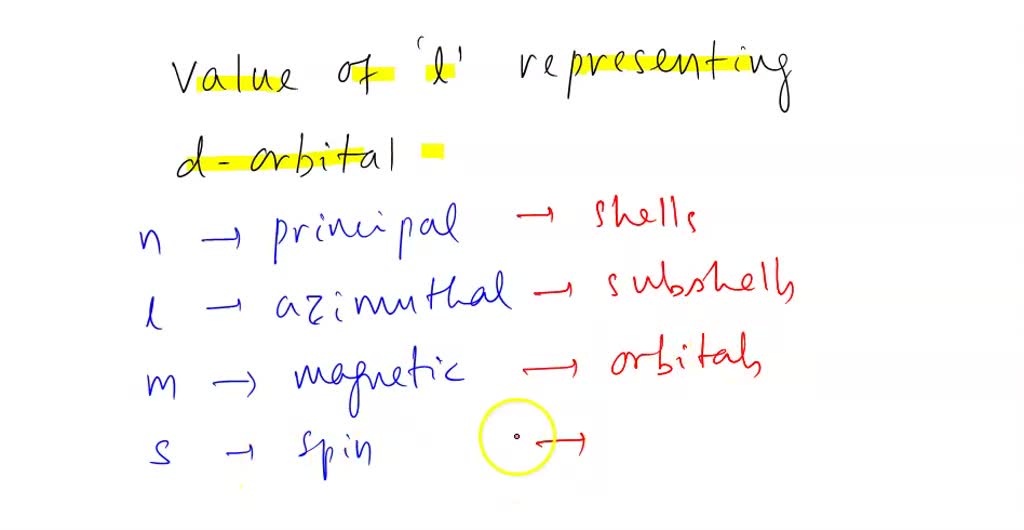
At the heart of quantum mechanics lies a set of mathematical rules that describe the probabilistic behavior of electrons within an atom. Unlike the classical planetary model, electrons don’t orbit the nucleus in fixed paths; instead, they occupy specific regions of space called orbitals. To characterize these orbitals and the electrons within them, scientists use a set of four quantum numbers.
The Four Quantum Numbers: A Blueprint for Electron Behavior
Each electron in an atom is uniquely defined by four quantum numbers, which are akin to an electron’s “address” within an atom.
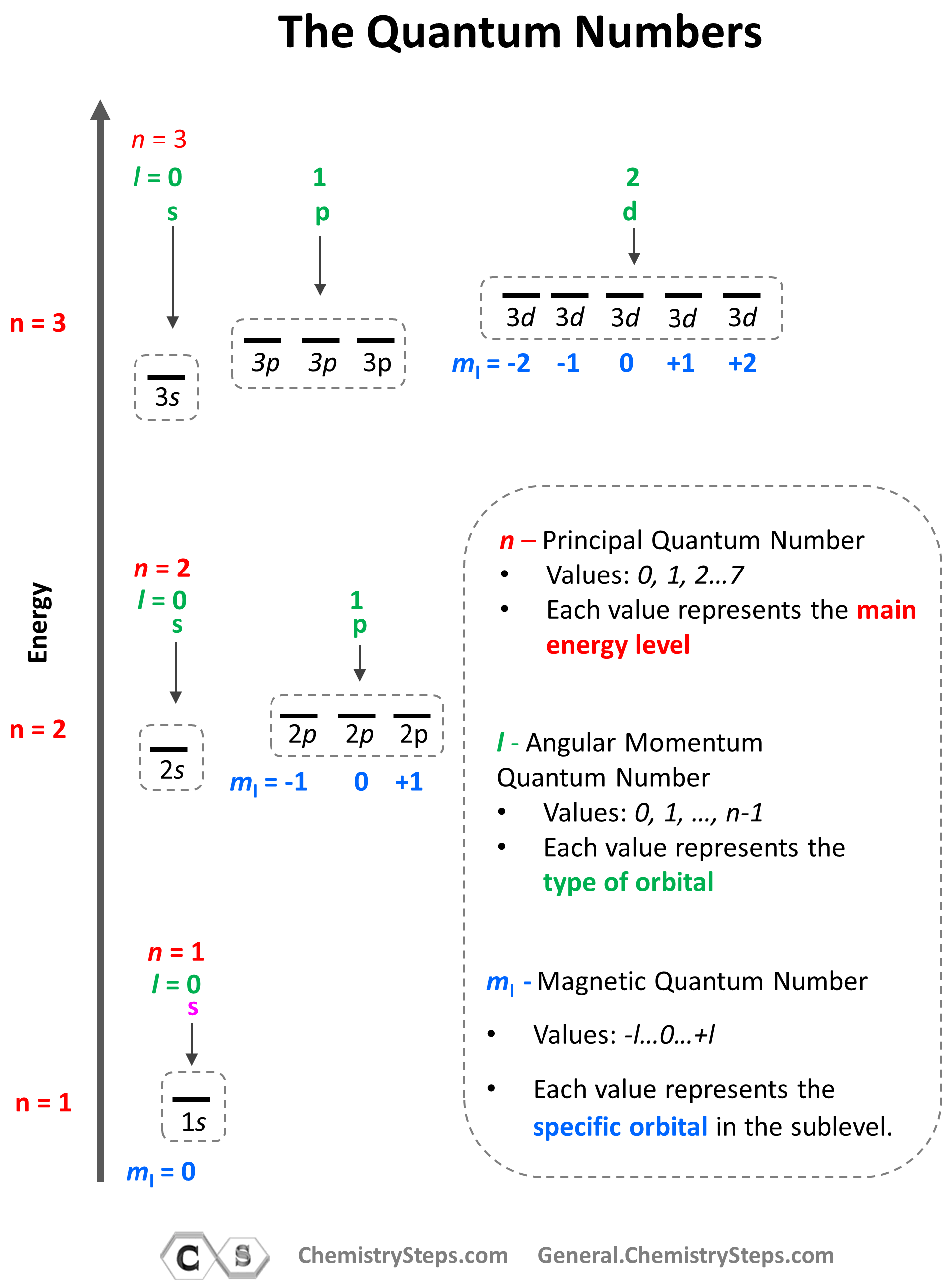
- Principal Quantum Number (n): This number determines the electron’s main energy level and, consequently, its average distance from the nucleus. Higher ‘n’ values mean higher energy and larger orbitals. (n = 1, 2, 3, …)
- Azimuthal (Angular Momentum) Quantum Number (l): This is the focus of our inquiry. It describes the shape of an orbital and the angular momentum of the electron. (l = 0, 1, 2, …, n-1)
- Magnetic Quantum Number (ml): This number specifies the orientation of the orbital in space. (ml = -l, -l+1, …, 0, …, l-1, l)
- Spin Quantum Number (m_s): This describes the intrinsic angular momentum, or “spin,” of an electron, which can be thought of as either “spin up” (+1/2) or “spin down” (-1/2).
Together, these numbers provide a complete quantum mechanical description of an electron’s state in an atom. For tech innovators, understanding how these numbers dictate electron behavior is crucial for manipulating electrons in novel ways, from designing superconductors to engineering new semiconductors.
Unpacking ‘l’: Shape and Angular Momentum
The azimuthal quantum number, ‘l’, is particularly insightful because it directly dictates the shape of an electron’s orbital and its angular momentum.
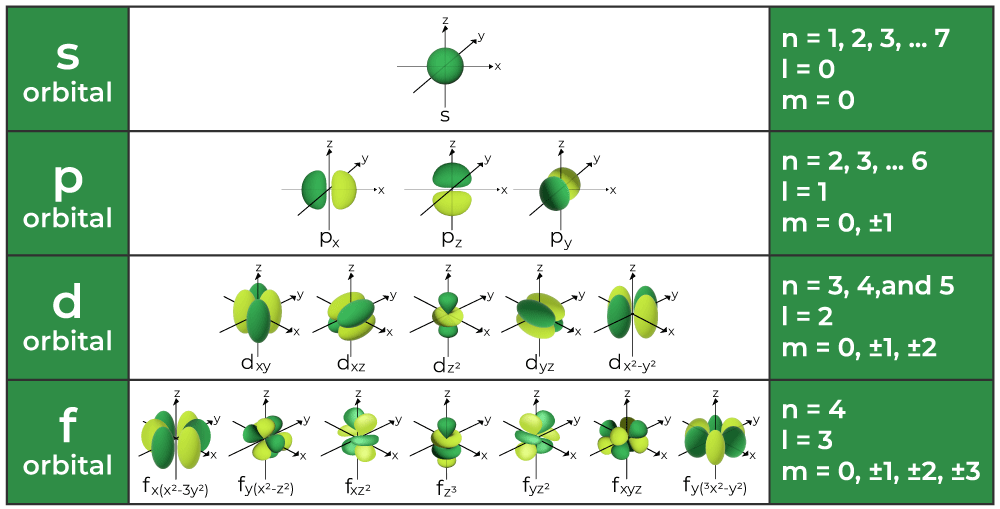
- l = 0: This value corresponds to an s orbital.
- l = 1: This value corresponds to a p orbital.
- l = 2: This value corresponds to a d orbital.
- l = 3: This value corresponds to an f orbital.
And so on, following the alphabetical order. Each ‘l’ value defines a distinct shape, which in turn influences how electrons interact with each other, with atomic nuclei, and with external fields. This fundamental understanding is paramount in materials science, where tailoring the shape and orientation of electron clouds can lead to materials with desired optical, electrical, or magnetic properties. For instance, the specific shapes of d-orbitals are key to understanding the catalytic properties of transition metals, a cornerstone for chemical engineering and industrial processes.
The s-Orbital: A Spherical Foundation for Quantum Tech
Now, to directly answer the central question: For an s orbital, the value of ‘l’ is always 0. This is not just a theoretical curiosity; it signifies a unique electronic configuration with profound implications for technology.
Visualizing the s-Orbital: Simplicity and Symmetry
An s orbital (derived from “sharp” lines in spectroscopy) is the simplest and most symmetrical of all orbital types. With l=0, an s orbital is perfectly spherical, centered around the atomic nucleus. This means that the electron density within an s orbital is uniformly distributed in all directions from the nucleus.
- The 1s orbital, for example, is the lowest energy s orbital, found closest to the nucleus in elements like Hydrogen and Helium.
- As ‘n’ increases (2s, 3s, etc.), the s orbitals become larger and contain radial nodes, but they retain their fundamental spherical symmetry.
This spherical symmetry is not merely an aesthetic detail; it dictates how s-orbital electrons participate in bonding and how they respond to external electromagnetic fields. Its predictability and simplicity make it a foundational element in theoretical models that underpin material design and quantum computation.
Why ‘l=0’ Matters: From Basic Chemistry to Qubit Design
The fact that ‘l=0’ for an s orbital means that electrons in s orbitals possess no angular momentum with respect to the nucleus. This characteristic makes them uniquely stable and predictable in certain contexts, which is incredibly valuable in technological applications:
- Atomic Clocks: The transitions between s-orbitals are often highly stable and less susceptible to external magnetic fields due to their lack of angular momentum. This stability is leveraged in ultra-precise atomic clocks, critical for GPS systems, global communication networks, and fundamental scientific research.
- Quantum Dots: In nanotechnology, quantum dots are semiconductor nanocrystals whose electronic properties are dictated by their size and shape. The understanding of electron confinement within these structures, often involving s-like electron states, is crucial for developing advanced displays, biological imaging, and next-generation solar cells.
- Qubit Design (Quantum Computing): The stability and distinct energy levels associated with s orbitals make them ideal candidates for representing quantum bits, or qubits. In many quantum computing architectures, the “spin” state of an electron (m_s) within an s orbital, or energy transitions involving s orbitals, can be used to encode information (0 or 1, or a superposition of both). The simplicity of the s orbital’s electron density distribution reduces complex interactions, making it easier to control and maintain quantum coherence – a paramount challenge in quantum computing. Researchers are actively exploring systems where electron spins in s-type orbitals of isolated atoms or defects in materials can serve as robust qubits.
Beyond the Sphere: How Different Orbitals Enable Advanced Technologies
While the s orbital (l=0) provides a spherical foundation, the complexity and diversity of p, d, and f orbitals unlock a much broader spectrum of material properties and quantum phenomena critical for technological innovation.
p, d, and f Orbitals: Expanding the Quantum Toolkit
- p Orbitals (l=1): These are dumbbell-shaped and exist as three degenerate orbitals (px, py, p_z) oriented along the Cartesian axes. Their directional nature is crucial for forming directional covalent bonds, which dictates the rigid structures of many semiconductors and organic compounds. For example, the sp2 hybridization of carbon, involving one s and two p orbitals, forms the basis for graphene, a material with extraordinary electrical and mechanical properties, promising new forms of electronics.
- d Orbitals (l=2): There are five d orbitals, with more complex, multi-lobed shapes. These are prominent in transition metals and are responsible for their vibrant colors, magnetic properties, and catalytic activities. Understanding d-orbital interactions is vital for designing high-performance catalysts for industrial chemical reactions, creating advanced magnetic storage devices, and engineering new types of sensors.
- f Orbitals (l=3): These seven orbitals possess even more intricate shapes and are found in lanthanides and actinides. Their complexity contributes to the unique spectral and magnetic properties of these elements, which are used in lasers, medical imaging contrast agents, and advanced permanent magnets crucial for electric vehicles and wind turbines.
Hybridization and Molecular Orbitals: Engineering Novel Materials
The concept extends beyond individual atomic orbitals. In molecules, atomic orbitals combine to form molecular orbitals, which span across multiple atoms. This process, known as hybridization, explains the geometry and bonding in virtually all chemical compounds, including those essential for technology.
For example, silicon, the backbone of modern electronics, forms four strong bonds through sp3 hybridization, leading to its diamond-like crystal structure and semiconducting properties. The precise manipulation of these hybridized orbitals—their energies, shapes, and overlaps—allows materials scientists to:
- Design novel semiconductors with tunable band gaps for efficient optoelectronics.
- Develop advanced polymers with tailored strength, flexibility, and conductivity for flexible electronics and bio-compatible implants.
- Engineer catalysts with specific active sites for higher efficiency and selectivity in chemical synthesis, reducing waste and energy consumption.
- Create metamaterials whose properties (e.g., negative refractive index) are not found in nature, by precisely arranging nanostructures derived from understanding orbital interactions.
Quantum Mechanics in Action: Fueling Tomorrow’s Tech
The journey from understanding the value of ‘l’ for an s orbital to manipulating quantum states for technological gain is a testament to humanity’s scientific prowess. This foundational knowledge is not merely academic; it is the bedrock upon which the next generation of technological breakthroughs will be built.
Quantum Computing: Leveraging Electron States for Computation
Quantum computing stands as one of the most promising frontiers directly stemming from quantum mechanics. Unlike classical bits that are either 0 or 1, qubits can exist in a superposition of both states simultaneously, and can be entangled, leading to exponentially greater computational power.
- Orbital-based Qubits: The distinct energy levels and spin states of electrons within various orbitals (including s orbitals) are prime candidates for encoding qubits. For instance, electron spins in donor atoms embedded in silicon, or trapped ions whose outer electrons occupy specific orbitals, are leading architectures for quantum computers. The ability to precisely control the transitions between these orbital energy levels and spin states is key to performing quantum operations.
- Controlling Quantum Coherence: The spherical symmetry of s orbitals and their relatively simple interaction profiles can contribute to longer coherence times for qubits, meaning they can maintain their quantum states for longer periods—a critical factor for building stable and error-resistant quantum computers.
Advanced Materials Science: Tailoring Properties at the Atomic Level
The precise knowledge of quantum numbers and orbital shapes empowers materials scientists to design and synthesize materials with unprecedented control over their properties:
- High-Temperature Superconductors: Understanding the complex orbital interactions in exotic materials, particularly involving d and f electrons, is essential for unlocking the secrets of high-temperature superconductivity, which could revolutionize energy transmission and storage.
- Efficient Solar Cells: Optimizing the electronic band structure of photovoltaic materials, often by engineering their molecular orbitals and crystal structures, leads to more efficient conversion of sunlight into electricity.
- Spintronics: This emerging field seeks to utilize the electron’s spin (m_s) in addition to its charge. Understanding the interplay between orbital angular momentum (‘l’) and spin angular momentum is crucial for developing spin-based memory devices and logic gates that consume less power and offer higher processing speeds.
The Bridge to Future AI: Quantum-Inspired Algorithms and Beyond
The influence of quantum mechanics extends even to the realm of artificial intelligence. While full-scale quantum AI is still nascent, the principles derived from quantum phenomena are inspiring new classical algorithms:
- Quantum-Inspired Optimization: Algorithms that leverage quantum principles like superposition and entanglement, even when run on classical computers, have shown promise in solving complex optimization problems crucial for logistics, financial modeling, and drug discovery.
- Neural Networks: Research is exploring how quantum states and interactions could be mapped onto neural network architectures, potentially leading to more powerful and efficient AI models capable of handling vast datasets and complex pattern recognition with higher fidelity.
In conclusion, the seemingly simple question “what value of l is represented by an s orbital?” unlocks a universe of understanding that is foundational to the most cutting-edge technological advancements. From the pristine symmetry of an s orbital dictating qubit design to the complex geometries of d and f orbitals enabling revolutionary materials, quantum mechanics is not just a theoretical construct; it is the operational manual for building the future of technology. As we push the boundaries of innovation, a deep appreciation for these fundamental quantum rules will continue to be an invaluable asset for scientists and engineers alike.
aViewFromTheCave is a participant in the Amazon Services LLC Associates Program, an affiliate advertising program designed to provide a means for sites to earn advertising fees by advertising and linking to Amazon.com. Amazon, the Amazon logo, AmazonSupply, and the AmazonSupply logo are trademarks of Amazon.com, Inc. or its affiliates. As an Amazon Associate we earn affiliate commissions from qualifying purchases.