
In the relentless march of technological innovation, the properties of materials stand as fundamental pillars, dictating what is possible and what remains in the realm of theory. Among these properties, melting point holds a peculiar and often underappreciated significance, especially for metals. While robust, high-temperature alloys capture headlines for their role in aerospace and heavy industry, it is often their counterparts – metals with exceptionally low melting points – that quietly enable the intricate, precise, and highly integrated world of modern electronics, advanced manufacturing, and emerging technologies. These “soft” metals and their alloys are the unseen heroes, crucial for everything from the micro-soldering of integrated circuits to the sophisticated thermal management systems that keep our most powerful processors cool. Understanding which metals exhibit this characteristic, and more importantly, how their unique properties are harnessed, provides a fascinating glimpse into the very fabric of our tech-driven society. This article delves into these essential low-melting point metals and explores their indispensable roles across the technology landscape.
The Unseen Heroes: Why Low Melting Points Matter in Technology
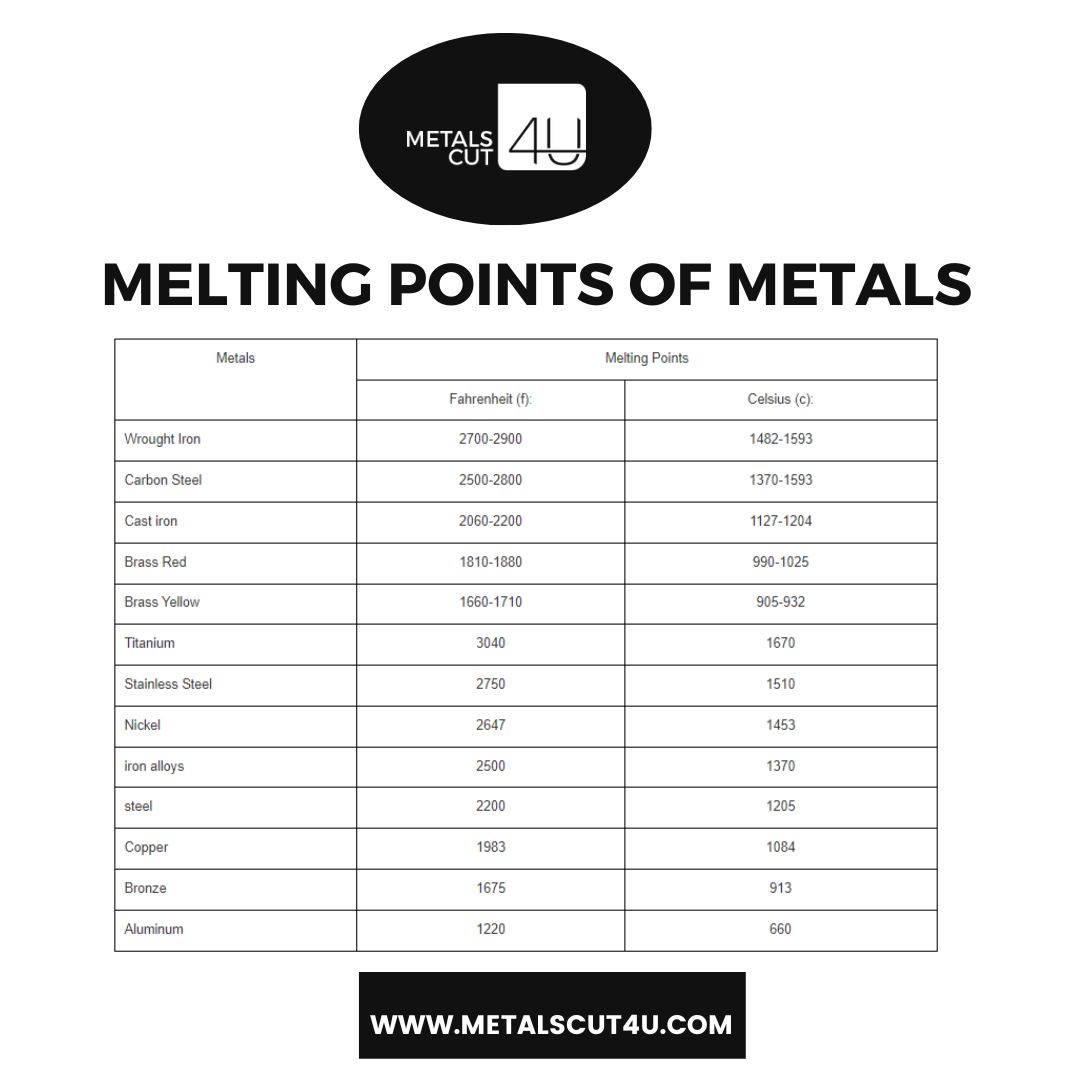
The ability of a metal to transition from solid to liquid at relatively low temperatures might seem counterintuitive for applications requiring durability, but it is precisely this characteristic that unlocks a vast array of technological possibilities. From ensuring the integrity of microscopic connections to managing extreme heat, low-melting point metals provide solutions where conventional materials fall short. Their utility in tech stems from several key advantages, including precision assembly, thermal regulation, and the ability to create complex, multi-material systems without compromising sensitive components.
Precision Assembly and Miniaturization: The Role of Solders
The intricate dance of electronics manufacturing, particularly in the era of miniaturization, relies heavily on the controlled application of heat. Soldering, the process of joining metallic surfaces by melting a filler metal (solder) into the joint, is a prime example where low melting points are not just beneficial but absolutely critical. Traditional solders, predominantly tin-lead alloys, boasted melting points around 183°C, allowing for effective bonding without damaging the delicate silicon chips, printed circuit boards, and other components, which can be sensitive to higher temperatures.
With the advent of environmental regulations, particularly the Restriction of Hazardous Substances (RoHS) directive, the electronics industry shifted towards lead-free solders. These newer alloys, often based on tin with additions of silver, copper, and bismuth, typically have slightly higher melting points (e.g., Sn-Ag-Cu alloys melt around 217-227°C) but still remain within a workable range for mass production. Even lower melting point solders are continually being developed for specialized applications, leveraging metals like indium and bismuth to create alloys that melt below 150°C. These ultra-low temperature solders are crucial for bonding temperature-sensitive components, enabling step-soldering (where subsequent soldering operations don’t remelt previous joints), and facilitating advanced packaging techniques that demand minimal thermal stress. Without metals capable of precise, low-temperature melting, the dense, multi-layered electronic devices we rely on daily simply wouldn’t be feasible.
Thermal Management: Keeping Electronics Cool
As electronic devices become more powerful and compact, managing the heat they generate is one of the most pressing challenges in tech. Excessive heat degrades performance, shortens lifespan, and can lead to catastrophic failure. This is where certain low-melting point metals, particularly gallium and its alloys, shine as exceptional thermal interface materials (TIMs) and cooling solutions.
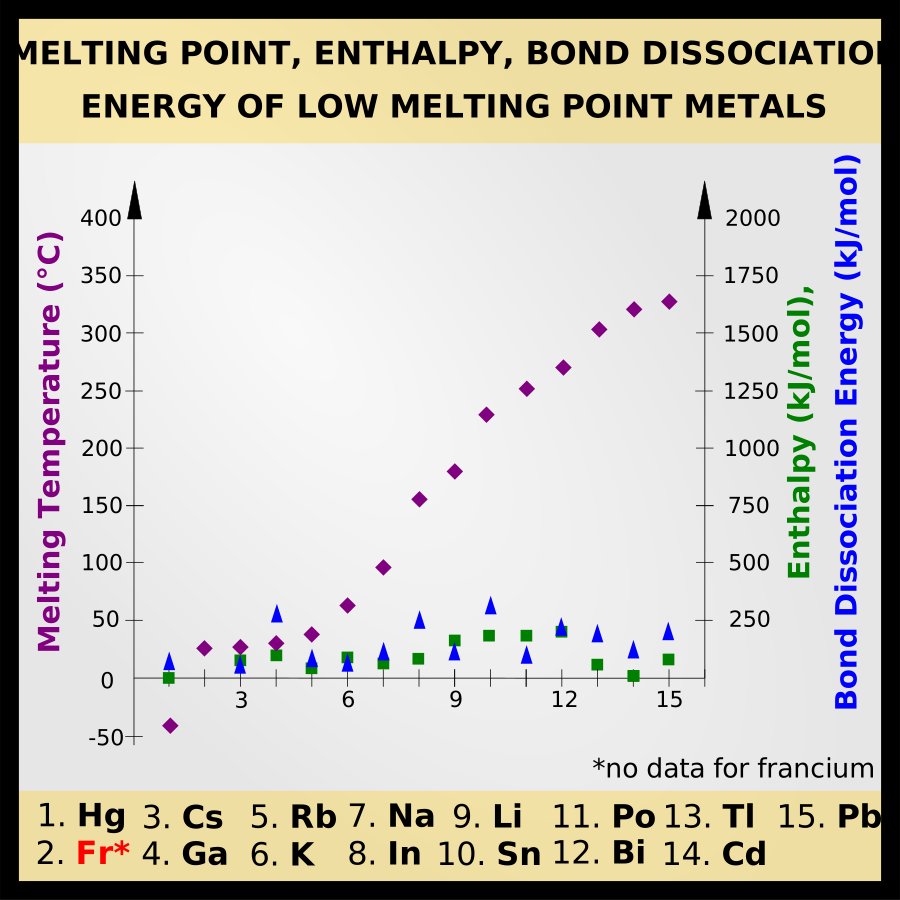
Gallium, with a remarkably low melting point of 29.76°C (just above room temperature), is a prime candidate for liquid metal thermal compounds. Alloys like Galinstan (a eutectic alloy of gallium, indium, and tin) remain liquid at room temperature and boast thermal conductivities far superior to traditional silicon-based thermal greases. These liquid metals are applied between a heat-generating component (like a CPU or GPU) and a heatsink, filling microscopic gaps to maximize heat transfer efficiency. Their fluid nature allows for nearly perfect surface contact, creating an ultra-efficient thermal bridge that drastically improves cooling performance. This capability is vital for high-performance computing, gaming systems, and data centers where every degree of temperature reduction translates into enhanced stability and longevity. Furthermore, research is exploring these liquid metals for phase-change cooling systems and even direct chip cooling, pushing the boundaries of what’s possible in thermal engineering.
Innovating with Eutectic Alloys: Beyond Pure Metals
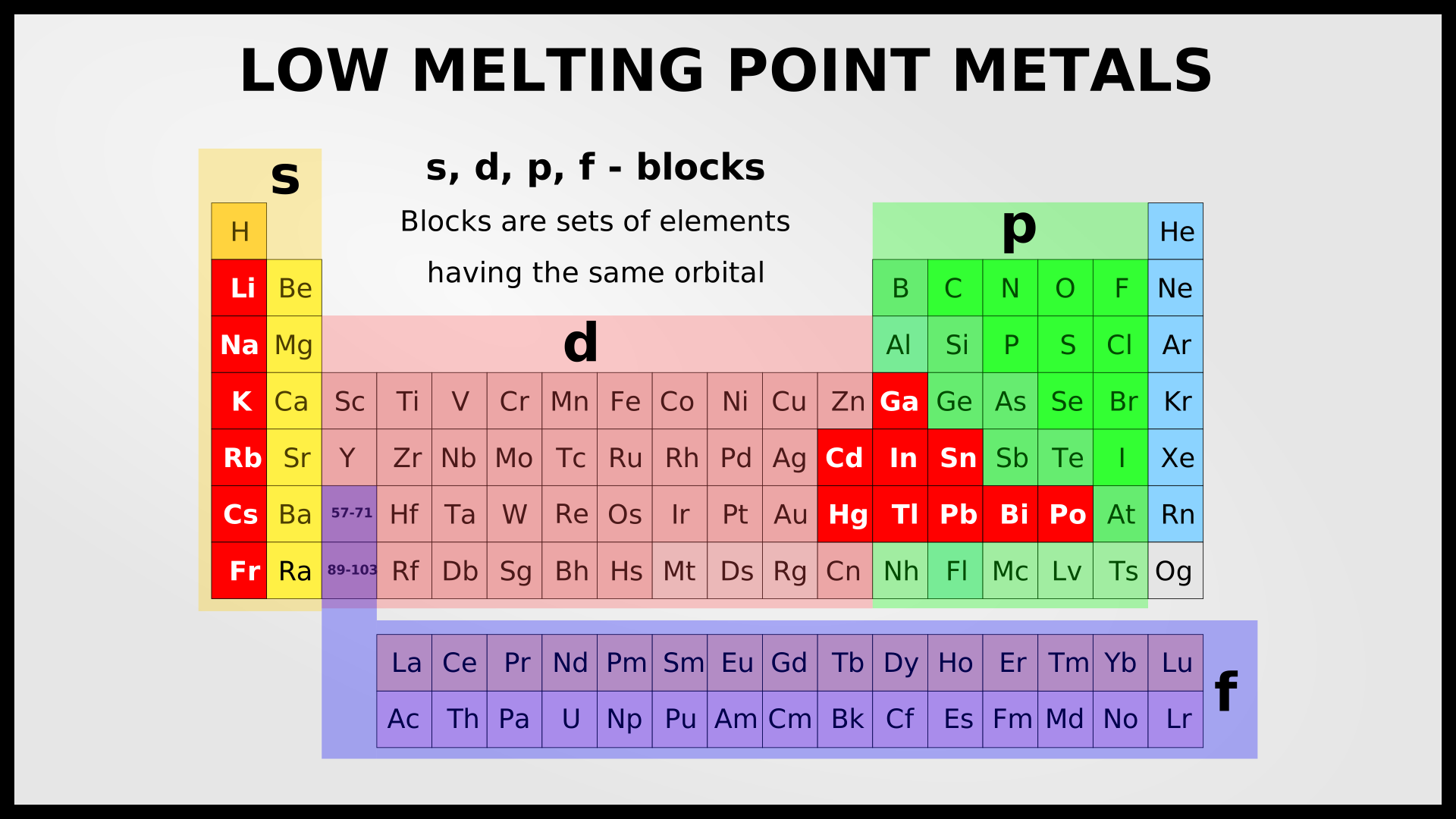
While pure metals like gallium have fascinating low-melting point properties, the true magic often happens when different metals are combined to form alloys. Eutectic alloys, in particular, are engineered to melt at a single, precisely defined temperature that is lower than the melting point of any of their individual constituent metals. This characteristic makes them incredibly versatile and indispensable for numerous technological applications, allowing for tailored thermal responses and unique functional properties.
Tailoring Properties for Specific Applications
Eutectic alloys are masters of thermal customization. By carefully selecting and combining elements like bismuth, tin, lead (historically), cadmium, indium, and gallium, metallurgists can engineer materials with specific melting points to activate or deactivate at precise temperatures. For example, Wood’s metal, a classic eutectic alloy of bismuth, lead, tin, and cadmium, melts at approximately 70°C. Its low melting point and distinct thermal behavior have made it invaluable in various tech applications, especially in safety devices. It’s used in fusible links for automatic fire sprinkler systems, where a rise in ambient temperature melts the alloy, releasing the sprinkler head. Similar alloys are found in thermal fuses within electronic devices, protecting circuits from overcurrent by melting and breaking the connection when temperatures exceed a safe threshold.
Beyond safety, these alloys are critical in specialized manufacturing processes. They can be used as temporary supports or mandrels for forming complex shapes in other materials; once the primary material is set, the low-melting point alloy can be simply melted away, leaving no residue. In some dental and medical applications, specific low-melting point alloys are chosen for their ease of casting and biocompatibility, allowing for the creation of intricate prosthetics or instruments. The ability to precisely tailor melting behavior is a cornerstone of modern material science, enabling functionalities that would be impossible with pure elements alone.
Advanced Manufacturing and 3D Printing
The advent of additive manufacturing, commonly known as 3D printing, has opened new frontiers for materials, and low-melting point alloys are finding their niche in this revolutionary field. While metals like titanium and stainless steel are typically associated with industrial 3D printing, the unique characteristics of low-melting point alloys offer distinct advantages for certain applications.
For example, specialized 3D printing techniques can utilize these alloys for creating complex, customized electronic circuits or components directly onto flexible substrates. Their lower processing temperatures reduce the thermal stress on the underlying material, allowing for integration with heat-sensitive polymers and plastics. This capability is pivotal for prototyping flexible electronics, bespoke sensors, and even intricate microfluidic devices where precise internal structures are critical. Research is also exploring the direct printing of liquid metal structures, particularly using gallium-based alloys, to create self-healing circuits, reconfigurable antennas, or soft robotic components that can change shape or electrical properties in response to external stimuli. The controlled deposition and solidification of these materials at lower temperatures promise to unlock new paradigms in direct-write electronics and smart material fabrication.
Future Frontiers: Low Melting Point Metals in Emerging Technologies
The utility of low-melting point metals extends far beyond traditional electronics and manufacturing. As researchers push the boundaries of materials science, these unique elements and their alloys are poised to play increasingly vital roles in the next generation of technological breakthroughs, from robotics to renewable energy.
Soft Robotics and Actuators
One of the most exciting areas where low-melting point metals are making waves is in soft robotics. Unlike traditional rigid robots, soft robots are designed to be flexible, adaptable, and often bio-inspired, making them ideal for delicate manipulation, exploration in confined spaces, or human-robot interaction. Liquid metals, particularly gallium and its alloys, offer unparalleled possibilities here. Their high electrical conductivity and fluidity at room temperature allow them to function as conductors within stretchable circuits, enabling “soft” electronic components that can deform without breaking.
Furthermore, the phase-change properties of certain low-melting point alloys can be harnessed for actuation. By integrating these metals into soft robotic bodies, researchers can create systems that deform, contract, or expand in response to subtle temperature changes, acting as “muscles” or grippers. The ability to switch between solid and liquid states provides a unique mechanism for shape memory, self-healing capabilities (where a crack can be repaired by melting and reforming the metal), and even programmable stiffness. These advancements could revolutionize fields from medical prosthetics and minimally invasive surgery to exploration robotics and wearable devices.
Renewable Energy and Energy Storage
While high-temperature metals are crucial for concentrated solar power and fusion, low-melting point metals also contribute to the renewable energy landscape, albeit in different capacities. Their excellent thermal conductivity and phase-change characteristics are being explored for advanced energy storage solutions. For instance, specific eutectic alloys can be utilized as phase-change materials (PCMs) for thermal energy storage, absorbing and releasing significant amounts of latent heat as they melt and solidify. Although typically applied in lower-temperature thermal management for buildings, research is ongoing to integrate them into more dynamic energy systems.
Moreover, liquid metal batteries, although often operating at higher temperatures, leverage the principles of low-melting point alloys. These batteries typically use molten metal electrodes (e.g., sodium and antimony, or magnesium and antimony) separated by a molten salt electrolyte. While the operating temperatures are often above room temperature, the inherent fluidity and ability to create multi-phase systems are derived from understanding and manipulating the melting behaviors of these metals. This innovative battery architecture offers potential advantages in scalability, lifespan, and safety for large-scale grid storage.
Wearable Electronics and Biomedical Devices
The demand for flexible, comfortable, and discreet wearable electronics is growing rapidly. Low-melting point metals, especially in their liquid state, are ideal candidates for creating conductive traces and interconnections that can stretch, bend, and conform to the human body without losing functionality. Gallium-based liquid metals can be directly printed onto textile substrates or encapsulated within elastic polymers to form robust and adaptable electronic components for smart clothing, health monitoring patches, and other next-generation wearables.
In the biomedical field, their biocompatibility (for certain alloys) and low processing temperatures open doors for specialized medical implants and diagnostic tools. For example, alloys that melt at body temperature could be engineered for drug delivery systems, releasing therapeutics upon reaching a specific physiological condition. Or, miniature, flexible sensors made with liquid metal components could provide real-time physiological data with minimal invasiveness. The ability to fabricate complex, functional structures at temperatures compatible with biological systems and sensitive materials is a critical advantage.
Challenges and Considerations in Tech Integration
Despite their immense potential and current indispensable roles, the widespread adoption and future development of low-melting point metals in technology face several challenges that require careful consideration.
Toxicity and Environmental Impact
The legacy of lead-based solders highlighted the critical importance of material toxicology. While the industry has largely transitioned to lead-free alternatives, many other low-melting point elements, such as cadmium, can pose environmental and health risks. Researchers are continually striving to develop new alloys that are not only functionally superior but also non-toxic and environmentally benign. Responsible sourcing, recycling infrastructure, and stringent regulatory compliance are paramount to mitigate potential ecological footprints associated with the extraction and disposal of these sometimes rare elements.
Corrosion and Reactivity
Liquid metals, by their very nature, can be highly reactive. Gallium, for instance, readily alloys with many common metals like aluminum, causing embrittlement and structural degradation. This high reactivity poses significant challenges in material selection and packaging for liquid metal applications, such as thermal interface materials or soft robotic components. Engineers must carefully choose compatible encapsulation materials and substrate metals to prevent corrosion and ensure long-term stability and reliability of devices. Protective coatings and advanced passivation techniques are often necessary to safeguard components from corrosive interactions.
Supply Chain and Cost
Many of the key elements in low-melting point alloys, such as indium, gallium, and bismuth, are considered minor metals. Their primary source is often as by-products of mining more abundant metals like zinc, aluminum, and copper. This dependence can lead to volatile pricing, supply chain vulnerabilities, and geopolitical concerns. Ensuring a stable, ethical, and cost-effective supply of these critical materials is a continuous challenge for the tech industry, driving research into more abundant alternatives or advanced recycling methods to recover these valuable elements from electronic waste. The economics of integrating these specialized materials into mass-produced devices must also be carefully balanced against performance benefits.
The Enduring Impact of Low Melting Point Metals on Tech Advancement
From the ubiquitous solder joints in every electronic device to the cutting-edge liquid metal components in experimental robotics, metals with low melting points are undeniably crucial to the technological landscape. They represent a paradox of strength and fluidity, enabling precision, thermal efficiency, and novel functionalities that are simply unattainable with traditional materials. As technology continues its relentless march towards greater miniaturization, higher performance, and more dynamic interactions, the demand for these “unseen heroes” will only intensify. The ongoing innovation in alloying, manufacturing techniques, and understanding their complex behaviors ensures that low-melting point metals will remain at the forefront of engineering new solutions, pushing the boundaries of what is possible and continuing to shape the future of our tech-driven world. Their quiet contributions underscore the profound impact that fundamental material properties have on the most advanced technologies we interact with daily.
aViewFromTheCave is a participant in the Amazon Services LLC Associates Program, an affiliate advertising program designed to provide a means for sites to earn advertising fees by advertising and linking to Amazon.com. Amazon, the Amazon logo, AmazonSupply, and the AmazonSupply logo are trademarks of Amazon.com, Inc. or its affiliates. As an Amazon Associate we earn affiliate commissions from qualifying purchases.