
In the intricate world of technology, efficiency, modularity, and consistency are paramount. Whether you’re an architect drafting a building, a software engineer writing code, or a technical writer compiling a user manual, the ability to manage complex information and interconnected components is crucial. This is where the concept of “xref” comes into play. Short for “cross-reference” or, more specifically in many applications, “external reference,” xref represents a fundamental mechanism that underpins the structured organization and dynamic linkage of data, files, and information across various digital domains. It’s not merely a technical term but a foundational principle enabling scalability, collaboration, and maintainability in countless technological endeavors.
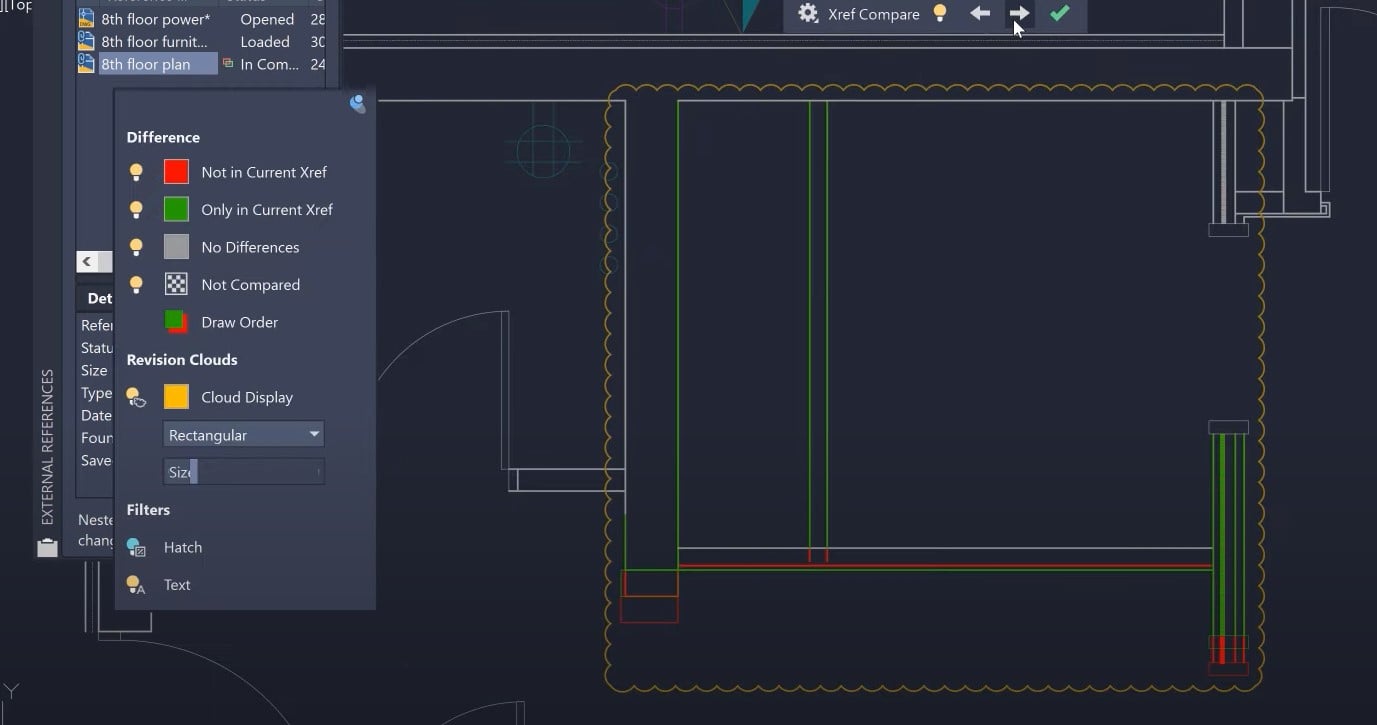
At its core, xref allows one entity to refer to another without embedding the latter directly. Instead, it creates a dynamic link, pointing to the external or related resource. This seemingly simple concept has profound implications, transforming how we design, develop, and document complex systems. From CAD drawings that integrate multiple specialist designs to software projects leveraging shared libraries, xref facilitates a powerful interconnectedness, ensuring that changes made in one place can ripple through an entire system, promoting accuracy and reducing redundant effort.
The Core Concept of Xref in Technology
Understanding xref begins with grasping the fundamental idea of referencing. In any information system, the ability to point from one piece of data or content to another is indispensable. Xref specifically addresses this need, particularly when dealing with external or independent resources.
Defining Cross-Referencing
Cross-referencing, in its broadest sense, is the act of linking one part of a document or system to another related part. This can be as simple as an index entry pointing to a page number in a book, or as complex as a sophisticated database query joining data from multiple tables based on common identifiers. The primary goal of cross-referencing is to establish relationships, provide context, and enable navigation between related pieces of information. It ensures that users or systems can easily find associated details, thus enhancing understanding and usability. In a digital context, these references often take the form of hyperlinks, pointers, or identifiers that uniquely locate the target information.
Xref as External References (XREFs)
While “cross-reference” is a general term, “xref” is often used specifically to denote an external reference. An external reference is a link to a file or resource that exists independently of the current file. Crucially, the content of the referenced file is not embedded or copied into the current file; instead, a live link is maintained. This distinction is vital because it means the current file “borrows” the content of the external file, displaying it as part of its own structure, but remains separate from it.
Consider an architectural drawing (File A) that needs to incorporate a standard detail drawing of a window (File B). If File B were embedded, any changes to the standard window detail would require updating every single architectural drawing that uses it. With an xref, File A simply references File B. When File B is updated, all drawings referencing it automatically reflect the changes the next time they are opened. This dynamic linkage ensures consistency, reduces file size (as content isn’t duplicated), and streamlines updates across an entire project. This principle extends across various tech domains, from integrating shared components in CAD software to linking common libraries in programming environments, demonstrating xref’s power in maintaining modularity and efficiency.
Xref in Action: Key Applications Across Tech Domains
The power of xref is not confined to a single niche; its underlying principles are leveraged across a multitude of technological disciplines, each benefiting from its ability to manage complexity and foster interconnectedness.
Computer-Aided Design (CAD) and Engineering
Perhaps the most prominent and direct use of the term “xref” is within the realm of Computer-Aided Design (CAD) software, particularly in applications like AutoCAD. Architects, engineers, and designers rely heavily on xrefs to manage large and complex design projects. A master drawing might xref multiple drawings from different disciplines—structural, electrical, plumbing, landscaping—each maintained by a specialist. This allows teams to work concurrently on different parts of a project without directly modifying each other’s work.
For instance, an architect creating a floor plan can xref a base map from a surveyor, ensuring accurate site context without having to redraw it. A structural engineer can then xref the architect’s floor plan to design the building’s skeleton, while a mechanical engineer xrefs both to lay out HVAC systems. When the architect makes a change to the floor plan, the structural and mechanical engineers see those updates automatically when they open their drawings, ensuring coordination and reducing errors. This modular approach significantly improves collaboration, streamlines workflows, and ensures all project components remain synchronized.
Software Development and Programming
While the term “xref” might not be explicitly used in everyday coding lingo, the concept of cross-referencing, particularly external references, is fundamental to software development. Modern programming relies heavily on modularity, code reuse, and dependency management—all facilitated by principles akin to xrefs.
- Dependency Management: Software projects frequently link to external libraries, frameworks, and modules. For example, a Python project might import a
requestslibrary, or a Java application might include a JAR file. These are external references; the code forrequestsis not duplicated in the project but dynamically linked at compile-time or runtime. Package managers like npm (JavaScript), Maven/Gradle (Java), or pip (Python) are essentially sophisticated xref managers, resolving and linking these external dependencies. - Code Navigation and IDEs: Integrated Development Environments (IDEs) offer features like “Go to Definition” or “Find All References,” which are powerful cross-referencing tools. They allow developers to quickly navigate through complex codebases, understanding where a function is defined or where a variable is used, thereby improving code comprehension and maintainability.
- API Referencing: When building applications that interact with external services, developers reference Application Programming Interfaces (APIs). These are specifications for how different software components should interact, acting as a form of external reference point for data exchange and functionality.
Technical Documentation and Content Management
In technical writing and content management systems (CMS), xrefs are crucial for creating comprehensive, navigable, and maintainable documentation. Help systems, user manuals, and knowledge bases often contain hundreds or thousands of interconnected topics.
Instead of duplicating information, technical writers use cross-references to link related concepts, definitions, procedures, and troubleshooting steps. For example, a troubleshooting guide might link to a “Setting Up Your Device” section, which in turn might link to a “Glossary of Terms.” This creates a rich web of interconnected content, allowing users to navigate freely and find relevant information without redundancy. Systems like DITA (Darwin Information Typing Architecture) heavily rely on referencing and reuse mechanisms, allowing content to be single-sourced and then assembled dynamically into various outputs, ensuring consistency and drastically reducing the effort required for updates and translations.
Database Systems and Data Management
Within database management systems, the concept of cross-referencing is foundational to relational integrity and data organization. While not explicitly called “xref,” the mechanism of foreign keys serves an identical purpose. A foreign key in one table creates a link to the primary key in another table, establishing a relationship between the two.

For instance, an “Orders” table might have a foreign key referencing the “CustomerID” in a “Customers” table. This acts as an external reference, linking each order to the specific customer who placed it. This ensures data consistency (you can’t have an order for a non-existent customer), allows for efficient data retrieval (joining related data), and prevents data duplication (customer information is stored only once). The integrity and interconnectedness of relational databases fundamentally rely on these cross-referencing relationships.
Advantages and Challenges of Implementing Xref
Implementing xref strategies brings a host of benefits that significantly enhance productivity, consistency, and collaborative capabilities in technological projects. However, it also introduces specific challenges that require careful management.
The Power of Modularity and Reusability
The primary advantage of xref is its ability to promote modularity. Complex projects can be broken down into smaller, independent, and manageable components. Each component can be developed, tested, and maintained in isolation. This modularity naturally leads to reusability. Standard components, code modules, or common design elements can be created once and referenced across multiple projects or within different parts of the same project. This drastically reduces development time, minimizes redundant effort, and ensures consistency across all instances where the reusable component is used. For example, a standard company logo or a common code utility function needs only one source of truth, updated once and reflected everywhere it’s referenced.
Enhanced Collaboration and Version Control
Xrefs are instrumental in facilitating collaboration among large teams. In a CAD environment, multiple designers can work on different parts of a building without interfering with each other’s files, as each specialist xrefs the necessary components. Similarly, in software development, teams can work on different modules concurrently, relying on stable interfaces or APIs that act as external references.
Furthermore, xrefs simplify version control. When an external file is updated, all files referencing it automatically reflect the latest version upon opening. This ensures that everyone on a project is working with the most current information, minimizing conflicts and streamlining the process of merging changes. Modern version control systems like Git manage these external dependencies implicitly or explicitly, enabling robust tracking and merging of changes across linked components.
Streamlined Updates and Maintenance
One of the most compelling benefits of xref is the ease of updates and maintenance. If a shared component or a referenced file needs modification, the change only needs to be made in the source file. Because other files dynamically reference this source, all instances where it’s used will automatically incorporate the update. This single-source-of-truth approach dramatically reduces the risk of inconsistencies, saves significant time during maintenance cycles, and ensures that the entire system remains coherent and up-to-date with minimal effort.
Potential Pitfalls and Best Practices
Despite its advantages, xref implementation comes with its own set of challenges that need proactive management:
- Broken References (Lost Links): This is perhaps the most common issue. If a referenced file is moved, renamed, or deleted without updating the referencing file, the link breaks. The referencing file will then be unable to locate or display the external content, often resulting in errors or missing information.
- Best Practice: Establish clear naming conventions and folder structures. Use relative paths where possible to maintain links even if the entire project folder is moved. Regularly validate links using built-in tools or scripts.
- Performance Overhead: Loading numerous external files can sometimes impact system performance, especially if the referenced files are large or stored on slow network drives.
- Best Practice: Optimize external files. Consider “binding” or embedding xrefs only when the design is final and the performance impact is justified.
- Complexity Management: In projects with a vast number of nested xrefs (where an xref itself references another xref), managing the hierarchy and ensuring all links are valid can become overwhelmingly complex.
- Best Practice: Keep xref hierarchies as flat as possible. Document the xref structure clearly. Use specialized xref management tools provided by software.
- Circular References: This occurs when File A references File B, and File B in turn references File A, creating an endless loop that can cause software crashes or unexpected behavior.
- Best Practice: Design systems to prevent circular dependencies through careful planning of component relationships and hierarchy.
The Future of Xref and Interconnected Systems
The foundational principles of xref—dynamic linking, modularity, and managing external dependencies—are not static concepts. They continue to evolve, integrating with emerging technologies to build increasingly sophisticated and interconnected digital ecosystems.
Integration with Cloud Technologies
Cloud computing platforms are fundamentally changing how external references are managed. Centralized cloud repositories provide a single, accessible source for referenced assets, eliminating issues related to local file paths and network drive access. Real-time collaboration, where multiple users can work on xref’d components simultaneously, becomes seamless. Cloud-native version control and asset management tools inherently support the dynamic linking and updating of components across distributed teams and global projects. This shift moves xref management from local file systems to resilient, globally accessible infrastructure.
AI-Enhanced Reference Management
Artificial Intelligence (AI) is poised to revolutionize how we identify, create, and manage cross-references. AI algorithms can analyze vast datasets of code, documentation, or design files to automatically identify potential relationships and suggest optimal cross-references, reducing manual effort. AI could also be used for semantic linking, understanding the meaning and context of content to create more intelligent and relevant connections. Furthermore, predictive analytics powered by AI could anticipate and flag potential broken links or dependency conflicts before they occur, drastically improving system reliability and maintainability.
Beyond Traditional Files: Xref in Data Fabrics and Knowledge Graphs
The concept of “referencing” is expanding beyond traditional files (like CAD drawings or code modules) into the realm of data fabrics and knowledge graphs. A data fabric is an architecture that provides a single, unified view of disparate data sources, linking them together through metadata and semantic layers. Similarly, knowledge graphs explicitly define relationships between entities (e.g., people, places, concepts) in a structured, machine-readable format. Both these technologies are essentially highly advanced forms of cross-referencing, where relationships and external data sources are dynamically linked and managed at a far grander scale, enabling powerful analytics, advanced search, and intelligent automation across enterprise data landscapes. The semantic web, which aims to make internet data machine-readable, is another testament to this evolving vision of ubiquitous, intelligent xref.

Conclusion
From the meticulous designs of architects to the intricate code of software developers, the humble yet powerful concept of “xref” serves as an indispensable tool in the modern technological landscape. It’s the silent enabler of modularity, the backbone of collaboration, and the engine of efficient maintenance across countless digital domains. By allowing components to be dynamically linked rather than redundantly embedded, xref ensures consistency, streamlines workflows, and significantly reduces the overhead associated with complex projects.
As technology continues its rapid evolution, embracing cloud platforms, artificial intelligence, and sophisticated data architectures like knowledge graphs, the fundamental principles of xref will remain crucial. Its role is not diminishing but transforming, adapting to new paradigms to facilitate an ever more interconnected and intelligent digital world. Understanding “what is xref” is therefore not just about a specific technical term, but about grasping a core principle that drives the design, development, and management of robust, scalable, and future-proof technological systems.
aViewFromTheCave is a participant in the Amazon Services LLC Associates Program, an affiliate advertising program designed to provide a means for sites to earn advertising fees by advertising and linking to Amazon.com. Amazon, the Amazon logo, AmazonSupply, and the AmazonSupply logo are trademarks of Amazon.com, Inc. or its affiliates. As an Amazon Associate we earn affiliate commissions from qualifying purchases.