
In the vast and ever-evolving landscape of enterprise information technology, certain names resonate with a deep sense of history, innovation, and impact. Tivoli software is one such name, synonymous for decades with comprehensive IT management solutions that helped shape how large organizations operate, maintain, and secure their digital infrastructures. While the brand itself has undergone significant transformations and integrations over the years, understanding “what is Tivoli software” requires a journey back to its origins, through its various incarnations, and into the enduring principles it championed for modern IT.
Tivoli was not a single product but a broad suite of software solutions primarily developed and marketed by IBM. Its core mission was to provide tools and frameworks for managing the complexity of enterprise IT environments, encompassing everything from system performance and data storage to security, automation, and service delivery. For many IT professionals of a certain era, Tivoli was the bedrock upon which reliable, efficient, and secure operations were built, a critical enabler for the digital backbone of global businesses.
The Genesis and Core Mission of Tivoli Software
The story of Tivoli began not within the halls of IBM, but as an independent startup in 1989. Tivoli Systems, Inc. quickly gained recognition for its innovative approach to distributed systems management, a burgeoning field as client-server architectures began to replace monolithic mainframes. Its initial success paved the way for its acquisition by IBM in 1996, a strategic move that significantly bolstered IBM’s software portfolio and positioned it as a dominant player in the enterprise management market.
From Startup to IBM Powerhouse
IBM’s acquisition of Tivoli Systems was a watershed moment. It signaled a clear commitment from the technology giant to move beyond hardware and operating systems into the critical realm of software-defined IT management. Under IBM’s stewardship, the Tivoli brand expanded dramatically, absorbing other IBM technologies and integrating new acquisitions, evolving into a vast family of products designed to address virtually every aspect of IT operations. This expansion allowed Tivoli to offer truly end-to-end solutions, from the desktop to the data center, and across heterogeneous environments.
Defining Enterprise Systems Management
At its heart, Tivoli software aimed to solve the inherent challenges of managing large-scale, complex IT infrastructures. Before comprehensive management suites, IT operations often involved disparate tools, manual processes, and reactive problem-solving. Tivoli sought to bring order to this chaos by providing integrated solutions that could monitor, automate, secure, and report on IT assets and services. This holistic approach was crucial for businesses that relied on their IT systems for daily operations, customer interactions, and strategic decision-making.
Addressing the Complexities of Large-Scale IT
The larger an organization, the more intricate its IT infrastructure becomes. This complexity manifests in numerous ways: a multitude of servers, networks, applications, and databases; diverse operating systems; vast amounts of data; and a constant stream of user requests and security threats. Tivoli software was engineered to tackle these challenges head-on. By centralizing management functions and providing granular control, it empowered IT departments to maintain high levels of performance, availability, and security, even across geographically dispersed and highly dynamic environments. It aimed to provide a single pane of glass for managing IT operations, reducing the need for specialized tools and fragmented processes.
A Comprehensive Suite for IT Operations
The breadth of Tivoli’s offerings was one of its defining characteristics. It evolved into a collection of specialized products, each targeting a specific facet of IT management but designed to work together to provide a unified operational view. This modular yet integrated approach allowed organizations to deploy only the components they needed while retaining the option to expand their management capabilities as their requirements grew.
Managing Performance and Availability
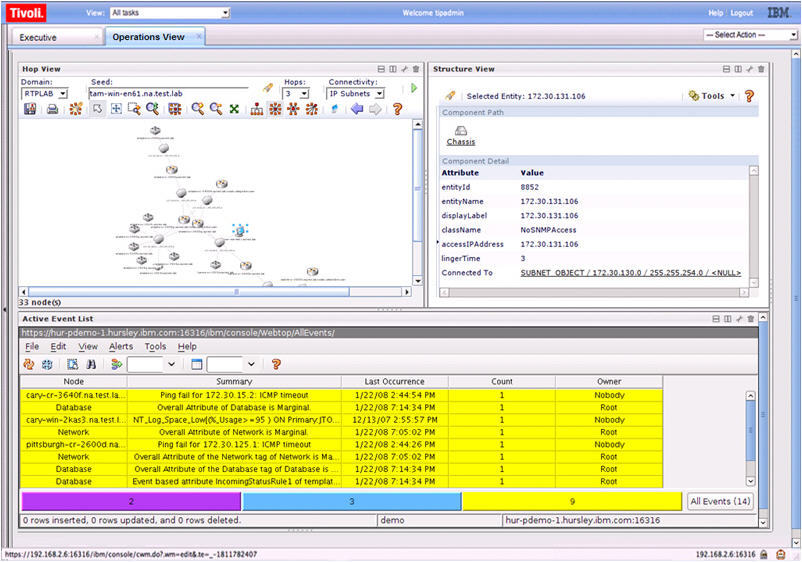
One of the most critical aspects of IT operations is ensuring that systems and applications are always up and running, performing optimally. Tivoli offered solutions like IBM Tivoli Monitoring which provided real-time visibility into the health and performance of servers, networks, databases, and applications. This allowed IT teams to proactively identify bottlenecks, predict potential failures, and rapidly diagnose issues before they impacted end-users or business processes. Tivoli Netcool/OMNIbus further enhanced this by providing event correlation and root cause analysis across various IT domains, enabling faster problem resolution.
Ensuring Data Integrity and Storage
Data is the lifeblood of any organization, and its protection and efficient management are paramount. IBM Tivoli Storage Manager (TSM), later rebranded as IBM Spectrum Protect, was a cornerstone of Tivoli’s portfolio. TSM provided robust data backup, recovery, and archiving capabilities across diverse platforms, ensuring business continuity in the face of data loss or disaster. It helped organizations manage the exponential growth of data, optimize storage utilization, and comply with retention policies. Other products like Tivoli Storage Productivity Center focused on managing storage infrastructure, capacity planning, and performance optimization.
Automating Tasks and Workflows
Repetitive and manual IT tasks are not only prone to error but also consume valuable human resources. Tivoli aimed to automate these processes to improve efficiency and reduce operational costs. IBM Tivoli Workload Scheduler (TWS), for instance, was a powerful tool for automating job scheduling and managing complex batch processes across distributed systems and applications. This ensured that critical business processes ran on time, every time, without manual intervention. Automation extended to other areas, such as provisioning and deployment, significantly accelerating the delivery of IT services.
Securing the Digital Perimeter
In an increasingly interconnected world, robust security management is non-negotiable. Tivoli included a strong suite of security products designed to protect identities, data, and access. IBM Tivoli Identity Manager (TIM) and IBM Tivoli Access Manager (TAM), now part of IBM Security Identity Manager and IBM Security Access Manager respectively, were fundamental for managing user identities, provisioning access rights, and enforcing security policies across the enterprise. These tools helped organizations achieve compliance with various regulatory mandates and mitigate the risks associated with unauthorized access and insider threats.
Optimizing Asset and Service Management
Beyond the technical aspects of infrastructure, Tivoli also addressed the broader management of IT as a service provider to the business. Products like IBM Tivoli Service Request Manager (often integrated with or leveraging the capabilities of IBM Maximo Asset Management, which became part of the Tivoli brand family) facilitated the management of IT services, incidents, problems, and changes. This enabled organizations to deliver better IT services to their users, align IT operations with business needs, and manage the lifecycle of IT assets more effectively, from acquisition to retirement.
The Business Impact and Strategic Value of Tivoli
The comprehensive nature of Tivoli software translated into significant strategic advantages for the businesses that deployed it. Its impact was felt across various organizational functions, extending far beyond the IT department itself to influence overall business agility and resilience.
Enhancing Operational Efficiency and Cost Savings
By automating routine tasks, centralizing management, and providing proactive monitoring, Tivoli dramatically improved the operational efficiency of IT teams. This led to fewer manual errors, reduced downtime, and optimized resource utilization. The ability to do more with existing resources translated directly into significant cost savings, freeing up budgets and personnel for more strategic initiatives rather than reactive firefighting. Streamlined processes also meant faster service delivery and reduced time-to-market for new applications and services.
Improving Reliability and Business Continuity
One of Tivoli’s most profound contributions was its role in enhancing the reliability and availability of critical business systems. Through robust monitoring, proactive alerting, and efficient problem resolution capabilities, organizations could ensure that their applications and data were consistently accessible. Furthermore, advanced backup and recovery features mitigated the impact of potential disasters, guaranteeing business continuity and minimizing financial losses that can result from extended outages.
Strengthening Security and Compliance Posture
With tools for identity and access management, security policy enforcement, and audit trail generation, Tivoli played a crucial role in strengthening an organization’s security posture. It provided the necessary controls and visibility to protect sensitive data, prevent unauthorized access, and respond to security incidents. This was particularly vital in industries with strict regulatory requirements, where demonstrating compliance with standards like HIPAA, SOX, or GDPR was mandatory. Tivoli helped simplify the complex task of meeting these compliance obligations.
Facilitating Scalability and Growth
As businesses grow, their IT needs inevitably expand. Tivoli software was designed with scalability in mind, capable of managing increasingly large and complex environments without requiring a complete overhaul of management infrastructure. This flexibility allowed organizations to expand their operations, introduce new technologies, and adapt to changing market demands with confidence, knowing their IT management platform could scale alongside their business ambitions.
Evolution, Integration, and the Cloud Era
Like all long-standing technology, Tivoli has not remained static. The brand and its underlying technologies have continuously evolved, adapted, and been integrated into broader IBM strategies to meet the demands of modern IT, particularly with the advent of cloud computing, DevOps, and artificial intelligence.
Adapting to Modern IT Landscapes
The shift from on-premise, monolithic applications to cloud-native, microservices architectures presented new challenges for IT management. While the core principles of monitoring, automation, and security remain, the tools and approaches needed to manage dynamic, hybrid cloud environments are different. IBM recognized this early on, gradually modernizing Tivoli’s capabilities to support virtualized infrastructures, public and private clouds, and agile development methodologies.
IBM’s Strategic Rebranding and Portfolio Shifts
Over the past decade, IBM has strategically reorganized and rebranded much of its software portfolio. Many of the individual Tivoli products have been integrated into larger solutions under different names, often aligning with broader strategic initiatives like IBM Cloud Paks or the IBM Security brand. For instance, components of Tivoli Security are now part of the IBM Security QRadar or IBM Security Verify suite, while Tivoli Storage Manager became IBM Spectrum Protect. This doesn’t mean the technology disappeared; rather, it matured and was absorbed into more modern, integrated offerings designed for the contemporary IT landscape.
Relevance in Hybrid Cloud and AI-Driven Operations
Even if the “Tivoli” brand name is less prominent today, the underlying philosophies and many of the core technologies it pioneered are more relevant than ever. The principles of automated operations, proactive monitoring, and integrated security are fundamental to successful hybrid cloud strategies. Furthermore, with the rise of AIOps (Artificial Intelligence for IT Operations), the vision of using intelligence to manage IT complexity, which Tivoli began to explore with event correlation and predictive analytics, is now being fully realized. Modern IBM management solutions continue to leverage the decades of expertise built within the Tivoli heritage to deliver intelligent, automated, and secure operations for the multi-cloud era.
The Enduring Principles of Tivoli’s Legacy
The legacy of Tivoli software is not just in the specific products it offered but in the management paradigm it helped establish. It underscored the importance of a unified approach to IT management, emphasizing automation, visibility, and control as essential ingredients for operational excellence. These principles continue to guide the development of new tools and strategies in today’s highly dynamic and complex IT environments, proving that good foundational thinking remains timeless.
Beyond the Software: A Philosophy of Proactive Management
Ultimately, Tivoli software represented more than just a collection of utilities; it embodied a philosophy of proactive and intelligent IT management. It championed the idea that IT should move beyond being a cost center that merely reacts to problems, transforming into a strategic enabler that anticipates needs, optimizes performance, and secures the digital assets essential for business success.
Shifting from Reactive to Predictive IT
One of Tivoli’s most significant contributions was its role in helping organizations transition from a reactive “fix-it-when-it-breaks” model to a proactive, predictive approach. By providing advanced monitoring and analytics, Tivoli tools empowered IT teams to identify potential issues before they escalated into critical problems, allowing for preemptive action. This foresight minimized downtime, improved service quality, and reduced the overall stress on IT operations.
The Future of Autonomous Operations (AIOps) and Tivoli’s Influence
While “AIOps” is a modern term, the seeds of autonomous IT operations were sown in the capabilities offered by suites like Tivoli. The desire to correlate events, automate responses, and derive insights from vast amounts of operational data directly foreshadowed today’s AIOps platforms. The journey from Tivoli’s early distributed systems management to current AI-driven operations reflects a continuous quest for higher levels of automation, intelligence, and self-healing capabilities within IT—a journey that Tivoli significantly influenced and propelled forward.
In conclusion, “what is Tivoli software” is a question that unveils a rich history of innovation in enterprise IT management. It represents a foundational suite of tools and a strategic vision that helped countless organizations navigate the complexities of their digital world. While the brand name may have evolved, the principles and functionalities pioneered by Tivoli continue to live on, embedded within modern IBM offerings and influencing the very fabric of how IT is managed in the cloud-native, AI-driven era. Its legacy serves as a testament to the enduring importance of robust, intelligent, and integrated approaches to managing the technology that powers our world.
aViewFromTheCave is a participant in the Amazon Services LLC Associates Program, an affiliate advertising program designed to provide a means for sites to earn advertising fees by advertising and linking to Amazon.com. Amazon, the Amazon logo, AmazonSupply, and the AmazonSupply logo are trademarks of Amazon.com, Inc. or its affiliates. As an Amazon Associate we earn affiliate commissions from qualifying purchases.