
The vast, intricate dance of the world’s oceans plays an indispensable role in shaping Earth’s climate. Far from being a static body of water, the ocean is a dynamic system, constantly interacting with the atmosphere, land, and even the planet’s internal geology. When we speak of “ocean climate,” we are referring to the long-term patterns and statistical descriptions of physical conditions in the marine environment, including temperature, salinity, currents, sea level, and ice cover, as well as biological and chemical processes. Understanding this complex system is not merely an academic exercise; it is crucial for predicting weather patterns, managing marine ecosystems, and addressing global challenges like climate change.

In an era defined by rapid technological advancement, our ability to comprehend, monitor, and model the ocean climate has been revolutionized. The question “what is the ocean climate?” increasingly finds its answer embedded in sophisticated technological solutions. From satellite-borne sensors that scan vast expanses of the sea surface to autonomous underwater vehicles (AUVs) exploring the deepest trenches, and from artificial intelligence (AI) algorithms sifting through petabytes of data to advanced computational models simulating future scenarios, technology is not just observing the ocean climate—it is actively defining our understanding of it. This article delves into the ocean climate through the lens of the indispensable technological innovations that enable its study, prediction, and potential mitigation.
Decoding the Ocean Climate: The Technological Imperative
The sheer scale and depth of the world’s oceans make direct, comprehensive observation a monumental challenge. Traditional methods, though foundational, are inherently limited in their spatial and temporal coverage. This vast observational gap has been steadily closing thanks to a continuous stream of technological breakthroughs, transforming our ability to collect, transmit, and process oceanographic data. Without these innovations, our understanding of the ocean climate would remain rudimentary, lacking the precision and scope required for informed decision-making.
Satellite Surveillance: Eyes from Space
Satellites have emerged as humanity’s distant but ever-vigilant eyes on the ocean. Orbiting hundreds of kilometers above Earth, these technological marvels provide synoptic views of the ocean surface, collecting data on parameters that are critical to defining ocean climate. Sensors onboard platforms like NASA’s Aqua and NOAA’s JPSS series measure Sea Surface Temperature (SST), a key indicator of ocean heat content and a driver of atmospheric processes. Altimetry satellites, such as those in the Jason series, precisely track sea level rise and map ocean currents, offering vital insights into ocean circulation patterns that redistribute heat and nutrients globally.
Synthetic Aperture Radar (SAR) systems pierce through cloud cover to measure ocean surface roughness, allowing scientists to infer wind speeds and wave heights, crucial for understanding air-sea interaction. Furthermore, color sensors analyze the spectral properties of seawater to estimate chlorophyll concentrations, an indirect measure of phytoplankton biomass, which forms the base of the marine food web and plays a significant role in the ocean’s carbon cycle. The continuous, global coverage provided by these satellite constellations offers an unparalleled dataset, allowing scientists to observe long-term trends and short-term anomalies in the ocean climate with unprecedented clarity. The data streamed from these satellites, often in real-time, feeds into global climate models and provides early warnings for phenomena like El Niño and hurricanes.
In-Situ Sensors and Autonomous Platforms: The Underwater Network
While satellites offer a surface-level perspective, understanding the full three-dimensional complexity of the ocean climate requires direct measurement within the water column. This is where a diverse array of in-situ sensors and autonomous platforms come into play, forming an expansive underwater network. Argo floats, a revolutionary international program, exemplify this technological prowess. Thousands of these robotic profiling floats drift with ocean currents, periodically descending to depths of 2000 meters or more, collecting temperature and salinity profiles before surfacing to transmit data via satellite. This global array provides invaluable data on subsurface ocean heat content and freshwater distribution, critical components of the ocean climate often unseen from space.
Beyond Argo, specialized Autonomous Underwater Vehicles (AUVs) and Gliders navigate predetermined paths for weeks or months, equipped with an array of sensors to measure oxygen levels, pH, currents, turbidity, and even marine noise. These platforms can operate in hostile environments, under ice, or in deep-sea trenches, where human presence is impractical or impossible. Moored buoys, deployed for years at fixed locations, provide continuous, high-frequency data on local oceanographic conditions, acting as vital sentinels for long-term climate monitoring. These in-situ technologies provide the granular, localized data necessary to validate satellite observations, refine climate models, and reveal the nuances of ocean climate variability that are invisible from afar. The integration of these diverse data sources, from space to the deep sea, builds a comprehensive, multi-dimensional picture of the ocean climate.
AI, Big Data, and Predictive Modeling: Shaping Our Understanding
The sheer volume, velocity, and variety of data generated by modern oceanographic technologies present a “big data” challenge that traditional analytical methods struggle to handle. This deluge of information, however, also represents an unprecedented opportunity. Advanced computational technologies, particularly artificial intelligence (AI) and machine learning (ML), coupled with high-performance computing, are transforming how we process this data, extract meaningful patterns, and ultimately predict the future state of the ocean climate.
AI for Pattern Recognition and Forecasting
AI algorithms, especially deep learning neural networks, excel at identifying subtle, non-linear patterns within massive datasets that human analysts might miss. In oceanography, AI is being deployed to enhance the accuracy of ocean climate forecasts. For instance, ML models can ingest vast quantities of satellite imagery, in-situ sensor data, and historical records to predict phenomena like harmful algal blooms, marine heatwaves, or the movement of plastic pollution with greater precision. AI also plays a crucial role in data fusion, intelligently combining disparate datasets (e.g., satellite SST with subsurface Argo profiles) to create a more complete and coherent picture of the ocean state. Furthermore, AI-driven anomaly detection systems can flag unusual oceanographic events in real-time, providing early warnings for extreme weather or ecological shifts linked to ocean climate change. The ability of AI to learn from complex ocean dynamics and generalize those learnings makes it an indispensable tool for understanding and predicting the ocean’s intricate behavior.
Harnessing Oceanographic Big Data
The term “big data” barely scratches the surface when describing the petabytes of information collected daily on the ocean climate. Storing, processing, and accessing this data requires robust, scalable infrastructure. Cloud computing platforms have become essential, offering on-demand computational power and storage solutions that can handle the fluctuating demands of oceanographic research. Data lakes and distributed databases allow researchers worldwide to access and share massive datasets, fostering collaborative science. Sophisticated data visualization tools transform raw numbers into intuitive, interactive maps and models, making complex ocean climate data accessible to scientists, policymakers, and the public. Efficient data management, tagging, and interoperability standards are critical to unlocking the full potential of this oceanographic big data, ensuring that the vast amounts of information collected are not just stored but actively utilized to deepen our understanding of the ocean climate.
Digital Twins and Simulation Models
The ultimate expression of our technological understanding of the ocean climate lies in sophisticated simulation models, often referred to as “digital twins” of the ocean. These highly complex mathematical models run on supercomputers, integrating physical laws with observed data to simulate ocean currents, temperature, salinity, biogeochemical cycles, and interactions with the atmosphere. Digital twins allow scientists to experiment with “what-if” scenarios, simulating the impact of different climate change trajectories or human interventions on the ocean climate. They provide a virtual laboratory to test hypotheses, refine our understanding of underlying processes, and predict future states with increasing accuracy. The development of high-resolution coupled ocean-atmosphere models, which simultaneously simulate both systems and their interactions, represents a pinnacle of computational science, offering the most comprehensive projections of future ocean climate conditions. These models are continuously refined with new data from sensors and AI-driven insights, creating an iterative loop of observation, modeling, and prediction that constantly improves our grasp of the ocean’s future.

Technological Frontiers in Ocean Climate Mitigation and Adaptation
Beyond understanding and predicting, technology is increasingly focused on developing solutions to address the challenges posed by a changing ocean climate. From innovative approaches to carbon sequestration to new methods for protecting coastal communities, technological ingenuity is at the forefront of humanity’s response to marine environmental shifts. These advancements represent not just tools for observation, but active interventions and strategies for resilience.
Carbon Sequestration Technologies and Blue Carbon Initiatives
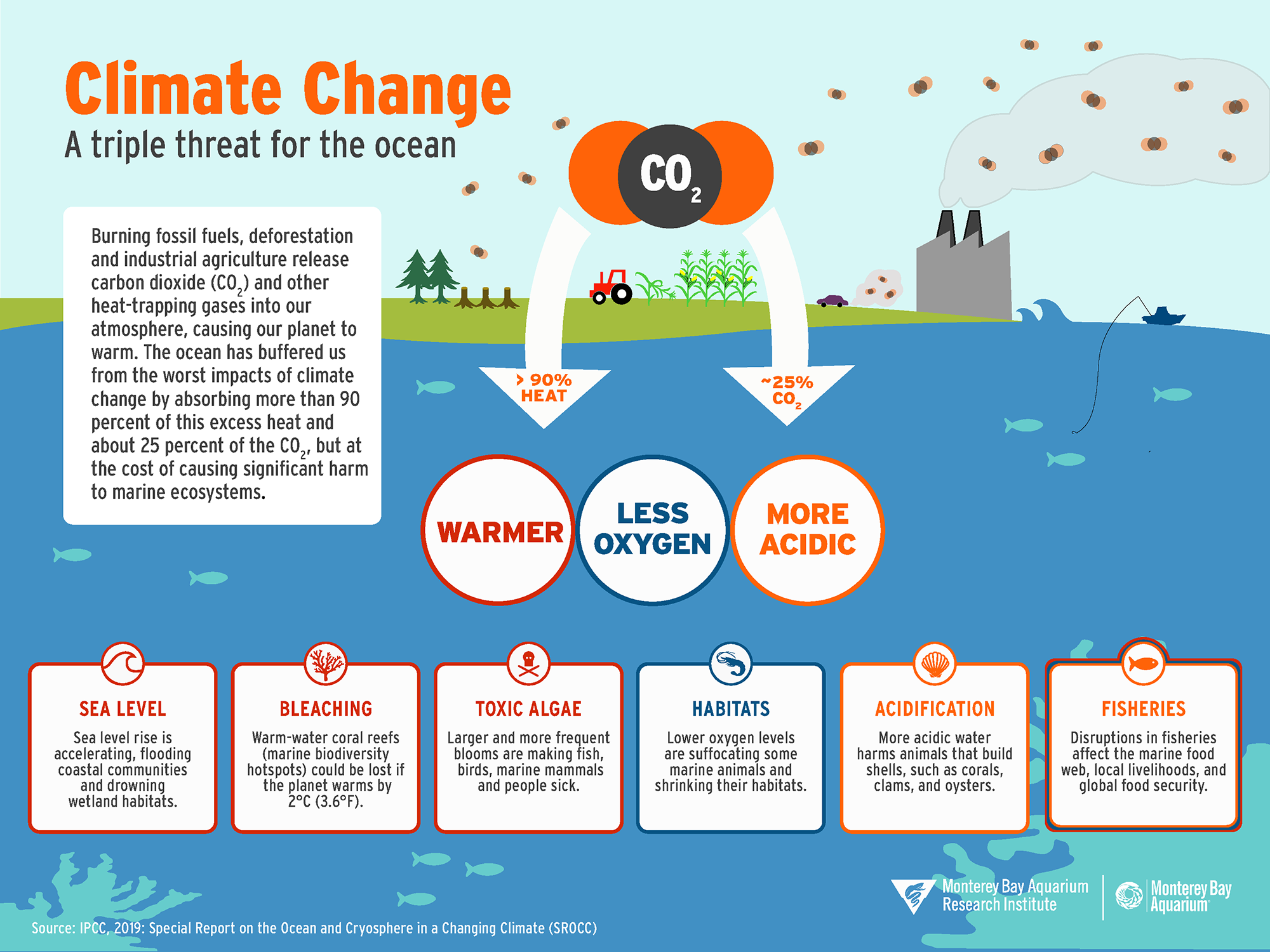
A primary driver of ocean climate change is the absorption of excess atmospheric carbon dioxide (CO2), leading to ocean acidification and warming. Technologies aimed at actively removing CO2 from the atmosphere or directly from seawater are gaining traction. Direct Air Capture (DAC) technologies, though nascent, are being explored for their potential to reduce atmospheric CO2, which would indirectly alleviate ocean stress. More directly related to the ocean, enhanced weathering techniques aim to accelerate natural geological processes to sequester carbon, some of which involve mineral additions to seawater.
Complementing these engineered solutions are “blue carbon” initiatives, which leverage and enhance natural oceanic carbon sinks using technology. Remote sensing and AI are used to map, monitor, and restore critical blue carbon ecosystems like mangrove forests, salt marshes, and seagrass beds. These ecosystems are highly efficient at sequestering carbon and also provide vital coastal protection and habitat. Technologies are being developed for more efficient restoration, such as drone seeding for mangroves or automated planting systems for seagrass, aiming to maximize their carbon removal potential and ecological benefits.
Renewable Ocean Energy and Sustainable Practices
Harnessing the immense energy potential of the ocean offers a path towards decarbonization, directly mitigating the root causes of climate change that impact ocean climate. Wave energy converters, tidal turbines, and ocean thermal energy conversion (OTEC) systems are technologies designed to generate clean electricity from the ocean’s movements and temperature gradients. While many are still in development or early deployment stages, ongoing engineering advancements are improving their efficiency, reliability, and cost-effectiveness. The integration of these technologies into smart grids, managed by AI, aims to provide stable and predictable renewable energy sources.
Furthermore, technological innovations are driving more sustainable practices within marine industries. Precision aquaculture, leveraging sensors, AI, and robotics, aims to reduce environmental impact and improve efficiency in seafood production. Sustainable shipping technologies, including low-emission fuels, optimized route planning software, and even wind-assisted propulsion, are reducing the carbon footprint of global maritime transport. These technological shifts are crucial for lessening anthropogenic pressures on the ocean climate system.
Advanced Materials for Resilient Coastal Infrastructure
As sea levels rise and extreme weather events intensify due to changes in ocean climate, coastal communities face increasing threats. Technology plays a vital role in adaptation through the development of resilient infrastructure. Advanced materials science is creating stronger, more durable, and environmentally friendly materials for seawalls, breakwaters, and other coastal defenses. Self-healing concretes, low-carbon geopolymer concretes, and innovative composite materials are designed to withstand harsher marine conditions and reduce their own carbon footprint during construction.
Smart coastal monitoring systems, integrating LiDAR, drone surveillance, and sensor networks, provide real-time data on erosion rates, storm surge impacts, and infrastructure integrity, allowing for proactive maintenance and emergency response. Furthermore, digital twin technology is being applied to coastal cities, allowing urban planners to simulate the impacts of sea level rise and storm surges on infrastructure and guide the development of adaptive strategies, such as relocating critical assets or designing nature-based solutions like living shorelines. These technologies empower communities to adapt to the unavoidable impacts of a changing ocean climate.
Data Security and Ethical AI in Ocean Climate Research
As our reliance on technology for understanding and managing the ocean climate grows, so too do the considerations around data security and the ethical deployment of AI. The vast networks of sensors, satellites, and computational models generate and process highly sensitive environmental data, while AI systems make increasingly critical predictions. Ensuring the integrity, privacy, and responsible use of these technological assets is paramount.
Protecting Sensitive Environmental Data
The integrity of ocean climate data is fundamental to scientific accuracy and policy formulation. Cyber threats to data collection platforms, transmission networks, and storage repositories could lead to data manipulation, loss, or unauthorized access, severely compromising our understanding of the ocean climate. Robust cybersecurity measures, including encryption, multi-factor authentication, intrusion detection systems, and secure data pipelines, are essential to protect this invaluable information. Furthermore, establishing clear data governance policies and ensuring compliance with international data protection regulations are crucial. The goal is not only to prevent malicious attacks but also to maintain the trust and reliability of the data that underpins global climate science and decision-making.
Ensuring Unbiased AI Models for Climate Predictions
The power of AI to analyze vast datasets and make predictions comes with the responsibility to ensure these models are unbiased and transparent. Biases can inadvertently be introduced into AI models through biased training data, flawed algorithms, or unrepresentative sampling. In the context of ocean climate, biased predictions could lead to misallocations of resources for mitigation, inaccurate risk assessments for coastal communities, or ineffective conservation strategies.
Ethical AI principles dictate that models should be explainable, allowing scientists to understand how predictions are made. Regular auditing of AI algorithms, rigorous validation against independent datasets, and diverse expert oversight are critical steps to identify and mitigate biases. Ensuring that AI models are robust, fair, and transparent is vital for maintaining scientific credibility and ensuring that technology genuinely serves the goal of a healthier, more predictable ocean climate for all.
In conclusion, “what is the ocean climate?” is a question whose answer is continuously being refined and expanded by an ever-evolving technological landscape. From the advanced sensors that gather raw data to the sophisticated AI that processes it, and the complex models that simulate its future, technology is the lens through which we comprehend this vital global system. As we face unprecedented environmental challenges, continued innovation in marine technology, coupled with robust ethical frameworks, will be indispensable in charting a course toward a sustainable future for our planet’s oceans.
aViewFromTheCave is a participant in the Amazon Services LLC Associates Program, an affiliate advertising program designed to provide a means for sites to earn advertising fees by advertising and linking to Amazon.com. Amazon, the Amazon logo, AmazonSupply, and the AmazonSupply logo are trademarks of Amazon.com, Inc. or its affiliates. As an Amazon Associate we earn affiliate commissions from qualifying purchases.