
In the intricate world of healthcare, the battle against microorganisms is ceaseless. Asepsis – the absence of pathogenic microorganisms – forms the bedrock of patient safety and infection control. Traditionally, the distinctions between medical asepsis (clean technique) and surgical asepsis (sterile technique) have been taught through manual protocols and stringent procedural adherence. However, as healthcare increasingly integrates advanced technology, the ways we understand, implement, and differentiate these two critical practices are evolving dramatically. This article delves into the fundamental differences between medical and surgical asepsis, examining how modern technology, from AI-driven analytics to sophisticated robotics and digital security, is not only enhancing these practices but also providing novel ways to maintain their distinct levels of microbial control within a digital healthcare ecosystem.
Foundational Concepts in a Digital Context: Redefining Asepsis with Tech
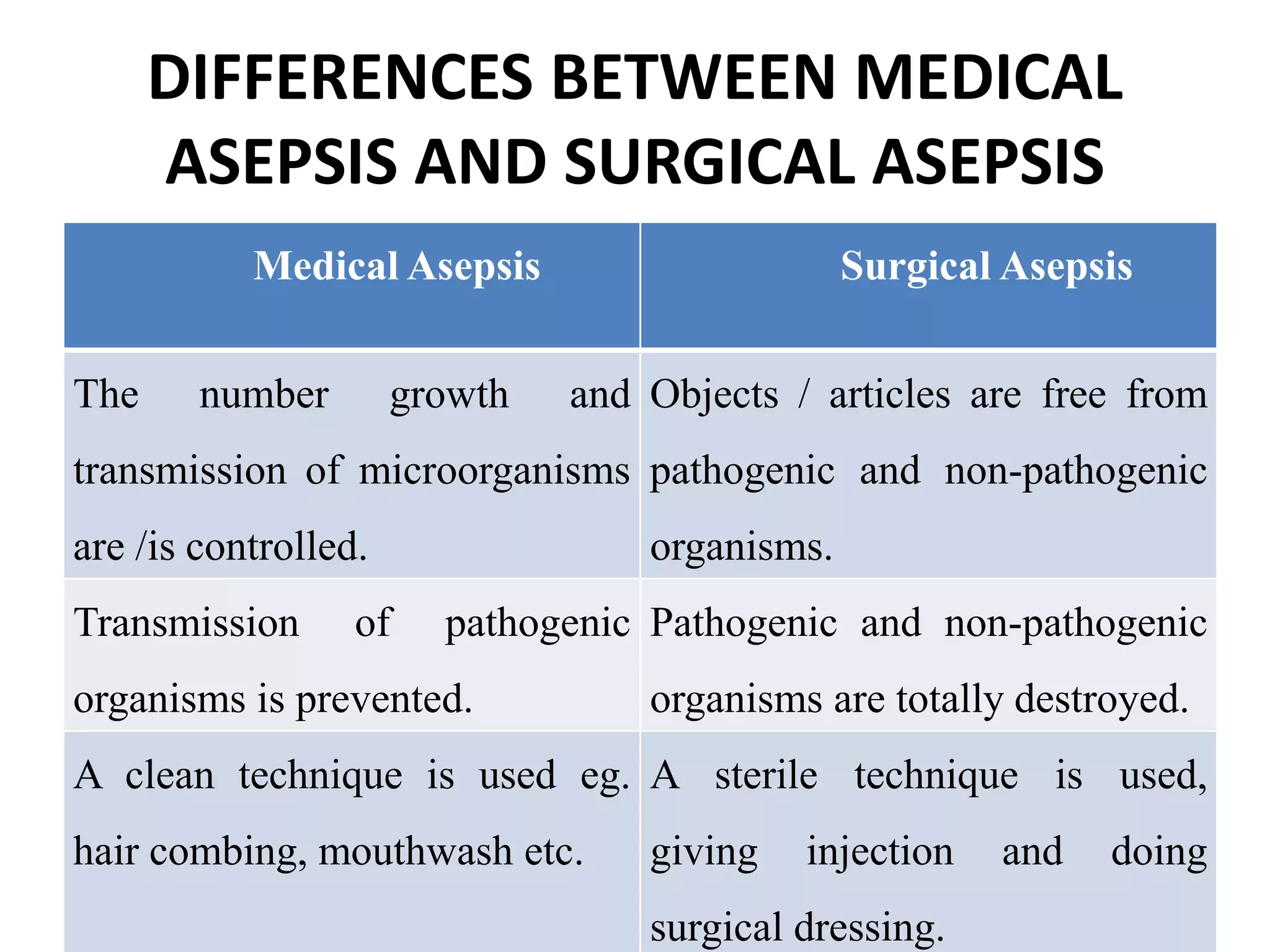
The core definitions of medical and surgical asepsis remain unchanged: medical asepsis aims to reduce the number and spread of microorganisms, while surgical asepsis strives for the complete elimination of all microorganisms. What has changed, however, are the tools and methodologies employed to achieve these objectives, with technology playing an increasingly pivotal role in their execution, monitoring, and differentiation.
Medical Asepsis (Clean Technique) – Enhanced by Smart Systems
Medical asepsis, often referred to as “clean technique,” focuses on reducing the presence of microorganisms in daily clinical environments to prevent infection spread. This encompasses practices like hand hygiene, cleaning patient rooms, using personal protective equipment (PPE), and proper waste disposal. While these principles are timeless, their implementation is increasingly augmented by smart systems.
For instance, hand hygiene compliance, a cornerstone of medical asepsis, is now monitored not just by observation but through IoT sensors integrated into soap and sanitizer dispensers, providing real-time data on usage patterns and compliance rates. AI-powered analytics can process this data to identify high-risk areas or times, enabling targeted interventions and staff training. Smart cleaning schedules, optimized by algorithms considering patient flow, room occupancy, and infection rates, ensure that environmental cleaning is efficient and effective. Digital checklists and software applications guide healthcare professionals through proper cleaning and disinfection protocols, reducing human error and ensuring adherence to institutional guidelines. The focus here is on the reduction and prevention of transmission, and technology provides the means to achieve this more consistently and measurably than ever before, moving from reactive cleaning to proactive, data-driven cleanliness management.
Surgical Asepsis (Sterile Technique) – Precision Driven by Advanced Tech
Surgical asepsis, or “sterile technique,” demands the complete absence of all microorganisms and spores from an area. This rigorous standard is indispensable for invasive procedures such as surgeries, catheterizations, and wound care, where even a single microbe can lead to life-threatening infections. The pursuit of absolute sterility has always relied on meticulous protocols, and technology has become indispensable in ensuring this uncompromising standard.
Sterilization of instruments, once a manual and error-prone process, is now managed by highly advanced autoclaves and sterilizers equipped with digital controls and automated logging systems. These devices monitor temperature, pressure, and time with unparalleled precision, generating verifiable digital records crucial for compliance and patient safety. Robotics are being deployed in surgical instrument processing units, handling contaminated instruments with minimal human contact and ensuring standardized cleaning and packing. Moreover, operating rooms are often equipped with sophisticated environmental controls, such as laminar airflow systems, continuously monitored by sensors and integrated software to maintain optimal air quality and minimize particulate matter. UV-C light robots perform terminal disinfection, autonomously sterilizing surfaces after procedures, further eliminating any remaining pathogens. In surgical asepsis, technology is not merely an enhancement; it is a fundamental enabler of the absolute, verifiable sterility required for patient safety.
Technological Differentiators: Bridging the Aseptic Divide
The distinction between medical and surgical asepsis, while clear in principle, is complex in practice. Technology provides innovative mechanisms to manage these differences, ensuring that appropriate levels of aseptic care are applied where and when needed, backed by data and advanced monitoring.
Data-Driven Protocol Management and Compliance
One of the most significant technological differentiators lies in how data is collected, analyzed, and utilized for protocol management and compliance. For medical asepsis, software platforms track general infection control measures, staff training completion, and environmental cleaning logs. AI algorithms can analyze patient demographics, admission diagnoses, and antibiotic resistance patterns to predict outbreaks and guide infection prevention strategies. The data provides insights into trends and areas for improvement in reducing microbial load and spread.
For surgical asepsis, the data requirements are far more stringent and granular. Digital systems provide immutable audit trails for every step of instrument reprocessing, from decontamination to sterilization and storage. Every sterilization cycle is logged, verifying parameters like temperature, pressure, and exposure time. These systems can immediately flag non-compliant cycles, preventing potentially contaminated instruments from reaching the operating room. Furthermore, digital solutions manage the expiry dates of sterile supplies and track their usage, ensuring that only certified sterile items are used in critical procedures. The level of data verification and real-time monitoring for surgical asepsis is far more intense, reflecting the zero-tolerance policy for microbial presence.
Environmental Monitoring and Control Innovations
The technological tools for environmental control also highlight the difference between the two aseptic levels. In areas requiring medical asepsis (e.g., patient rooms, clinics), technology focuses on efficient cleaning and general microbial reduction. This includes automated UV-C disinfection robots for daily room turnover, electrostatic sprayers for broad-spectrum disinfection, and smart waste management systems that optimize collection routes and maintain hygiene. Air purification systems with HEPA filters might be present, but the air quality monitoring is less critical than in sterile fields.

Conversely, environments requiring surgical asepsis (e.g., operating theaters, sterile processing departments) employ highly specialized and continuously monitored technology. Laminar flow ventilation systems, often with advanced HEPA and ULPA filtration, maintain ultra-clean air environments by directing filtered air unidirectionally across the sterile field. Pressure differential monitoring systems continuously ensure positive air pressure in ORs relative to adjacent areas, preventing airborne contaminants from entering. Real-time particle counters and microbial air samplers provide continuous verification of air quality. These systems are typically integrated into a central building management system that logs all parameters, ensuring a controlled and sterile environment that can be justified through digital records.
The Role of AI and Automation in Advancing Aseptic Practices
Artificial Intelligence and automation are not just improving existing aseptic practices but are also enabling new paradigms in infection prevention, particularly in how they help distinguish and manage the varied demands of medical versus surgical asepsis.
Predictive Analytics for Contamination Risk
AI’s capacity to analyze vast datasets is revolutionizing risk assessment. For medical asepsis, AI can synthesize data from electronic health records, patient movements, staff schedules, and environmental sensor data to predict potential hotspots for infection transmission. This allows healthcare facilities to proactively deploy resources, enhance cleaning, or adjust patient placement to minimize the spread of common healthcare-associated infections (HAIs). The focus is on identifying and mitigating generalized risks to public health within the facility.
In surgical asepsis, predictive analytics takes on a different emphasis. AI can analyze trends in sterilization failures, instrument wear, and even surgical team compliance to predict potential breaches in sterility before they occur. By identifying subtle patterns, AI can flag equipment that needs maintenance, training gaps among staff, or environmental factors that might compromise the sterile field. This proactive approach helps maintain the absolute integrity of surgical environments, preventing the catastrophic consequences of a sterile breach.
Robotic Assistance and Autonomous Disinfection
Robotics and automation contribute significantly to both levels of asepsis by performing tasks that are either repetitive, high-risk for human error, or directly reduce human interaction with potentially contaminated surfaces. In medical asepsis, autonomous mobile robots (AMRs) can transport supplies and waste, minimizing foot traffic and potential cross-contamination. UV-C disinfection robots can autonomously navigate patient rooms and common areas, providing thorough terminal cleaning and disinfection, especially critical for multi-drug resistant organisms.
For surgical asepsis, robotic integration is even more profound. Robotic systems assist in the precise handling and cleaning of delicate surgical instruments, ensuring consistency and reducing the risk of damage or incomplete decontamination. Surgical robots themselves, while primarily designed for precision surgery, are built with components that can be fully sterilized or covered with sterile drapes, adhering to the highest aseptic standards. This automation not only enhances efficiency but also minimizes human presence in sterile environments, thereby reducing the primary source of microbial contamination.
Digital Security and the Integrity of Aseptic Environments
In an increasingly interconnected healthcare landscape, digital security is no longer an afterthought but a critical component of maintaining aseptic integrity. The systems that monitor, control, and record aseptic practices are vulnerable to cyber threats, and their compromise could have severe consequences for patient safety.
Protecting Smart Medical Devices and Systems
The proliferation of smart medical devices, from IoT-enabled hand hygiene dispensers to sophisticated robotic sterilizers and environmental monitoring systems, means that the digital attack surface in healthcare has expanded. A cybersecurity breach could disrupt automated sterilization cycles, alter environmental control parameters in an operating room, or corrupt crucial compliance data. For surgical asepsis, specifically, ensuring the resilience and security of connected instruments, sterilization equipment, and OR environmental controls is paramount. Any compromise could directly jeopardize the sterile field, leading to patient infections. Strong encryption, multi-factor authentication, and robust network segmentation are essential to protect these critical components of aseptic practice.
Data Integrity in Compliance and Audit Trails
The digital records generated by aseptic monitoring systems form the backbone of compliance, accreditation, and legal defensibility. For both medical and surgical asepsis, maintaining the integrity and security of these audit trails is crucial. A medical facility needs to demonstrate that its infection control protocols are followed consistently, and its environment is appropriately clean. For surgical asepsis, precise, unalterable digital logs of sterilization cycles, equipment calibration, and environmental parameters are legally required and essential for patient safety. Blockchain technology, while still nascent in healthcare, offers potential solutions for creating immutable and transparent audit trails for aseptic processes, ensuring that these critical records cannot be tampered with. Protecting this data from unauthorized access, modification, or deletion is as important as the physical measures taken to maintain asepsis itself.
Conclusion
The distinction between medical asepsis and surgical asepsis remains a cornerstone of infection prevention in healthcare. While medical asepsis focuses on reducing pathogen load and spread, surgical asepsis demands absolute sterility. In the digital age, technology has become an indispensable partner in achieving and maintaining these different levels of microbial control. From IoT sensors enhancing hand hygiene compliance to AI predicting contamination risks, and from automated sterilization robots to advanced environmental monitoring systems, technology provides the tools to execute aseptic practices with unprecedented precision, consistency, and verifiability. Furthermore, securing these interconnected systems against cyber threats is now an integral part of maintaining aseptic integrity. As healthcare continues its digital transformation, the synergistic relationship between traditional aseptic principles and cutting-edge technology will only deepen, leading to safer patient environments and more effective infection control strategies across the continuum of care.
aViewFromTheCave is a participant in the Amazon Services LLC Associates Program, an affiliate advertising program designed to provide a means for sites to earn advertising fees by advertising and linking to Amazon.com. Amazon, the Amazon logo, AmazonSupply, and the AmazonSupply logo are trademarks of Amazon.com, Inc. or its affiliates. As an Amazon Associate we earn affiliate commissions from qualifying purchases.