
While both majestic members of the Cervidae family, deer and elk, often colloquially grouped together, possess distinct characteristics that set them apart. Understanding these differences is crucial for wildlife enthusiasts, hunters, and even those simply curious about the natural world. This exploration delves into the biological, ecological, and behavioral distinctions that define these magnificent North American ruminants.
Evolutionary Divergence and Biological Classification
The distinction between deer and elk stems from millions of years of evolutionary divergence. Though they share a common ancestor, their lineages have branched significantly, leading to observable genetic and morphological differences. Both belong to the order Artiodactyla (even-toed ungulates) and the family Cervidae, but they are classified into different genera, reflecting their distinct evolutionary paths.
Species and Genera
The term “deer” is a broad category encompassing numerous species worldwide, belonging to several genera. In North America, common deer species include the white-tailed deer (Odocoileus virginianus) and the mule deer (Odocoileus hemionus). These are smaller to medium-sized cervids.
Elk, on the other hand, are more specifically referred to as Cervus canadensis, a species within the genus Cervus. This genus also includes the red deer of Europe and Asia, and it’s worth noting that recent genetic studies have confirmed the elk’s close relation to these Old World counterparts, further highlighting its distinct evolutionary trajectory from the Odocoileus genus of deer. This close relationship within the Cervus genus means elk are sometimes referred to as “wapiti,” a Native American name that means “white rump,” referencing a key physical characteristic.
Physical Morphology: Size, Antlers, and Coloration
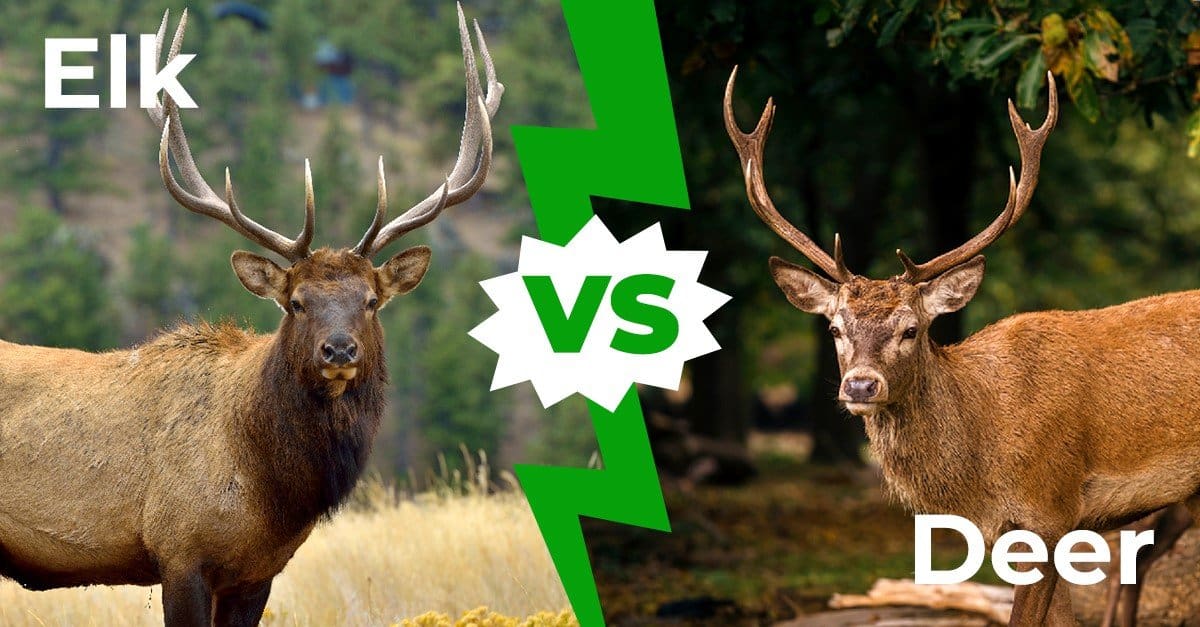
The most immediately apparent difference between deer and elk lies in their physical size. Elk are considerably larger than most North American deer species. Adult bull elk can stand over five feet tall at the shoulder and weigh between 500 to over 1,000 pounds, making them one of the largest land mammals in North America. In contrast, white-tailed deer typically stand about three feet at the shoulder and weigh between 100 to 300 pounds, with mule deer being similar in size.
Antlers: The Crown of the Cervids
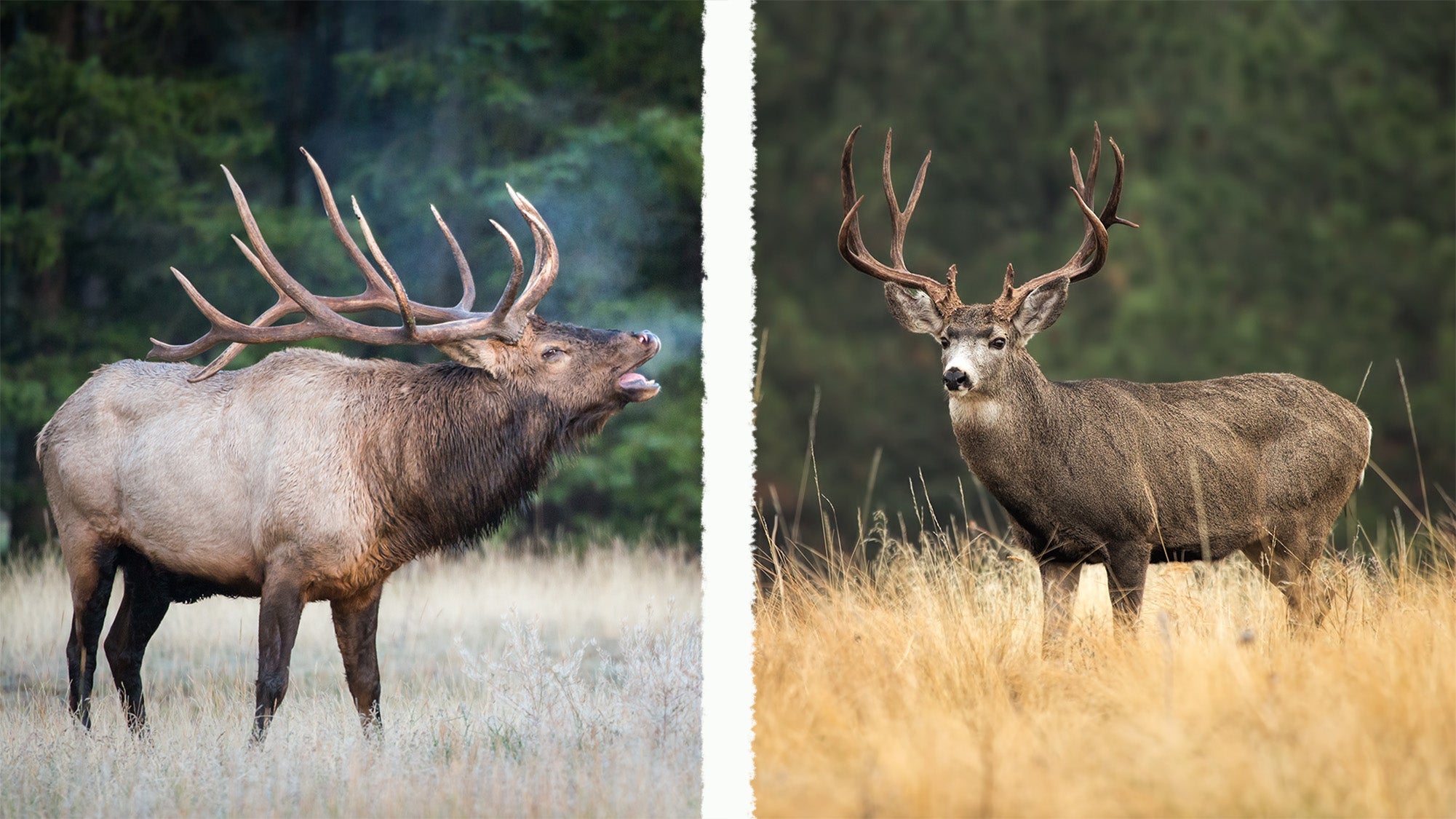
Antler development is a defining feature of male cervids, and significant differences exist between deer and elk. Elk antlers are massive, complex, and can spread up to four feet wide, with multiple tines branching off a main beam. They are typically a uniform brown color and have a characteristic curvature. The shedding and regrowth cycle of elk antlers is also notable, with bulls growing a full set of velvet-covered antlers each spring that harden into bone by late summer.
Deer antlers, while impressive in their own right, are generally smaller and less complex than those of elk. White-tailed deer antlers typically consist of a main beam with tines branching upwards and forwards, forming a distinctive “rack.” Mule deer antlers are characterized by their forked structure, with each beam splitting into two main branches, which then further subdivide. The size and complexity of antlers are often indicative of the age and health of the individual male.
Coat Coloration and Markings
While both species exhibit seasonal coat changes, there are subtle differences in coloration. Elk typically have a tawny brown coat with a distinct dark mane around the neck and a prominent, yellowish rump patch. Their legs are often darker. White-tailed deer are generally reddish-brown in the summer and grayish-brown in the winter, with a white underside to their tail and throat. Mule deer have a grayish-brown coat, a black tip on their tail, and large ears that give them their name.
Habitat and Ecological Niches
The differing physical attributes and evolutionary histories of deer and elk have shaped their respective adaptations to various environments, leading them to occupy distinct ecological niches. Their habitat preferences, dietary habits, and social structures reflect these adaptations.
Geographic Distribution and Preferred Landscapes
Elk are historically widespread across North America, though their populations have fluctuated due to hunting and habitat loss. They are primarily found in mountainous regions, boreal forests, and open woodlands with meadows and riparian areas. Their large size and robust build allow them to navigate challenging terrain and withstand colder climates. Yellowstone National Park is a prime example of a major elk habitat.
Deer, particularly white-tailed deer, are far more adaptable and have a broader distribution, thriving in a wider array of habitats. They are commonly found in forests, woodlands, grasslands, agricultural areas, and even suburban environments across North and Central America. Their smaller size and agility allow them to exploit a variety of food sources and evade predators in diverse settings. Mule deer tend to prefer more arid and open environments, often found in the western United States, in foothills, shrublands, and mountainous terrain.
Diet and Foraging Strategies
Both deer and elk are herbivores, but their dietary preferences and foraging strategies can differ based on habitat availability. Elk are primarily grazers, with grasses and sedges forming a significant portion of their diet, especially during the summer months. They also consume forbs, leaves, and twigs, and in winter, they may rely more heavily on bark and browse. Their powerful jaws and digestive systems are well-suited to processing a large volume of coarse vegetation.
Deer, particularly white-tailed deer, are more selective browsers, with a diet that often includes a greater variety of leaves, buds, twigs, fruits, and acorns. Their ability to adapt their diet to available resources is a key factor in their widespread success. Mule deer also browse on shrubs and forbs, and their diet can vary significantly depending on the season and the specific plant communities within their range.
Social Behavior and Herd Dynamics
The social structures of deer and elk also exhibit notable differences. Elk are highly social animals, often forming large herds, especially during the winter months. These large herds can offer protection from predators and facilitate efficient foraging. During the rutting season (mating season), bull elk engage in elaborate displays and vocalizations, including bugling, to attract females and assert dominance.
Deer exhibit more variable social behavior. White-tailed deer are often solitary or live in small family groups consisting of a doe and her fawns. While they may congregate in larger numbers in areas with abundant food or during the rut, they generally do not form the large, cohesive herds characteristic of elk. Mule deer also tend to be less gregarious than elk, with does and fawns often forming small groups.
Life Cycles and Reproduction
The reproductive strategies and life cycles of deer and elk, while sharing fundamental mammalian traits, also present distinct differences, influenced by their respective sizes, social structures, and environmental pressures.
Gestation and Fawning/Calving
Both deer and elk are precate (give birth to precocial young), meaning their offspring are relatively well-developed at birth and able to stand and move shortly after. The gestation period for elk is approximately 250-260 days, with calves typically born in late spring or early summer. A cow elk usually gives birth to one or two calves, which are spotted for camouflage.
White-tailed deer have a gestation period of around 195-210 days, with fawns also born in late spring or early summer. A doe typically has one or two fawns, which are also born spotted. Mule deer have a similar gestation period and birth patterns to white-tailed deer. The spotted coats of young deer and elk are crucial for their survival, helping them blend into their surroundings and evade predators in the vulnerable early stages of their lives.
Antler Shedding and Growth Cycles
As mentioned previously, antlers are a prominent feature of male cervids. Both deer and elk shed their antlers annually, typically in late winter or early spring. The process of antler regrowth is fueled by hormones and a rich supply of nutrients. The velvet covering that nourishes the developing antlers is shed once they have hardened into bone, usually by late summer or early fall, in time for the mating season. The size and complexity of the shed antlers are often indicators of the animal’s health and age.
Lifespan and Mortality Factors
The lifespan of deer and elk can vary significantly depending on factors such as predation, disease, hunting pressure, and habitat quality. In the wild, elk can live for 10 to 15 years, and sometimes longer, while white-tailed deer typically live for 6 to 10 years, though some individuals can reach 15 years or more. Mule deer have a similar lifespan to white-tailed deer.
Mortality for both species can be high, especially among young animals. Common causes of death include predation by wolves, cougars, and bears, as well as disease, starvation during harsh winters, and vehicle collisions. Hunting by humans also plays a role in population management for both species in many regions.

Conclusion: Appreciating the Distinctiveness
In summation, while the superficial similarities between deer and elk might lead to their casual grouping, a deeper examination reveals a fascinating array of differences. From their distinct evolutionary paths and substantial size disparities to their unique antler structures, habitat preferences, and social behaviors, these two cervid species are remarkable examples of adaptation and specialization within the North American landscape. Recognizing these differences not only enriches our understanding of wildlife but also underscores the importance of conserving the diverse habitats that support these magnificent creatures. Whether one encounters a nimble white-tailed deer bounding through a forest or a majestic elk bugling across a mountain meadow, appreciating their individual characteristics offers a profound connection to the wild world around us.
aViewFromTheCave is a participant in the Amazon Services LLC Associates Program, an affiliate advertising program designed to provide a means for sites to earn advertising fees by advertising and linking to Amazon.com. Amazon, the Amazon logo, AmazonSupply, and the AmazonSupply logo are trademarks of Amazon.com, Inc. or its affiliates. As an Amazon Associate we earn affiliate commissions from qualifying purchases.