
Determining the “worth” of Facebook—now officially operating as Meta Platforms, Inc.—is a multifaceted exercise that spans beyond a simple glance at a stock ticker. For investors, financial analysts, and business enthusiasts, the value of this social media titan is a barometer for the broader tech economy and the digital advertising landscape. To understand how much Facebook is worth today, one must dissect its market capitalization, its revenue engines, and the intrinsic value of its sprawling digital ecosystem.
Since its Initial Public Offering (IP0) in 2012, Facebook’s valuation has undergone a radical transformation. It has evolved from a campus networking site into a global conglomerate that dictates the flow of information and commerce for billions of people. This article explores the financial architecture of Meta, examining the quantitative and qualitative factors that define its current price tag.
Understanding Market Capitalization: The Numbers Behind the Name
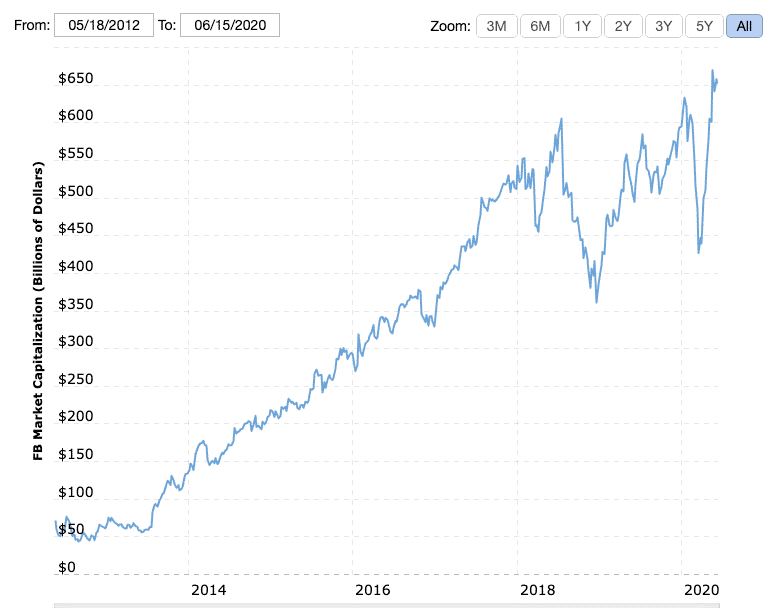
The most common way to answer “how much is Facebook worth” is to look at its market capitalization. Market cap is calculated by multiplying the current share price by the total number of outstanding shares. However, for a company as volatile and influential as Meta, this figure is a moving target that reflects investor confidence in real-time.
Current Market Cap and Historical Context
As of mid-2024, Meta’s market capitalization has frequently hovered around the $1 trillion mark, firmly cementing its place in the exclusive “Trillion Dollar Club” alongside peers like Apple, Microsoft, and Alphabet. This is a significant recovery from the “year of efficiency” in 2023, following a brutal 2022 where the company saw its valuation plummet due to concerns over metaverse spending and stalling user growth.
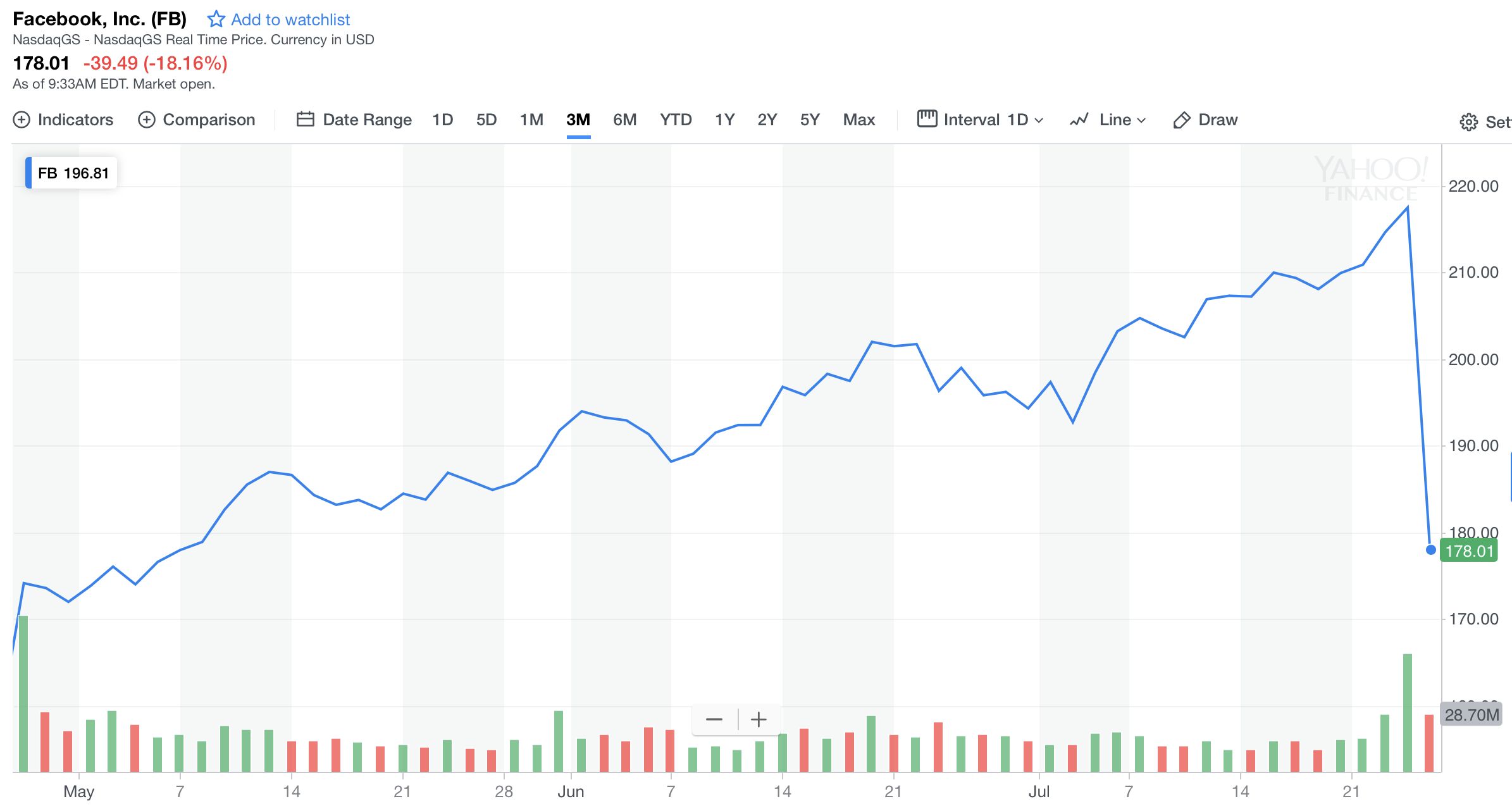
The historical trajectory of Meta’s worth is a lesson in market sentiment. In early 2022, Meta experienced the largest single-day drop in market value for any U.S. company in history, losing over $230 billion in valuation in 24 hours. The rebound to a trillion-dollar valuation highlights the company’s resilience and the market’s renewed faith in its core advertising business and emerging AI capabilities.
Earnings Per Share (EPS) and Price-to-Earnings (P/E) Ratios
To professional investors, the price of a stock is only relevant when compared to its earnings. The P/E ratio is a primary metric used to determine if Meta is overvalued or undervalued relative to its sector. Historically, Meta has often traded at a lower P/E ratio than high-growth software companies, reflecting the regulatory risks and mature nature of its flagship platform.
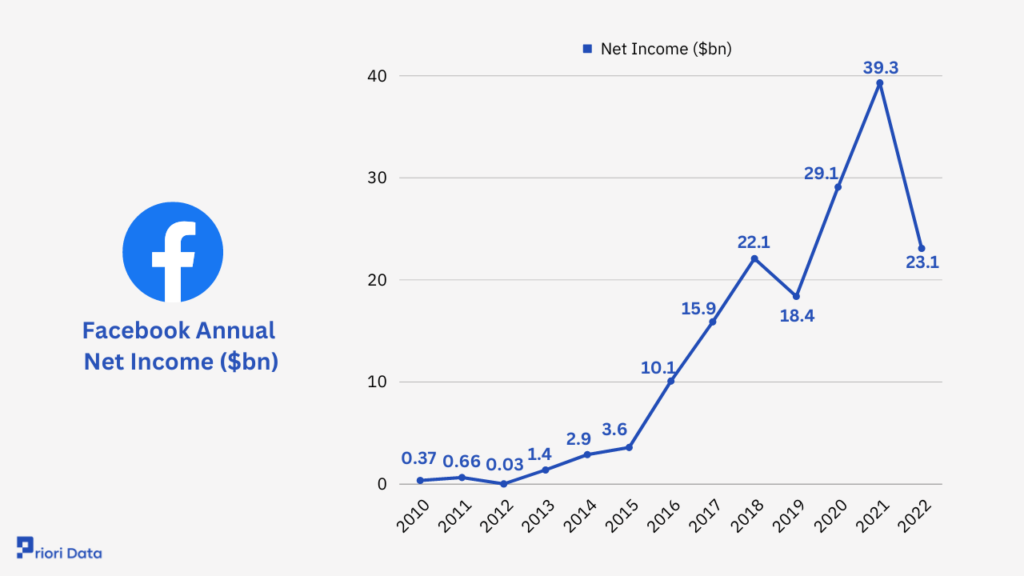
Earnings Per Share (EPS) has remained a strong suit for the company. Despite massive capital expenditures in hardware and research, Meta’s ability to generate billions in net income every quarter provides a “valuation floor.” When EPS grows while the P/E ratio remains compressed, many value investors view the company as “worth” more than its current trading price suggests.
Revenue Streams: How Meta Generates Value
A company’s worth is fundamentally the present value of its future cash flows. To understand Facebook’s worth, we must look at where its money comes from. While the company is exploring new frontiers, its valuation remains heavily tethered to its dominance in the attention economy.
The Advertising Powerhouse
Over 97% of Meta’s total revenue is derived from advertising. This is the engine that drives its valuation. Meta’s worth is built on its ability to offer advertisers unparalleled targeting capabilities across Facebook, Instagram, Messenger, and increasingly, WhatsApp.
The valuation of this advertising business is protected by a “moat” of user data and network effects. Even as privacy changes—such as Apple’s App Tracking Transparency (ATT)—initially threatened this revenue stream, Meta’s pivot toward AI-driven ad modeling has allowed it to recover. The “worth” of the Facebook app alone is predicated on its status as an essential utility for small and medium-sized businesses (SMBs) worldwide, millions of whom rely on the platform as their primary storefront.
Diversification Through Reality Labs and AI
Meta’s “worth” also includes its speculative ventures. Reality Labs, the division responsible for virtual reality (VR), augmented reality (AR), and the Metaverse, is currently a “value-negative” component in terms of immediate cash flow, losing billions of dollars annually. However, from a long-term valuation perspective, these investments represent the company’s attempt to own the next computing platform.
If Meta successfully transitions from being a “social media company” to a “spatial computing company,” the current valuation may eventually be seen as a bargain. Furthermore, the integration of Artificial Intelligence (AI) into its ad-bidding systems and user interfaces has added a new layer of value, as AI efficiency directly correlates to higher margins and better ROI for advertisers.
Factors Influencing Facebook’s Financial Valuation
The valuation of a global entity like Meta is not static; it is influenced by internal performance metrics and external macroeconomic pressures. To determine the “true” worth of the company, analysts look at several key performance indicators (KPIs).
User Growth and Engagement Metrics (ARPU)
Meta’s valuation is intrinsically linked to its Daily Active Users (DAU) and Monthly Active Users (MAU). With over 3 billion people using at least one of its apps daily, the company has reached a level of scale that is difficult to replicate.
However, the more critical metric for valuation is Average Revenue Per User (ARPU). A user in North America is significantly more “valuable” to Meta’s bottom line than a user in Southeast Asia due to the maturity of the advertising market. Meta’s worth increases as it finds ways to better monetize its “Family of Apps” in emerging markets and shifts users toward high-engagement formats like Reels.
Macroeconomic Trends and Regulatory Impacts
As a titan of the digital age, Meta is a frequent target for antitrust litigation and privacy regulation. The company’s worth is often discounted by the “regulatory tax”—the risk that the European Union’s Digital Markets Act (DMA) or U.S. Federal Trade Commission (FTC) lawsuits could force a breakup of the company or limit its data-collection practices.
Additionally, interest rates play a massive role in tech valuations. When interest rates are high, the future earnings of growth-oriented companies like Meta are discounted more heavily, leading to a lower present value. Conversely, in a low-rate environment, Meta’s massive cash reserves and buyback programs become even more attractive to investors seeking stability and growth.
The Future Outlook: Is Meta a Value Play or a Growth Trap?
The debate over how much Facebook is worth often boils down to whether the company is a maturing “cash cow” or a “hyper-growth” innovator. This distinction determines the multiple that the market is willing to pay for its shares.
The Metaverse Long-Term Bet
Mark Zuckerberg’s decision to rebrand the company to Meta was a signal that the company’s future value lies beyond the blue Facebook app. This is a high-risk, high-reward strategy. If the Metaverse becomes the standard for work and play, Meta’s current valuation could triple over the next decade. If it fails, the company risks being seen as a legacy social media firm that burned billions on a failed vision. Currently, the market assigns a conservative value to Reality Labs, viewing it more as an expensive R&D project than a current asset.
Artificial Intelligence as a Catalyst for Growth
In the short to medium term, AI is the primary driver of Meta’s financial worth. By open-sourcing its Llama LLMs (Large Language Models), Meta is positioning itself as the infrastructure provider for the next wave of tech. AI improves the “worth” of the core business in three ways:
- Ad Targeting: Higher precision leads to higher prices per ad.
- Content Discovery: Better algorithms keep users on Instagram and Facebook longer.
- Operational Efficiency: AI-driven coding and automated customer service reduce overhead.
Conclusion: Synthesizing Meta’s Total Worth
So, how much is Facebook worth? From a strictly financial standpoint, the answer is found in its trillion-dollar market cap, its $130+ billion in annual revenue, and its robust balance sheet. However, the “intrinsic value” of the company is far more complex.
It is a combination of its dominant position in the global advertising duopoly (alongside Google), its massive user base that represents nearly half of the planet’s population, and its aggressive pursuit of future technologies like AI and VR. While regulatory hurdles and competition from platforms like TikTok present ongoing risks, Meta’s core profitability remains staggering. For the modern investor, the worth of Facebook is not just a reflection of what it is today, but a bet on its ability to remain the primary gateway to the digital world for decades to come.
aViewFromTheCave is a participant in the Amazon Services LLC Associates Program, an affiliate advertising program designed to provide a means for sites to earn advertising fees by advertising and linking to Amazon.com. Amazon, the Amazon logo, AmazonSupply, and the AmazonSupply logo are trademarks of Amazon.com, Inc. or its affiliates. As an Amazon Associate we earn affiliate commissions from qualifying purchases.