
In the era of high-speed mobility, the difference between a safe stop and a catastrophic collision is often measured in milliseconds. While the physiological limits of the human brain have remained largely unchanged for millennia, the technology used to measure, augment, and ultimately replace human reflexes is evolving at an exponential rate. Understanding the average reaction time for drivers is no longer just a matter of biological curiosity; it is a critical benchmark for developers of Advanced Driver Assistance Systems (ADAS), Artificial Intelligence (AI) engineers, and telematics innovators.
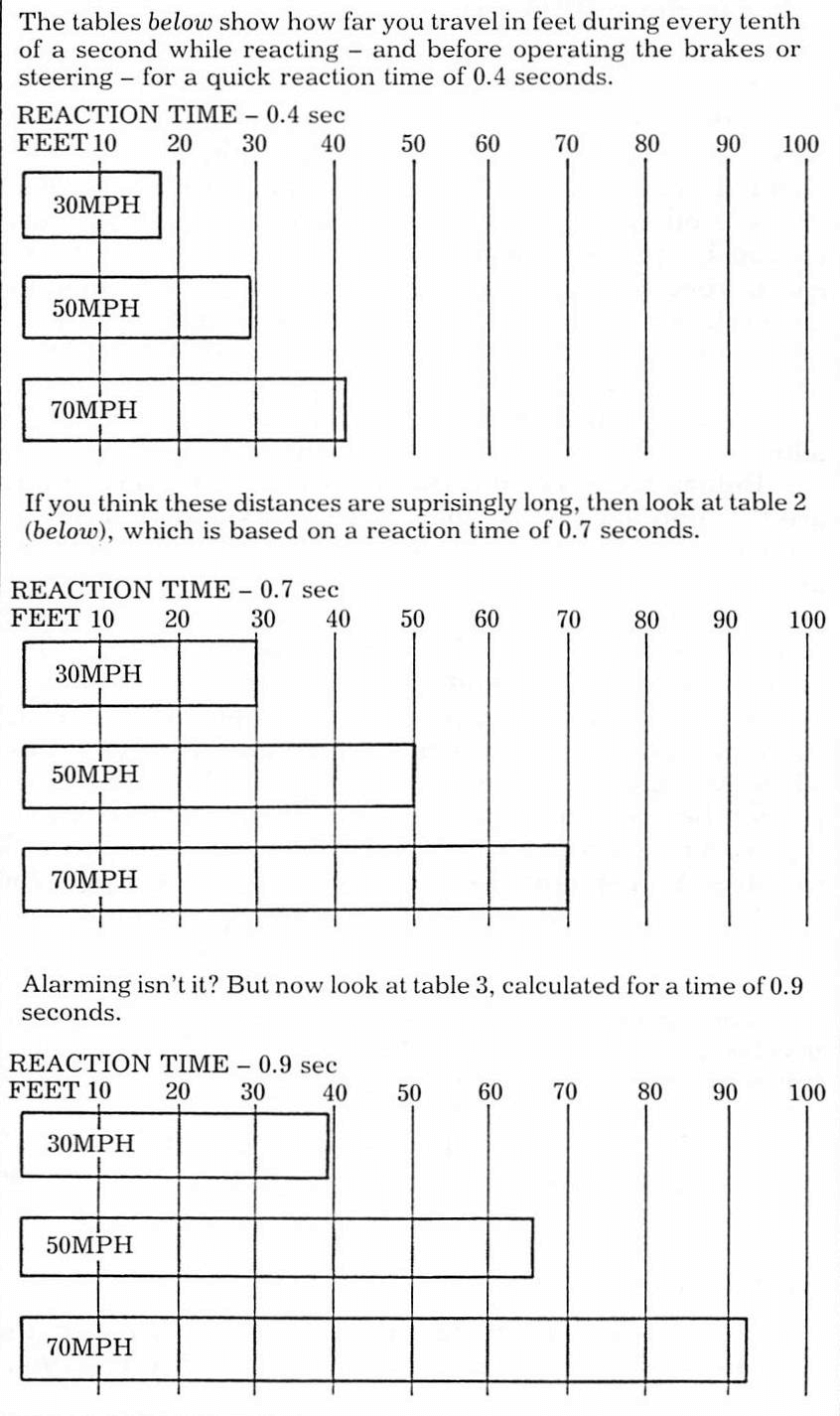
To understand where we are going with autonomous transit, we must first quantify the baseline: the human driver.
The Science and Data of Human Reaction Times
From a technical perspective, a driver’s reaction time is not a single event but a sequence of latency periods within a biological “system.” In engineering terms, this is often referred to as Perception-Response Time (PRT).
Perception, Processing, and Execution
The process begins when a stimulus—such as a brake light or a pedestrian—enters the driver’s field of vision. This data is transmitted via the optic nerve to the visual cortex. The “processing” phase involves the brain identifying the object and deciding on a course of action (e.g., “I need to brake”). Finally, the “execution” phase is the physical movement of the foot from the accelerator to the brake pedal.
Data from the American Association of State Highway and Transportation Officials (AASHTO) suggests that for the average driver, the PRT is approximately 1.5 seconds. However, this is a conservative estimate used for road design. In controlled laboratory settings, simple reaction times to a clear stimulus can be as low as 0.2 to 0.3 seconds, but the complexity of real-world driving—which requires “choice reaction time”—typically pushes the average to 0.7 to 1.0 seconds under ideal conditions.
Factors Influencing Biological Latency
Just as hardware performance can be throttled by heat or background processes, human reaction time is highly variable. Software developers creating safety apps must account for “latency modifiers”:
- Cognitive Load: When a driver is using an infotainment system or a mobile device, reaction times can degrade by up to 30%.
- Age-Related Degradation: Biological processing speeds typically peak in the early 20s and decline gradually, adding dozens of milliseconds to the response chain every decade.
- Environmental Inputs: Low-light conditions or heavy rain increase the “noise” in the visual data, requiring the brain to spend more cycles on image recognition before a decision can be made.
Telematics and the Quantified Driver
The rise of the Internet of Things (IoT) has turned the modern vehicle into a mobile data center. Telematics—the integration of telecommunications and informatics—has allowed us to move beyond laboratory estimates and measure real-world reaction times across millions of miles.
IoT Sensors in Modern Vehicles
Modern cars are equipped with an array of sensors, including accelerometers, gyroscopes, and GPS modules. These components track “harsh braking events.” By analyzing the delta between a lead vehicle’s deceleration and the following driver’s brake application, telematics software can calculate reaction times in real-time.
This data is used to create a “Digital Twin” of a driver’s behavior. Tech companies are now using this granular data to develop personalized safety profiles. For example, if a system detects that a driver’s reaction time is consistently lagging on Friday evenings compared to Monday mornings, it can adjust the sensitivity of the Forward Collision Warning (FCW) to trigger earlier, compensating for the driver’s fatigue.
Mobile Apps and Gamification of Road Safety
Software developers have successfully transitioned reaction-time monitoring from expensive hardware to smartphone apps. Utilizing the phone’s built-in camera and AI-driven computer vision, apps can monitor the road ahead and the driver’s face simultaneously.
By using “gamification,” these tech platforms encourage drivers to improve their alertness. Through haptic feedback and visual scoring, drivers are incentivized to maintain a “safety buffer” that exceeds their measured reaction time. This represents a shift from reactive safety to proactive tech-managed behavior.
Artificial Intelligence vs. Human Reflexes
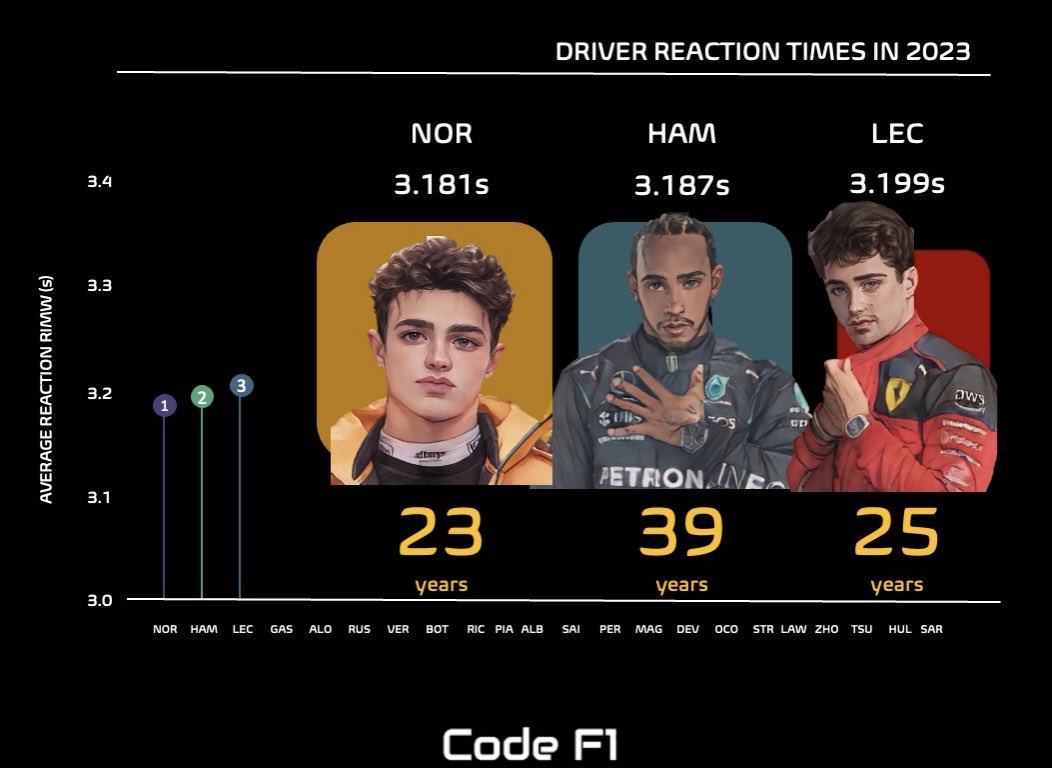
The most significant disruption in the study of reaction times is the advent of Artificial Intelligence. While humans are limited by the speed of electrochemical signals in the nervous system, AI operates at the speed of silicon.
The 0.1 Second Threshold
In the world of autonomous vehicles (AVs), the goal is to reduce the reaction time to near zero. Current AI stacks, powered by high-performance GPUs and NPUs (Neural Processing Units), can perceive a hazard and initiate a braking sequence in less than 100 milliseconds (0.1 seconds).
To put this in perspective:
- Human Average: 1,500ms (at 60 mph, the car travels 132 feet before the driver hits the brakes).
- AI Average: 100ms (at 60 mph, the car travels 8.8 feet before the system responds).
This 90% reduction in reaction time is the primary technical argument for the transition to fully autonomous systems. The “reaction” for an AI isn’t just faster; it is also more consistent. AI does not experience “distraction” or “fatigue,” ensuring that the 100ms response is maintained regardless of the duration of the trip.
Sensor Fusion and Predictive Algorithms
Reaction time in AI is further enhanced by “Sensor Fusion.” While a human driver relies almost exclusively on sight, an AI combines data from LiDAR (Light Detection and Ranging), Radar, and Cameras.
Advanced algorithms use “Occupancy Grids” to predict where an object will be in the next 500 milliseconds. This means the tech isn’t just reacting to what has happened; it is reacting to what is statistically likely to happen. This “predictive reaction” effectively creates a negative latency, where the vehicle begins to adjust its trajectory before a human would even be aware a hazard exists.
The Future of Reactive Tech: From ADAS to V2X
As we look toward the future of transportation technology, the concept of “average reaction time” may become obsolete, replaced by “system latency” and interconnected communication.
Edge Computing on the Road
The limitation for current vehicle tech is the time it takes to process vast amounts of sensor data. This is where Edge Computing comes in. By processing data locally on the vehicle’s onboard computer rather than sending it to the cloud, manufacturers can shave off vital milliseconds.
The next generation of automotive chips is designed specifically for “low-latency inference.” These chips are optimized to run deep neural networks that can identify a “pedestrian” vs. a “stationary pole” in a fraction of the time it took previous generations of hardware. This optimization of the “digital reflex” is the current frontline of automotive tech R&D.
V2X Communication: Eliminating the Need for Reaction
Perhaps the most transformative technology is V2X (Vehicle-to-Everything) communication. In a V2X ecosystem, vehicles communicate with each other (V2V) and with smart infrastructure (V2I).
In this scenario, if a car three vehicles ahead performs an emergency brake, it broadcasts a signal via 5G or DSRC (Dedicated Short-Range Communications) to all surrounding cars. This signal travels at the speed of light. The following vehicles receive this data and begin braking simultaneously with the lead car.
In a fully realized V2X environment, the “reaction time” is essentially zero. The system moves from a “reactive” model—where one must see and then act—to a “synchronized” model, where the entire fleet of vehicles acts as a single, coordinated entity. This technology effectively solves the problem of human biological limits by removing the human from the critical path of the reaction chain.

Conclusion
The average reaction time for all drivers remains a sobering metric—a 1.5-second window that determines the boundary between safety and disaster. However, through the lens of technology, we are seeing a massive shift in how this window is managed.
From the telematics that monitor our biological latencies to the AI and V2X systems that aim to bypass them entirely, the tech industry is redefined “reaction” as a data-driven engineering challenge. As we move from 1,500 milliseconds of human hesitation to 100 milliseconds of AI precision, the road becomes not just a place of transit, but a high-speed network where safety is dictated by the speed of code.
aViewFromTheCave is a participant in the Amazon Services LLC Associates Program, an affiliate advertising program designed to provide a means for sites to earn advertising fees by advertising and linking to Amazon.com. Amazon, the Amazon logo, AmazonSupply, and the AmazonSupply logo are trademarks of Amazon.com, Inc. or its affiliates. As an Amazon Associate we earn affiliate commissions from qualifying purchases.