
In the rapidly evolving landscape of global finance, few companies have disrupted the traditional credit model as effectively as Klarna. Founded in Stockholm in 2005, Klarna has grown from a localized payment solution into a global powerhouse, synonymous with the “Buy Now, Pay Later” (BNPL) revolution. However, for many consumers and investors, a fundamental question remains: if the service is often free for the shopper, how does Klarna generate billions in revenue?
To understand Klarna’s financial engine, one must look beyond the simple interface of its mobile app. Klarna operates a sophisticated, multi-layered revenue model that balances merchant partnerships, consumer financial services, and auxiliary banking products. By positioning itself as both a payment processor and a marketing partner, Klarna has moved away from the traditional banking model of relying solely on high-interest debt, opting instead for a diversified ecosystem that prioritizes transaction volume and merchant integration.
The Merchant Ecosystem: The Primary Revenue Engine
The largest portion of Klarna’s revenue does not come from the pockets of consumers, but from the merchants who integrate Klarna into their checkout pages. For a retailer, offering Klarna is not just a convenience; it is a strategic investment in sales conversion.
Merchant Transaction and Commission Fees
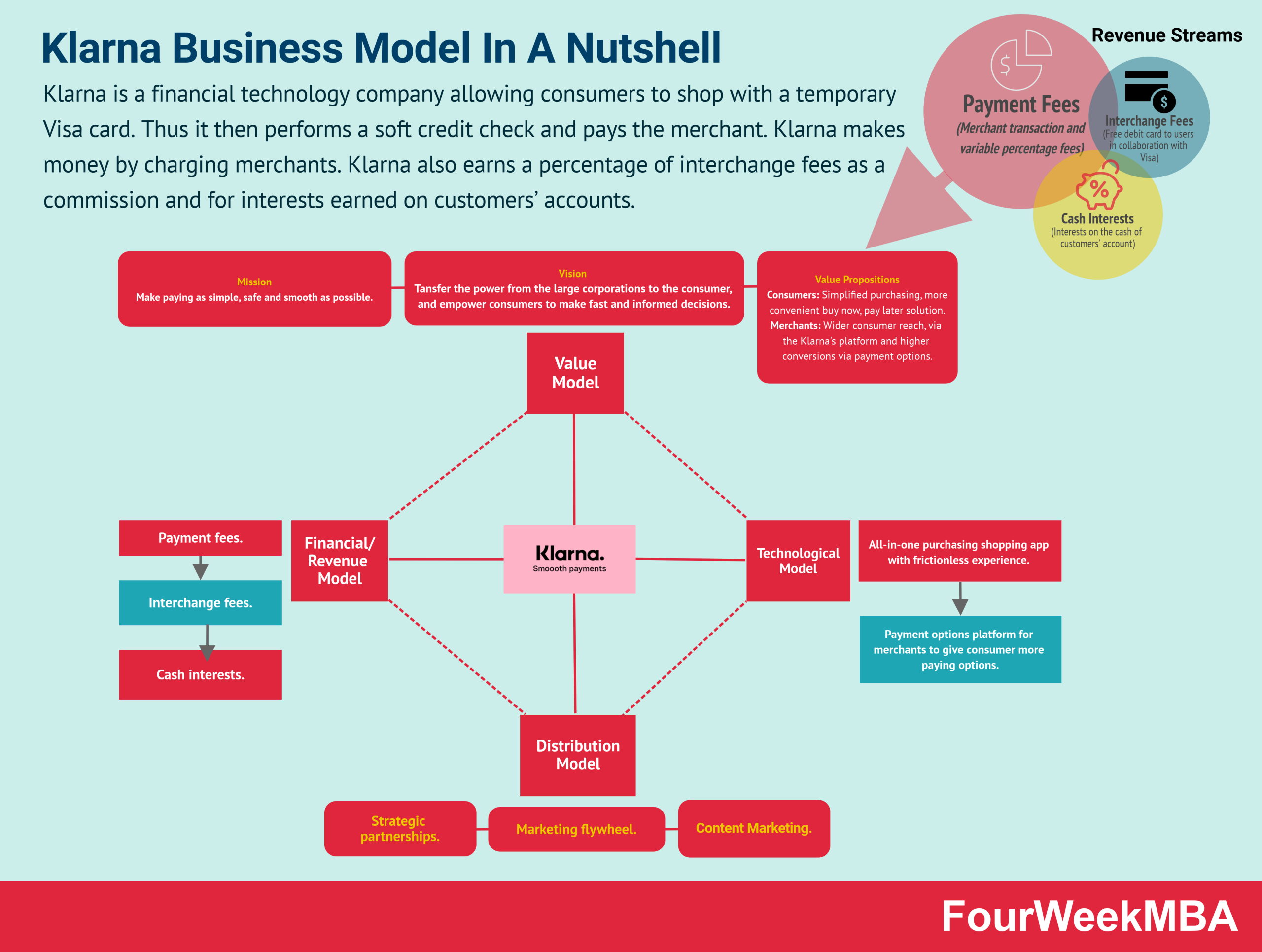
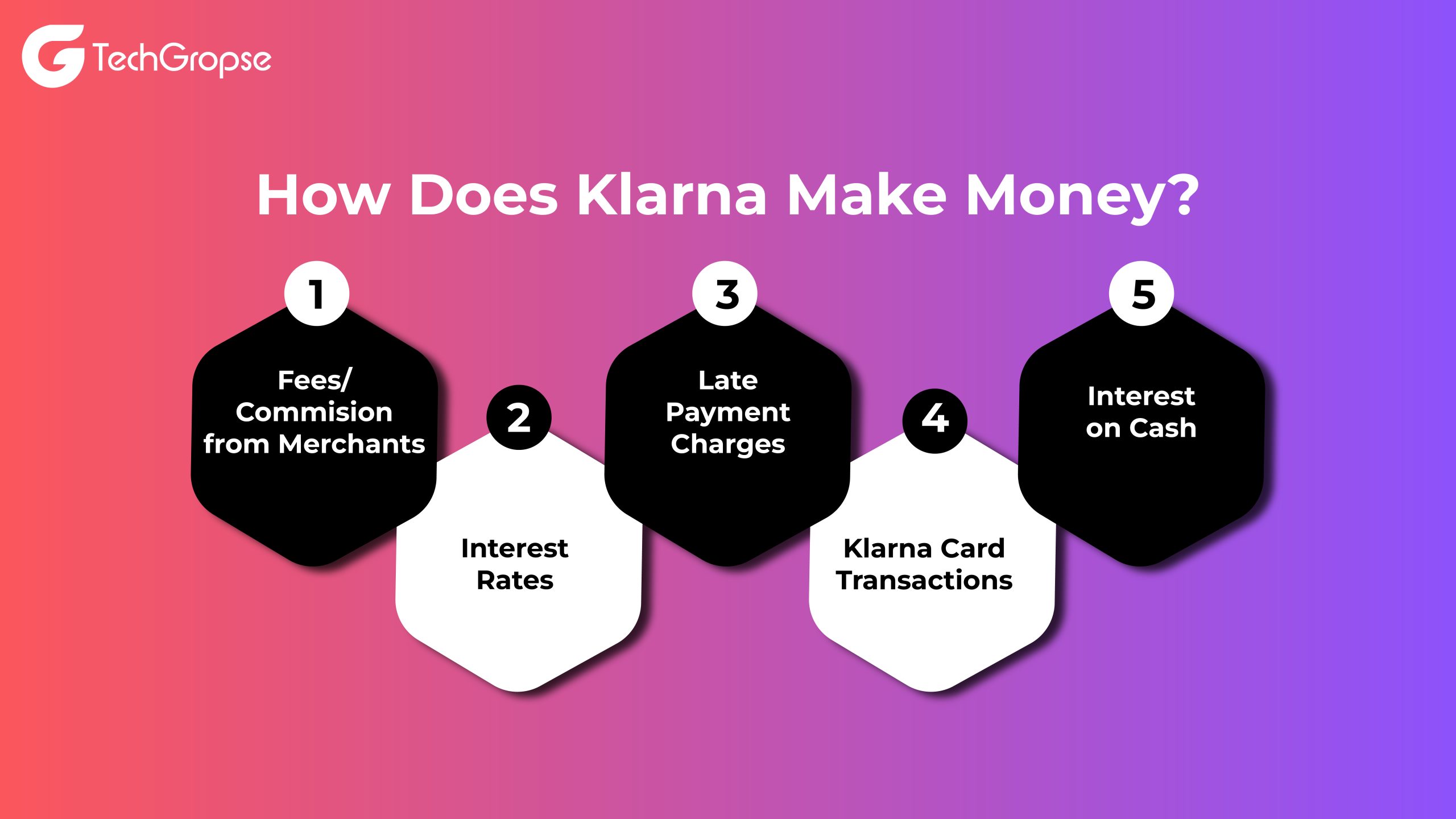
Every time a customer selects Klarna at checkout, the merchant pays a fee. This typically consists of a fixed transaction fee (often around $0.30) plus a variable commission based on the total order value. While traditional credit card processors might charge between 1.5% and 3%, Klarna’s fees are often higher, sometimes ranging from 3% to 7%.
Retailers are willing to pay this premium because Klarna assumes all the credit risk. The merchant receives the full payment for the goods immediately (minus the fee), while Klarna takes on the responsibility of collecting the funds from the customer over time. If the customer defaults, the merchant is still protected.
Boosting Conversion Rates and Average Order Value (AOV)
From a business finance perspective, Klarna’s value proposition to merchants is centered on “conversion.” Research consistently shows that offering flexible payment terms reduces “cart abandonment.” When consumers see they can split a $400 purchase into four interest-free payments of $100, they are significantly more likely to complete the purchase.
Furthermore, Klarna drives a higher Average Order Value (AOV). Shoppers who use BNPL services often spend up to 45% more per transaction than those using traditional payment methods. For a high-end fashion or electronics retailer, the increased volume more than offsets the higher commission fee paid to Klarna.
Integration and Marketing Services
Klarna has evolved into a “shopping destination,” not just a checkout button. Through its app, Klarna offers “Boost” packages to brands. These are essentially marketing and lead-generation services where brands pay to be featured in the Klarna app’s curated lists or personalized recommendations. By leveraging data-driven insights into consumer spending habits, Klarna acts as a high-intent marketing channel, charging brands for the traffic and sales it directs toward their storefronts.
Monetizing the Consumer Experience: Interest and Service Fees
While Klarna’s “Pay in 4” and “Pay in 30 Days” products are famous for being interest-free, they are only one part of the consumer-facing portfolio. Klarna operates as a fully licensed bank in several jurisdictions, allowing it to offer more traditional credit products that generate significant interest income.
Interest-Bearing Financing Plans
For larger purchases—such as furniture or high-end electronics—Klarna offers “Monthly Financing.” Unlike the short-term BNPL products, these plans function much like a traditional personal loan or credit card. Terms can range from 6 to 36 months, and the Annual Percentage Rate (APR) can be as high as 19.99% to 29.99%, depending on the user’s creditworthiness and the region’s regulations. This interest income is a stable and lucrative pillar of Klarna’s revenue, particularly in the US and UK markets.
Late Fees and Penalty Charges
Although Klarna markets itself as a consumer-friendly alternative to credit cards, it does employ late fees to encourage timely payments and recoup administrative costs. If a user misses a scheduled payment in the “Pay in 4” model, Klarna may charge a fee (typically around $7 to $10 in the US, or £5 in the UK).
While Klarna emphasizes that it does not want to rely on late fees—and has even abolished them in some markets to improve its brand image—they remain a necessary component of the “Money” side of the business. These fees serve as a hedge against the cost of capital and the risks associated with unsecured lending.
The Klarna Card and Subscription Models
In a bid to capture more of the consumer’s daily spending, the company introduced the Klarna Card. This physical and virtual Visa card allows users to “Klarna” any purchase, even at stores that are not official partners. In some regions, Klarna charges a small monthly subscription fee for the card, while in others, it generates revenue through “interchange fees”—the small percentage paid by a merchant’s bank to the card issuer every time a card is swiped. Additionally, Klarna has experimented with “Klarna Plus,” a subscription service that offers users waived service fees and exclusive rewards for a flat monthly rate.
Diversified Financial Streams: Affiliate Income and Banking Operations
Beyond the direct interaction between merchant and consumer, Klarna utilizes its massive data pool and banking license to generate revenue through indirect channels. This diversification is what separates Klarna from smaller BNPL competitors.
Affiliate Commissions and Lead Generation
The Klarna app is effectively a digital shopping mall. When a user discovers a product through the Klarna app and clicks through to a merchant’s site, Klarna often earns an affiliate commission on any resulting sale. This is a “performance-based” revenue stream. Unlike the fixed commission at checkout, affiliate fees are earned for the role Klarna plays as a discovery engine. For many retailers, Klarna is now one of their top-performing referral sources, rivaling Google and Meta in terms of high-intent traffic.
Cash Management and Interest on Deposits
Because Klarna holds a Swedish banking license, it is permitted to take deposits from consumers. In several European markets, Klarna offers savings accounts with competitive interest rates. This allows Klarna to secure a low-cost source of capital. Instead of borrowing money from other banks at high market rates to fund its BNPL loans, it uses the deposits from its savings customers. The “spread”—the difference between the low interest it pays to savers and the higher returns it generates from merchant fees and consumer loans—is a classic banking profit mechanism.
Data Monetization and Insights
While Klarna does not sell individual user data, the aggregated insights it possesses are incredibly valuable. Klarna can track purchasing trends across thousands of brands and millions of users. This data allows Klarna to refine its internal credit scoring models, reducing the “cost of risk” (the money lost to bad debt). By being better at predicting who will pay back their loans, Klarna ensures that its capital is used efficiently, directly impacting the company’s bottom line.
Navigating the Financial Realities: Risk, Debt, and Sustainability
To truly understand how Klarna makes money, one must also understand how it protects its money. The BNPL business model is highly sensitive to the broader economic environment, particularly interest rates and inflation.
Managing Credit Default Risks
The greatest threat to Klarna’s profitability is “bad debt”—money lent to consumers that is never repaid. Klarna uses proprietary AI-driven underwriting models to assess a user’s risk in milliseconds. By starting new users with low credit limits and increasing them only after successful repayments, Klarna mitigates its exposure. The ability to keep default rates low while scaling volume is the secret sauce that determines whether the company is profitable in a given quarter.
The Impact of Global Interest Rates
Klarna’s model was born in an era of “cheap money” (low interest rates). When central banks raise rates, it becomes more expensive for Klarna to fund its lending. To stay profitable, Klarna must either increase its fees to merchants, raise interest on its financing products, or become more efficient in its operations. Recently, Klarna has shifted its focus from “growth at all costs” to “path to profitability,” significantly reducing its operational expenses and focusing on higher-margin products to counter the rising cost of capital.

The Future of the Klarna Revenue Model
As Klarna prepares for an eventual public listing, its revenue model continues to shift toward a “global retail bank” hybrid. We are seeing a move away from a reliance on simple transaction fees toward a more robust ecosystem of financial services. By offering insurance, high-yield savings, and even wealth management tools, Klarna aims to increase the “lifetime value” of its users. The goal is to be the primary financial interface for a generation that is skeptical of traditional banks but deeply comfortable with embedded finance.
In conclusion, Klarna’s ability to make money is a masterclass in modern fintech strategy. By charging merchants for growth, consumers for flexibility, and utilizing its banking infrastructure for capital efficiency, Klarna has built a resilient and multi-faceted financial machine. While challenges like regulation and economic volatility remain, Klarna’s diversified revenue streams provide a blueprint for the future of the digital economy.
aViewFromTheCave is a participant in the Amazon Services LLC Associates Program, an affiliate advertising program designed to provide a means for sites to earn advertising fees by advertising and linking to Amazon.com. Amazon, the Amazon logo, AmazonSupply, and the AmazonSupply logo are trademarks of Amazon.com, Inc. or its affiliates. As an Amazon Associate we earn affiliate commissions from qualifying purchases.