
In the complex world of finance, from personal budgeting to multi-billion dollar corporate investments, decisions are the bedrock upon which wealth is built or lost. Understanding how these decisions ideally should be made is paramount. This brings us to the Rational Model of Decision Making—a cornerstone concept in economics, finance, and business strategy that postulates individuals and organizations aim to make choices that maximize their utility or achieve their goals in a logical, structured manner. Far from being a mere academic exercise, this model provides a powerful framework for evaluating, planning, and executing financial strategies, even as its limitations provoke deeper insights into human economic behavior.

At its core, the rational model suggests a systematic process: identifying a problem or opportunity, gathering all relevant information, evaluating alternatives against clearly defined criteria, and ultimately selecting the option that offers the greatest benefit or lowest cost. For anyone navigating the intricacies of personal finance, investing, or business financial management, grasping this model is not just theoretical; it’s a practical imperative for cultivating sound financial judgment.
The Pillars of Rational Financial Choice
The rational model rests on several fundamental assumptions that, when applied to financial contexts, paint a picture of an ideal decision-maker. These pillars highlight the conditions under which financial choices are presumed to be perfectly logical and optimal.
Complete Information and Perfect Foresight
One of the most foundational assumptions of the rational model is the availability of complete and accurate information. In a financial context, this implies that a decision-maker has access to all pertinent data regarding market conditions, investment options, risk factors, potential returns, and future economic trends. Furthermore, “perfect foresight” suggests an ability to accurately predict the outcomes of various choices.
While a theoretical ideal, this assumption underpins much of financial modeling and analysis. For instance, when an investor analyzes a company’s financial statements, industry reports, and macroeconomic indicators, they are striving to gather as much information as possible to approximate this ideal. Similarly, financial planning often involves projecting future income, expenses, and investment growth, attempting to anticipate outcomes. The closer one gets to comprehensive information, the more “rational” their decision-making process can be. Without it, financial decisions are inherently more speculative and prone to error, underscoring the value of thorough due diligence and continuous learning in money matters.
Clear Objectives and Utility Maximization
A rational financial decision-maker is assumed to have clear, well-defined objectives. Whether it’s maximizing personal wealth, achieving a specific retirement fund size, maximizing shareholder value for a corporation, or minimizing debt, these objectives provide the compass for decision-making. The model then posits that choices are made to “maximize utility”—meaning selecting the option that brings the greatest satisfaction, benefit, or profit relative to the defined goals.
In personal finance, this could involve choosing between saving for a down payment on a house versus investing in a high-growth stock portfolio, where the chosen path aligns most directly with the individual’s long-term financial aspirations and risk tolerance. For a business, it might mean choosing between different capital investment projects, with the decision hinging on which project is expected to generate the highest return on investment (ROI) or net present value (NPV), thereby maximizing shareholder wealth. The clarity of these financial objectives is crucial; ambiguous goals lead to inconsistent and sub-optimal decisions.
Consistent Preferences and Logical Evaluation
The rational model also assumes that decision-makers possess consistent preferences over time and evaluate alternatives using a logical, unbiased thought process. This means that if an investor prefers investment A over investment B today, and B over C, they will logically prefer A over C, assuming all conditions remain equal. This transitivity of preferences ensures a stable basis for comparison.
Logical evaluation involves systematically assessing each alternative against the established criteria, weighing pros and cons without succumbing to emotional biases or cognitive shortcuts. For instance, when comparing various mortgage options, a rational borrower would meticulously analyze interest rates, terms, fees, and their long-term financial impact, rather than being swayed by superficial features or a sense of urgency. In corporate finance, this translates into rigorous financial modeling, sensitivity analysis, and scenario planning to objectively compare different strategic options. This commitment to logical, consistent evaluation is what distinguishes a truly rational decision from one driven by impulse or fleeting sentiment.
Applying Rationality in Personal Finance and Investing
The theoretical underpinnings of the rational model find profound practical application across various facets of personal finance and investment management. By consciously adopting a rational approach, individuals can significantly enhance their financial well-being and achieve their monetary goals more effectively.
Budgeting and Savings: A Rational Approach to Personal Wealth
At the most fundamental level, budgeting is an exercise in rational decision-making. It involves defining financial goals (e.g., saving for retirement, a down payment, or an emergency fund), gathering information about income and expenses, and then allocating resources in a way that maximizes the achievement of those goals. A rational budgeter evaluates different spending categories, identifies areas for optimization, and makes trade-offs based on long-term utility rather than immediate gratification.
For example, choosing to contribute consistently to a retirement account instead of splurging on discretionary purchases demonstrates a rational preference for future financial security over present consumption. Similarly, building an emergency fund is a rational response to unforeseen financial shocks, minimizing future risk and potential debt accumulation. This structured approach to income and outflow ensures that every dollar is intentionally directed towards maximizing personal financial utility.
Investment Strategies: Objective Analysis for Optimal Returns
Investing is arguably where the rational model shines brightest and faces its greatest challenges. A rational investor meticulously researches potential investments, analyzes financial data, assesses risk-reward profiles, and diversifies their portfolio based on objective criteria rather than hype or emotion. They seek to understand the intrinsic value of an asset, weigh its potential growth against market risks, and make decisions aimed at maximizing long-term returns commensurate with their risk tolerance.
This involves looking beyond daily market fluctuations to focus on fundamental analysis, evaluating a company’s earnings, balance sheet, management quality, and competitive landscape. It also means understanding concepts like compounding returns, inflation’s impact, and asset allocation. A rational investment strategy is characterized by patience, discipline, and a commitment to data-driven insights over speculative impulses, even when market sentiments are volatile.
Debt Management: Rational Choices for Financial Freedom
Managing debt rationally involves making strategic choices to minimize interest payments, reduce financial burden, and ultimately achieve financial freedom. This could mean prioritizing high-interest debts using methods like the “debt avalanche” (paying off debts with the highest interest rates first) or “debt snowball” (paying off the smallest debts first for motivational purposes, after rational consideration of all debts).
A rational debtor would also carefully evaluate the terms of new loans, understand the true cost of borrowing, and avoid taking on excessive debt that could jeopardize their financial stability. For instance, making the rational choice to pay off a credit card balance in full each month to avoid interest charges is a prime example. Similarly, refinancing a mortgage to a lower interest rate after analyzing the costs and benefits demonstrates a rational pursuit of financial optimization.
Corporate Finance and Strategic Business Decisions
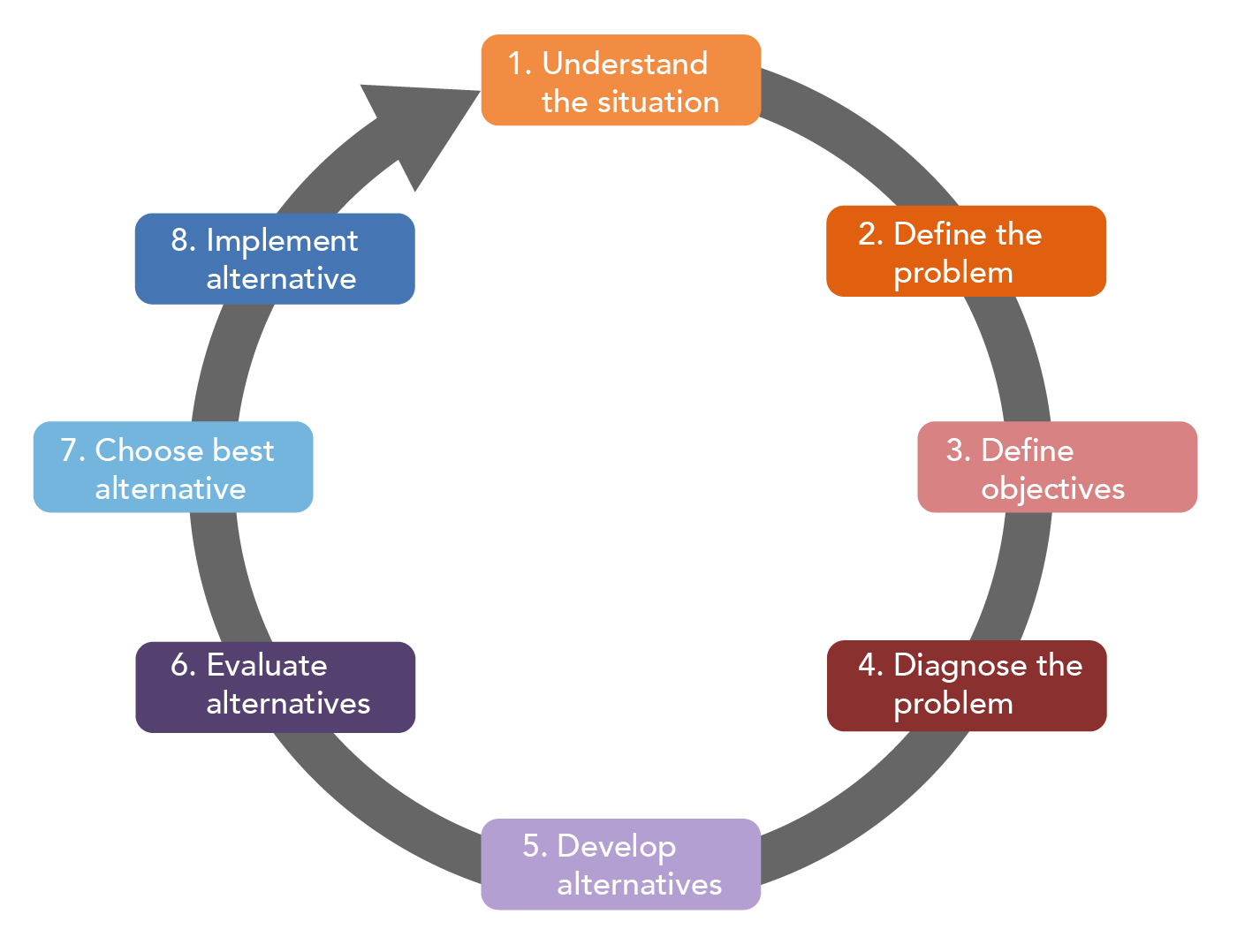
The principles of the rational model are even more rigorously applied in the corporate world, where financial decisions often involve large sums, multiple stakeholders, and significant long-term implications for the business’s viability and growth.
Capital Budgeting: Evaluating Investment Opportunities Rationally
Capital budgeting is the process companies use to evaluate potential major projects or investments. This is a quintessential rational decision-making process. Businesses employ tools like Net Present Value (NPV), Internal Rate of Return (IRR), Payback Period, and Profitability Index to objectively assess whether an investment (e.g., a new factory, equipment upgrade, or R&D project) will generate sufficient returns to justify its cost and maximize shareholder wealth.
Each potential project is meticulously analyzed for its expected cash flows, risks, and alignment with strategic objectives. The rational model guides decision-makers to select projects that offer the greatest expected economic value, ensuring that finite capital resources are allocated efficiently and effectively to drive sustainable growth and profitability.
Merger & Acquisition Strategies: Logical Assessments for Growth
When companies consider mergers, acquisitions, or divestitures, they engage in a highly complex form of rational decision-making. These strategic moves involve extensive due diligence, valuation analysis, synergy assessment, and risk evaluation. Companies rationally assess whether combining with another entity will create greater value than operating independently, considering factors like market share expansion, cost efficiencies, access to new technologies or markets, and competitive advantages.
Every step, from target identification to negotiation and integration planning, is ideally driven by a logical assessment of financial implications, strategic fit, and potential returns on investment. The goal is to maximize enterprise value for shareholders by making an objectively superior strategic choice.
Risk Management: Quantifying and Mitigating Financial Exposure
Rational decision-making in corporate finance heavily involves identifying, quantifying, and mitigating financial risks. This includes market risk, credit risk, operational risk, and liquidity risk. Companies employ sophisticated models and processes to assess potential exposures and implement strategies—such as hedging, insurance, diversification, or establishing robust internal controls—to protect assets and maintain financial stability.
For example, a company might rationally decide to hedge against foreign exchange fluctuations if it has significant international operations, to stabilize its revenues and profits. The decision to invest in cybersecurity measures is a rational response to the growing threat of cyberattacks, protecting valuable data and preventing potential financial losses and reputational damage. These choices are not made based on fear or guesswork, but on a calculated assessment of probabilities and potential impacts.
The Limits of Rationality: When Money Decisions Go Awry
While the rational model provides an invaluable ideal, the real world of finance is often far messier. Human behavior, imperfect information, and inherent uncertainties frequently lead to deviations from pure rationality.
Behavioral Biases: The Human Element in Financial Choices
Behavioral economics has illuminated the many ways psychological biases can lead individuals and even experienced professionals to make irrational financial decisions. Biases such as loss aversion (the tendency to prefer avoiding losses over acquiring equivalent gains), overconfidence (underestimating risks and overestimating one’s ability), herding behavior (following the crowd), and anchoring (over-relying on the first piece of information encountered) can profoundly impact investment choices, spending habits, and debt management.
For example, an investor might hold onto a losing stock too long (loss aversion) or sell a winning stock too early (regret aversion), contrary to rational portfolio management. Understanding these biases is crucial for anyone striving for financial rationality, as it allows for self-correction and the implementation of safeguards against these common pitfalls.
Information Asymmetry and Uncertainty: Navigating Real-World Financial Markets
The assumption of complete information and perfect foresight rarely holds true in dynamic financial markets. Information asymmetry, where one party in a transaction has more or better information than the other, is common (e.g., company insiders versus external investors). Furthermore, inherent uncertainty about future economic conditions, geopolitical events, and technological disruptions means that perfect foresight is impossible.
Rational decision-makers must therefore adapt by embracing probabilistic thinking, scenario planning, and building flexibility into their financial strategies. They understand that decisions are often made under conditions of imperfect information and must account for a range of possible outcomes, rather than relying on single-point predictions. This means accepting a degree of calculated risk and continuously updating their assessments as new information emerges.
Ethical Considerations: Beyond Pure Self-Interest in Financial Decisions
While the rational model often assumes decisions are driven by self-interest and utility maximization, ethical considerations increasingly play a significant role in financial choices. Investors and companies alike are recognizing the importance of Environmental, Social, and Governance (ESG) factors. A purely rational model focused solely on financial returns might overlook the broader societal impact of investments or business practices.
However, incorporating ethical considerations can also be framed within a broader rational framework if one defines “utility” to include social responsibility or long-term sustainability, which can, in turn, contribute to brand value, customer loyalty, and reduced regulatory risks—all of which have financial implications. This suggests that the definition of “rational” itself can evolve to encompass a more holistic view of value.
Cultivating Rational Financial Decision-Making
Despite its theoretical nature and real-world challenges, the rational model remains an aspirational guide for improving financial decisions. Cultivating a more rational approach can lead to better outcomes for individuals and organizations alike.
Data-Driven Analysis and Financial Literacy
The bedrock of rational financial decision-making is robust data analysis and a strong foundation in financial literacy. This involves actively seeking out and scrutinizing relevant information, understanding financial statements, market trends, economic indicators, and the principles of investment and risk. For individuals, it means continuous education on personal finance topics. For businesses, it entails investing in analytical tools and expertise. The more informed a decision-maker is, the closer they can come to approximating the “complete information” ideal.
Structured Decision Frameworks and Tools
Implementing structured decision frameworks helps to systematize the rational process. This includes using decision matrices, cost-benefit analysis, break-even analysis, discounted cash flow models, and various financial planning software. These tools provide a systematic way to evaluate alternatives, quantify potential outcomes, and compare options against predefined criteria, thereby reducing reliance on intuition or emotion. For personal finance, budgeting apps, investment calculators, and retirement planners serve a similar purpose, guiding users through a more methodical decision process.

The Role of Financial Advisors
For many, particularly in complex financial situations, engaging with a qualified financial advisor can be a highly rational decision. A good advisor can provide objective insights, help mitigate behavioral biases, access specialized information, and guide clients through structured decision-making processes tailored to their unique circumstances and goals. They act as a rational sounding board, helping to articulate clear objectives, evaluate alternatives dispassionately, and ensure consistency in financial strategies over time.
In conclusion, the rational model of decision making, while an idealized construct, offers an indispensable blueprint for navigating the financial landscape. By striving for complete information, defining clear objectives, and employing logical evaluation, individuals and organizations can significantly enhance their ability to make prudent, wealth-maximizing financial choices. Recognizing its limits and understanding behavioral finance further refines this approach, leading to a more robust, realistic, and ultimately more successful journey in the world of money.
aViewFromTheCave is a participant in the Amazon Services LLC Associates Program, an affiliate advertising program designed to provide a means for sites to earn advertising fees by advertising and linking to Amazon.com. Amazon, the Amazon logo, AmazonSupply, and the AmazonSupply logo are trademarks of Amazon.com, Inc. or its affiliates. As an Amazon Associate we earn affiliate commissions from qualifying purchases.