
In the vast and ever-expanding landscape of software development, Python stands out as a language celebrated for its readability, versatility, and powerful ecosystem. At the heart of many complex operations, from data science to web development, lies a fundamental process known as parsing. If you’ve ever wondered how your computer understands structured data, executes code, or extracts meaningful information from seemingly chaotic text, parsing is the unseen hero making it all possible.
Parsing, in essence, is the systematic analysis of a string of symbols (like text or code) according to the rules of a formal grammar. Its primary goal is to determine the input’s grammatical structure and, often, to build a hierarchical representation of that structure. For Python developers, understanding parsing isn’t just an academic exercise; it’s a critical skill that unlocks capabilities ranging from efficient data extraction to building sophisticated domain-specific languages and even analyzing Python code itself. This article delves deep into what parsing entails in the context of Python, exploring its mechanisms, applications, and the robust suite of tools available to master this indispensable technique.
The Essence of Parsing: Deconstructing Information
At its core, parsing is about making sense of raw input. Imagine trying to understand a human sentence without knowing the meaning of individual words or how they fit together grammatically. A computer faces a similar challenge when presented with a stream of characters. Parsing provides the methodology to break down this complex input into understandable components and discern their relationships.
Defining Parsing
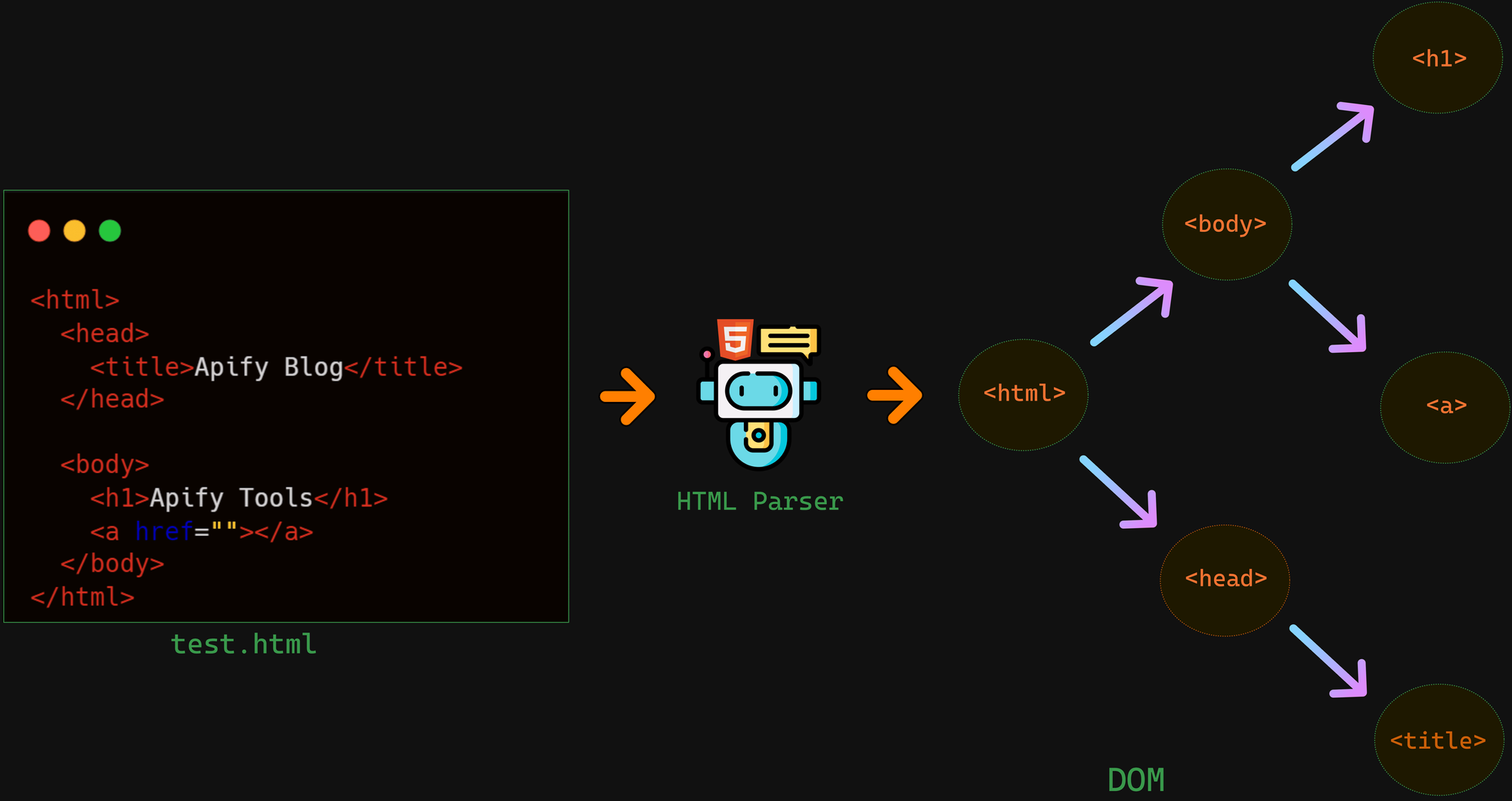
Formally, parsing is the process of analyzing a sequence of characters or a stream of tokens to determine its grammatical structure concerning a given formal grammar. The output of this process is typically a parse tree or an Abstract Syntax Tree (AST), which visually represents the hierarchical structure of the input. This tree structure makes it easier for subsequent processes (like interpretation, compilation, or data extraction) to work with the data.
Consider a simple mathematical expression like “2 + 3 * 4”. A human instinctively understands the order of operations. A computer, however, needs parsing to explicitly identify ‘2’, ‘+’, ‘3’, ‘*’, and ‘4’ as distinct elements (tokens) and then apply rules (like multiplication before addition) to correctly interpret the expression’s structure. Without parsing, computers would treat all input as an undifferentiated blob of text, incapable of executing instructions or extracting meaningful data.
Lexical Analysis vs. Syntactic Analysis (Tokenization vs. Parsing)
The parsing process is often divided into two main stages, each with a distinct role:
-
Lexical Analysis (Scanning or Tokenization): This is the initial phase where the input stream of characters is broken down into a sequence of meaningful units called “tokens.” A token is the smallest meaningful building block of a language, similar to words in a human language. For example, in the expression
x = 10 + y, a lexical analyzer would identify:x(identifier token)=(assignment operator token)10(integer literal token)+(addition operator token)y(identifier token)
Lexical analyzers typically use patterns, often defined by regular expressions, to recognize these tokens. Python’sremodule is a powerful tool for this stage.
-
Syntactic Analysis (Parsing Proper): Once the input has been tokenized, the syntactic analyzer (the parser) takes this stream of tokens and constructs a hierarchical representation based on the language’s grammar rules. This stage verifies if the sequence of tokens forms a valid “sentence” according to the grammar. If the token sequence adheres to the grammar, a parse tree or AST is generated. If not, a syntax error is reported. For our
x = 10 + yexample, the parser would understand thatxis assigned the result of an expression involving10,+, andy, respecting operator precedence.
The Parse Tree and Abstract Syntax Tree (AST)
The output of syntactic analysis can take a couple of forms:
-
Parse Tree (Concrete Syntax Tree): This is a very detailed tree representation that reflects every step of the parsing process, including all non-terminal symbols of the grammar used to derive the input. It closely mirrors the grammatical rules and can be quite verbose.
-
Abstract Syntax Tree (AST): An AST is a more abstract and simplified representation of the program’s or data’s structure. It discards details related to the parsing process itself (like parentheses in an expression that only define precedence) and focuses solely on the essential structural and semantic information needed for subsequent processing. For instance, in
(3 + 5) * 2, the AST would represent the multiplication as the root node, with its children being the addition operation (with 3 and 5 as its children) and 2. ASTs are generally preferred for tasks like interpretation, compilation, code analysis, and transformation due to their conciseness and focus on meaning.
Why Parsing Matters in Python Development
Python’s versatility means it’s used in diverse domains, each presenting unique parsing challenges and opportunities. The ability to parse data efficiently and correctly is fundamental to many core development tasks.
Data Extraction and Web Scraping
One of the most common applications of parsing in Python is in extracting information from various data sources.
- Web Scraping: Websites are essentially structured documents (HTML). To extract specific data (e.g., product prices, news headlines, user reviews), a parser is used to navigate the HTML tree, identify relevant elements, and pull out their content. Libraries like Beautiful Soup and
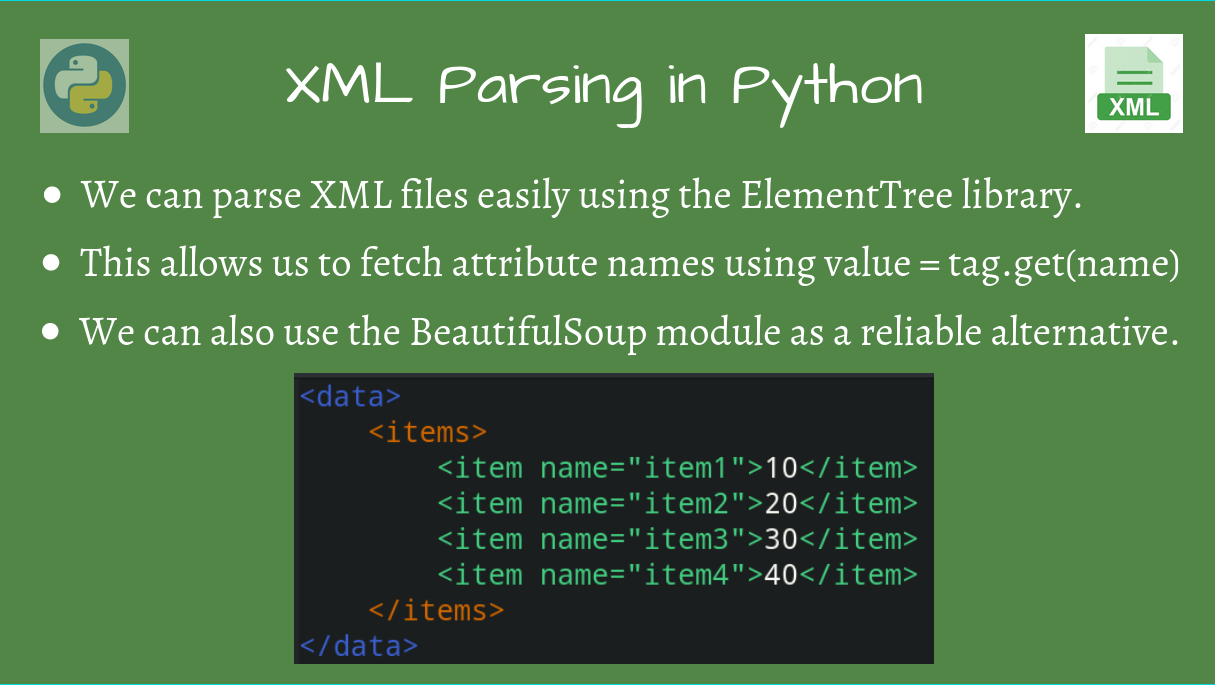
lxmlare indispensable tools for HTML/XML parsing. - JSON and XML Processing: JSON (JavaScript Object Notation) and XML (Extensible Markup Language) are standard data interchange formats. Python’s built-in
jsonandxml.etree.ElementTreemodules provide robust capabilities to parse these formats, converting them into native Python data structures (dictionaries, lists, objects) for easy manipulation. - CSV Parsing: Comma-Separated Values (CSV) files are ubiquitous for tabular data. Python’s
csvmodule allows for straightforward parsing and writing of these files, handling various delimiters and quoting rules. - Unstructured Text: For less rigidly structured text, regular expressions (via Python’s
remodule) are often employed to define patterns and extract matching snippets, performing a form of lightweight lexical parsing.
Configuration File Handling
Applications often rely on configuration files to store settings, parameters, and user preferences. These files come in various formats, and parsing them correctly is crucial for an application to function as intended.
- INI-style Files: Python’s
configparsermodule is specifically designed to parse and manage INI-style configuration files, providing a structured way to access sectioned key-value pairs. - YAML, TOML, and Others: Beyond INI, formats like YAML (Yet Another Markup Language) and TOML (Tom’s Obvious, Minimal Language) are popular for configuration due to their human-readable nature. Libraries like PyYAML and
tomlprovide parsers to convert these files into Python dictionaries, simplifying configuration management.
Language Processors and DSLs
Python’s dynamic nature and powerful string manipulation make it an excellent choice for building custom language processors and Domain-Specific Languages (DSLs).
- Interpreters/Compilers: For educational purposes or niche applications, developers might build simple interpreters or compilers for custom scripting languages. Parsing forms the front-end of such systems, transforming source code into an AST that can then be executed or translated.
- Domain-Specific Languages (DSLs): DSLs are specialized languages designed for a particular application domain, offering a more expressive and concise way to solve problems within that domain than general-purpose languages. Parsing allows developers to define the syntax of these DSLs and translate their constructs into executable Python code or data structures. Examples include query languages, workflow definitions, or simple calculation engines.
Code Analysis and Transformation
Parsing isn’t just for external data; it’s also vital for understanding and manipulating Python code itself.
astModule: Python’s built-inastmodule allows developers to parse Python source code into its Abstract Syntax Tree. This is an incredibly powerful feature for tasks like:- Linters and Formatters: Tools like Black, Flake8, and Pylint use ASTs to analyze code for style adherence, potential errors, and best practices.
- Static Analyzers: Identifying security vulnerabilities, performance bottlenecks, or complex code patterns without actually running the code.
- Code Generation and Transformation: Automatically refactoring code, generating boilerplate, or transpiling Python code into other forms.
Common Parsing Techniques and Tools in Python
Python’s rich ecosystem provides a spectrum of tools, from simple string methods to full-fledged parser generators, catering to different parsing complexities.
Regular Expressions (re module)
For many basic parsing tasks involving pattern matching in unstructured or semi-structured text, Python’s re module (regular expressions) is the go-to tool. They are excellent for:
- Extracting specific patterns (e.g., email addresses, phone numbers, dates).
- Validating input formats.
- Performing simple tokenization.
However, regular expressions are inherently limited to lexical analysis and cannot handle nested or recursive structures required for full syntactic parsing (like matching arbitrarily nested parentheses).
Built-in Modules for Structured Data
Python includes several modules optimized for standard structured data formats:
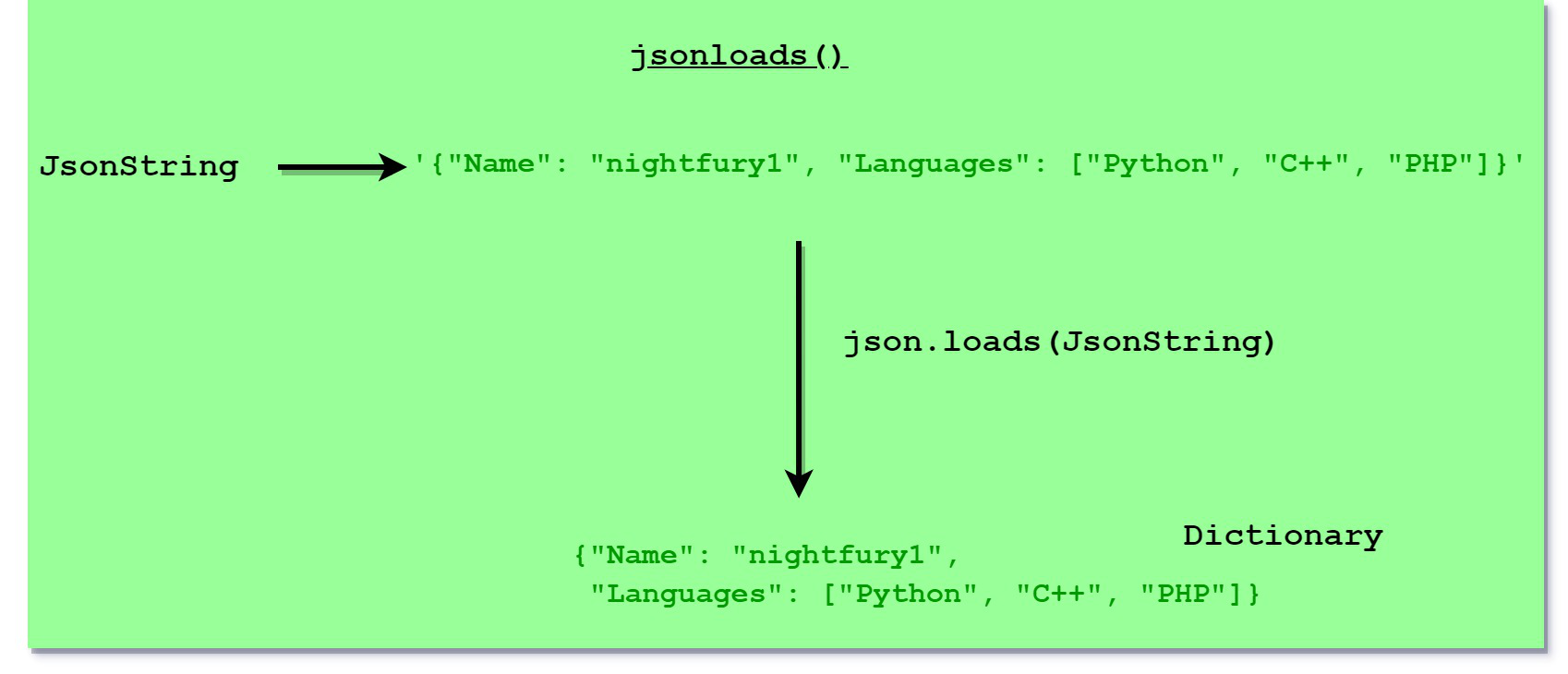
json: For encoding and decoding JSON data.json.loads()converts a JSON string to a Python object (dict, list), andjson.dumps()does the reverse.csv: For reading and writing CSV files. It intelligently handles various dialects, delimiters, and quoting mechanisms.xml.etree.ElementTree: Python’s standard library for XML parsing. It provides an ElementTree API for navigating and manipulating XML documents as tree structures.configparser: Specifically designed for parsing and managing INI-style configuration files, offering sections and key-value pairs.
HTML/XML Parsers
When dealing with web content or complex XML documents, specialized libraries provide more robust and convenient parsing capabilities than generic XML modules.
- Beautiful Soup (
bs4): A highly popular library for web scraping. It sits atop parsing libraries likelxmlorhtml.parserand provides Pythonic idioms for navigating, searching, and modifying parse trees, making it incredibly user-friendly for HTML/XML extraction. lxml: A high-performance, feature-rich library for processing XML and HTML. It’s built on top of the C libraries libxml2 and libxslt, offering excellent speed and support for XPath and XSLT. It’s a powerful choice for demanding parsing tasks where performance is critical.
Parser Generators and Libraries for Complex Grammars
For building parsers for formal languages or complex DSLs, where regular expressions or built-in modules fall short, parser generators or specialized parsing libraries are essential.
- PLY (Python Lex-Yacc): This library implements the functionality of the classic Unix
lexandyacctools directly in Python. It allows you to define a grammar using a context-free grammar notation and then generates a lexer (tokenizer) and a parser (syntax analyzer) for you. PLY is robust and well-suited for building compilers and interpreters. - TextX: A metamodel-based language engineering framework that allows you to define a language using an easy-to-read grammar. TextX then generates a parser and a metamodel (a class hierarchy mirroring your grammar) from that definition. It emphasizes building DSLs quickly.
- Parsimonious: Implements a Parsing Expression Grammar (PEG) parser. PEGs offer an alternative to context-free grammars, often being more straightforward to write for certain types of languages because they avoid ambiguity issues inherent in CFGs. Parsimonious is known for its clarity and good error reporting.
- Lark: A modern, feature-rich parser generator that supports multiple grammar formalisms (EBNF, ANTLR-like, LALR(1), Earley). Lark is designed to be easy to use while offering powerful features like automatic tree building and excellent error handling, making it a versatile choice for a wide range of parsing challenges.
Implementing a Simple Parser: A Walkthrough Example
To illustrate the concepts, let’s consider the task of parsing a simple arithmetic expression, like “3 + 5 * (2 – 1)”. This involves identifying numbers, operators, and parentheses, and then applying rules of precedence.
Step 1: Tokenization (Lexical Analysis)
The first step is to break the input string into meaningful tokens. We can use regular expressions for this.
Input: "3 + 5 * (2 - 1)"
Possible tokens:
- Numbers (integers, floats)
- Operators (
+,-,*,/) - Parentheses (
(,)) - Whitespace (usually ignored or filtered out)
A lexer would convert the input string into a list like this:
['3', '+', '5', '*', '(', '2', '-', '1', ')']
Each item in this list carries information about its type (e.g., ‘3’ is a number, ‘+’ is an operator). For a real lexer, tokens would be objects carrying both value and type.
Step 2: Parsing (Syntactic Analysis)
The parser takes the token stream and builds a hierarchical representation (an AST or parse tree) that reflects the order of operations. For “3 + 5 * (2 – 1)”, we know multiplication and division have higher precedence than addition and subtraction, and parentheses force evaluation first.
A parser might employ techniques like a recursive descent parser or an algorithm like Shunting-yard to convert infix notation (like 3 + 5) to postfix (Reverse Polish Notation) or directly build an expression tree.
Conceptually, the AST for “3 + 5 * (2 – 1)” would look something like this:
      +
     /
    3   *
       /
      5   -
         /
        2   1
Here, the + operation is the root, with 3 as its left child. The right child of + is another operation, *, which involves 5 and the result of the (2 - 1) operation. This tree structure explicitly encodes the order of operations.
Step 3: Evaluation
Once the AST is constructed, it can be traversed to perform the actual calculation. A post-order traversal (evaluating children before the parent) is common for arithmetic expressions:
- Evaluate
(2 - 1)->1 - Evaluate
5 * 1->5 - Evaluate
3 + 5->8
This simple example highlights how parsing transforms a linear string into a structured representation that a machine can easily understand and process, adhering to predefined rules.
Best Practices and Advanced Considerations in Python Parsing
While the fundamental principles remain constant, effective parsing in real-world applications often involves considering several advanced factors.
Error Handling
Robust parsers must gracefully handle malformed or invalid input. When a syntax error is encountered (input doesn’t conform to the grammar), the parser should:
- Report clear and meaningful error messages, indicating the location and nature of the error.
- Ideally, attempt error recovery to continue parsing and find subsequent errors, rather than stopping at the first issue.
- For critical applications, decide whether to reject malformed input entirely or attempt to “fix” it (though this is generally discouraged for data integrity).
Performance
The choice of parsing tool or technique significantly impacts performance, especially with large inputs.
lxmlvs. Beautiful Soup: For speed-critical XML/HTML processing,lxmlis often faster than Beautiful Soup (though Beautiful Soup can uselxmlas its backend).- Regular Expressions vs. Full Parsers: For simple pattern matching, regular expressions are highly optimized. For complex, recursive structures, a full-fledged parser generator is necessary, even if it has a higher initial overhead.
- Lazy Parsing: For very large files, consider lazy parsing techniques (e.g., iterating through lines or chunks) rather than loading the entire input into memory, to manage memory usage.
Maintainability and Readability
A well-designed parser should be easy to understand, debug, and extend.
- Clear Grammar Definition: If using a parser generator, a well-commented and logically structured grammar file is paramount.
- Modular Design: Separate the lexer from the parser, and potentially break down complex grammars into smaller, manageable components.
- Testing: Thoroughly test the parser with valid, invalid, and edge-case inputs to ensure correctness and robust error handling.
Security Implications
Parsing untrusted or external input can introduce security vulnerabilities.
- XML External Entities (XXE): XML parsers can be vulnerable to XXE attacks, where external entities are referenced, potentially leading to information disclosure, denial of service, or remote code execution. Always configure XML parsers to disable DTD processing or external entity resolution for untrusted sources.
- JSON Injection: While less common than XXE, malicious JSON input could potentially exploit vulnerabilities if not properly handled, especially in systems that dynamically evaluate JSON content.
- Sanitization and Validation: Always sanitize and validate any data extracted through parsing before using it in your application, especially when interacting with databases, file systems, or other external systems. Never blindly trust parsed input.
Conclusion
Parsing is a foundational concept in computer science and an indispensable skill for any proficient Python developer. From the seemingly mundane task of reading a configuration file to the sophisticated analysis of programming languages, parsing is the mechanism by which computers transform raw input into actionable, structured information.
Python’s rich ecosystem, offering everything from simple regular expressions and powerful built-in modules for structured data to advanced parser generators like PLY, TextX, Parsimonious, and Lark, empowers developers to tackle parsing challenges of any complexity. By understanding the principles of lexical and syntactic analysis, recognizing the distinction between parse trees and ASTs, and mastering the diverse tools available, Python developers can unlock new capabilities in data processing, language engineering, and application development. As data continues to grow in volume and complexity, the art and science of parsing will only become more critical, standing as a testament to our ability to bring order and meaning to the digital world.
aViewFromTheCave is a participant in the Amazon Services LLC Associates Program, an affiliate advertising program designed to provide a means for sites to earn advertising fees by advertising and linking to Amazon.com. Amazon, the Amazon logo, AmazonSupply, and the AmazonSupply logo are trademarks of Amazon.com, Inc. or its affiliates. As an Amazon Associate we earn affiliate commissions from qualifying purchases.