
The story of A Beautiful Mind, popularized by Sylvia Nasar’s biography and the subsequent Academy Award-winning film, is often remembered as a poignant narrative of mental illness and academic triumph. However, at its core, the intellectual legacy of the protagonist, John Forbes Nash Jr., is not merely a tale of personal perseverance. It is the foundation of modern economic thought. To understand what A Beautiful Mind was truly about is to understand the birth of Game Theory—a mathematical framework that has fundamentally reshaped personal finance, corporate strategy, and global market dynamics.
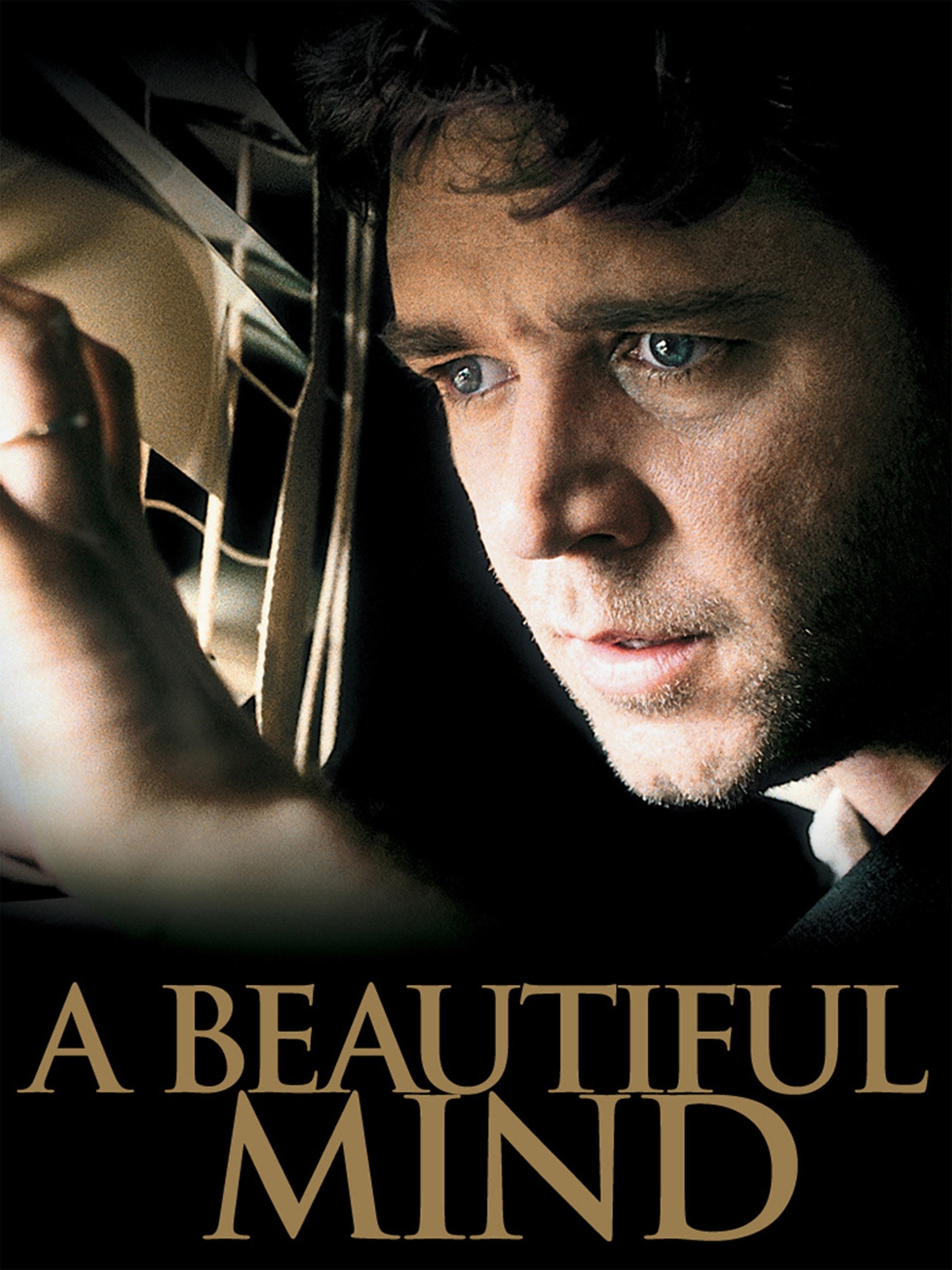
While the film focuses on the dramatic arc of Nash’s life, the “beautiful mind” in question produced a breakthrough that challenged two centuries of economic theory. Before Nash, the prevailing wisdom followed Adam Smith’s “invisible hand,” which suggested that the best result comes from everyone in a group doing what is best for themselves. Nash proved that the best result comes from everyone in a group doing what is best for themselves and the group. This shift from pure competition to strategic interdependence changed the way we view money forever.
The Nash Equilibrium: Redefining Competitive Strategy
The central contribution of John Nash, for which he was awarded the Nobel Prize in Economic Sciences in 1994, is the “Nash Equilibrium.” In the context of business and money, an equilibrium is reached when no player can benefit by changing their strategy while the other players keep theirs unchanged. This concept moved economics away from simple supply-and-demand curves and into the complex world of strategic decision-making.
The Prisoner’s Dilemma in Modern Markets
One of the most famous applications of Nash’s work is the Prisoner’s Dilemma, a standard example of a game analyzed in game theory. In the financial world, this plays out daily among competing firms. If two major tech companies are deciding whether to lower the price of their flagship products, Nash Equilibrium helps predict the outcome. If both lower prices, they both lose profit margin. If only one lowers the price, they capture the market. If neither lowers the price, they maintain high margins but risk a third competitor entering. Understanding the “game” allows CFOs and investors to predict market stability rather than just reacting to price fluctuations.
Breaking Monopolies and Oligopolies
Nash’s theories provided a mathematical roadmap for understanding oligopolies—markets dominated by a small number of large sellers. Before Nash, it was difficult to model how these firms interacted without assuming they were colluding (which is often illegal). Nash showed that even without secret meetings, firms naturally reach a state of strategic “checkmate.” This insight is vital for modern investors who analyze industries like telecommunications or aerospace, where a few players dictate the financial health of the entire sector.
Game Theory in Corporate Finance and Wealth Management
The transition from academic mathematics to “Money” occurs when we apply Nash’s insights to capital allocation. Every corporate merger, every hostile takeover, and every salary negotiation is a “game” where the participants are seeking a Nash Equilibrium.
Strategic Asset Allocation and Portfolio Theory
For the individual investor, A Beautiful Mind offers a lesson in diversification and strategic positioning. Modern Portfolio Theory (MPT) and Game Theory often overlap when looking at “Zero-Sum” vs. “Non-Zero-Sum” games. Most people view the stock market as a place where someone must lose for another to win. However, Nash’s work suggests that through cooperative-like strategies—such as broad market indexing and long-term holding—investors can participate in a “non-zero-sum” game where the total wealth of the system grows, benefiting all participants who adhere to a stable, rational strategy.
Negotiating Salaries and Business Contracts
In the realm of personal finance, understanding the “game” of a salary negotiation can lead to significant lifetime earnings increases. A “Beautiful Mind” approach involves identifying the “Reservation Price” (the minimum a party will accept) and the “ZOPA” (Zone of Possible Agreement). By anticipating the employer’s strategy and understanding that the negotiation is a repeated game—where reputation and future cooperation matter—individuals can move beyond the “take it or leave it” mentality to find a Nash Equilibrium that maximizes their financial worth without burning bridges.

The Psychology of the Market: Rationality vs. Irrationality
One of the most striking aspects of A Beautiful Mind is the juxtaposition of Nash’s hyper-rational mathematical theories with his period of irrationality due to schizophrenia. In the world of finance, this serves as a powerful metaphor for Behavioral Economics.
Overcoming the “Beautiful Mind” Bias
The “Beautiful Mind” bias is the assumption that markets always act rationally. Nash’s theories assume “rational actors,” but as the film depicts, the human mind is prone to “ghosts” and delusions. In finance, these take the form of market bubbles, panic selling, and “herd mentality.” High-net-worth individuals and institutional investors use Nash’s framework to identify when the market has drifted away from equilibrium. When the “crowd” becomes irrational, the rational strategist finds opportunities to buy undervalued assets, essentially betting on the eventual return to a mathematical equilibrium.
Risk Assessment in Volatile Times
Risk management is perhaps the most direct application of Nash’s logic to money. In a volatile market, the “best” strategy isn’t always the one with the highest potential return; it is the one that is most “stable” against the actions of others. This is why many sophisticated financial tools, such as Value at Risk (VaR) models, incorporate game-theoretic simulations. They don’t just ask, “What happens if the market drops?” They ask, “What happens if everyone else reacts to the market dropping by selling their assets?” By simulating these multi-player interactions, financial institutions protect trillions of dollars in assets.
The Financial Legacy of John Nash: Auctions and Resource Allocation
While the movie concludes with a sentimental scene at the Nobel ceremony, the real-world application of Nash’s work continued to evolve, specifically in how governments and corporations manage massive financial transactions.
Spectrum Auctions and the “Money of the Air”
One of the most successful applications of Game Theory is in the design of “Spectrum Auctions.” When governments sell the rights to transmit data over airwaves (to companies like Verizon or AT&T), they use Nash’s principles to design the auction rules. This ensures that the government (and thus the taxpayer) receives the maximum possible value while preventing any single company from unfairly cornering the market. These auctions have generated hundreds of billions of dollars globally—a direct financial result of the theories developed by the “beautiful mind.”
Algorithmic Trading and AI in Finance
Today, the legacy of John Nash lives on in the code of High-Frequency Trading (HFT) algorithms. These bots are programmed to find Nash Equilibria in milliseconds. They analyze the “moves” of other bots and traders to find a position where they cannot be exploited. As we move into an era of AI-driven finance, the mathematics of A Beautiful Mind provides the logic for the neural networks that manage our retirement funds and global currency exchanges.

Conclusion: The Lasting Value of Strategic Thinking
A Beautiful Mind was ultimately about the power of a single idea to change the world. While the personal story of John Nash is a testament to the human spirit, his economic legacy is a testament to the power of mathematics in the pursuit of wealth and stability.
By moving the world from a mindset of “me vs. you” to an understanding of “me in relation to you,” Nash provided the tools for modern business strategy, effective investing, and sophisticated financial modeling. For anyone looking to master their personal or corporate finances, the lesson is clear: Success is not just about having the best assets; it is about having the best strategy in a world where everyone else is also playing to win. The “beautiful mind” taught us that in the complex game of money, the most rational path to individual prosperity often requires a deep understanding of the collective equilibrium.
aViewFromTheCave is a participant in the Amazon Services LLC Associates Program, an affiliate advertising program designed to provide a means for sites to earn advertising fees by advertising and linking to Amazon.com. Amazon, the Amazon logo, AmazonSupply, and the AmazonSupply logo are trademarks of Amazon.com, Inc. or its affiliates. As an Amazon Associate we earn affiliate commissions from qualifying purchases.