
Yellowstone. The name evokes images of steaming geysers, bison herds, and a vast, untamed wilderness. But beneath this iconic landscape lies a geological phenomenon of immense power and scientific fascination: the Yellowstone Caldera. This colossal volcanic feature, a “supervolcano” by definition, is not your typical cone-shaped mountain. Understanding its true nature requires delving into cutting-edge scientific methodologies, exploring how its unique status influences global perceptions, and even considering the economic implications of studying such a potent force of nature.
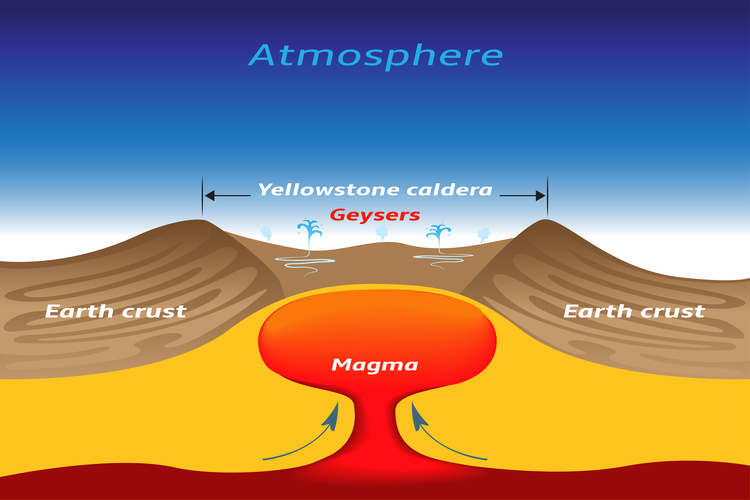
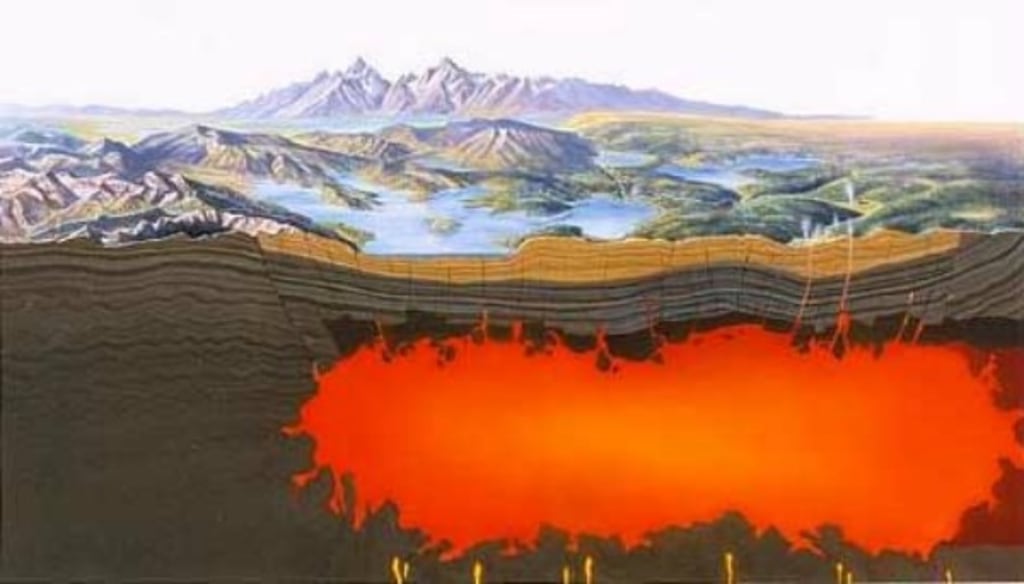
The question “what type of volcano is Yellowstone caldera?” doesn’t have a simple answer like “stratovolcano” or “shield volcano.” Instead, it points to a much more complex and awe-inspiring category: a supervolcano, characterized by its immense size and the potential for catastrophic eruptions. At its heart, Yellowstone is a caldera, a massive volcanic crater formed by the collapse of land following a volcanic eruption. However, the sheer scale of Yellowstone’s caldera, estimated to be over 30 miles long and 20 miles wide, sets it apart. It’s the remnant of multiple supereruptions over the past two million years, each unleashing a fury of ash and gas that dramatically reshaped continents.

The formation of the Yellowstone Caldera is intrinsically linked to a hotspot, a plume of molten rock rising from deep within the Earth’s mantle. As the North American tectonic plate slowly drifts westward, this stationary hotspot punches through the crust, creating volcanic activity. The current Yellowstone Caldera is the surface expression of this ongoing process, with past eruptions having been among the largest in Earth’s history. These colossal events are not frequent occurrences, with major eruptions spaced hundreds of thousands of years apart. However, the immense energy contained within this system means that when it does erupt at that scale, the consequences are globally significant.
Unraveling the Supervolcano: Technology’s Eye on Yellowstone
The sheer scale and potential danger of the Yellowstone Caldera necessitate the use of sophisticated technology to monitor its every tremor and thermal fluctuation. For decades, scientists have been deploying an intricate network of seismic sensors, GPS stations, and thermal imaging equipment to keep a vigilant watch. These tools are not merely for scientific curiosity; they are critical for understanding the complex plumbing system beneath Yellowstone and for providing early warnings should any significant activity arise.
Seismic Surveillance: Listening to the Earth’s Pulse
The bedrock of Yellowstone monitoring lies in seismic surveillance. Thousands of seismometers are strategically placed across the caldera and surrounding areas. These sensitive instruments detect even the slightest ground motion, from minor earthquakes to the subtle rumblings that signal magma movement. AI-powered algorithms are now being employed to sift through the immense volume of seismic data, identifying patterns and anomalies that might elude human observation. These AI tools can differentiate between various types of seismic events, helping researchers understand the stress and strain within the Earth’s crust and the potential pathways for magma ascent. This level of detail allows for more precise modeling of underground processes.
GPS and Deformation Monitoring: Mapping the Swell
Beyond tremors, the ground itself tells a story. High-precision GPS stations continuously measure minute changes in the elevation and horizontal position of the land surface. The Yellowstone Caldera is known to periodically swell and subside as magma chambers beneath it fill and empty. These subtle deformations, often measured in millimeters per year, are crucial indicators of underground activity. Advanced apps and data visualization software are used to process this constant stream of GPS data, creating dynamic maps that highlight areas of uplift or subsidence. This allows scientists to visualize the “breathing” of the supervolcano and assess whether it’s undergoing inflationary or deflationary phases, both of which can be precursors to different types of volcanic events.
Thermal Imaging and Gas Monitoring: The Subtle Signs of Heat
The heat emanating from Yellowstone’s geothermal system is another vital clue. Infrared cameras and satellite-based thermal imaging systems are used to map surface temperatures, identifying areas of unusual heat flow. Similarly, sophisticated gas sensors are deployed to monitor the composition and concentration of gases released from fumaroles and hot springs, such as sulfur dioxide and carbon dioxide. Changes in gas ratios can indicate shifts in the magma below. Digital security becomes paramount in protecting the integrity of this vast data network, ensuring that sensitive real-time information is not compromised. The ability to analyze these diverse data streams – seismic, geodetic, thermal, and chemical – through integrated technological platforms allows for a holistic understanding of the caldera’s health.
Reviewing the Data for Predictive Modeling
The aggregation and analysis of this vast technological dataset are not for passive observation. Researchers are constantly reviewing the collected information to build and refine predictive models of volcanic behavior. These models, powered by complex computational analysis and machine learning, aim to forecast the likelihood and potential scale of future eruptions. While predicting the exact timing of a supereruption remains a formidable challenge, these technological advancements are pushing the boundaries of our understanding, offering increasingly sophisticated insights into the immense forces at play beneath Yellowstone.
The Brand of the Beast: Yellowstone’s Global Identity
Yellowstone’s designation as a supervolcano, coupled with its status as a globally renowned national park, has forged a powerful and complex brand. This brand encompasses awe, danger, and unparalleled natural beauty, influencing everything from tourism to scientific funding. The very concept of “Yellowstone” conjures specific imagery and expectations.
Personal Branding of the Park: A Dual Identity
The personal branding of Yellowstone National Park is a fascinating paradox. On one hand, it’s marketed as a sanctuary of natural wonder, a place for recreation, education, and appreciating the raw power of nature. This draws millions of visitors annually, contributing significantly to local and national economies. On the other hand, the “supervolcano” aspect imbues it with an aura of inherent danger and geological significance. This duality is carefully managed, with park services and scientific institutions working to educate the public about both the risks and the remarkable scientific opportunities Yellowstone presents.
Corporate Identity of Research Institutions: Guardians of the Caldera
The corporate identity of the organizations that study Yellowstone, such as the Yellowstone Volcano Observatory (YVO) and its associated universities, is one of scientific rigor, dedication, and custodianship. Their mission is to be the scientific eyes and ears of the caldera, providing reliable data and expert analysis to both the public and policymakers. Their communication strategies often focus on transparency and education, aiming to demystify the complex science of volcanology and build trust in their findings. This builds a strong reputation for being credible sources of information in a landscape prone to sensationalism.
Marketing the Marvel: Promoting both Tourism and Research
The marketing of Yellowstone is a sophisticated operation that balances promoting its tourist appeal with highlighting its scientific importance. Case studies of past eruptions, visualized through sophisticated mapping and simulation software, are used to educate the public about the caldera’s history and potential. The allure of a “supervolcano” itself becomes a marketing tool, drawing attention to the unique scientific research being conducted there. This research, in turn, receives significant funding, allowing for the continued deployment of cutting-edge technology and the pursuit of deeper understanding. The park’s brand is, therefore, a carefully curated narrative of beauty, power, and scientific endeavor.
Reputation Management in the Face of Uncertainty
Reputation management is crucial for Yellowstone. As a supervolcano, the potential for a catastrophic eruption, however unlikely in the short term, looms large in public consciousness. Organizations involved with Yellowstone must manage public perception, ensuring that fear does not overshadow scientific understanding. This involves clear, consistent, and evidence-based communication, especially during periods of heightened seismic or geothermal activity. The goal is to foster an informed public that appreciates Yellowstone’s geological significance without succumbing to undue alarm.
The Money Trail: Funding the Study of Earth’s Giants
The immense power and scientific importance of the Yellowstone Caldera necessitate substantial financial investment. The study of such a potent geological feature involves significant costs, from the deployment and maintenance of sophisticated technology to the salaries of highly specialized scientists and the dissemination of research findings. Understanding the money involved in Yellowstone research provides insight into the global priorities for Earth science and hazard mitigation.
Personal Finance for Earth Scientists: Investing in Knowledge
For the geologists, seismologists, and volcanologists who dedicate their careers to Yellowstone, their personal finance might not be directly tied to the caldera itself, but their financial well-being is often linked to securing grants and funding for their research. The pursuit of knowledge in this field requires significant investment in education and specialized training, often leading to advanced degrees that command competitive salaries within research institutions and government agencies. The economic incentive is the opportunity to contribute to vital scientific understanding.
Investing in Supervolcano Research: A Global Priority
The study of Yellowstone is a prime example of investing in understanding large-scale geological hazards. Governments and international scientific organizations allocate significant budgets to Yellowstone research because the potential impact of a supereruption is global. This investment isn’t just about understanding the past; it’s about mitigating future risks. The data gathered from Yellowstone can inform hazard assessments for other volcanic regions worldwide, making it a crucial node in the global network of geoscientific monitoring. The economic benefits of preventing or mitigating a single catastrophic event far outweigh the ongoing research costs.
Online Income Streams for Disseminating Scientific Findings
While the direct online income from Yellowstone research isn’t a primary driver, the dissemination of findings often involves platforms that generate revenue. Scientific journals, educational websites, and even popular science media outlets that publish articles and documentaries about Yellowstone contribute to a broader ecosystem of knowledge sharing. These platforms, supported by subscriptions, advertising, or direct donations, ensure that the valuable insights gained from Yellowstone reach a wider audience, fostering public understanding and continued support for research.
Side Hustles in Science Communication and Outreach
Many scientists involved with Yellowstone engage in side hustles related to science communication and public outreach. This can include public speaking engagements, writing books or articles for popular magazines, or creating educational content for online platforms. These activities not only supplement their income but also play a vital role in translating complex scientific concepts for the general public, building support for continued research and a greater appreciation for the geological forces shaping our planet.
Business Finance for Infrastructure and Technology
The operational aspects of Yellowstone research require significant business finance. This includes the procurement and maintenance of sophisticated gadgets like seismic arrays, GPS receivers, and high-performance computing clusters needed for data analysis. It also covers the logistical costs of field operations, travel, and the salaries of support staff. These financial considerations are managed through grants, government appropriations, and institutional budgets, ensuring that the infrastructure necessary for continuous monitoring and research is in place.
Financial Tools for Data Management and Analysis
Modern geoscientific research relies heavily on advanced financial tools for managing and analyzing massive datasets. This includes the purchase of specialized software licenses for data processing, visualization, and modeling, as well as cloud computing services for data storage and analysis. The efficient allocation of these financial resources is critical for maximizing the scientific output from the Yellowstone Caldera and ensuring that researchers have the tools they need to unravel its mysteries.
In conclusion, the Yellowstone Caldera is a supervolcano, a caldera of immense scale formed by a deep Earth hotspot. Understanding its nature is a testament to the power of modern technology, the careful cultivation of its global brand, and the significant money invested in scientific inquiry. By analyzing seismic data, monitoring ground deformation, and studying gas emissions with cutting-edge tools, we gain invaluable insights. This knowledge is then communicated through a brand that balances awe with awareness, and the financial resources dedicated to this research underscore its critical importance in understanding our planet’s dynamic geological processes. The Yellowstone Caldera remains a potent reminder of Earth’s power, a place where cutting-edge science, global perception, and economic investment converge to unravel one of nature’s most magnificent and formidable mysteries.
aViewFromTheCave is a participant in the Amazon Services LLC Associates Program, an affiliate advertising program designed to provide a means for sites to earn advertising fees by advertising and linking to Amazon.com. Amazon, the Amazon logo, AmazonSupply, and the AmazonSupply logo are trademarks of Amazon.com, Inc. or its affiliates. As an Amazon Associate we earn affiliate commissions from qualifying purchases.