
The question of “what percentage of Americans are military” often sparks immediate thoughts about national security, patriotism, and the strength of our armed forces. While these are undoubtedly crucial aspects, for those navigating the complex world of finance, this statistic carries profound economic weight. The size and composition of the U.S. military—both active duty and reserve forces, alongside its vast veteran population—represent a significant economic force, impacting everything from personal finances and government budgets to regional economies and national investment strategies.
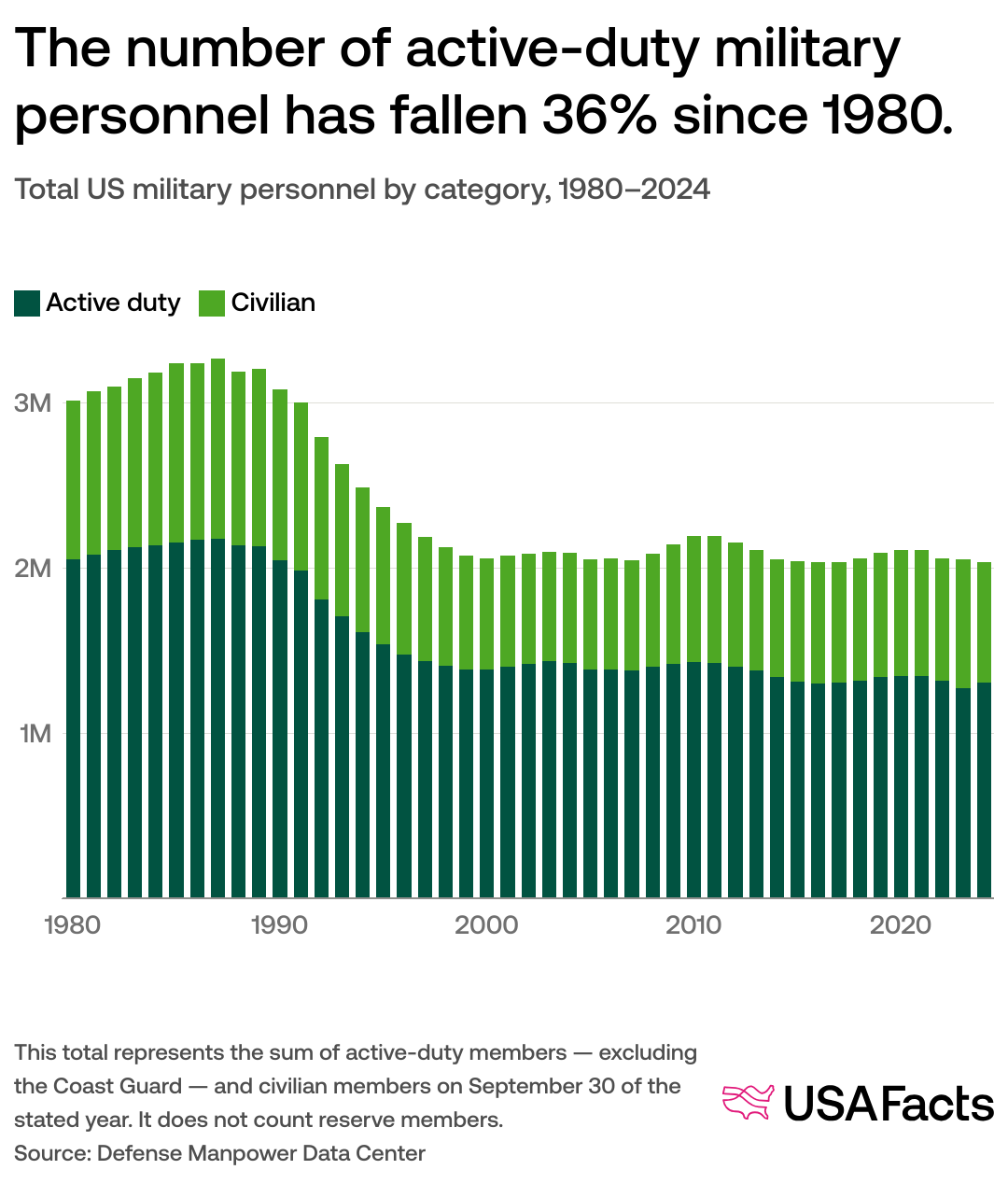
In 2023, the active-duty military force of the United States stood at approximately 1.3 million service members. When factoring in the Ready Reserve (National Guard and Reserve components), this number approaches 2 million. Considering a total U.S. population of over 330 million, the active-duty military represents roughly 0.4% of the population, with the broader reserve components pushing it closer to 0.6%. While these percentages might seem small on the surface, their financial ripple effects are anything but insignificant. This article delves into the multi-layered financial implications of this demographic, examining the economic footprint, personal finance considerations for service members and veterans, and the macroeconomic perspective of defense spending.

The Shifting Demographics and Their Economic Footprint
Understanding the precise percentage of Americans serving in the military provides a crucial baseline for analyzing its economic influence. The military is not merely a government entity; it is a major employer, a benefits provider, and a consumer of vast resources, all of which contribute significantly to the nation’s financial landscape.
A Snapshot of Military Service in America
The composition of the U.S. military has evolved over time, reflecting changes in global geopolitics, technological advancements, and recruitment strategies. Today’s all-volunteer force is a highly skilled and technologically advanced organization. The roughly 1.3 million active-duty personnel are complemented by approximately 800,000 members in the National Guard and Reserve. Beyond these immediately serving figures, the United States is also home to over 18 million military veterans, a demographic whose financial needs, benefits, and economic contributions continue to shape national and local economies long after their service concludes.
These numbers, while seemingly small relative to the entire population, represent a concentrated cohort with distinct financial profiles and needs. Their salaries, benefits, and spending habits form a substantial and often underestimated segment of the national economy. The relatively small percentage underscores the specialized nature of military service in modern America and the concentrated financial support systems required to sustain it.
Economic Contributions of the Military Community
The financial impact of this community extends far beyond direct military expenditures. Military personnel, their families, and veterans contribute to the economy in numerous ways:
- Direct Spending: Salaries and allowances paid to service members are spent on housing, food, transportation, and consumer goods, injecting billions of dollars directly into local economies, particularly those surrounding military installations.
- Local Economic Stimulus: Military bases often serve as economic anchors for surrounding communities. They create demand for local businesses, from restaurants and retailers to childcare services and construction. The presence of a base can stabilize local housing markets and ensure a steady stream of employment opportunities for civilians who support military operations.
- Human Capital Development: The military invests heavily in training and education, producing a highly skilled workforce. When service members transition to civilian life, they bring valuable technical skills, leadership experience, and work ethic that boost productivity and innovation across various industries. Many veterans pursue higher education using the GI Bill, further enhancing their economic potential and contributing to the tax base.
Personal Finance Implications for Service Members and Veterans
For the individual who chooses to serve, the military offers a unique and often robust financial package that profoundly impacts their personal finance journey, from early career through retirement and beyond. Understanding these financial pillars is key to appreciating the economic value of military service.
Compensation and Benefits: A Foundation for Financial Security
Military compensation is more complex than a civilian salary, encompassing a blend of direct pay and a comprehensive suite of benefits designed to provide financial stability and support to service members and their families.
- Basic Pay: This is the primary component of compensation, determined by rank and years of service. It is a stable, reliable income source that grows with career progression.
- Allowances: These non-taxable payments are crucial for covering living expenses.
- Basic Allowance for Housing (BAH): Tailored to local housing costs and dependent status, BAH helps service members afford housing in their assigned duty stations. This stabilizes housing markets near bases and ensures quality living for military families.
- Basic Allowance for Subsistence (BAS): This allowance covers food costs, ensuring service members have resources for meals, whether they cook at home or eat at base facilities.
- Special and Incentive Pays: These are offered for specific skills (e.g., foreign language proficiency), dangerous duties (e.g., hazardous duty pay), or demanding assignments, providing additional financial incentives.
- Healthcare (TRICARE): Access to comprehensive, low-cost healthcare through TRICARE is an invaluable benefit, significantly reducing out-of-pocket medical expenses for service members and their families, a substantial financial relief compared to many civilian healthcare plans.
Long-Term Financial Planning: Retirement and Education Benefits
Beyond immediate compensation, the military provides powerful tools for long-term financial security and upward mobility.
- Military Pensions: After 20 years of service, members are eligible for a defined-benefit pension, providing a reliable income stream for life. While the Blended Retirement System (BRS) introduced a hybrid model with a defined contribution component, the pension remains a significant draw and a cornerstone of military retirement planning.
- Thrift Savings Plan (TSP): Similar to a 401(k), the TSP allows service members to save for retirement through tax-advantaged investments. The BRS includes government matching contributions for those enrolled, providing a significant boost to retirement savings.
- GI Bill: Perhaps one of the most transformative benefits, the Post-9/11 GI Bill provides tuition, housing, and book stipends for eligible service members and veterans pursuing higher education or vocational training. This not only empowers individuals to achieve their educational and career goals but also represents a massive investment in the nation’s human capital, fueling innovation and economic growth. The ability to transfer these benefits to dependents also offers significant financial relief to military families.
Navigating Post-Service Financial Transitions
Transitioning from military to civilian life can present unique financial challenges, but a robust suite of veteran benefits exists to support this critical period.
- VA Benefits: The Department of Veterans Affairs (VA) provides an extensive range of benefits, including disability compensation for service-connected conditions, access to VA healthcare services, and life insurance. These benefits offer a crucial financial safety net and ensure veterans receive care for their sacrifices.
- VA Home Loans: The VA home loan program offers significant advantages, including no down payment requirements, competitive interest rates, and no private mortgage insurance. This enables veterans to achieve homeownership, build equity, and stabilize their family finances more readily than many civilian counterparts.
- Employment Support: Numerous federal and state programs, alongside non-profit organizations, assist veterans with job placement, career counseling, and entrepreneurship resources. These programs aim to leverage veterans’ skills and experience, facilitating their integration into the civilian workforce and contributing to their financial independence.
The Macroeconomic Perspective: Defense Spending and National Investment
The aggregate financial impact of the military extends far beyond individual compensation and benefits; it is intricately linked to the nation’s defense budget, which represents a substantial portion of federal expenditure and has broad economic implications.
Government Expenditure: Investing in National Security
The U.S. defense budget is the largest in the world, reflecting the nation’s global security commitments. While much of this spending is directed towards operations, procurement of advanced weaponry, and research and development, a significant portion directly supports military personnel.
- Personnel Costs: Salaries, allowances, healthcare, and retirement benefits for active-duty, reserve, and civilian defense employees constitute a major segment of the defense budget. This ensures a stable and professional fighting force, but also means a steady flow of federal dollars into the hands of millions of Americans.
- Operations and Maintenance: A large part of the budget covers the day-to-day costs of running military bases, training exercises, and deployments. This involves contracts with numerous businesses for supplies, services, and facility maintenance, supporting a wide array of civilian jobs.
- Procurement and R&D: Investment in new technologies, weapon systems, and research creates high-paying jobs in the defense industry, stimulates innovation, and often leads to spin-off technologies with civilian applications.
Economic Spin-offs: Industry and Innovation
The defense sector is a powerful engine for economic growth and technological advancement.
- Defense Contractors: Large and small businesses across the nation, from aerospace giants to small parts manufacturers, rely on defense contracts. This creates millions of direct and indirect jobs, driving demand for engineers, manufacturing workers, and support staff.
- Technological Advancements: Military R&D often pushes the boundaries of science and engineering. Innovations developed for defense purposes frequently find civilian applications, leading to new industries, products, and economic opportunities (e.g., GPS, the internet, advanced materials).
- Job Creation: Beyond direct military personnel, the broader defense ecosystem supports a vast civilian workforce, including federal employees, defense contractors, and businesses that supply goods and services to military installations.
Regional Economic Impact of Military Bases
Military installations are often economic hubs, particularly in rural or less populated areas.
- Local Employment: Bases employ thousands of civilians in administrative, support, and technical roles, providing stable, well-paying jobs.
- Housing Markets: The demand for housing from service members and their families can significantly influence local real estate markets, providing stability and growth for surrounding communities.
- Support Services: Businesses catering to military personnel and their families, such as retail stores, medical facilities, schools, and entertainment venues, thrive near bases, creating a vibrant local economy. These communities rely heavily on the consistent influx of military salaries and federal spending.
Financial Considerations for Aspiring Service Members
For young Americans contemplating military service, the financial package is often a significant factor in their decision-making process. Understanding the potential financial trajectory can help individuals make informed choices.
Weighing the Financial Pros and Cons of Enlistment
Joining the military can be a strategic financial move for many, particularly those facing limited civilian job opportunities or burdened by student loan debt.
- Guaranteed Income and Benefits: A steady paycheck, comprehensive healthcare, and housing/food allowances provide a level of financial stability often unmatched by entry-level civilian jobs.
- Debt Relief: Programs like the Student Loan Repayment Program (SLRP) can significantly alleviate student debt, making higher education more accessible without future financial strain.
- Career Development: The military provides extensive training and certifications that are highly valued in the civilian sector, often without the personal financial cost associated with equivalent civilian education.
However, potential service members must also consider:
- Lower Initial Pay: While benefits are extensive, initial military pay may be lower than some private sector opportunities for highly skilled individuals.
- Limited Control over Career Path/Location: Military life often involves frequent relocations and deployments, which can impact a spouse’s career or family financial planning.
Financial Literacy and Planning for Military Families
The unique demands of military life necessitate robust financial planning.
- Budgeting for Instability: Deployments and frequent moves require flexible budgeting and emergency savings.
- Investment Opportunities: Utilizing the TSP and other investment vehicles from an early career stage can lead to substantial wealth accumulation given the consistent income and potential for long-term service.
- Spousal Employment and Financial Impact: Military spouses often face challenges maintaining continuous employment due to relocations, making financial planning for dual-income households more complex. Resources and support for military spouses seeking remote work or portable careers are increasingly vital.
Conclusion: A Financial Pillar of the Nation
The question “what percentage of Americans are military” reveals a statistic that, while seemingly small, underpins a vast and intricate financial ecosystem. From the direct salaries and comprehensive benefits that empower individual service members and their families to build financial security, to the multi-billion-dollar defense budget that fuels innovation, creates jobs, and stabilizes regional economies, the military’s financial impact is profound and pervasive.
Beyond the numbers, the military represents a significant national investment—an investment in security, in human capital development, and ultimately, in the broader economic stability and prosperity of the United States. Understanding these financial dimensions is crucial for policymakers, financial planners, and indeed, all citizens, to fully appreciate the economic role played by those who serve. The percentage of Americans in uniform may be modest, but their collective financial footprint is anything but.
aViewFromTheCave is a participant in the Amazon Services LLC Associates Program, an affiliate advertising program designed to provide a means for sites to earn advertising fees by advertising and linking to Amazon.com. Amazon, the Amazon logo, AmazonSupply, and the AmazonSupply logo are trademarks of Amazon.com, Inc. or its affiliates. As an Amazon Associate we earn affiliate commissions from qualifying purchases.