
The Redstone Arsenal, nestled in the heart of Huntsville, Alabama, is far more than just a military installation; it is a sprawling epicenter of technological innovation, national security, and scientific advancement. Often referred to as “America’s Rocket City,” Huntsville owes much of its identity to this colossal federal complex. Redstone Arsenal serves as a critical nexus for research, development, engineering, and testing across a spectrum of cutting-edge domains, from ballistic missiles and space exploration to cybersecurity and hypersonics. It is a place where the theoretical converges with the tangible, shaping the future of defense, aerospace, and digital technologies for the United States and its allies.

To truly understand what the Redstone Arsenal is, one must delve into its rich history of pioneering breakthroughs, its current composition of world-leading technological organizations, and its relentless pursuit of the next generation of solutions that safeguard national interests and push the boundaries of human achievement. It is a living laboratory, a strategic asset, and a testament to sustained investment in technological superiority.
A Crucible of Innovation: Redstone’s Core Mission and Impact
At its fundamental core, Redstone Arsenal’s mission is deeply intertwined with technological progress. Conceived initially as a chemical weapons production facility during World War II, its destiny pivoted dramatically to become the bedrock of America’s missile and space programs. This transformation set the stage for its enduring legacy as a forge for groundbreaking technologies.
From V-2 Rockets to Space Exploration: A Legacy of Firsts
The arrival of Dr. Wernher von Braun and his team of German rocket scientists in 1950 marked a definitive turning point for Redstone. Under their guidance, the Arsenal rapidly transitioned into the primary development center for the U.S. Army’s ballistic missile programs. This era produced the Redstone missile – the namesake of the facility – which propelled America’s first satellite, Explorer 1, into orbit and launched Alan Shepard as the first American in space. This early success solidified Redstone’s reputation as the birthplace of American space flight and a powerhouse in rocket propulsion technology.
The technological advancements made during this period were monumental, laying the theoretical and practical groundwork for subsequent generations of rockets, guidance systems, and aerospace engineering principles. From materials science capable of withstanding extreme temperatures and pressures to sophisticated telemetry and control systems, the innovations emanating from Redstone were foundational to both military might and humanity’s quest to explore the cosmos. This legacy of “firsts” continues to inspire and inform the advanced research conducted there today.
Pioneering Missile and Defense Systems
Beyond its space legacy, Redstone Arsenal remains at the forefront of missile and defense system development. It is the primary command for the U.S. Army’s missile and aviation technology development. Engineers and scientists here are constantly refining existing systems and conceptualizing new ones, addressing an ever-evolving threat landscape. This includes everything from tactical missiles designed for precision strikes to strategic ballistic missile defense systems that protect against long-range threats.
The work involves complex interdisciplinary efforts, integrating advanced aerodynamics, propulsion, guidance, navigation, and control (GNC) systems, as well as sophisticated sensor technologies. The aim is to develop systems that are faster, more accurate, more resilient to countermeasures, and capable of operating in contested environments. This continuous cycle of innovation ensures the United States maintains a decisive technological edge in a critical domain of national security.
Key Technological Hubs and Organizations
The sheer breadth of Redstone Arsenal’s technological endeavors is reflected in the diverse array of organizations that call it home. Each entity contributes unique expertise and capabilities, collectively forming a formidable ecosystem of innovation.
NASA Marshall Space Flight Center: Charting the Cosmos
A cornerstone of the Arsenal, NASA’s Marshall Space Flight Center (MSFC) is a world leader in propulsion systems, space launch vehicle development, and scientific research. Building on its historic role in the Apollo program, MSFC is now a central player in NASA’s Artemis program, designing and testing critical components for the Space Launch System (SLS) rocket, which aims to return humans to the Moon and eventually to Mars.
MSFC’s technological focus extends to advanced manufacturing techniques for space, in-space propulsion, life support systems for long-duration missions, and scientific payloads for deep space exploration. Its contributions are not just about reaching space; they’re about surviving and thriving there, pushing the boundaries of engineering and materials science in the extreme conditions of the solar system. The center also plays a significant role in managing and operating the International Space Station (ISS) science operations, demonstrating its ongoing commitment to space-based research and technological development.
US Army Futures Command and Missile & Aviation Technology
Redstone Arsenal hosts several critical Army commands and agencies focused on technology. The U.S. Army Futures Command (AFC) is revolutionizing how the Army modernizes, and Redstone is a key component of this effort. Specifically, the Combat Capabilities Development Command Aviation & Missile Center (CCDC AvMC) and the Program Executive Office Missiles and Space (PEO MS) are headquartered here. These organizations are responsible for the entire lifecycle of Army missile and aviation systems – from basic research and conceptual design to advanced prototyping, testing, and sustainment.
Their technological pursuits are vast, encompassing:
- Hypersonic Weaponry: Developing systems that can travel at speeds exceeding Mach 5, posing significant challenges in materials science, thermal management, and precision guidance.
- Vertical Lift Technology: Advancing the next generation of Army aircraft, including future attack reconnaissance aircraft (FARA) and long-range assault aircraft (FLRAA), incorporating advanced avionics, autonomy, and propulsion.
- Precision Fires: Enhancing the accuracy and range of artillery and missile systems, often integrating GPS, inertial navigation, and advanced sensor fusion.
- Air and Missile Defense: Creating layered defense systems capable of intercepting a wide array of aerial threats, from drones to intercontinental ballistic missiles.
These efforts are not merely about incremental improvements but about disruptive technological leaps that ensure battlefield superiority and soldier safety.
FBI and Cybersecurity Presence
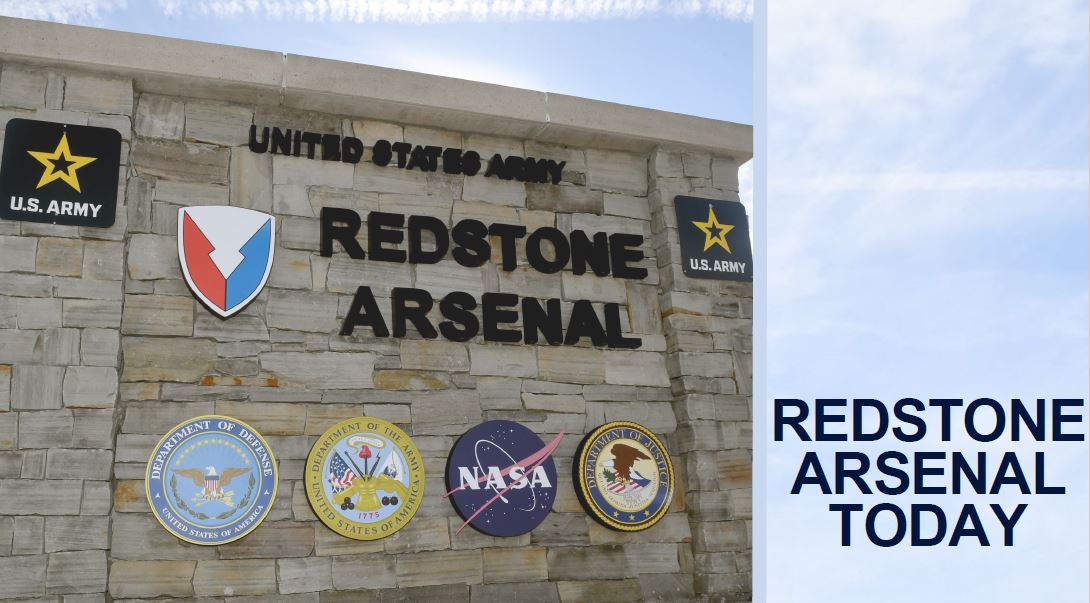
In a testament to the comprehensive nature of modern defense, Redstone Arsenal also houses a significant presence from the Federal Bureau of Investigation (FBI). The FBI’s terror screening center and other operational divisions on the Arsenal highlight the evolving scope of national security to include cyber warfare and digital threats. This presence underscores the fact that technology, particularly information technology and cybersecurity, is now a critical battlespace.
The FBI’s operations at Redstone benefit from and contribute to the Arsenal’s broader technological ecosystem, particularly in areas like data analytics, digital forensics, and secure communications. The collaboration between military, intelligence, and law enforcement agencies on the Arsenal creates a powerful synergy for developing integrated technological solutions to both conventional and unconventional threats.
Redstone’s Contribution to National Security and Advanced Technology
The work undertaken at Redstone Arsenal directly translates into tangible advancements that bolster national security and push the boundaries of global technology. Its contributions span critical domains that define modern warfare and strategic advantage.
Cybersecurity and Digital Defense
As the world becomes increasingly interconnected, cybersecurity has emerged as a paramount concern. Redstone Arsenal plays a vital role in developing robust digital defenses for military networks, weapons systems, and critical infrastructure. This involves research into secure computing, intrusion detection, resilient network architectures, and offensive/defensive cyber capabilities.
Experts at Redstone work on encryption technologies, vulnerability assessments, penetration testing, and incident response protocols, ensuring that the nation’s technological assets are protected from sophisticated cyber adversaries. The integration of cyber considerations into every stage of weapon system development – from design to deployment – is a hallmark of Redstone’s comprehensive approach to modern defense technology.
Hypersonics and Directed Energy Research
The race for hypersonic capabilities is a defining characteristic of 21st-century military technology. Redstone Arsenal is a major center for U.S. efforts in this domain, focusing on the materials science, propulsion systems, aerodynamic controls, and thermal management required for vehicles traveling at extreme speeds. The engineering challenges are immense, demanding novel approaches to high-temperature materials, navigation in plasma sheaths, and precision maneuvering.
Similarly, Redstone is actively engaged in directed energy research, exploring the potential of high-energy lasers and high-power microwaves to provide new defensive and offensive capabilities. These technologies offer the promise of speed-of-light engagement, precision targeting with minimal collateral damage, and cost-effective defense against swarming threats like drones. The development requires expertise in optics, power generation, beam control, and atmospheric propagation.
AI, Machine Learning, and Autonomous Systems
The integration of artificial intelligence (AI) and machine learning (ML) into defense systems is rapidly transforming military capabilities, and Redstone is at the forefront of this revolution. Researchers are developing AI algorithms for target recognition, predictive maintenance of complex systems, optimizing logistics, and enhancing command and control. The goal is to create more intelligent, adaptive, and efficient systems that augment human decision-making and performance.
Furthermore, Redstone is heavily invested in autonomous systems, from unmanned aerial vehicles (UAVs) and ground vehicles to robotic platforms for dangerous tasks. The technological challenges here involve developing robust sensor fusion, intelligent path planning, human-robot teaming, and ensuring ethical and safe operation in complex environments. These autonomous technologies are designed to extend reach, reduce risk to human personnel, and provide persistent surveillance and strike capabilities.
The Ecosystem of Innovation: Collaboration and Future Trends
Redstone Arsenal is not an isolated entity; it thrives on a dynamic ecosystem of collaboration, education, and strategic foresight, all geared towards sustaining its technological leadership.
Public-Private Partnerships and Tech Transfer
A key driver of innovation at Redstone is the robust network of public-private partnerships. Government agencies and military commands actively collaborate with defense contractors, aerospace companies, and technology firms. This synergy accelerates research, development, and commercialization of new technologies. Through initiatives like Cooperative Research and Development Agreements (CRADAs) and Small Business Innovation Research (SBIR) programs, technologies developed on the Arsenal can transition to the private sector, and commercial innovations can be adapted for military use. This two-way transfer of knowledge and technology is crucial for maintaining a competitive edge and fostering economic growth in the region.
Workforce Development and STEM Initiatives
Recognizing that human capital is the ultimate technological resource, Redstone Arsenal invests heavily in workforce development and STEM (Science, Technology, Engineering, and Mathematics) education. It collaborates with local universities, community colleges, and K-12 schools to cultivate a pipeline of skilled scientists, engineers, and technicians. Internships, mentorship programs, and research opportunities are abundant, drawing talent from across the nation. This focus on nurturing the next generation of innovators ensures that Redstone will continue to have the intellectual firepower needed to tackle future technological challenges.
The Future Trajectory of Redstone Arsenal
As global technological landscapes continue to evolve at an unprecedented pace, Redstone Arsenal is proactively adapting to ensure its sustained relevance and impact.
Adapting to Emerging Threats and Technologies
The Arsenal is constantly evaluating emerging threats – from peer-state adversaries developing advanced weapon systems to the pervasive risk of cyberattacks and the proliferation of disruptive technologies. This forward-looking approach drives investment in fundamental research and advanced prototyping. Areas of increasing focus include quantum computing, advanced materials with revolutionary properties, space-based deterrents, and fully integrated multi-domain battle management systems. Redstone’s ability to anticipate and respond to these technological shifts will define its future success.

Expanding its Global Technological Footprint
While deeply rooted in Alabama, Redstone Arsenal’s technological influence extends globally. Its innovations contribute to international defense cooperation, space exploration partnerships, and the broader scientific community. Through its pioneering work, Redstone continues to attract international attention and collaboration, solidifying its position not just as a national asset but as a globally recognized center of technological excellence. Its future is one of continued growth, relentless pursuit of scientific discovery, and unwavering commitment to securing the technological high ground for the nation.
In essence, Redstone Arsenal is a vibrant, dynamic, and indispensable hub of technological development. It is where the past achievements of the Space Age meet the future challenges of an increasingly complex world, all driven by a singular focus on innovation, engineering prowess, and the relentless pursuit of technological superiority.
aViewFromTheCave is a participant in the Amazon Services LLC Associates Program, an affiliate advertising program designed to provide a means for sites to earn advertising fees by advertising and linking to Amazon.com. Amazon, the Amazon logo, AmazonSupply, and the AmazonSupply logo are trademarks of Amazon.com, Inc. or its affiliates. As an Amazon Associate we earn affiliate commissions from qualifying purchases.