
The term “quantum” has permeated popular culture, often invoked to signify something groundbreaking, complex, or futuristic. From “quantum leaps” in technology to “quantum physics” mystifying the public, the concept carries an aura of both profound scientific discovery and immense technological potential. But what exactly is the quantum? At its heart, the quantum refers to the fundamental, discrete units of energy, matter, and information at the smallest scales of the universe. It is the realm where classical physics, which describes the world we perceive, breaks down, giving way to a bizarre yet incredibly accurate set of rules known as quantum mechanics. Understanding the quantum isn’t just an academic exercise; it’s the gateway to a new era of technology, promising to revolutionize computation, materials science, sensing, and communication in ways previously unimaginable. This article delves into the core principles of the quantum world and explores the burgeoning technologies it enables, outlining the transformative impact these advancements are poised to have on our future.

Unveiling the Microscopic Realm: The Foundations of Quantum Mechanics
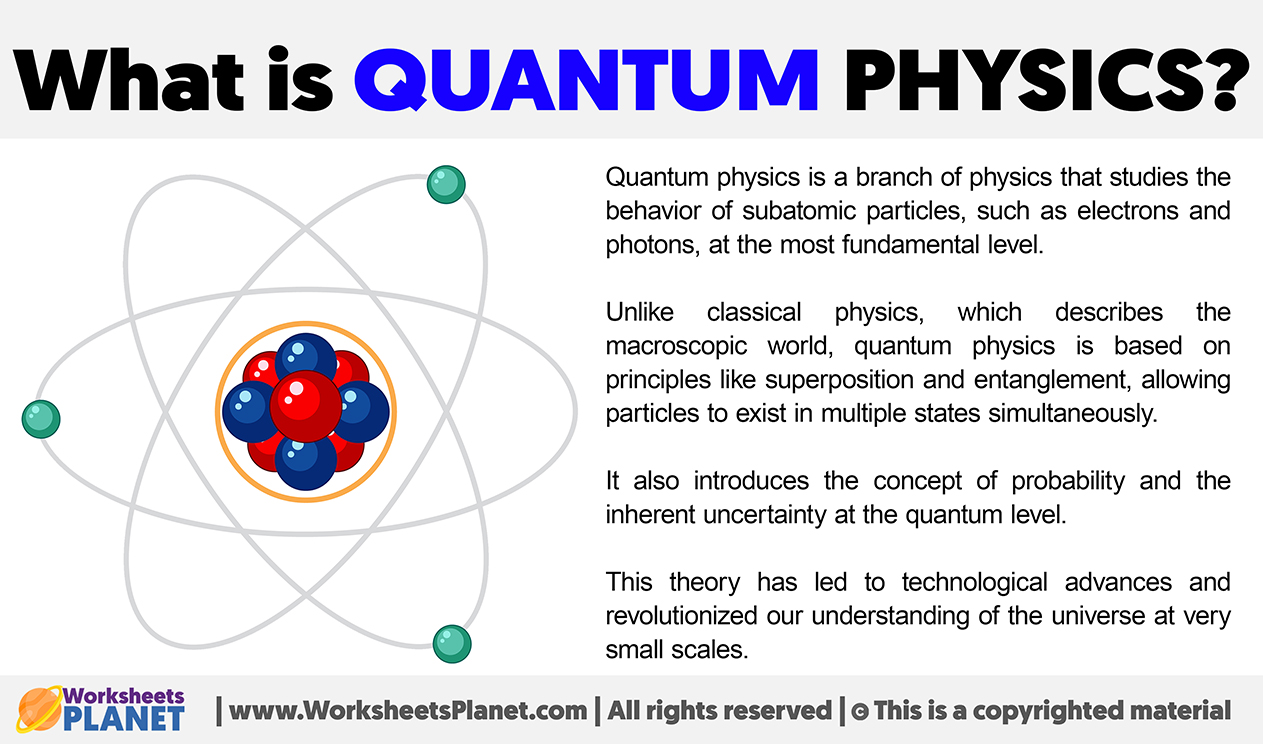
At the heart of the “quantum” lies quantum mechanics, the scientific framework developed in the early 20th century to explain the behavior of matter and energy at atomic and subatomic levels. This realm operates under rules vastly different from our everyday experience, challenging our classical intuition with concepts that appear counter-intuitive yet are rigorously validated by experimental evidence.
The Particle-Wave Duality: Beyond Classical Understanding
One of the most perplexing and foundational concepts in quantum mechanics is the particle-wave duality. Classically, entities are either particles (like a baseball, with a definite position and momentum) or waves (like light or sound, characterized by frequency and amplitude). However, at the quantum scale, entities like electrons and photons exhibit properties of both. A photon, a quantum of light, can act like a wave, diffracting and interfering, but also like a particle, delivering energy in discrete packets. Similarly, an electron, typically thought of as a particle, can also display wave-like behavior. This dual nature means that the “quantum” is not easily categorized by our macroscopic definitions, forcing us to adopt a more nuanced understanding of reality itself. This duality is not merely an interesting quirk; it’s a fundamental property that underpins many quantum technologies. For instance, in quantum computing, the wave-like properties of particles allow for complex interference patterns that are leveraged for computation, while their particle-like nature allows for discrete measurements.
Quantum Superposition: Existing in Multiple States
Perhaps the most mind-bending aspect of the quantum world is superposition. Imagine a classical bit in a computer, which can be either a 0 or a 1. In the quantum realm, a quantum bit (qubit) can exist as a 0, a 1, or a combination of both 0 and 1 simultaneously. This isn’t just an “either/or” with uncertainty; it’s a genuine state where the qubit is in a probabilistic combination of all possible states until it is measured. Only upon measurement does the superposition “collapse” into a definite state (either 0 or 1), with a probability determined by its prior superposition. Schrödinger’s famous thought experiment with a cat in a box, simultaneously dead and alive, attempts to illustrate this bizarre concept, though it’s important to remember that quantum superposition applies to isolated quantum systems, not macroscopic objects like cats. The ability of a qubit to hold multiple states concurrently is a primary source of quantum computers’ immense processing power, allowing them to explore many possibilities simultaneously, a feat impossible for classical machines.
Quantum Entanglement: The Spooky Action at a Distance
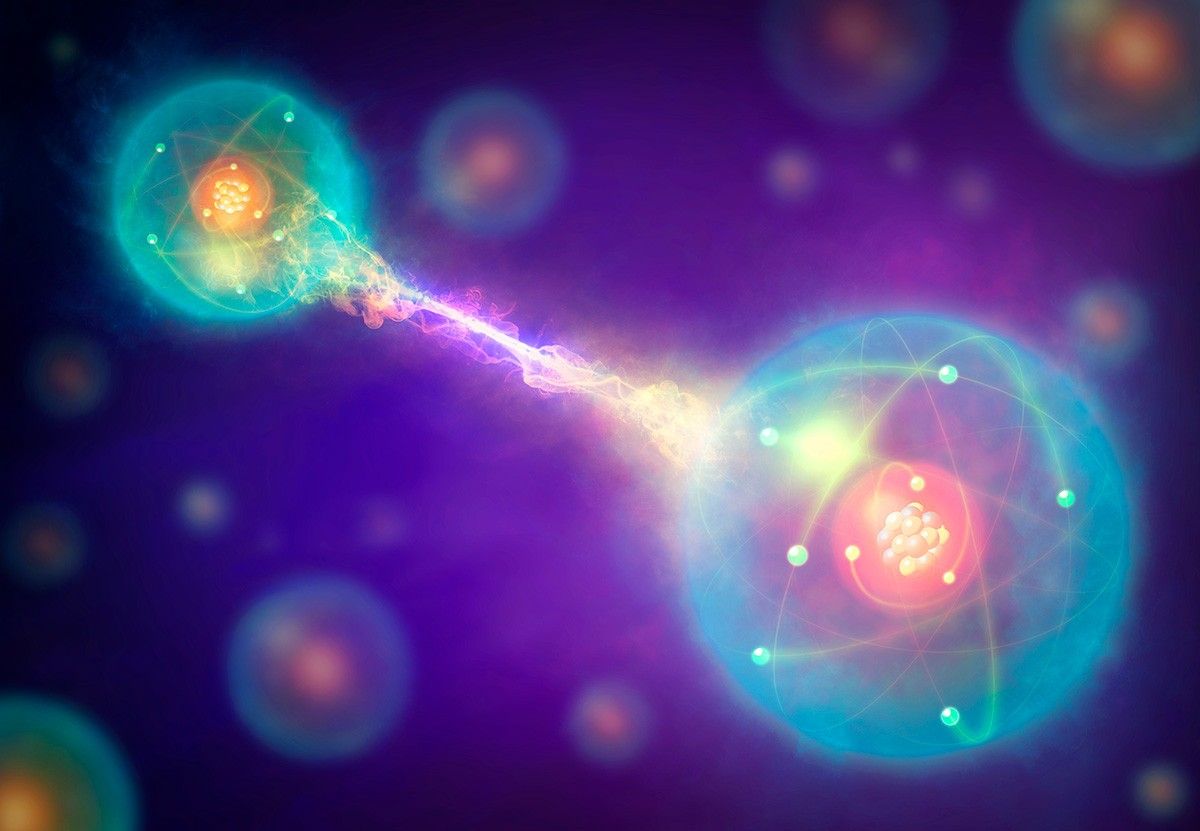
Einstein famously derided entanglement as “spooky action at a distance.” This phenomenon occurs when two or more quantum particles become linked in such a way that they share the same fate, no matter how far apart they are. If you measure the property of one entangled particle, you instantaneously know the corresponding property of the other, even if they are light-years apart, without any direct communication between them. This correlation is stronger than any classical correlation and cannot be explained by local hidden variables. For example, if two electrons are entangled, and one is found to have an “up” spin, the other will instantaneously be known to have a “down” spin, even if the measurement is performed simultaneously on both ends of the universe. Entanglement is not just a scientific curiosity; it is a critical resource for quantum technologies. It enables secure quantum communication (quantum cryptography), forms the basis of quantum teleportation protocols, and significantly enhances the computational power of quantum computers by linking qubits together into a coherent system.
Quantum Computing: Revolutionizing Information Processing
While the foundational principles of quantum mechanics are intriguing in their own right, their most celebrated practical application currently lies in the burgeoning field of quantum computing. This technology promises to solve problems that are intractable for even the most powerful classical supercomputers, opening doors to scientific discovery and technological innovation on an unprecedented scale.
Bits vs. Qubits: The Power of Superposition and Entanglement
The fundamental difference between classical and quantum computing lies in their basic unit of information: the bit versus the qubit. A classical bit, as mentioned, can represent either a 0 or a 1. A qubit, leveraging the principle of superposition, can exist as a 0, a 1, or a combination of both simultaneously. This exponential increase in information density is amplified further by entanglement. When multiple qubits are entangled, their states become interconnected, creating a vast computational space. For instance, three classical bits can represent one of $2^3 = 8$ possible combinations at any given time. Three entangled qubits, however, can represent all eight combinations simultaneously due to superposition. This means that as the number of qubits increases, the computational power grows exponentially, allowing quantum computers to explore many solutions in parallel, unlike classical computers which must check each solution sequentially. This fundamental difference is what gives quantum computers their potential to tackle problems beyond classical reach.
The Promise of Quantum Algorithms: Solving Intractable Problems
The true power of quantum computing isn’t just in the hardware but in the algorithms designed to exploit quantum phenomena. Quantum algorithms, such as Shor’s algorithm and Grover’s algorithm, offer exponential speedups for specific types of problems. Shor’s algorithm, for example, can efficiently factor large numbers, a task that is computationally prohibitive for classical computers and forms the basis of much of modern encryption (RSA). This poses a significant future threat to current cybersecurity protocols. Grover’s algorithm, on the other hand, can speed up searches in unstructured databases quadratically. Beyond these, quantum computers are anticipated to excel in areas like:
- Drug Discovery and Materials Science: Simulating molecular interactions and material properties with unprecedented accuracy, accelerating the development of new medicines, catalysts, and advanced materials.
- Optimization Problems: Finding optimal solutions for complex logistics, financial modeling, and supply chain management problems.
- Artificial Intelligence and Machine Learning: Enhancing AI algorithms by processing vast datasets and recognizing patterns more efficiently, leading to more powerful and nuanced AI systems.
- Financial Modeling: Performing complex risk analyses and portfolio optimizations beyond classical capabilities.
Challenges and the Race to Build a Fault-Tolerant Quantum Computer
Despite the immense promise, quantum computing is still in its nascent stages. Building and maintaining quantum computers presents formidable engineering challenges. Qubits are incredibly fragile; they are highly susceptible to decoherence, where interactions with their environment cause them to lose their quantum properties (superposition and entanglement). This fragility necessitates extreme isolation, often requiring ultra-low temperatures (millikelvin range) and strong electromagnetic shielding. Current quantum computers are “noisy intermediate-scale quantum” (NISQ) devices, meaning they have a limited number of qubits and are prone to errors. The grand challenge for researchers globally is to develop “fault-tolerant” quantum computers, which can perform complex calculations with a very low error rate, enabling them to realize their full potential. This involves developing sophisticated error correction codes and scalable qubit architectures, a technological race involving governments, major tech companies, and startups worldwide.
Beyond Computation: Diverse Applications of Quantum Technologies
While quantum computing garners significant attention, the quantum realm extends its influence far beyond computation, giving rise to a suite of “quantum technologies” poised to transform various sectors, from precision measurement to secure communication.
Quantum Sensing: Unprecedented Precision
Quantum sensors leverage the exquisite sensitivity of quantum systems to external stimuli to achieve measurement precision far beyond classical limits. The inherent quantum properties of atoms, electrons, or photons can be manipulated to detect minute changes in magnetic fields, gravity, time, or temperature. This has opened doors to revolutionary applications:
- Medical Diagnostics: Detecting diseases at earlier stages using highly sensitive magnetic resonance imaging (MRI) or magnetoencephalography (MEG) devices that can sense tiny magnetic fields generated by brain activity.
- Navigation and Metrology: Developing ultra-precise atomic clocks that enable more accurate GPS systems and fundamental scientific research. Quantum accelerometers and gravimeters could allow for navigation without GPS and even detect hidden underground structures or resources.
- Geophysics and Exploration: Mapping geological features with greater accuracy for mineral exploration and earthquake prediction.
- Fundamental Physics: Enabling more precise measurements for testing fundamental theories of the universe.
Quantum Communication and Cryptography: Unbreakable Security
The principles of quantum mechanics, particularly entanglement and the no-cloning theorem (which states that an unknown quantum state cannot be perfectly copied), offer a fundamentally new paradigm for secure communication. Quantum Key Distribution (QKD) is the most mature application in this area. QKD allows two parties to establish a shared encryption key that is theoretically unbreakable. Any attempt by an eavesdropper to intercept or measure the quantum state of the photons carrying the key will inevitably disturb the quantum state, alerting the legitimate parties to the breach. This makes QKD the only known communication method that can guarantee security against any future computational advancements, including those made by quantum computers. While QKD is currently deployed in niche applications, the vision of a “quantum internet” that can transmit entangled qubits over long distances is being actively pursued, promising global networks that are immune to eavesdropping.
Quantum Materials: Engineering the Future
Quantum materials are a class of substances whose intriguing properties arise directly from quantum mechanical effects. These materials exhibit unique electronic, magnetic, and optical behaviors that cannot be explained by classical physics alone. Research in quantum materials is leading to breakthroughs in diverse areas:
- Superconductors: Materials that conduct electricity with zero resistance below a certain critical temperature. High-temperature superconductors could revolutionize energy transmission and storage, creating loss-free power grids and ultra-efficient electronic devices.
- Topological Insulators: Materials that act as insulators in their bulk but conduct electricity perfectly along their surfaces, potentially leading to new generations of low-power electronics and quantum computing architectures.
- Spintronics: Utilizing the “spin” of an electron in addition to its charge, enabling new forms of data storage and processing that are faster and more energy-efficient than traditional electronics.
- Photonic Crystals: Materials engineered to control the flow of light, leading to advancements in optical communication, lasers, and solar energy.
The ability to engineer materials at the quantum level opens up possibilities for creating bespoke substances with properties tailored for specific technological needs, from advanced sensors to more efficient energy solutions.
The Impact and Ethical Considerations of the Quantum Age
The rapid progression of quantum technologies signals the dawn of a new era, often referred to as the “Quantum Age.” This epoch promises profound societal and economic transformations, but also necessitates careful consideration of its ethical dimensions and potential challenges.
Transformative Potential Across Industries
The implications of quantum advancements are staggering and cut across virtually every industry sector. In healthcare, quantum simulations will accelerate drug discovery, personalized medicine, and sophisticated diagnostics. Finance will benefit from enhanced fraud detection, optimized trading strategies, and more robust risk management. The defense sector will see advancements in secure communication, surveillance, and next-generation weapons systems. Manufacturing will be revolutionized by the design of novel materials and optimized production processes. Energy will witness breakthroughs in fusion power, more efficient solar cells, and advanced battery technologies. The sheer breadth of these potential applications indicates that quantum technologies are not merely incremental improvements but foundational shifts that will redefine the technological landscape for decades to come.
The Quantum Threat: A New Frontier in Cybersecurity
With immense power comes significant challenges. The very strength of quantum computers to break classical encryption algorithms poses a formidable threat to current cybersecurity infrastructure. If Shor’s algorithm becomes practical on a large-scale quantum computer, it could render public-key cryptography (like RSA and ECC), which secures everything from online banking to classified government communications, completely vulnerable. This “quantum threat” is spurring a global race to develop and deploy “post-quantum cryptography” (PQC) – classical encryption algorithms that are believed to be resistant to attacks from both classical and quantum computers. Migrating the world’s digital infrastructure to PQC is a monumental undertaking that requires international cooperation and significant investment to secure our digital future against this looming threat.
Guiding the Development: Ethical AI and Responsible Innovation
As quantum technologies mature, so too do the ethical questions surrounding their development and deployment. The power of quantum AI, the potential for surveillance with quantum sensors, and the dual-use nature of quantum computing for both beneficial and potentially harmful applications, necessitate a proactive approach to responsible innovation. Discussions around data privacy in a quantum-secure world, the equitable access to quantum resources, the potential for job displacement, and the implications for national security and international relations are critical. Governments, academia, and industry must collaborate to establish ethical guidelines, regulatory frameworks, and public education initiatives to ensure that the quantum age serves humanity’s best interests, fostering a future where technological prowess is balanced with societal well-being and moral responsibility.
In conclusion, “the quantum” is far more than a scientific curiosity; it represents a fundamental paradigm shift in our understanding of reality and a fertile ground for revolutionary technologies. From the bizarre principles of superposition and entanglement to their application in quantum computing, sensing, communication, and materials science, the quantum realm is unlocking capabilities previously confined to science fiction. While significant challenges remain in engineering these technologies to their full potential and addressing the ethical complexities they present, the quantum age promises to reshape our world, driving innovation and expanding the boundaries of what is technologically possible.
aViewFromTheCave is a participant in the Amazon Services LLC Associates Program, an affiliate advertising program designed to provide a means for sites to earn advertising fees by advertising and linking to Amazon.com. Amazon, the Amazon logo, AmazonSupply, and the AmazonSupply logo are trademarks of Amazon.com, Inc. or its affiliates. As an Amazon Associate we earn affiliate commissions from qualifying purchases.