
For decades, the world of high-finance was gated by a formidable barrier: the “unit price.” To own a piece of the world’s most successful companies, a stake in prime Manhattan real estate, or a share of a Renaissance masterpiece, you didn’t just need a strategy—you needed a massive upfront capital injection. If a single share of a tech giant cost $3,500, and you only had $500 to invest, you were effectively locked out of that growth engine.
Enter the era of “What the Fraction?” This seismic shift in the financial landscape has replaced the rigid “all-or-nothing” ownership model with a modular, accessible, and highly flexible system. Fractional investing has dismantled the velvet ropes of Wall Street, allowing retail investors to slice and dice assets into affordable portions. This article explores how fractionalization is redefining personal finance, the mechanics of this financial evolution, and how to navigate the risks of a divided market.
The Breakdown of Traditional Barriers
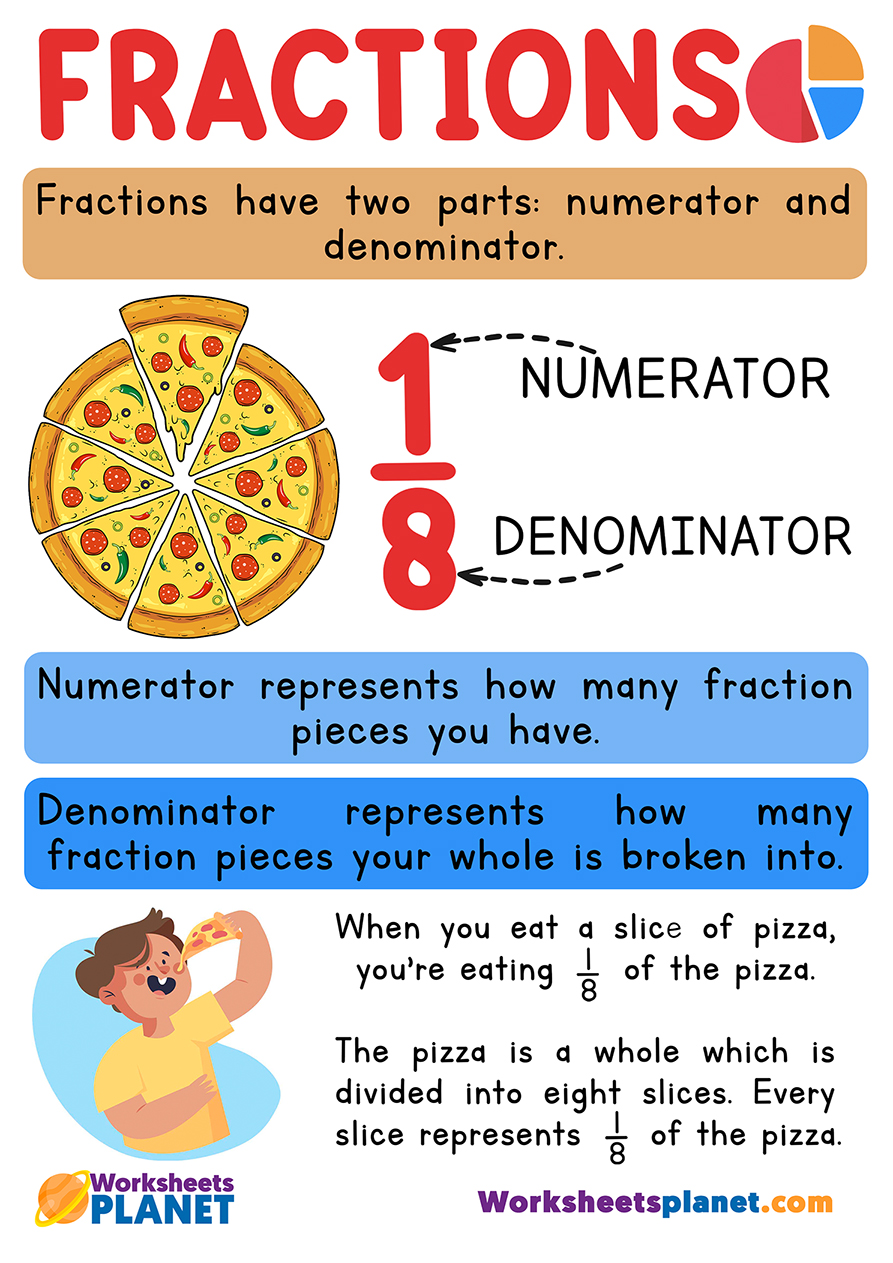
The concept of fractionalization is not entirely new, but its application across almost every asset class is a hallmark of the modern financial era. At its core, fractionalization is the process of taking a high-value asset and dividing it into smaller “slices,” each representing a proportional share of the whole.
From Wall Street to Main Street: The Rise of Fractional Shares
The most visible impact of this trend is in the stock market. Historically, buying stock required purchasing at least one full share. For high-priced “blue chip” stocks, this created a high barrier to entry. Brokerages now utilize internal ledgers to allow investors to buy “0.001” of a share. This means that with as little as $1 or $5, a teenager or a novice investor can own a piece of the world’s most valuable companies. This democratization ensures that capital allocation is no longer dependent on the nominal price of a stock, but rather on the investor’s conviction and available budget.
The Technology Behind the Slice: How Brokerages Automate Partials
The “magic” of fractional shares is actually a feat of sophisticated software and accounting. Most major digital brokerages act as the primary owner of the full share. They purchase the share on the open market and then sub-divide the ownership rights among their users. This requires real-time synchronization of dividends, corporate actions, and voting rights—scaled across millions of users. The automation of these processes has reduced the administrative cost of micro-transactions to near zero, making it profitable for firms to cater to the “small” investor.
Beyond Stocks: The Diversification of High-Value Assets
While stocks were the first to fall, the fractional revolution has quickly spread to assets that were previously considered “alternative” or reserved exclusively for the ultra-wealthy. This expansion is providing retail investors with diversification tools that were once the exclusive domain of institutional hedge funds.
Real Estate Portfolios for the Price of a Coffee
Real estate has long been the preferred vehicle for wealth creation, yet it requires significant down payments, credit checks, and maintenance. Fractional real estate platforms have changed the game. Through Special Purpose Vehicles (SPVs) or Real Estate Investment Trusts (REITs) that are subdivided into digital shares, investors can now put $100 into a commercial warehouse or a luxury apartment complex. This allows for geographical and sectoral diversification; rather than putting $50,000 into one single-family home, an investor can put $1,000 into 50 different properties across the country, significantly mitigating the risk of localized market downturns.
Blue-Chip Art and Collectibles: Owning a Piece of History
Perhaps the most intriguing development is the fractionalization of “passion assets.” Fine art by names like Banksy or Warhol, vintage Ferraris, and even rare sports cards are now being securitized. Platforms purchase these assets, insure them, and store them in climate-controlled vaults, while selling shares to the public. This turns a painting—which might appreciate at 10% a year but costs $5 million—into a liquid-ish financial instrument accessible to anyone with a smartphone. It represents a shift from “custodial ownership” (having the painting on your wall) to “economic ownership” (benefiting from its value appreciation).
The Psychology and Strategy of Micro-Investing

The shift toward fractions isn’t just a technical change; it is a psychological one. The way people interact with their money changes when the “minimum buy-in” disappears.
Lowering the Psychological Barrier to Entry
Financial inertia is often caused by the “threshold effect.” When an investment requires a large sum, the fear of making a mistake is amplified, leading to analysis paralysis. Fractional investing removes this friction. By allowing individuals to start with “pennies,” it encourages the habit of investing over the act of speculating. It transforms investing from a high-stakes event into a recurring lifestyle choice, similar to a subscription service.
Dollar-Cost Averaging: The Fractional Investor’s Greatest Tool
The true power of fractionalization lies in its synergy with Dollar-Cost Averaging (DCA). In a traditional model, if you wanted to invest $200 every month into a stock priced at $150, you would have to buy one share and leave $50 sitting in cash, or wait two months to buy a second share. With fractional shares, you can invest exactly $200 every single month, regardless of the share price. This ensures that your capital is always working for you, maximizing the effects of compound interest and smoothing out market volatility over time.
Risks and Realities of the Fractional Model
While the “What the Fraction?” movement offers unprecedented access, it is not without its pitfalls. Investors must look beyond the convenience to understand the structural risks involved in owning pieces of a whole.
Liquidity Constraints and Hidden Fees
The liquidity of a fraction is not always equal to the liquidity of the whole. If you own 0.5 of a share of a stock on a major platform, you can usually sell it instantly because the broker facilitates the trade. However, in more niche markets like fractional real estate or art, there may not be an active secondary market. You might own a “slice” of a building, but if you need your cash back tomorrow, you may find that there are no buyers for your specific fraction, or you may be forced to sell at a significant discount. Furthermore, some platforms charge “management fees” or “sourcing fees” that can eat into the small returns generated by micro-investments.
The Ownership Illusion: Voting Rights and Legal Structures
When you own a fraction, do you truly “own” the asset? In many cases, the answer is legally complex. In the stock market, many fractional share programs do not grant the investor voting rights or the ability to transfer those partial shares to another brokerage (ACATS). If you decide to leave your broker, you often have to liquidate your fractions into cash first, which can trigger unwanted capital gains taxes. In the world of collectibles, you are essentially a shareholder in a company that owns an asset, meaning you are at the mercy of the company’s management regarding when and if the asset is eventually sold for a profit.
The Future of Wealth: A Fractional Frontier
As we look toward the next decade, the “fractionalization of everything” appears to be an inevitable trajectory for the global economy. The fusion of finance and technology is creating a world where every asset, no matter how large or illiquid, can be tokenized and traded.
Tokenization and the Blockchain Revolution
The next evolution of the “What the Fraction?” trend is the migration of these assets onto blockchain networks. Tokenization allows for even smaller divisions and, more importantly, 24/7 trading without the need for traditional intermediaries. By representing a fraction of an office building as a digital token, the “settlement time” for a sale could drop from months to seconds. This promises to bring a level of liquidity to the real estate and private equity markets that was previously unimaginable.

Building a Balanced Portfolio in a Divided World
For the modern investor, the challenge is no longer access, but selection. In a world where you can buy a fraction of anything, the risk of “over-diversification” or “diworsification” becomes real. A portfolio scattered across 50 different fractions of stocks, 20 pieces of art, and 10 real estate tokens can become a nightmare to track and manage.
The strategy for the future is disciplined curation. Fractional investing should be viewed as a bridge, not the destination. It is a tool to gain exposure to high-growth areas early, to reinvest dividends precisely, and to build a robust financial foundation from the ground up. By understanding the “why” behind the “what,” investors can leverage these slices to build a whole, secure financial future.
In conclusion, “What the Fraction?” is more than a catchy phrase; it is a declaration of financial independence for the digital age. It represents the final collapse of the “wealth gatekeeper” model, proving that in the modern economy, it doesn’t matter how much you start with—it only matters that you start.
aViewFromTheCave is a participant in the Amazon Services LLC Associates Program, an affiliate advertising program designed to provide a means for sites to earn advertising fees by advertising and linking to Amazon.com. Amazon, the Amazon logo, AmazonSupply, and the AmazonSupply logo are trademarks of Amazon.com, Inc. or its affiliates. As an Amazon Associate we earn affiliate commissions from qualifying purchases.