
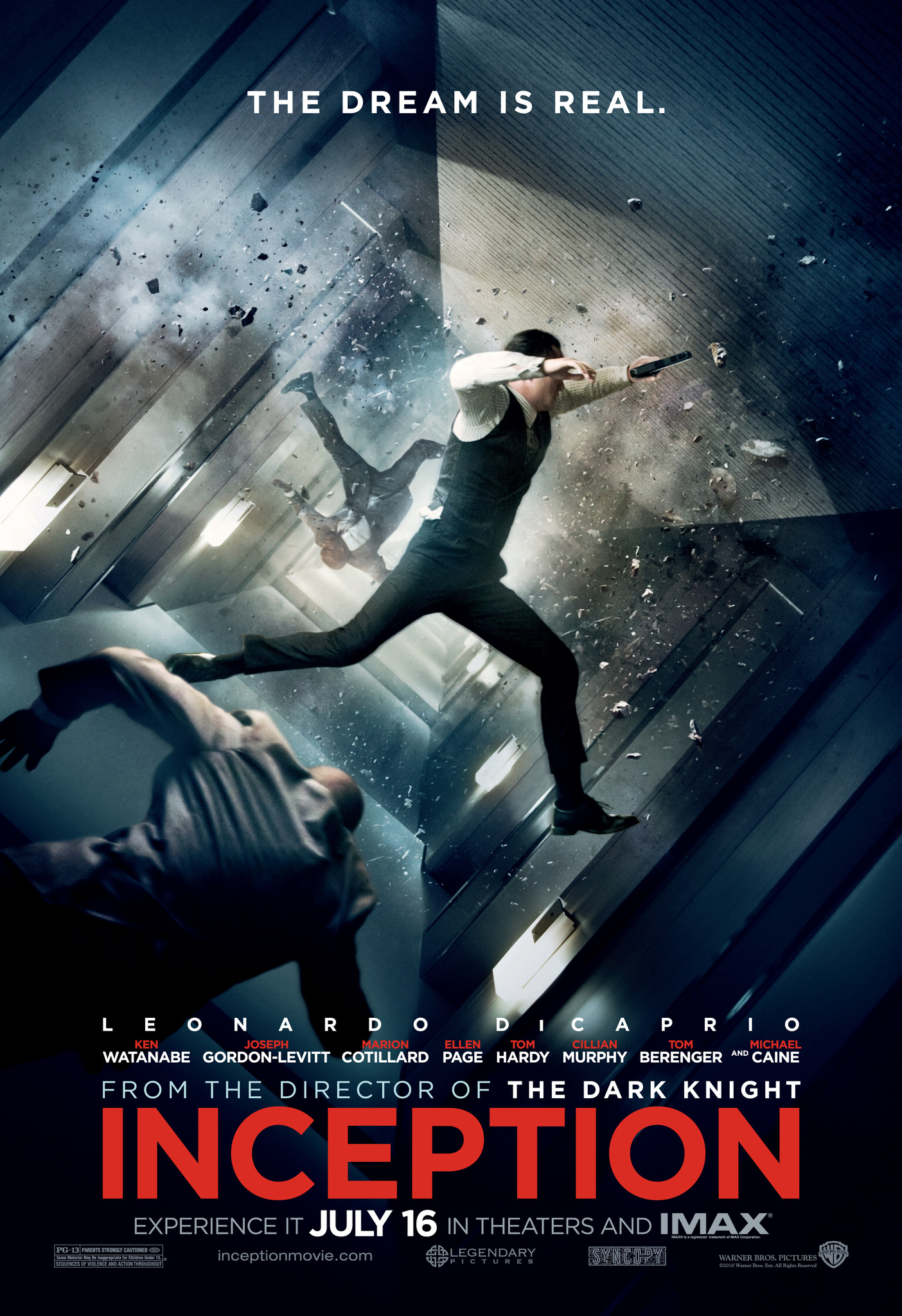
Christopher Nolan’s Inception is more than just a blockbuster; it’s a meticulously crafted exploration of the human mind, consciousness, and the very nature of reality. At its core, the film revolves around the concept of “extraction” – the art of stealing valuable information by entering a person’s subconscious through shared dreaming. However, the narrative quickly expands to encompass a more ambitious and dangerous undertaking: “inception,” the act of planting an idea into someone’s mind, making them believe it’s their own. This complex premise serves as the fertile ground for a thrilling heist, a poignant character study, and a profound philosophical inquiry into the power of ideas and the fragility of perception.

The film’s brilliance lies in its intricate world-building and the elegantly presented rules of its dream-sharing technology. While the science behind it is fictional, Nolan imbues it with a compelling internal logic that allows the audience to suspend disbelief and immerse themselves in the extraordinary possibilities of the subconscious. Inception doesn’t just tell a story; it invites viewers to question their own realities, memories, and the origins of their deepest beliefs.
The Mechanics of Dreams and Extraction
The foundation of Inception‘s narrative is the sophisticated technology that allows individuals to enter and manipulate dreams. This isn’t simply about lucid dreaming; it’s a controlled, shared experience facilitated by a portable device and specific sedative drugs. The team of specialists, led by the enigmatic Dom Cobb, utilizes this technology for corporate espionage, extracting sensitive information from the minds of their targets.
The Architecture of the Subconscious
Understanding how dreams are constructed in Inception is crucial to grasping the film’s plot. The subconscious is visualized as a malleable architectural space, a landscape that the “architect” of the team, Ariadne, designs and builds within the dream. This architecture serves as the playground for the extraction mission, with different levels of dreams acting as distinct environments. The more layers of dreams one descends into, the more unstable and dangerous the experience becomes, with time dilating exponentially with each deeper level. This unique concept of dream architecture not only provides a visually stunning backdrop for the action but also underpins the narrative’s escalating stakes.
The Art of Extraction: Stealing Ideas
Extraction, the film’s initial focus, involves a team of skilled individuals infiltrating a target’s dream to extract specific information. This requires a deep understanding of psychology, deception, and the ability to navigate the subconscious mind without arousing suspicion. The extractor, often Cobb himself, must impersonate a figure within the target’s dream that the target would trust enough to confide in. This process is fraught with peril, as any misstep can lead to the target’s subconscious defenses manifesting as hostile projections, known as “projections.” These projections are essentially the target’s own mind defending itself against intrusion, creating formidable obstacles for the extraction team.
The Rules of Engagement
Nolan masterfully establishes a set of rules that govern the dream-sharing technology, adding layers of complexity and tension. These rules are not arbitrary; they are integral to the plot and the characters’ actions. Key among these are:
- Time Dilation: Time passes at a significantly slower rate in deeper dream levels. A few minutes in the real world can equate to hours, days, or even years within the dream. This allows for extensive operations within dreams that would be impossible in waking life.
- The Totem: Each dreamer carries a personal object, a “totem,” whose weight, balance, or feel is unique to them. This serves as a vital tool for distinguishing between the dream world and reality. If a character is unsure whether they are dreaming, they can test their totem.
- The Kick: To wake up from a dream, a physical jolt, known as a “kick,” is required. This can be anything from falling to being hit. In the layered dream structure, kicks must be synchronized across different levels to ensure a simultaneous awakening.
- The Limbo: If a dreamer dies in a dream, they are not truly dead but are instead sent to “Limbo,” an unconstructed dream space of pure subconscious. Limbo is a dangerous place where one can become lost, forgetting what is real and what is a dream, potentially spending an eternity trapped in their own mind.
The Grand Ambition: Inception
While extraction is the team’s bread and butter, Inception‘s titular concept, “inception,” represents a far more challenging and ethically ambiguous objective. Planting an idea is significantly more difficult than stealing one, as it requires subtly introducing a concept that the target will genuinely believe is their own original thought. This form of mental manipulation forms the central mission of the film and delves into the deeper themes of the movie.
The Art of Planting an Idea
The process of inception is depicted as an intricate, multi-layered operation. The team must not only plant the initial seed of an idea but also ensure that the target nurtures and develops it into a fully formed belief. This involves orchestrating a series of dreams, each designed to reinforce the implanted idea and make it appear organic to the target. The target’s subconscious is manipulated to perceive the idea as their own epiphany, driven by their own desires and motivations. This makes inception a profound exercise in psychological engineering, pushing the boundaries of what is considered possible in mental manipulation.
The Target: Robert Fischer Jr.
The film’s primary inception mission is targeted at Robert Fischer Jr., the heir to a powerful energy conglomerate. The goal is to convince him to break up his father’s empire, a mission orchestrated by a rival businessman, Mr. Saito. This personal motivation adds a layer of complexity to Cobb’s involvement, as he has his own personal stakes in the success of this mission, tied to his desire to return to his children. The personal stakes for both the target and the protagonist elevate the narrative beyond a simple heist.
The Motivations and Stakes
The motivations behind the inception mission are multi-faceted. For Mr. Saito, it’s about business and power. For Cobb and his team, it’s about completing a challenging job and, for Cobb, it’s about a chance at redemption and reuniting with his family. The stakes are incredibly high, not just in terms of potential financial gain or loss, but also in terms of the psychological toll on the individuals involved. The success of the mission could alter the global economic landscape, while failure could trap them in the perilous depths of Limbo. The ethical implications of such profound mental manipulation are also a constant undercurrent, prompting the audience to consider the moral boundaries of altering someone’s fundamental beliefs.
The Protagonist’s Inner Conflict: Dom Cobb
At the heart of Inception lies the compelling and tormented figure of Dom Cobb, played by Leonardo DiCaprio. Cobb is a master extractor haunted by his past, his guilt manifesting as a dangerous projection of his deceased wife, Mal. His internal struggle and emotional baggage are not just character development; they are integral to the plot and the very fabric of the dream world.
The Shadow of Mal
Mal, Cobb’s wife, is a constant presence in his subconscious. Her death, which Cobb feels responsible for, has created a profound sense of guilt that manifests as a destructive force within the dreamscapes. Mal appears as a hostile projection, actively sabotaging Cobb’s missions and attempting to pull him into Limbo, a reflection of his own self-destructive tendencies and his inability to let go of her. Her character serves as a powerful metaphor for unresolved grief and the way past traumas can haunt and impede present endeavors.
The Quest for Redemption
Cobb’s ultimate goal is not just to complete the inception mission but to achieve redemption and return to his children. This desire is what drives him, even as his inner demons threaten to consume him. The inception mission offers him a potential way out of his self-imposed exile, a chance to reclaim his life. However, his own psychological barriers, represented by Mal, are the most significant obstacles he must overcome. His journey is as much about conquering his internal demons as it is about successfully planting an idea in someone else’s mind.
The Blurred Lines of Reality
The film constantly blurs the lines between dreams and reality, not just for the characters but also for the audience. Cobb’s own perception of reality is compromised by his experiences and his guilt. The recurring image of his children and the ambiguous ending with the spinning top are deliberate choices by Nolan to question the nature of what we perceive as real. This ambiguity is a hallmark of Inception, leaving viewers to ponder the ultimate truth of Cobb’s reality long after the credits roll. The film encourages introspection on how our own perceptions shape our understanding of the world and the people around us.
The Enduring Legacy and Philosophical Implications
Inception‘s impact extends far beyond its box office success. Its intricate narrative, groundbreaking visual effects, and thought-provoking themes have cemented its place as a modern cinematic masterpiece, sparking countless debates and analyses. The film’s enduring appeal lies in its ability to engage audiences on multiple levels – as a thrilling action-adventure, a complex heist film, and a profound philosophical exploration.
The Power of Ideas
One of the central philosophical questions Inception grapples with is the immense power of ideas. The film suggests that an idea, once planted and believed, can fundamentally alter a person’s trajectory, their motivations, and their perception of the world. This concept resonates with real-world phenomena, from the formation of personal beliefs to the spread of ideologies. The movie highlights how profoundly our thoughts and beliefs can shape our actions and, ultimately, our destinies. It prompts us to consider the origin of our own ideas and the influence they have on our lives.
The Nature of Reality
The film’s exploration of the subjective nature of reality is another key aspect of its lasting legacy. By creating a world where dreams can be meticulously constructed and indistinguishable from waking life, Inception forces us to question what constitutes “real.” Is reality an objective truth, or is it a construct of our own consciousness? The movie suggests that our perception is paramount, and that what we believe to be real has a tangible impact on our experience of the world. This ambiguity, particularly in the film’s iconic ending, invites continuous discussion and personal interpretation.

A Masterclass in Storytelling and World-Building
Inception stands as a testament to Christopher Nolan’s skill as a filmmaker. His ability to weave complex narratives with intricate world-building, compelling characters, and profound thematic depth is unparalleled. The film’s intricate plot is a carefully constructed puzzle, with each piece falling into place to create a cohesive and satisfying whole. The visual spectacle, combined with Hans Zimmer’s iconic score, further enhances the immersive experience, making Inception a truly unforgettable cinematic journey. Its success has inspired countless filmmakers and continues to captivate audiences, proving that intellectually stimulating blockbusters can achieve both critical and commercial acclaim.
aViewFromTheCave is a participant in the Amazon Services LLC Associates Program, an affiliate advertising program designed to provide a means for sites to earn advertising fees by advertising and linking to Amazon.com. Amazon, the Amazon logo, AmazonSupply, and the AmazonSupply logo are trademarks of Amazon.com, Inc. or its affiliates. As an Amazon Associate we earn affiliate commissions from qualifying purchases.