
In today’s health-conscious world, navigating the aisles of the grocery store can feel like a complex mission. Labels abound with terms like “sugar-free,” “low-carb,” and “natural sweeteners,” often leaving consumers scratching their heads. Among these, “sugar alcohol” is a term that frequently surfaces, promising sweetness without the caloric punch of traditional sugar. But what exactly are sugar alcohols, and how do they differ from the granulated white stuff we’re all familiar with? Understanding this distinction is crucial for making informed dietary choices, managing health conditions like diabetes, and even optimizing your productivity by avoiding energy crashes.

While the primary topic of this article might seem purely nutritional, the underlying principles of understanding complex ingredients, making informed choices, and their impact on personal well-being resonate deeply with the core themes of our website. Whether you’re a tech enthusiast optimizing your digital life, a brand strategist building a compelling identity, or a savvy investor managing your finances, the ability to dissect information, understand nuances, and make effective decisions is paramount. This exploration into sugar and sugar alcohols is, in essence, a consumer tech-meets-brand-intelligence-meets-personal-finance lesson disguised as a culinary inquiry.
Understanding the Basics: Sugar’s Role in Our Diet
Before diving into the specifics of sugar alcohols, let’s establish a baseline understanding of sugar itself. When we talk about “sugar” in everyday conversation, we are typically referring to sucrose, the common table sugar derived from sugarcane or sugar beets. Sucrose is a disaccharide, meaning it’s composed of two simpler sugar units bonded together: glucose and fructose.
The Energy Source (and Potential Pitfall)
From a biochemical perspective, sugar is a carbohydrate, and its primary function in the body is to provide a quick source of energy. When you consume sugar, your digestive system breaks it down into glucose, which is then absorbed into your bloodstream. This triggers the release of insulin, a hormone that helps transport glucose from the blood into your cells for immediate use or storage.
However, the ease with which sugar provides energy can also be its downfall. A rapid influx of glucose can lead to a sharp spike in blood sugar levels, followed by a subsequent drop as insulin works overtime. This “sugar crash” can leave you feeling fatigued, irritable, and craving more sugar, creating a cycle that many people struggle to break. Beyond the immediate energy fluctuations, excessive sugar consumption is linked to a host of health issues, including weight gain, increased risk of type 2 diabetes, heart disease, and dental problems.
Beyond Sucrose: Other Common Sugars
It’s important to note that “sugar” can encompass a broader category of sweet-tasting carbohydrates. Other common sugars found in our diet include:
- Fructose: Commonly found in fruits and high-fructose corn syrup (HFCS).
- Glucose: The primary sugar found in our blood and a building block for many other carbohydrates.
- Lactose: The sugar found in milk, composed of glucose and galactose.
While these sugars have slightly different metabolic pathways and effects, they generally share the characteristic of being readily digestible carbohydrates that contribute calories and impact blood sugar levels.
Enter the Sugar Alcohols: A Different Kind of Sweetener
Now, let’s shift our focus to sugar alcohols, also known by their scientific name, polyols. These are a group of carbohydrates that share structural similarities with both sugars and alcohols, hence their name. However, it’s crucial to understand that sugar alcohols are not alcoholic beverages. The “alcohol” in their name refers to their chemical structure, specifically the presence of a hydroxyl group (-OH) attached to a carbon atom.
Chemical Structure and Digestion
The key difference between sugar and sugar alcohol lies in their chemical structure and how our bodies process them. While sugars are typically composed of aldehyde or ketone groups, sugar alcohols have their carbonyl group reduced to a hydroxyl group. This seemingly minor alteration has significant implications for digestion.
Unlike regular sugars, sugar alcohols are only partially absorbed by the small intestine. This incomplete absorption means that fewer calories are derived from them, and they have a less significant impact on blood sugar levels. The unabsorbed portion of sugar alcohol travels to the large intestine, where it can be fermented by gut bacteria.
Common Sugar Alcohols and Their Characteristics
You’ve likely encountered several sugar alcohols in your food choices, even if you didn’t recognize the name. Some of the most common ones include:
- Xylitol: A popular sweetener often found in sugar-free gum, mints, and toothpaste. It’s known for its cooling sensation and has a sweetness similar to sugar. Xylitol is particularly well-regarded for its dental benefits, as it cannot be metabolized by the bacteria that cause tooth decay.
- Erythritol: This is another widely used sugar alcohol, often found in baked goods, beverages, and keto-friendly products. It has a much lower caloric value than sugar and a very minimal impact on blood sugar. Erythritol is often praised for being well-tolerated digestively compared to other sugar alcohols.
- Sorbitol: Commonly used as a sweetener and humectant (a substance that retains moisture) in processed foods like candies and dietetic baked goods. Sorbitol has a milder sweetness than sugar and is often used in combination with other sweeteners.
- Mannitol: Similar to sorbitol in its properties and uses, often found in confectionery and as a pharmaceutical excipient.
- Maltitol: A common sweetener in sugar-free chocolates and candies, it has a sweetness profile close to sugar but fewer calories.
- Isomalt: Often used in hard candies and sugar-free confections due to its ability to resist crystallization and its low hygroscopicity (tendency to absorb moisture).
The “Sugar-Free” Promise: Benefits and Considerations
The primary appeal of sugar alcohols lies in their ability to provide sweetness with fewer calories and a reduced impact on blood sugar. This makes them a valuable tool for:
- Individuals with Diabetes: For those managing diabetes, sugar alcohols can offer a way to enjoy sweet treats without causing significant glycemic spikes. This allows for greater dietary flexibility and can contribute to better blood sugar control.
- Weight Management: By reducing overall calorie intake from sweeteners, sugar alcohols can be a strategic choice for individuals aiming to lose weight or maintain a healthy weight.
- Dental Health: As mentioned with xylitol, many sugar alcohols are not fermented by oral bacteria, thus not contributing to tooth decay. This is a significant advantage over regular sugar.
- Low-Carbohydrate Diets: For those following ketogenic or other low-carbohydrate diets, sugar alcohols offer a way to satisfy sweet cravings without consuming net carbohydrates that would disrupt ketosis.
However, it’s not all sweet news. The incomplete digestion of sugar alcohols can lead to certain side effects, primarily related to the digestive system.
Navigating the Differences: A Practical Comparison
To truly grasp the difference between sugar and sugar alcohols, a direct comparison is insightful. This understanding can empower you to make informed purchasing decisions and manage your dietary intake effectively.
Caloric Content and Glycemic Impact
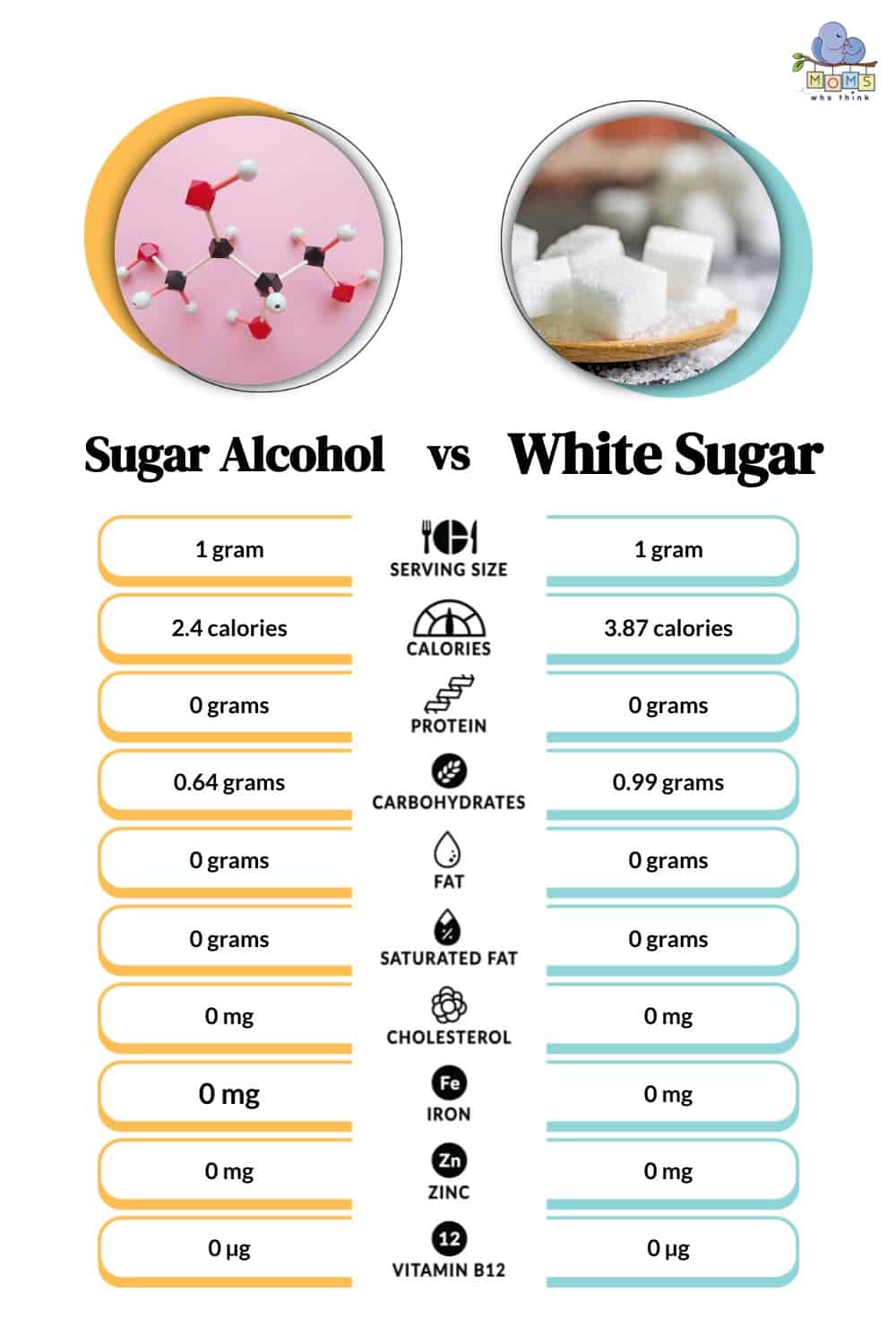
| Feature | Sugar (Sucrose) | Sugar Alcohols (e.g., Erythritol, Xylitol) |
|---|---|---|
| Caloric Value | Approximately 4 calories per gram. | Varies, but generally 0.2 to 3 calories per gram (Erythritol is close to 0). |
| Glycemic Index (GI) | High (around 65 for sucrose). Causes a rapid rise in blood sugar. | Low to zero. Minimal to no impact on blood sugar. |
| Insulin Response | Triggers a significant insulin release. | Minimal to no insulin response. |
Digestibility and Potential Side Effects
- Sugar: Readily digested and absorbed in the small intestine, contributing fully to calorie intake and blood sugar. Generally well-tolerated digestively for most individuals in moderate amounts.
- Sugar Alcohols: Partially absorbed in the small intestine. The unabsorbed portion ferments in the large intestine, which can lead to:
- Gas: Due to fermentation by gut bacteria.
- Bloating: Similar to gas production.
- Diarrhea: In larger quantities, sugar alcohols can draw water into the intestines, leading to a laxative effect.
The degree of these side effects varies significantly among individuals and depends on the specific sugar alcohol consumed and the quantity. Erythritol is often considered the most well-tolerated due to its high absorption rate in the small intestine.
Taste Profile and Culinary Applications
While both provide sweetness, there are subtle differences in their taste and how they behave in cooking and baking.
- Sugar: Provides a clean, familiar sweetness. It caramelizes, contributes to browning, and provides structure and texture in baked goods.
- Sugar Alcohols:
- Sweetness Level: Varies. Xylitol is very similar to sugar, while others like sorbitol are less sweet.
- Aftertaste: Some sugar alcohols can have a slight cooling sensation (e.g., xylitol, erythritol) or a mild aftertaste.
- Baking: They don’t caramelize or brown in the same way as sugar, which can affect the appearance and texture of baked goods. They also don’t contribute to the same level of structure. Formulations often require adjustments when substituting for sugar in recipes.
Making Informed Choices: Beyond the Label
Understanding the differences between sugar and sugar alcohols is the first step. The next is to apply this knowledge to your daily life, making conscious choices that align with your health goals and dietary needs.
Reading Food Labels: Deciphering the Sweeteners
When you pick up a packaged food item, take a moment to scrutinize the ingredient list and the nutrition facts panel.
- Ingredient List: Look for terms like “sucrose,” “high-fructose corn syrup,” “glucose,” and “fructose” to identify traditional sugars. You’ll also find sugar alcohols listed by their specific names (e.g., “xylitol,” “erythritol,” “sorbitol”).
- Nutrition Facts Panel: Pay attention to the “Total Carbohydrate” section. Underneath, you’ll often find “Dietary Fiber” and “Total Sugars.” In products containing sugar alcohols, you might see an additional line for “Sugar Alcohols.” The calories contributed by sugar alcohols are sometimes listed separately or factored differently into the total calorie count, depending on the regulations in your region. It’s crucial to understand that for low-carb diets, the “net carbs” are often calculated by subtracting fiber and sugar alcohols from total carbohydrates.
When to Choose Sugar Alcohols and When to Be Cautious
Consider sugar alcohols when:
- You are managing diabetes or pre-diabetes.
- You are trying to reduce your calorie intake for weight management.
- You want to improve your dental health.
- You are following a low-carbohydrate or ketogenic diet.
Be mindful of sugar alcohols when:
- You have a sensitive digestive system. Start with small quantities to assess your tolerance.
- You are looking for traditional baking results. Sugar alcohols may require recipe adjustments.
- You are concerned about potential laxative effects. Consume in moderation.

The Role of Moderation and Whole Foods
While sugar alcohols offer beneficial alternatives to sugar, they are not a free pass to overindulge. Moderation remains key. Furthermore, relying heavily on processed “sugar-free” products can sometimes lead to a disconnect from whole, unprocessed foods that are naturally nutrient-dense. Prioritizing fruits, vegetables, and lean proteins will always form the foundation of a healthy diet, regardless of your sweetener choices.
In conclusion, the difference between sugar and sugar alcohol is rooted in their chemical structure, leading to distinct impacts on our bodies. Understanding these differences empowers you to make more informed decisions, navigate the complex world of food labeling, and ultimately contribute to a healthier and more balanced lifestyle. Just as understanding technological advancements or branding strategies helps you make better decisions in those domains, understanding your food is a critical component of personal well-being.
aViewFromTheCave is a participant in the Amazon Services LLC Associates Program, an affiliate advertising program designed to provide a means for sites to earn advertising fees by advertising and linking to Amazon.com. Amazon, the Amazon logo, AmazonSupply, and the AmazonSupply logo are trademarks of Amazon.com, Inc. or its affiliates. As an Amazon Associate we earn affiliate commissions from qualifying purchases.