
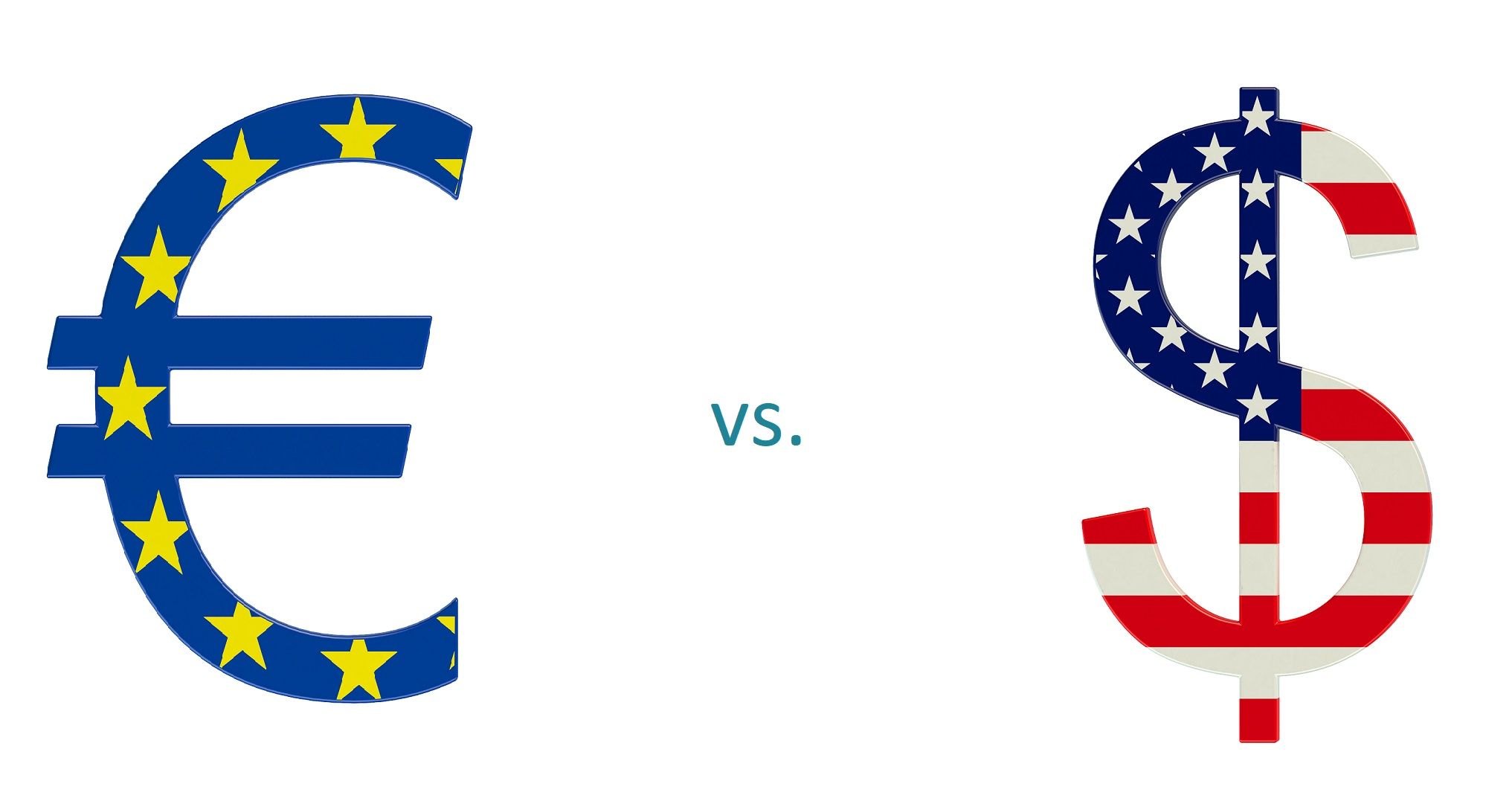
In an increasingly globalized world, understanding currency conversion is not just a niche skill for financial experts but a practical necessity for travelers, international businesses, remote workers, and online shoppers alike. Among the myriad currency pairs, the conversion between the Euro (EUR) and the United States Dollar (USD) stands out as one of the most frequently executed and closely watched. As two of the world’s primary reserve currencies and representing two of the largest economies, their exchange rate directly impacts everything from the cost of your European vacation to the profitability of multinational corporations.

This comprehensive guide will demystify the process of converting Euros to Dollars, exploring the underlying mechanisms of exchange rates, practical methods for conversion, and crucial strategies to ensure you get the best value for your money. Whether you’re planning a trip, managing international investments, or simply curious about the global financial landscape, grasping the intricacies of EUR to USD conversion is a fundamental step towards financial literacy and empowerment.
Understanding Exchange Rates: The Foundation of Currency Conversion
At its core, currency conversion is the act of exchanging one country’s currency for another’s. This seemingly simple transaction is governed by a complex, dynamic system of exchange rates, which dictate the value of one currency in relation to another.
What is an Exchange Rate?
An exchange rate is essentially the price of one currency expressed in terms of another currency. For instance, an exchange rate of “1 EUR = 1.08 USD” means that one Euro can be exchanged for 1.08 US Dollars. These rates are rarely static; they fluctuate continuously based on a multitude of economic, political, and social factors.
Most major currencies, including the Euro and the Dollar, operate under a “floating exchange rate” system. This means their value is determined by the forces of supply and demand in the foreign exchange (forex) market, rather than being pegged to a fixed value by a government or central bank. While there are “fixed exchange rate” systems where a currency’s value is set against another major currency or a basket of currencies, these are less common for the world’s most traded pairs like EUR/USD.
Factors Influencing Exchange Rates
The Euro-Dollar exchange rate is a barometer of the relative economic health and financial stability of the Eurozone and the United States. Several key factors constantly exert pressure on this delicate balance:
- Interest Rates: Central banks (like the European Central Bank and the US Federal Reserve) influence interest rates. Higher interest rates typically attract foreign investment, increasing demand for that currency and thus strengthening its value. If the Fed raises rates while the ECB keeps them stable, the Dollar might strengthen against the Euro.
- Inflation: Lower inflation generally leads to a stronger currency, as the purchasing power of that currency is maintained. High inflation erodes purchasing power, making a currency less attractive.
- Economic Performance: Strong economic growth, low unemployment, and a stable political environment make a country’s currency more appealing to investors, driving up its value. Positive economic news from the US might boost the Dollar, while negative news from the Eurozone could weaken the Euro.
- Political Stability and Government Debt: Geopolitical events, political instability, or concerns over a country’s national debt can significantly impact investor confidence, leading to capital flight and currency depreciation.
- Trade Balances: A country with a trade surplus (exports more than it imports) typically sees higher demand for its currency, as foreigners need to buy that currency to pay for goods and services. Conversely, a trade deficit can weaken a currency.
- Speculation: Large-scale currency traders and financial institutions constantly buy and sell currencies based on their predictions of future movements, which can create significant short-term fluctuations.
Bid-Ask Spreads and Mid-Market Rate
When you look up an exchange rate online, you’ll often see a single “mid-market rate.” This is the theoretical midpoint between the “bid” price (the price at which a buyer is willing to buy a currency) and the “ask” price (the price at which a seller is willing to sell a currency) in the interbank market.
However, as a consumer, you rarely get the mid-market rate. Financial institutions, banks, and currency exchange services profit by adding a “spread” to this rate. When you convert Euros to Dollars, they will sell you Dollars at a rate slightly higher than the mid-market rate (their “ask” price). When you convert Dollars to Euros, they will buy Dollars from you at a rate slightly lower than the mid-market rate (their “bid” price). This difference is the spread, and it’s a key factor in the actual cost of your conversion. Understanding this spread is crucial for evaluating different conversion services.
How to Convert Euros to Dollars: Practical Methods and Tools
Converting Euros to Dollars can be done through various channels, each with its own advantages, disadvantages, and associated costs. Choosing the right method depends on your priorities: convenience, speed, cost-effectiveness, or security.
Online Converters and Financial Apps
For quick estimates and real-time rate tracking, online currency converters (like Google Finance, XE.com, or OANDA) and financial apps are invaluable. They provide instant access to current mid-market rates, helping you monitor fluctuations and decide the optimal time for conversion. Many also offer historical data and rate alerts, notifying you when a desired rate is reached. While they don’t perform the actual transaction, they are essential tools for informed decision-making.
Dedicated financial apps and digital wallets (e.g., Revolut, TransferWise/Wise, PayPal) go a step further, allowing you to hold multiple currencies, convert between them, and send money internationally, often at more favorable rates and lower fees than traditional banks.
Banks and Credit Unions
Traditional banks and credit unions are a common choice for currency conversion. You can convert cash, transfer funds between accounts, or get foreign currency at their branches. While convenient for existing customers, banks often charge higher foreign exchange markups (wider spreads) and may levy additional transaction fees for international transfers. It’s advisable to check their specific exchange rates and fee structures before committing, as these can vary significantly even between major institutions.
Bureaux de Change and Airport Kiosks
These services specialize in cash currency exchange and are frequently found in tourist areas, airports, and train stations. They offer immediate access to foreign cash, which can be convenient for travelers. However, this convenience often comes at a premium. Bureaux de Change, especially at airports, are notorious for offering some of the least favorable exchange rates and higher commissions due to their captive audience and operational costs. It’s generally recommended to avoid these services unless absolutely necessary for small amounts.
Using Credit/Debit Cards Abroad
For spending in a foreign currency, using your credit or debit card can be highly efficient. Most cards offer competitive exchange rates, often close to the interbank rate, processed by the card networks (Visa, MasterCard). However, the critical factor here is “foreign transaction fees.” Many banks charge a percentage (typically 1-3%) on all transactions made in a foreign currency. Some cards, particularly those marketed for travel, offer zero foreign transaction fees, making them an excellent choice for international use. Always check your card’s fee schedule before traveling.

Peer-to-Peer (P2P) and Digital Wallets
The emergence of FinTech companies has revolutionized currency conversion. Services like Wise (formerly TransferWise) operate on a peer-to-peer model, matching users who want to exchange currencies in opposite directions, thereby reducing the need for actual currency conversion via banks and cutting down on costs. They typically offer very competitive rates, often close to the mid-market rate, with transparent, upfront fees. Digital wallets like PayPal also offer currency conversion capabilities, though their exchange rates can sometimes be less favorable than specialized money transfer services.
Navigating the Nuances of Euro-Dollar Conversion
Understanding the basic methods is only part of the equation. To truly optimize your conversions, you need to be aware of the less obvious aspects that can impact the final amount you receive.
Hidden Costs and Fees
The quoted exchange rate is rarely the full story. Many services embed their profit in a less favorable exchange rate (the “spread”) rather than charging an explicit fee. Beyond the spread, look out for:
- Transaction Fees: A flat fee charged per transfer or conversion.
- Foreign Exchange Markup: The percentage difference between the rate you get and the mid-market rate.
- ATM Fees: While using your debit card abroad, you might face fees from your own bank for foreign ATM withdrawals, and additional fees from the local ATM operator.
- Dynamic Currency Conversion (DCC): When offered to pay in your home currency (e.g., USD when in Europe), always decline. DCC services allow the merchant’s bank to set their own, often highly unfavorable, exchange rate. Always choose to pay in the local currency (EUR in the Eurozone).
The Impact of Volatility
Currency markets are inherently volatile, meaning rates can change rapidly within hours or even minutes. Major economic announcements, political shifts, or unexpected global events can cause significant swings in the EUR/USD rate. For large conversions, even a small percentage change can translate into hundreds or thousands of dollars. Monitoring trends and historical data can help in understanding volatility, but predicting precise future movements is challenging for even professional traders.
Tax Implications (Brief Mention)
For most personal conversions for travel or everyday spending, tax implications are minimal. However, if you’re dealing with very large sums, such as proceeds from selling international property, significant investments, or income from a foreign business, there could be capital gains tax implications in your home country. It’s always wise to consult with a tax advisor for substantial international financial transactions.
When to Convert?
Timing is everything in currency conversion.
- Monitoring Rates: Use online tools to track the EUR/USD rate. If you have flexibility, wait for a favorable rate.
- Dollar-Cost Averaging: For recurring conversions, converting smaller amounts regularly can average out the impact of volatility, rather than trying to time one large conversion.
- Hedging (for Businesses): Businesses with significant future foreign currency obligations might use financial instruments like forward contracts to lock in an exchange rate in advance, mitigating risk from adverse currency movements. For individuals, this is usually unnecessary but good to know for context.
Strategies for Optimizing Your Euro-Dollar Conversions
Making informed choices can significantly reduce costs and maximize the amount of Dollars you receive for your Euros, or vice-versa.
Compare Rates Across Providers
Never settle for the first exchange rate you see. Use online comparison tools or manually check rates from multiple providers: your bank, online money transfer services, and specialized travel cards. Pay attention to both the displayed rate and any associated fees. Often, a service with a slightly less favorable rate but zero fees might be better than one with a seemingly good rate but high hidden charges.
Understand Fee Structures
Differentiate between flat fees and percentage-based fees. For small conversions, a flat fee might be disproportionately high. For large conversions, a percentage fee, even if small, can add up quickly. Some services offer tiered fees, where the percentage decreases for larger amounts. Always read the fine print regarding all charges.
Consider Dedicated Travel Cards or Multi-Currency Accounts
For frequent international travelers or those managing international finances, specialized financial products can be game-changers.
- Zero Foreign Transaction Fee Credit Cards: As mentioned, these eliminate the 1-3% fee typically charged on foreign currency purchases.
- Multi-Currency Accounts: Offered by FinTech companies like Wise, these accounts allow you to hold balances in multiple currencies (including EUR and USD), convert between them at competitive rates, and make payments or withdrawals in the local currency without incurring foreign transaction fees. This is often the most cost-effective solution for those who frequently deal with both currencies.
Leverage Technology for Best Rates
Set up rate alerts through financial apps to be notified when the EUR/USD rate hits your target. Explore services that offer “limit orders,” allowing you to set a specific rate at which you want your conversion to execute automatically. Many modern transfer services also use transparent pricing models and real-time rate updates, ensuring you get the most current information.
Conclusion
The conversion of Euros to Dollars is a daily financial interaction for millions globally, underpinned by the intricate dynamics of the foreign exchange market. From central bank policies and economic indicators to geopolitical events, countless factors contribute to the constant ebb and flow of this crucial currency pair.
By understanding how exchange rates work, exploring the diverse methods of conversion, diligently scrutinizing hidden fees, and strategically timing your transactions, you can transform what might seem like a complex financial task into a streamlined and cost-effective process. Leveraging modern financial tools and adopting an informed approach will not only save you money but also empower you to navigate the global economy with greater confidence and efficiency, ensuring that your Euros stretch further when they become Dollars, and vice versa.
aViewFromTheCave is a participant in the Amazon Services LLC Associates Program, an affiliate advertising program designed to provide a means for sites to earn advertising fees by advertising and linking to Amazon.com. Amazon, the Amazon logo, AmazonSupply, and the AmazonSupply logo are trademarks of Amazon.com, Inc. or its affiliates. As an Amazon Associate we earn affiliate commissions from qualifying purchases.