
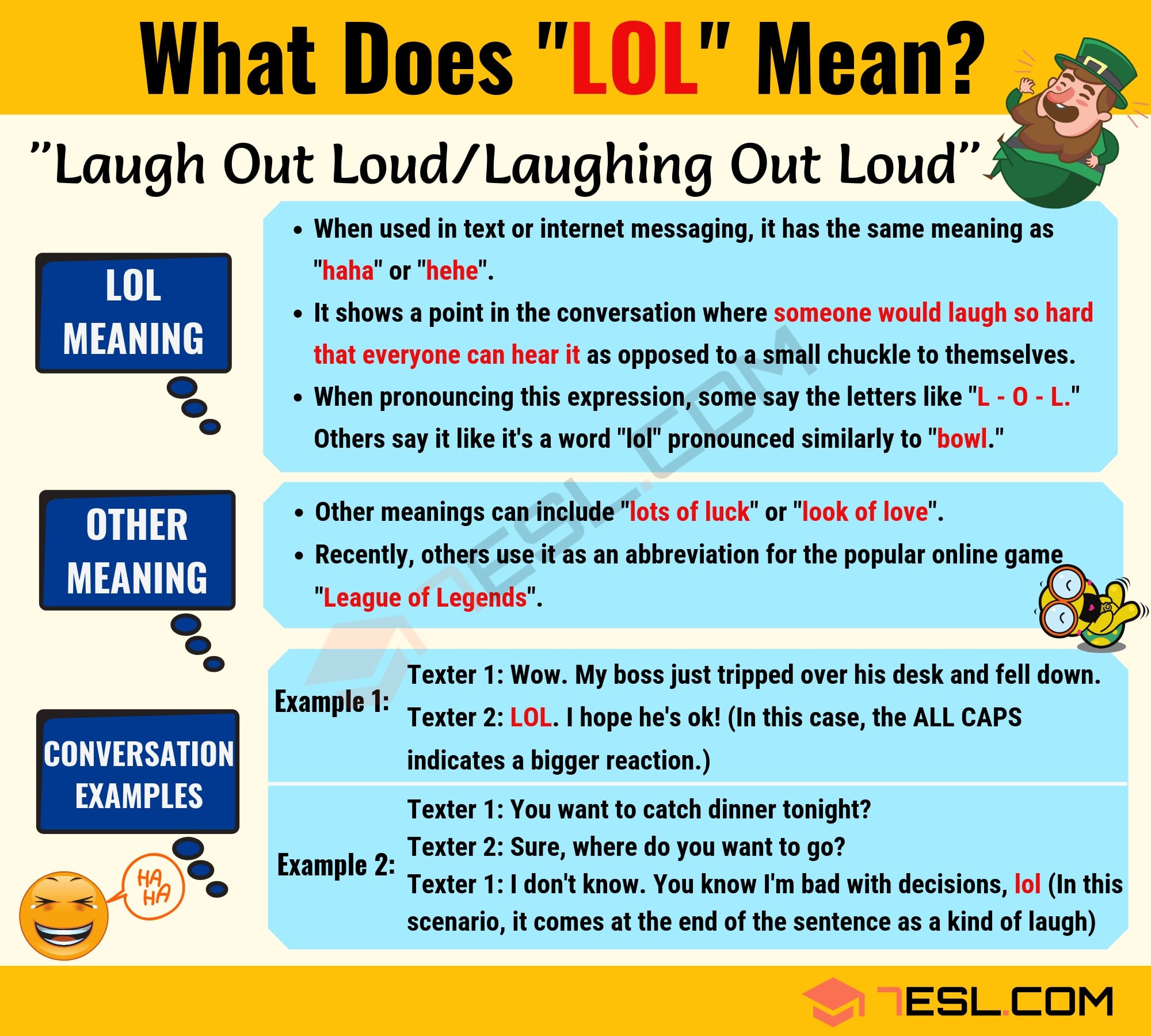
In the vast and ever-evolving lexicon of digital communication, few acronyms have achieved the iconic status and widespread recognition of “LOL.” Far more than a simple abbreviation, LOL – standing for “Laughing Out Loud” – represents a foundational element of internet slang, a linguistic innovation born from the constraints and opportunities of early digital interactions. To truly understand what LOL means, one must delve into its technological origins, its evolution through various digital platforms, and its profound impact on how we express emotion, convey tone, and build connections in the screen-mediated world. This article will explore LOL not just as a term, but as a microcosm of digital communication’s development, highlighting its enduring significance in an era increasingly defined by rapid technological advancement and instant connectivity.
The Genesis of LOL: A Digital Communication Revolution
The advent of the internet brought with it a paradigm shift in human communication. Suddenly, geographical barriers dissolved, and individuals could connect globally in real-time, albeit through text-based interfaces. This new frontier necessitated a new way of speaking, one that was efficient, expressive, and adapted to the technological limitations and advantages of the medium. LOL emerged from this crucible, a direct response to the unique demands of digital interaction.
Early Internet Communication and the Need for Brevity
Before graphical user interfaces became commonplace, the internet was primarily a text-based environment. Communication platforms like Usenet newsgroups, IRC (Internet Relay Chat), and early email services relied heavily on plain text. Typing speed and bandwidth limitations often made lengthy, descriptive messages impractical. In this context, brevity was not just a convenience but a necessity. Users sought shorthand methods to convey complex emotions or reactions without consuming valuable time or character space. Emoticons, like 🙂 and :-(, were early attempts to inject emotion into text. LOL, however, offered a more active, declarative form of emotional expression. It allowed users to signal shared amusement, inject humor, or simply acknowledge a joke without having to type out “That was very funny and I am laughing heartily.” This efficiency was crucial in fostering the rapid-fire, conversational pace that characterized early online communities.
From Usenet to Instant Messaging: LOL’s Ascendance
While its exact origins are debated, LOL is widely believed to have originated in the late 1980s or early 1990s, gaining traction in environments like Usenet. As the internet evolved and dial-up connections gave way to broadband, new communication technologies emerged, each playing a role in solidifying LOL’s status. Instant messaging (IM) platforms like AOL Instant Messenger (AIM), ICQ, and MSN Messenger became particularly fertile ground for its proliferation. These services facilitated synchronous, one-on-one or small-group text conversations, mirroring the intimacy and spontaneity of face-to-face dialogue. In these real-time exchanges, LOL became an indispensable tool for signaling reaction, maintaining conversational flow, and injecting personality into otherwise sterile text. Its ease of typing and immediate recognition made it a staple, ingrained in the muscle memory of an entire generation of digital natives. The transition from more formal email to informal IM chats accelerated the adoption of such slang, proving that technology not only shapes how we communicate but also the language we use.
The Role of Acronyms in Streamlining Digital Interaction
LOL is just one prominent example of a broader trend in digital communication: the widespread adoption of acronyms. From BRB (Be Right Back) and BTW (By The Way) to IMHO (In My Humble Opinion) and TTYL (Talk To You Later), acronyms became the linguistic backbone of early internet culture. This phenomenon was directly driven by the technological interfaces and user behaviors they enabled. They served multiple critical functions: they saved keystrokes, making typing faster; they signaled membership in an “in-group” of digitally literate individuals; and they helped manage the asynchronous and often fragmented nature of online dialogue. By condensing common phrases into easily recognizable shortcuts, acronyms like LOL streamlined communication, reduced cognitive load, and fostered a sense of shared understanding among participants. Their prevalence underscored a fundamental truth about human interaction with technology: given the right tools and constraints, users will always innovate to make communication more efficient and expressive.
LOL’s Evolution and its Impact on Digital Etiquette and Language
As technology advanced and digital communication became ubiquitous, the meaning and usage of LOL underwent a fascinating transformation. What began as a literal declaration of laughter evolved into a versatile linguistic tool, shaping digital etiquette and influencing the very fabric of online language. This evolution demonstrates how user adoption and cultural context can profoundly alter the function of technological tools and their associated outputs.
Beyond Literal Laughter: Nuances in Digital Expression
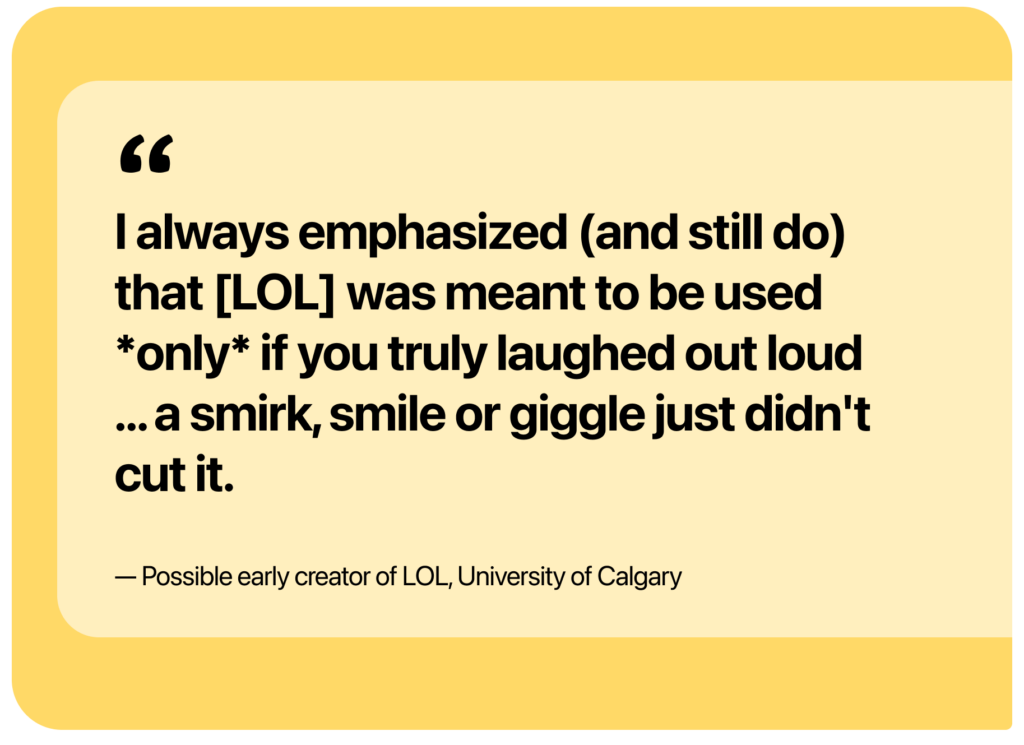
Initially, LOL was straightforward: someone found something genuinely funny and typed LOL to express hearty laughter. However, as its usage proliferated across various digital platforms, its meaning began to diversify. It increasingly moved beyond representing a visceral, audible laugh to encompass a spectrum of milder reactions. A user might type “lol” in response to something only mildly amusing, or even as a way to acknowledge a statement without necessarily finding it funny at all. This semantic drift highlights how digital shorthand adapts to the complex needs of human interaction, serving functions far beyond its literal definition. The technology allowed for quick, low-effort responses, which naturally led to the term being deployed in a broader range of communicative contexts.
LOL as a Filler, Empathy Signal, or Conversational Punctuation
In modern digital exchanges, LOL often serves a function akin to verbal fillers like “um” or “like” in spoken conversation. It can fill a pause, soften a statement, or even act as a form of conversational punctuation. For instance, appending “lol” to the end of a potentially serious or sarcastic statement can lighten the tone, signaling to the recipient that the message is not meant to be taken too harshly. “I guess I’ll just work all night lol” conveys a different emotional weight than “I guess I’ll just work all night.” In this capacity, LOL becomes a vital tool for managing tone, a notoriously difficult aspect of text-based communication. Furthermore, it can act as an empathy signal, indicating that the sender understands and acknowledges the humor or lightheartedness in the recipient’s message, even if they aren’t genuinely laughing out loud. This demonstrates a sophisticated adaptation of a technological artifact (an acronym) to serve intricate social and emotional purposes.
The Shifting Meanings: From “Laughing Out Loud” to “Mild Amusement” or Acknowledgment
The journey of LOL from a strong indicator of mirth to a more generalized marker of engagement or mild amusement is perhaps its most significant linguistic development. Today, “lol” (often lowercase) can simply mean “I get it,” “That’s somewhat amusing,” or even just “Acknowledged.” This dilution of its original intensity is a testament to its widespread adoption and the ease with which digital communication allows for such semantic shifts. It reflects a natural linguistic evolution within a high-speed, high-volume communication environment. Understanding these shifting meanings is crucial for effective digital literacy, particularly when navigating conversations across different generations or cultural contexts online. The technological platforms themselves, by enabling such rapid and informal exchanges, provided the perfect crucible for this kind of linguistic flexibility.
LOL’s Influence on Textspeak and Internet Slang
LOL is not an isolated phenomenon; it is a pioneer and prime example of “textspeak” or “internet slang.” Its success paved the way for countless other abbreviations, neologisms, and specific grammatical structures that define online communication. It normalized the idea that written language could be informal, fluid, and abbreviated, diverging significantly from traditional formal writing. This influence has seeped into nearly every corner of digital interaction, from messaging apps to social media comments, and even occasionally into professional correspondence. The speed and immediacy afforded by technology fostered an environment where such linguistic innovations could spread virally, creating a dynamic and constantly evolving digital dialect.
Technological Platforms and the Ubiquity of LOL
The journey of LOL from a niche Usenet term to a globally recognized digital expression is inextricably linked to the proliferation and evolution of communication technologies. Each new platform provided a fresh avenue for its spread, solidifying its place in the digital lexicon.
The Ecosystem of Messaging Apps: Driving LOL’s Spread
The rise of dedicated messaging applications revolutionized how people communicated, and in doing so, amplified the reach of LOL. From the early days of SMS (Short Message Service) on mobile phones, which inherently limited character counts and thus incentivized brevity, to the sophisticated, feature-rich instant messaging platforms like WhatsApp, Telegram, and Signal, LOL found a natural home. These apps facilitate continuous, asynchronous, and often group-based conversations, creating a constant demand for quick, expressive responses. LOL became a default reaction, seamlessly integrated into the rapid-fire exchanges characteristic of these platforms. The “read receipts” and “typing indicators” on modern messaging apps further reinforce the need for quick replies, making efficient shorthand like LOL even more valuable. These technologies didn’t just carry LOL; they actively fostered an environment where such shorthand thrived.
Social Media’s Amplification: LOL in Feeds and Comments
The explosive growth of social media platforms – Facebook, Twitter, Instagram, TikTok, and countless others – provided an unprecedented global stage for LOL. On these platforms, content is often visual and ephemeral, but textual comments and reactions remain crucial. LOL appears in tweet replies, Instagram captions, Facebook comments, and even as a quick reaction to video content. Its presence helps to convey humor, acknowledge irony, or simply express agreement within the highly public and often performative spaces of social media. The public nature of these platforms meant that LOL was constantly exposed to new users and contexts, further cementing its status as a universal digital signifier. The algorithms themselves, by promoting engaging content and comments, indirectly contribute to the virality and continued relevance of such widely understood expressions.
The Emoji Connection: LOL vs. and the Visualisation of Emotion
While LOL thrived in a text-dominant era, the advent and widespread adoption of emojis introduced a new layer of emotional expression to digital communication. The “Face with Tears of Joy” emoji ( ) quickly became one of the most used emojis globally, often serving a similar function to LOL. This visual representation of laughter offers an alternative or supplementary way to convey amusement, and for some, it has even begun to replace the textual acronym. However, the two often coexist, sometimes used interchangeably, and at other times with subtle distinctions in nuance. The choice between LOL and can depend on generational preferences, the formality of the context, or even the specific platform being used. This dynamic illustrates the continuous evolution of digital expression, where new technological tools (like emoji keyboards) interact with established linguistic norms, creating a richer, albeit more complex, communication landscape.
Gaming Communities and Real-time Communication
Gaming communities, particularly those centered around online multiplayer games, have also been significant drivers of LOL’s continued relevance. In fast-paced gaming environments, real-time communication via in-game chat or voice chat with accompanying text can be critical for strategy, camaraderie, and expressing reactions. LOL is frequently used to acknowledge a funny moment, diffuse tension, or simply react to gameplay. The need for quick, unobtrusive communication in high-stakes or high-speed scenarios makes acronyms like LOL indispensable. These communities often develop their own intricate slang, but LOL has maintained its cross-game appeal, demonstrating its fundamental utility in rapid digital interaction. The integration of communication tools directly into gaming platforms ensures its continued use by a demographic deeply immersed in digital technology.
The Cultural and Societal Ramifications in a Digitally Connected World
LOL’s journey from a niche internet acronym to a globally recognized expression has significant cultural and societal implications, reflecting broader shifts in how humans interact, build communities, and navigate digital spaces. Its widespread adoption highlights the transformative power of technology on language and social norms.
Bridging Gaps and Fostering Community Online
One of LOL’s most profound impacts lies in its ability to bridge communication gaps and foster a sense of community online. For early internet users, mastering “textspeak” and understanding acronyms like LOL was a form of digital literacy, a shared secret handshake that signified membership in the nascent online world. This shared language helped build rapport, establish a common ground, and reduce the anonymity inherent in text-based interactions. Even today, using LOL appropriately can signal a certain level of digital fluency and a willingness to engage in informal, relatable communication. It humanizes interactions across vast distances, adding a touch of personality and warmth that might otherwise be absent in purely factual or formal text exchanges. This aspect underscores how technology, through simple linguistic tools, can facilitate deeper social connections.
Generational Divides and Digital Literacy
While ubiquitous, the usage and perception of LOL can vary significantly across different age groups, revealing a generational divide in digital literacy and communication styles. Younger generations, having grown up with instant messaging and social media, often use “lol” in a much broader, less literal sense, sometimes as a default response or even a nervous tic. Older generations, who may have adopted digital communication later in life, might interpret “LOL” more literally, or find its casualness inappropriate in certain contexts. This disparity highlights the ongoing challenge of adapting to rapidly evolving digital linguistic norms. Understanding these nuances is crucial for effective intergenerational communication in professional and personal digital settings. Technology, in accelerating linguistic evolution, inadvertently creates these communicative gaps that require conscious effort to bridge.
LOL in Professional vs. Informal Digital Settings
The informality inherent in LOL also brings to light the evolving boundaries between professional and informal communication in the digital age. While perfectly acceptable and even expected in casual chats with friends or family, using “lol” in a formal email to a colleague or a client can be perceived as unprofessional or disrespectful. However, this line is increasingly blurred in modern workplaces, especially within tech companies or startups that embrace a more casual corporate culture. Platforms like Slack, which blend professional tasks with informal chat, often see “lol” used to lighten conversations, build team rapport, or acknowledge humorous remarks among colleagues. The context provided by the technological platform itself often dictates the appropriateness of such language, demonstrating how tool design influences communication etiquette. Navigating this balance requires strong digital judgment and an understanding of organizational culture.

The Future of Digital Expression: Beyond LOL?
As technology continues to advance, so too will the ways we express ourselves digitally. While LOL has maintained remarkable longevity, its evolution suggests that future forms of digital expression will continue to emerge and adapt. The rise of sophisticated emojis, GIFs, short video clips (like TikToks), and even AI-generated responses indicates a shift towards more visual, multimodal, and interactive forms of communication. These new technologies offer richer, more nuanced ways to convey emotion and reaction, potentially challenging the dominance of simple text-based acronyms. However, the underlying need for brevity, efficiency, and emotional clarity in digital interactions will likely persist. Whether LOL itself will fade, transform further, or continue to coexist with newer forms of expression remains to be seen, but its journey offers a fascinating case study in how technology shapes and is shaped by human language and culture. The ongoing interplay between technological innovation and linguistic adaptation will undoubtedly continue to redefine what it means to “laugh out loud” in the digital realm.
aViewFromTheCave is a participant in the Amazon Services LLC Associates Program, an affiliate advertising program designed to provide a means for sites to earn advertising fees by advertising and linking to Amazon.com. Amazon, the Amazon logo, AmazonSupply, and the AmazonSupply logo are trademarks of Amazon.com, Inc. or its affiliates. As an Amazon Associate we earn affiliate commissions from qualifying purchases.