
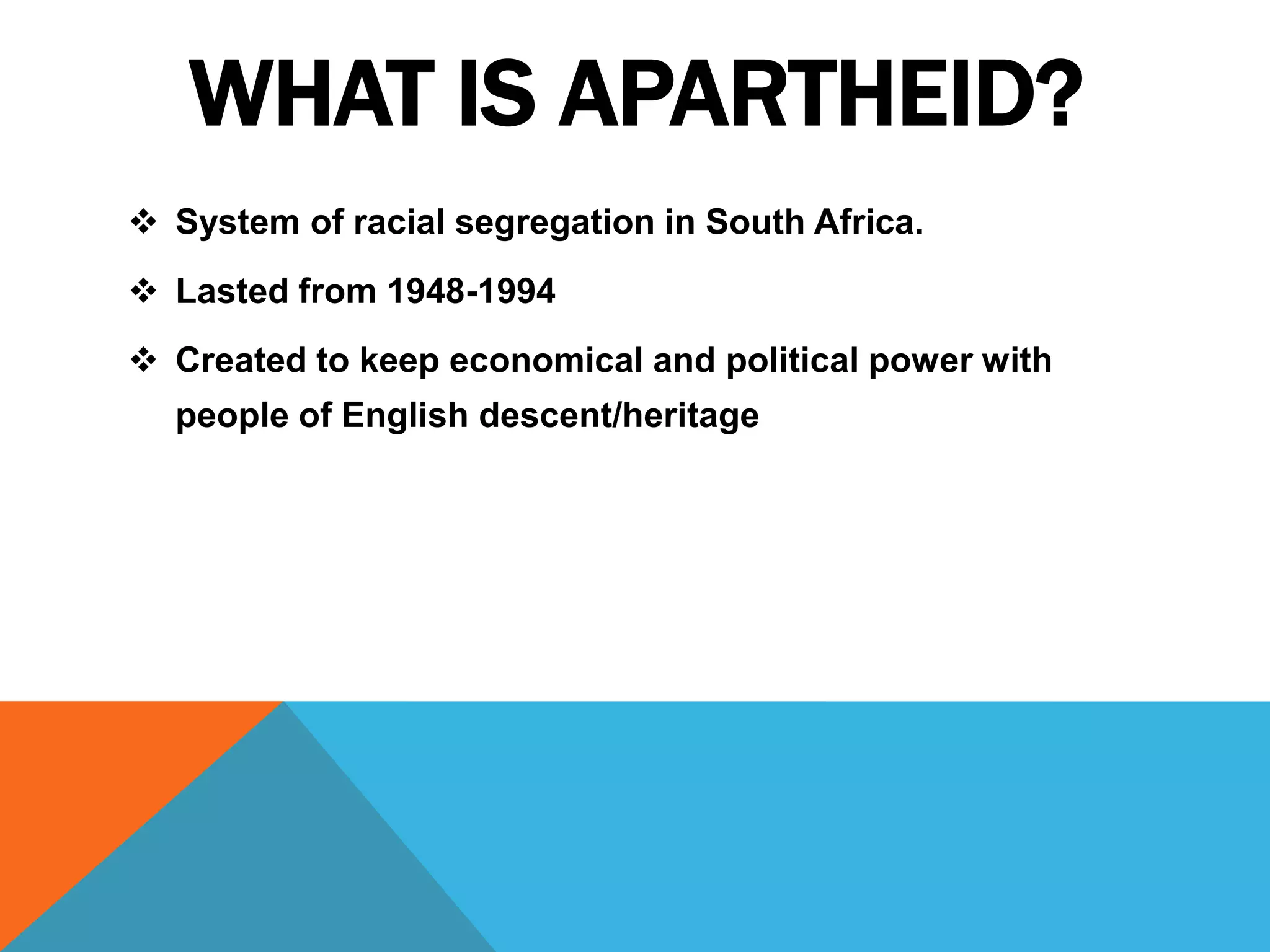
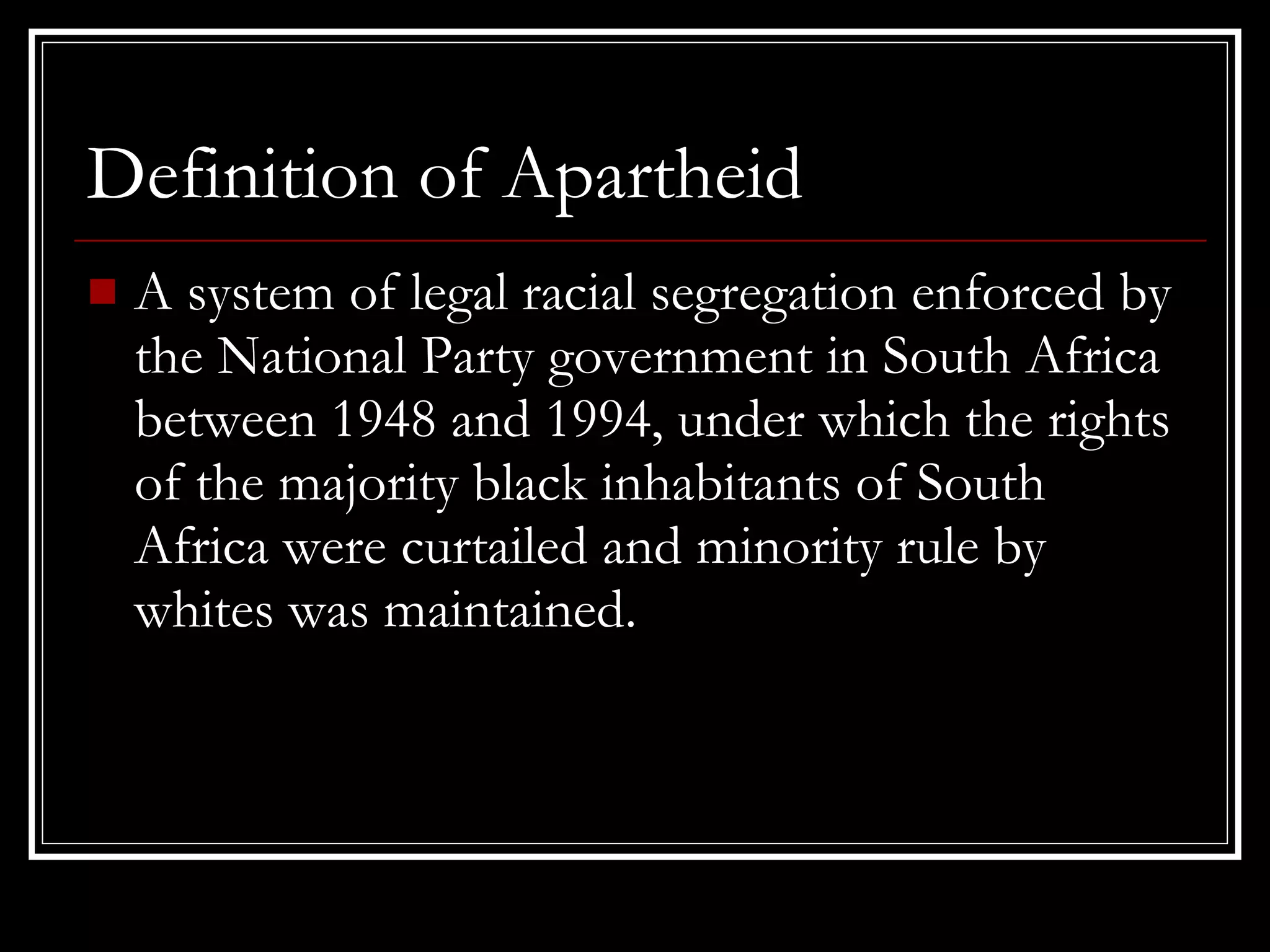
The term “apartheid” conjures images of social injustice, political oppression, and human rights abuses. Originating in South Africa, it represented a brutal system of racial segregation and discrimination enforced by law from 1948 to the early 1990s. However, to truly grasp the profound and enduring “meaning of apartheid,” one must delve beyond its social and political manifestations and scrutinize its intricate financial underpinnings. Apartheid was not merely a social construct; it was an elaborate economic framework designed to concentrate wealth, control resources, and exploit labor along racial lines, fundamentally reshaping the financial landscape for generations.
This financial perspective reveals how discriminatory laws directly impacted personal finance, business operations, national economic policy, and even global financial markets. Understanding apartheid through this lens offers critical insights into the long-term economic disparities that persist today, the challenges of economic redress, and the complex relationship between social justice and financial equity.
The Economic Pillars of Segregation
Apartheid’s structure was intrinsically economic, built upon a foundation designed to ensure the financial supremacy of the white minority while systematically impoverishing and disempowering the Black majority and other non-white groups. This economic scaffolding dictated everything from land ownership to wage structures, creating a deeply entrenched system of financial inequality.
Dispossession and Wealth Concentration
At the heart of apartheid’s economic strategy was the systematic dispossession of non-white populations from their land and productive assets. The Native Land Act of 1913 and subsequent legislation restricted land ownership for Black Africans to just 13% of the country’s least fertile land, despite them comprising the vast majority of the population. This forced millions into overcrowded, underdeveloped “Bantustans” or “homelands,” stripping them of their primary means of wealth accumulation through agriculture, mining, or urban development.
The consequence was a massive transfer of wealth and resources to the white minority. Prime agricultural land, rich mineral deposits, and urban centers became exclusively white-owned, fostering immense wealth concentration. This initial financial injustice created a foundational disparity in inherited wealth and opportunities that would echo through generations, severely limiting the personal finance prospects of millions and preventing the development of a broad-based Black entrepreneurial class.
Labor Exploitation and Wage Disparity
Apartheid codified a system of cheap, exploitable labor for white-owned industries and farms. Black workers were deliberately denied access to quality education and training, relegating them to menial, low-wage jobs. Pass laws and influx control regulations restricted their movement, ensuring a constant supply of cheap labor to white-designated areas without granting them full citizenship rights or benefits. Trade unions for Black workers were severely repressed, further suppressing wage growth and workers’ rights.
Wage disparities were stark and legally enforced. Black workers often earned a fraction of what their white counterparts received for the same work, if they could even access skilled positions. This institutionalized wage gap directly impacted household income, savings capacity, and the ability to escape poverty, making it nearly impossible for Black families to build intergenerational wealth or participate meaningfully in the formal economy. For businesses, this system offered artificially low labor costs, boosting profits for white owners at the expense of human dignity and fair compensation.
Restricted Markets and Entrepreneurship
The segregated nature of apartheid extended to economic markets and entrepreneurial opportunities. Black businesses were systematically stifled through lack of access to capital, markets, and infrastructure. They were often restricted to operating within their designated townships or homelands, which were deliberately underdeveloped and lacked the economic dynamism of white urban centers. Licensing restrictions, lack of property rights, and discriminatory lending practices by financial institutions further hampered the growth of Black-owned enterprises.
This policy ensured that the lucrative sectors of the economy – finance, manufacturing, retail, and mining – remained almost exclusively in white hands. The concept of “Black economic empowerment” was unthinkable under apartheid; instead, the system actively disempowered Black entrepreneurs, preventing the emergence of a robust Black middle class that could challenge the existing financial order. The meaning of apartheid, in this context, was the intentional suppression of an entire demographic’s economic agency and potential.
Financial Tools of Control
Beyond broad economic policies, apartheid utilized specific financial tools and mechanisms to enforce segregation and maintain economic control. These tools were embedded in the legal and administrative framework, affecting every aspect of daily financial life for non-white individuals.
Land Acts and Property Rights
The various Land Acts were perhaps the most potent financial tools of apartheid. By denying Black Africans freehold property rights in 87% of the country, these laws prevented them from using land as collateral for business loans, investing in property for wealth appreciation, or passing on significant assets to their descendants. Property ownership is a cornerstone of wealth creation, and its systematic denial to the majority was a direct financial attack.
Furthermore, forced removals under the Group Areas Act dispossessed hundreds of thousands of non-white families of their homes and businesses in areas declared “white.” The compensation offered was often negligible, leaving families with little to no financial cushion and forcing them into impoverished townships, often paying rent on government-owned housing rather than building equity. This directly contributed to the current housing crisis and wealth disparities in post-apartheid South Africa.
Banking and Credit Discrimination
Financial institutions, operating within the apartheid framework, actively discriminated against non-white individuals and businesses. Access to bank accounts, loans, mortgages, and credit facilities was severely limited or denied based on race. Banks were often reluctant to lend in townships due to perceived higher risk or simply due to institutionalized racism, further isolating these communities from mainstream financial services.
Without access to formal credit, individuals struggled to finance education, start businesses, or purchase assets, trapping them in cycles of poverty. This financial exclusion not only perpetuated economic inequality but also hindered the development of a stable financial system that could serve all citizens, creating parallel and often informal financial economies with limited regulatory oversight or protection.
Budgetary Allocations and Public Services

The state budget under apartheid was a clear reflection of its discriminatory financial agenda. Vastly disproportionate amounts of public funds were allocated to white communities for education, healthcare, infrastructure, and housing, while non-white areas received minimal investment. This resulted in severely underfunded schools, inadequate healthcare facilities, and a complete lack of basic infrastructure (roads, sanitation, electricity) in townships and homelands.
These budgetary disparities had direct financial consequences for non-white populations. They were forced to attend inferior schools, limiting their future earning potential. They faced higher health risks due to poor services, leading to increased healthcare costs. The lack of infrastructure meant higher costs for essential services and hindered local economic development. The meaning of apartheid, from a financial perspective, was the deliberate starvation of resources to the majority, ensuring their perpetual economic disadvantage.
The Global Financial Response and Disinvestment
Apartheid’s egregious human rights record eventually provoked a significant global financial response, demonstrating the power of international economic pressure to challenge oppressive regimes.
Sanctions and Economic Isolation
As the world became more aware of apartheid’s brutality, many nations, international organizations, and advocacy groups began to impose economic sanctions against South Africa. These ranged from trade embargoes on specific goods to broader financial sanctions, restricting loans and investments. The aim was to pressure the apartheid government by damaging its economy and making the cost of maintaining the system financially unsustainable.
These sanctions, while debated in their immediate impact, undeniably placed a growing strain on the South African economy. They limited access to foreign capital, increased import costs, and made it difficult for South African businesses to compete internationally. The meaning of apartheid began to shift on the global stage, transforming from an internal policy into an international financial pariah.
Corporate Divestment Campaigns
A powerful element of the global financial response was the corporate divestment movement. Universities, pension funds, churches, and individual investors were pressured to sell off their shares in companies that did business in South Africa. This campaign aimed to withdraw financial support from the apartheid regime and morally implicate companies that benefited from the system.
Major multinational corporations, facing reputational damage and financial pressure, began to pull out of South Africa, further isolating the economy. While the direct financial impact of divestment varied, its psychological and political effects were profound, signaling to the apartheid government that the international financial community was losing confidence in its legitimacy and long-term viability.
Impact on South Africa’s Economy
The cumulative effect of sanctions and divestment contributed significantly to South Africa’s economic decline in the 1980s. High inflation, capital flight, declining foreign investment, and a growing debt burden weakened the state’s capacity to maintain its oppressive apparatus. While internal resistance was the primary driver for change, the economic squeeze played a crucial role in compelling the apartheid government to negotiate. The meaning of apartheid thus includes its ultimate financial unsustainability in the face of concerted global pressure.
Post-Apartheid Economic Reconstruction and Inequality
The dismantling of apartheid in the early 1990s marked a new era for South Africa, but the economic legacy of over four decades of systemic financial discrimination could not be erased overnight. Understanding the current financial landscape requires acknowledging the deep wounds inflicted by apartheid.
Addressing Historical Financial Injustices
Post-apartheid South Africa embarked on an ambitious program of economic transformation aimed at redressing historical injustices. Policies like Black Economic Empowerment (BEE) were introduced to increase the participation of historically disadvantaged groups in the economy through ownership, management, and skills development. Land reform programs aimed to redistribute land to correct past dispossession.
However, these initiatives have faced immense challenges. The scale of historical financial disadvantage is so vast that progress has been slow and uneven. The meaning of apartheid continues to manifest in the structural barriers that hinder genuine financial inclusion, even decades after its legal end.
Persistent Wealth Gaps
One of the most enduring legacies of apartheid is the extreme wealth inequality that persists in South Africa. The Gini coefficient, a measure of income inequality, remains among the highest in the world. The vast majority of the country’s wealth – land, property, and capital – remains concentrated in the hands of the white minority, while millions of Black South Africans continue to live in poverty.
This persistent wealth gap is a direct consequence of apartheid’s financial architecture, which systematically denied opportunities for wealth creation to the majority. It underscores that while legal segregation has ended, the financial structures it created continue to perpetuate disparity, impacting personal finance, access to credit, and entrepreneurial success for millions.
The Long Road to Financial Inclusion
Achieving true financial inclusion and economic equity in South Africa is a long-term project. It requires continued efforts to dismantle the remaining systemic barriers, provide access to quality education and financial literacy, foster entrepreneurship in disadvantaged communities, and create a truly inclusive financial sector. The meaning of apartheid, from a contemporary financial perspective, is the ongoing struggle to overcome its entrenched economic disparities and build a society where financial opportunity is genuinely accessible to all, irrespective of race.
In conclusion, “what is meaning of apartheid” is a question that finds a profound answer in its financial dimensions. It was a meticulously crafted economic system of control, dispossession, and exploitation that shaped the financial destinies of millions. While the political and social chains have been broken, the economic chains continue to cast a long shadow, reminding us that true freedom and equity require not just political liberation but also comprehensive financial justice and sustained economic transformation.
aViewFromTheCave is a participant in the Amazon Services LLC Associates Program, an affiliate advertising program designed to provide a means for sites to earn advertising fees by advertising and linking to Amazon.com. Amazon, the Amazon logo, AmazonSupply, and the AmazonSupply logo are trademarks of Amazon.com, Inc. or its affiliates. As an Amazon Associate we earn affiliate commissions from qualifying purchases.