
The term “BMI” – Body Mass Index – is something we often encounter, whether it’s during a doctor’s visit, in health articles, or even whispered in conversations about fitness. But what does it truly mean to have an “ideal BMI”? Is it a rigid number we should all strive for, or is it a more nuanced metric? In a world increasingly influenced by technology, where apps promise to track our every move and AI offers personalized insights, understanding our health metrics like BMI feels more accessible than ever. Yet, the temptation to chase an “ideal” number can sometimes overshadow the bigger picture of overall well-being, brand building for our health, and even the financial implications of our health choices.

This article dives deep into the concept of BMI, exploring its origins, its limitations, and what it truly signifies for our health. We’ll also consider how technology, personal branding, and financial considerations intersect with our understanding and pursuit of a healthy weight.
Understanding the Foundation: What is BMI and How is it Calculated?
At its core, Body Mass Index (BMI) is a simple calculation designed to be a quick and easy way to categorize a person’s weight relative to their height. Developed by Belgian mathematician Adolphe Quetelet in the 19th century, it was initially intended as a tool to understand population-level weight distribution rather than a diagnostic measure for individuals.
The Formula: A Simple Equation, Complex Interpretations
The formula for calculating BMI is straightforward:
BMI = weight (kg) / height (m)²
- Weight: Measured in kilograms (kg).
- Height: Measured in meters (m), squared.
For those who prefer imperial units:
BMI = (weight (lb) / height (in)²) * 703
- Weight: Measured in pounds (lb).
- Height: Measured in inches (in), squared.
- 703: This is a conversion factor to account for the different units.
Categorizing the Numbers: The BMI Ranges
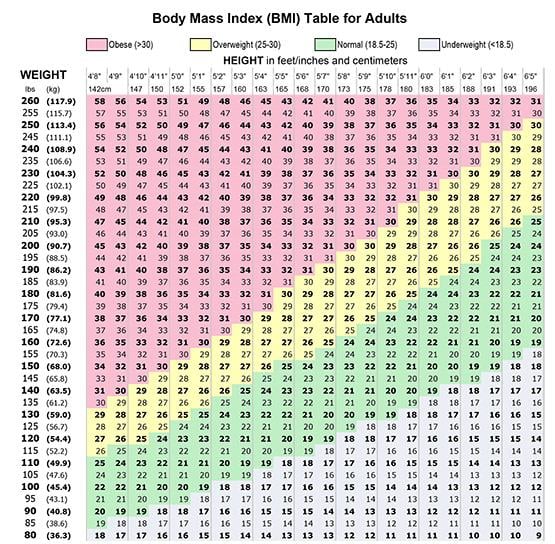
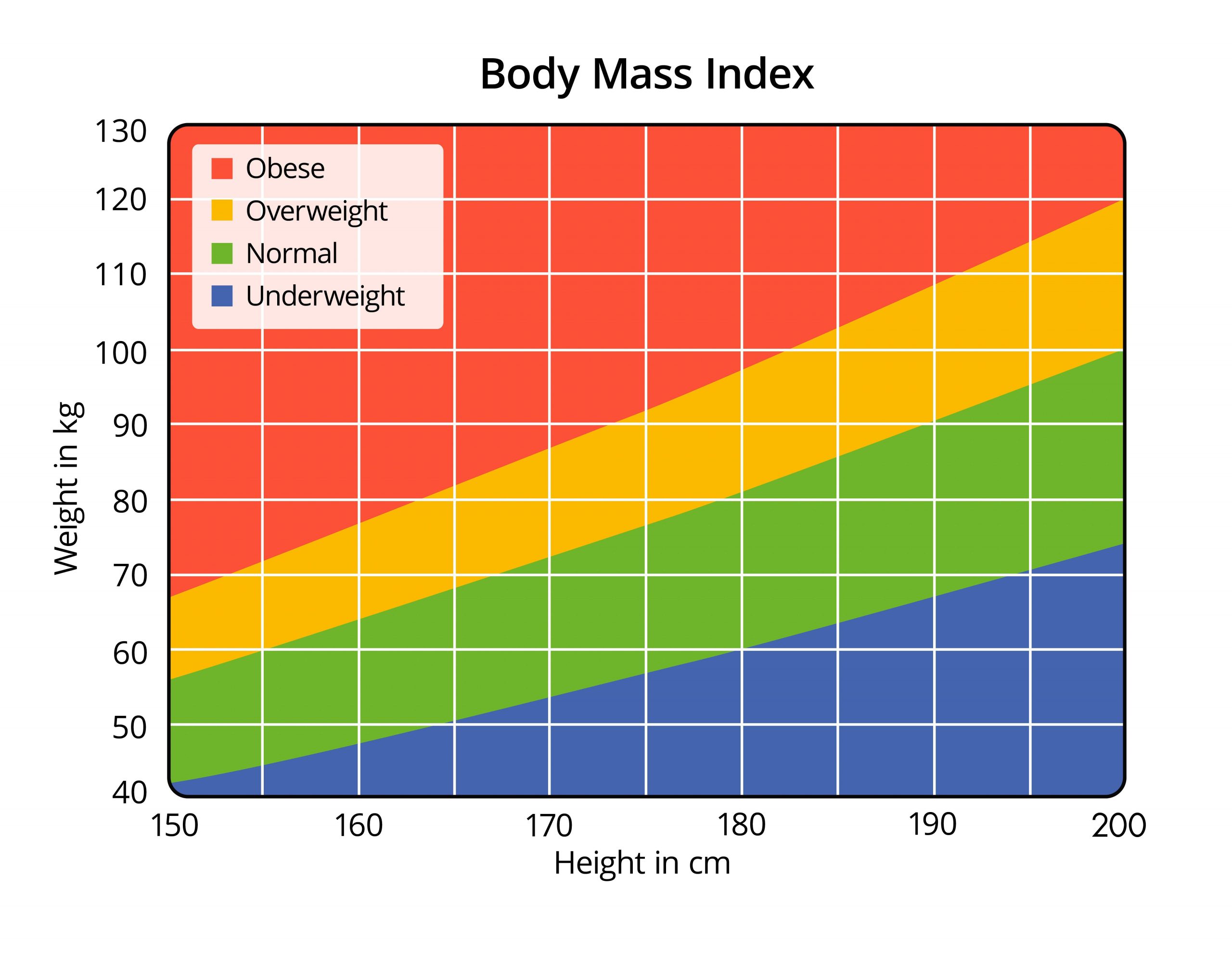
Once calculated, the BMI value is typically placed into one of several categories:
- Underweight: BMI below 18.5
- Normal or Healthy Weight: BMI between 18.5 and 24.9
- Overweight: BMI between 25.0 and 29.9
- Obese: BMI 30.0 and above
These ranges are widely used by healthcare professionals and public health organizations as a screening tool to identify potential weight categories that may be associated with increased health risks.
Beyond the Binary: Limitations and Nuances of BMI
While BMI offers a convenient and widely recognized metric, it’s crucial to acknowledge its limitations. It’s a blunt instrument, a starting point for discussion, not a definitive diagnosis. Relying solely on a BMI number can be misleading because it doesn’t account for crucial factors that contribute to overall health.
The Muscle vs. Fat Dilemma: Where BMI Falls Short
One of the most significant limitations of BMI is its inability to differentiate between fat mass and lean muscle mass. Muscle is denser than fat. Therefore, individuals who are very muscular – such as athletes, bodybuilders, or even active individuals who have built significant muscle – can have a high BMI and be incorrectly categorized as overweight or obese, despite having very low body fat percentages. Conversely, someone with a “normal” BMI could have a high percentage of body fat and a low amount of muscle, which still poses health risks.
Individual Variations: Age, Sex, and Ethnicity Matter
BMI calculations do not inherently account for natural variations in body composition that occur with age, sex, and ethnicity.
- Age: As people age, their body composition naturally changes, often with a decrease in muscle mass and an increase in body fat. A BMI that might be considered healthy for a younger adult could be less indicative for an older adult.
- Sex: Men and women typically have different body fat percentages and muscle mass distribution. These differences aren’t reflected in the standard BMI calculation.
- Ethnicity: Research suggests that certain ethnic groups may have different risks associated with specific BMI ranges. For example, some Asian populations may experience increased health risks at a lower BMI than traditionally defined “overweight” thresholds.
The Importance of Waist Circumference and Body Fat Percentage
To gain a more comprehensive understanding of health risks related to weight, healthcare providers often consider additional measurements alongside BMI.
- Waist Circumference: This measurement indicates the amount of abdominal fat, which is particularly detrimental to health. High waist circumference is a strong predictor of cardiovascular disease, type 2 diabetes, and other metabolic disorders, regardless of BMI.
- Body Fat Percentage: This is a more direct measure of the proportion of fat in the body. Tools like bioelectrical impedance analysis (BIA) scales, smartwatches, and calipers can provide estimates of body fat percentage.
The Technology of Health: Leveraging Tools for a Better Understanding
In our digitally driven era, technology offers a powerful suite of tools to help us understand, monitor, and improve our health, including our relationship with weight and BMI. From advanced wearable devices to intelligent apps, we can now access data and insights that were once only available in clinical settings.
Wearable Technology: More Than Just Step Counting
Smartwatches and fitness trackers have moved far beyond simply counting steps. Many now incorporate:
- Heart Rate Monitoring: Crucial for understanding cardiovascular health and exercise intensity.
- Sleep Tracking: Sleep quality significantly impacts weight management and overall health.
- ECG Capabilities: Detecting irregular heart rhythms, a vital health indicator.
- Blood Oxygen (SpO2) Monitoring: Can provide insights into respiratory health.
- Some even claim to estimate body composition, though accuracy can vary.
These devices provide a continuous stream of data that can be invaluable when discussed with a healthcare professional. They allow for personalized insights into daily activity levels, sleep patterns, and stress responses, all of which influence weight and well-being.
AI and Health Apps: Personalized Insights and Guidance
Artificial intelligence is revolutionizing health and wellness. AI-powered apps can:
- Analyze Your Data: Integrate data from wearables and manual input to identify trends and patterns in your diet, exercise, and sleep.
- Provide Personalized Recommendations: Based on your unique data, AI can suggest tailored workout plans, meal ideas, and lifestyle adjustments.
- Offer Nutritional Guidance: Apps can help you track your food intake, identify nutrient deficiencies, and suggest healthier alternatives.
- Gamify Fitness: Many apps use gamification techniques to make exercise more engaging and motivating, fostering long-term adherence.
- Virtual Coaching: Some platforms offer AI-driven virtual coaching, providing encouragement and accountability.
Digital Security: Protecting Your Personal Health Information
As we embrace these technological advancements, it’s paramount to consider the digital security of our personal health information. When using health apps and wearables, ensure you understand their privacy policies. Choose services that employ robust encryption and data protection measures. Be mindful of what information you share and with whom, especially on platforms that might share aggregated, anonymized data. Protecting your health data is as important as protecting your financial information.
Personal Branding Your Health: Cultivating a Healthy Identity
Beyond the technical aspects of health monitoring, the concept of “personal branding” can be applied to our own well-being. How we perceive ourselves, how we communicate our health goals, and the habits we cultivate all contribute to our personal health brand. This isn’t about projecting a false image, but about actively building and nurturing a lifestyle that aligns with our health aspirations.
The Narrative of Health: Telling Your Story
Our approach to health is a narrative we live out daily. Do we see ourselves as someone who struggles with weight, or as someone committed to a healthy and active lifestyle? Shifting this internal narrative can be powerful.
- Focus on Progress, Not Perfection: Acknowledge that there will be setbacks. The narrative isn’t about flawlessness, but about resilience and continuous effort.
- Embrace Sustainable Habits: True personal branding for health involves adopting habits that are enjoyable and sustainable in the long term, rather than resorting to quick fixes.
- Communicate Your Goals Positively: When discussing your health journey with others, focus on what you are doing and striving for, rather than dwelling on perceived failures.
Building a Healthy Lifestyle as a Brand Asset
Think of your health as a vital personal asset. A strong, healthy body and mind contribute to your overall effectiveness, energy, and resilience.
- Invest in Your Health: Treat your health as you would any valuable investment – with time, attention, and resources. This might mean prioritizing sleep, preparing healthy meals, or making time for exercise.
- Seek Expert Advice: Just as you’d consult specialists for your career or finances, don’t hesitate to seek guidance from doctors, dietitians, or certified personal trainers.
- Be a Role Model: By embodying healthy habits, you can positively influence those around you, further strengthening your personal brand as someone who prioritizes well-being.
The Financial Footprint of Health: Money Matters in the Pursuit of Wellness
Our health and our finances are inextricably linked. The choices we make about our lifestyle have a direct impact on our healthcare costs, our ability to earn, and our overall financial security. Understanding this connection can provide further motivation to strive for a healthy weight and well-being.
Healthcare Costs: The Price of Poor Health
Poor health, often exacerbated by being overweight or obese, can lead to significant financial burdens.
- Increased Medical Bills: Chronic conditions like type 2 diabetes, heart disease, and certain cancers are often linked to excess weight and can result in substantial medical expenses for treatment, medication, and ongoing care.
- Higher Insurance Premiums: In some cases, individuals with certain health conditions may face higher health insurance premiums.
- Lost Income: Illness can lead to missed workdays, reduced productivity, and potentially even job loss, impacting earning potential.
Investing in Your Health: A Smart Financial Move
Conversely, prioritizing your health can be seen as a wise financial investment.
- Reduced Healthcare Expenses: By preventing or managing health conditions, you can significantly lower your long-term medical costs.
- Increased Productivity and Earning Potential: A healthy body and mind are more energized and focused, leading to greater productivity and potentially higher earning capacity.
- Financial Freedom: When you’re healthy, you’re better positioned to work, save, and invest, contributing to greater financial freedom and security.
Financial Tools for Health: Budgeting for Wellness
Integrating health into your financial planning is essential.
- Budget for Healthy Foods: Allocate a realistic portion of your budget to nutritious groceries. This might involve planning meals, buying in bulk, or seeking out seasonal produce.
- Invest in Fitness: Consider the cost of gym memberships, fitness classes, home exercise equipment, or even personal training as investments in your long-term financial well-being.
- Health Savings Accounts (HSAs) and Flexible Spending Accounts (FSAs): If available through your employer, these accounts offer tax advantages for medical expenses, including certain wellness-related items.
Conclusion: Embracing a Holistic Approach to “Ideal” Health
So, what is the “ideal BMI”? The answer, it turns out, is not a single, universally applicable number. While BMI remains a useful initial screening tool, it’s vital to look beyond the digits. Our ideal health is a multifaceted concept that encompasses not just our weight but our body composition, our lifestyle choices, our mental well-being, and our financial stability.
By leveraging the power of technology to understand our bodies better, by consciously building a positive and resilient “personal brand” for our health, and by recognizing the profound financial implications of our well-being, we can move towards a truly holistic definition of health. This approach empowers us to make informed decisions, foster sustainable habits, and ultimately, lead more vibrant and fulfilling lives. It’s about creating a life where “ideal” is not just a number, but a state of empowered, balanced, and prosperous well-being.
aViewFromTheCave is a participant in the Amazon Services LLC Associates Program, an affiliate advertising program designed to provide a means for sites to earn advertising fees by advertising and linking to Amazon.com. Amazon, the Amazon logo, AmazonSupply, and the AmazonSupply logo are trademarks of Amazon.com, Inc. or its affiliates. As an Amazon Associate we earn affiliate commissions from qualifying purchases.