
In the realm of personal finance, few line items are as complex or as critical as health insurance. For the modern professional or family, health insurance is not merely a healthcare requirement; it is a sophisticated financial tool designed to mitigate the risk of catastrophic loss. However, determining how much you should be paying—and what constitutes a “fair” price—requires a deep dive into actuarial structures, market variables, and individual financial goals.
Understanding the cost of health insurance is about more than just looking at a monthly premium. It involves a holistic evaluation of how medical expenses integrate into your broader financial strategy. Whether you are self-employed, an employee evaluating a benefits package, or a business owner providing coverage, the “cost” is a moving target influenced by several key economic factors.
The Anatomy of Health Insurance Costs: Premiums vs. Out-of-Pocket Expenses
When we discuss the cost of health insurance, the most visible figure is the monthly premium. However, from a financial planning perspective, the premium is only one part of the “Total Cost of Care” equation. To determine what you should be paying, you must analyze the relationship between fixed costs and variable costs.
Understanding the Fixed Cost: The Monthly Premium
The premium is the subscription fee for your insurance. In the current market, the cost of premiums varies wildly based on the “Metal Tier” of the plan (Bronze, Silver, Gold, or Platinum). A Bronze plan will have the lowest monthly premium but the highest out-of-pocket costs when you seek care. Conversely, a Platinum plan carries a high monthly fixed cost but minimizes the financial impact of medical visits. For a healthy individual with a robust emergency fund, a lower premium (Bronze or Silver) often makes the most financial sense. For those with chronic conditions, paying a higher premium for a Gold plan can actually save thousands of dollars annually.
The Variable Costs: Deductibles, Co-pays, and Co-insurance
The true cost of health insurance often reveals itself only when you use it. The deductible is the amount you must pay out of your own pocket before the insurance company begins to share the costs. In the “Money” niche, the deductible represents a liquidity requirement; you must have this amount accessible in a high-yield savings account or Health Savings Account (HSA). Co-insurance—usually a percentage like 20%—and flat-fee co-pays for prescriptions or office visits represent the ongoing variable costs that must be factored into your monthly budget.
The Safety Net: The Out-of-Pocket Maximum
Perhaps the most important number for financial security is the Out-of-Pocket (OOP) Maximum. This is the absolute ceiling on what you will pay in a calendar year for covered services. From a risk management perspective, your health insurance “cost” for a worst-case scenario is: (Monthly Premium x 12) + Out-of-Pocket Maximum. If this total exceeds your liquid net worth, you are arguably under-insured.
Factors That Influence Your Market Rate
Not everyone pays the same for health insurance. In the United States, under the Affordable Care Act (ACA), there are specific “rating factors” that insurers use to determine your specific cost. Understanding these can help you benchmark whether you are overpaying.
Geographic Location and Local Competition
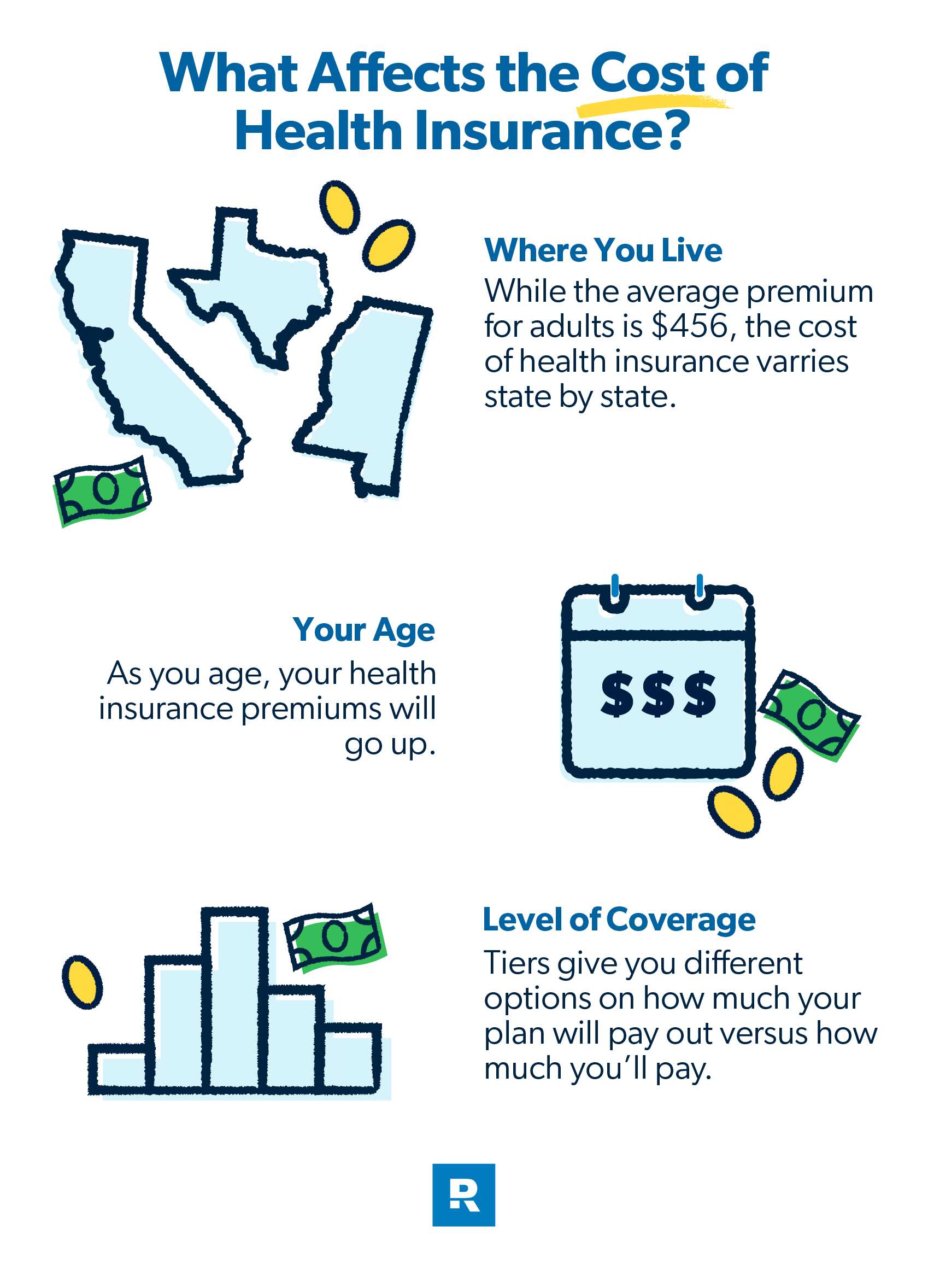
Your zip code is one of the primary drivers of health insurance costs. This is due to the local cost of living, the level of competition among healthcare providers in your area, and state-level mandates. For example, a plan in a rural area with only one major hospital system may cost significantly more than a similar plan in a metropolitan area with multiple competing networks. When budgeting for a move or a remote work lifestyle, investigating regional health insurance premiums is a vital part of the financial due diligence process.
Age and Household Size
While the ACA prevents insurers from charging based on pre-existing conditions, they are allowed to charge older individuals more than younger ones—typically up to a 3:1 ratio. Additionally, the number of people on a policy scales the cost. For families, the “family deductible” is often double the individual deductible, creating a higher threshold for the insurance company’s cost-sharing to kick in.
Tobacco Use and Financial Penalties
Tobacco use is one of the few behavioral factors that can legally increase your health insurance premiums. Insurers can charge tobacco users up to 50% more than non-users through a “tobacco surcharge.” From a personal finance standpoint, this is a direct hit to your discretionary income that offers no increased value in coverage, making it one of the most expensive lifestyle choices a consumer can make.

Benchmarking Affordability: How Much Should You Pay?
Financial experts often use the “10% Rule” as a benchmark for health insurance affordability. Ideally, your total healthcare spending—including premiums and routine out-of-pocket costs—should not exceed 10% of your gross household income.
The Federal Standard of Affordability
For those receiving insurance through an employer, the IRS sets an “affordability” threshold. If the lowest-priced self-only coverage option costs more than a specific percentage of your household income (roughly 8.39% in recent years), it is considered unaffordable. If your costs exceed this, you may be eligible for premium tax credits on the public marketplace, which can significantly lower your monthly investment.
Average Market Costs for Individuals and Families
As of the current market cycle, a healthy individual in their 30s might expect to see Silver plan premiums ranging from $400 to $600 per month without subsidies. For a family of four, that number can easily climb to $1,500 or $2,000. If your quotes are significantly higher than these averages, it may be due to your specific region or a high-tier plan choice that provides more coverage than you economically require.
Leveraging Financial Tools: HSAs and Tax Credits
To optimize the cost of health insurance, one must look at the tax advantages available. Health insurance is not just an expense; it is a gateway to tax-advantaged investing.
The Triple Tax Advantage of Health Savings Accounts (HSAs)
If you opt for a High Deductible Health Plan (HDHP), you gain access to an HSA. This is arguably the most powerful financial tool in the tax code. Contributions are tax-deductible (lowering your taxable income), the funds grow tax-free, and withdrawals for qualified medical expenses are tax-free. By choosing a plan with a lower premium and redirecting those savings into an HSA, you are effectively “self-insuring” for minor costs while building a long-term investment vehicle for healthcare in retirement.
Navigating Premium Tax Credits and Subsidies
For many individuals and entrepreneurs, the “sticker price” of health insurance is mitigated by Advanced Premium Tax Credits (APTC). These credits are based on your estimated annual income relative to the Federal Poverty Level. Managing your Adjusted Gross Income (AGI)—perhaps by increasing retirement contributions—can sometimes drop you into a lower income bracket, qualifying you for larger subsidies and drastically reducing the net cost of your insurance.
Strategizing for Maximum Value: Finding the “Sweet Spot”
The goal of analyzing health insurance costs is to find the “sweet spot” where you are protected against financial ruin without overpaying for benefits you won’t use.
The “Total Cost of Care” Comparison
To find the best value, do not look at the premium alone. Create a spreadsheet with three scenarios: Low Usage (only preventive care), Medium Usage (a few sick visits and one specialist), and High Usage (surgery or emergency room visit). Calculate the total cost (Premium + Expected Out-of-Pocket) for each plan tier. Often, a “more expensive” Gold plan is actually the cheapest option in a high-usage year, while a “cheap” Bronze plan is only the winner if you stay perfectly healthy.
Evaluating Network Types: HMO vs. PPO
The structure of your provider network also dictates cost. An HMO (Health Maintenance Organization) is usually cheaper because it restricts you to a specific network and requires referrals. A PPO (Preferred Provider Organization) costs more because it offers the financial flexibility to see out-of-network doctors. From a business finance perspective, unless you have a specific doctor you must see, the HMO or EPO (Exclusive Provider Organization) often provides a better return on investment for the average user.

Closing the Gap with Ancillary Insurance
Sometimes, the best way to lower your health insurance cost is to buy a “skinnier” major medical plan and supplement it with low-cost ancillary products like accident or critical illness insurance. These can provide a lump-sum cash payment if a specific event occurs, helping you cover a high deductible without having to pay the massive premiums of a Platinum-tier health plan.
In conclusion, the cost of health insurance is a variable that must be managed with the same rigor as an investment portfolio. By understanding the interplay between premiums, deductibles, and tax-advantaged accounts like HSAs, you can ensure that you are paying a price that protects both your health and your long-term wealth. Health insurance should not be an anchor on your finances; rather, it should be the hull of the ship that keeps your financial life afloat during turbulent times.
aViewFromTheCave is a participant in the Amazon Services LLC Associates Program, an affiliate advertising program designed to provide a means for sites to earn advertising fees by advertising and linking to Amazon.com. Amazon, the Amazon logo, AmazonSupply, and the AmazonSupply logo are trademarks of Amazon.com, Inc. or its affiliates. As an Amazon Associate we earn affiliate commissions from qualifying purchases.