
Social Security remains the cornerstone of retirement planning for millions of Americans. Often viewed as a complex bureaucratic maze, the program is actually governed by a precise set of formulas designed to provide a progressive safety net for workers. Understanding exactly how much you can expect from Social Security is not just a matter of curiosity; it is a fundamental requirement for building a robust personal finance strategy. Whether you are decades away from retirement or standing on the threshold of your golden years, the ability to calculate and influence your future benefits is a powerful tool for financial independence.
Understanding the Calculation: From Earnings to Monthly Payments
The amount of your Social Security benefit is not a random figure. It is the result of a lifelong “earnings record” that the Social Security Administration (SSA) tracks using your Social Security number. To determine your monthly check, the SSA uses a multi-step process that accounts for inflation and your highest-earning years.
Average Indexed Monthly Earnings (AIME)
The first step in the calculation is determining your Average Indexed Monthly Earnings (AIME). The SSA looks at your entire work history and selects the 35 years in which you earned the most. If you worked fewer than 35 years, the remaining years are calculated as zeros, which can significantly lower your average. To ensure that past earnings are relevant to today’s economy, the SSA “indexes” your historical wages. This means they adjust your 1990 salary to reflect its value in today’s dollar terms before averaging those top 35 years and dividing by 12.
The Primary Insurance Amount (PIA) and Bend Points
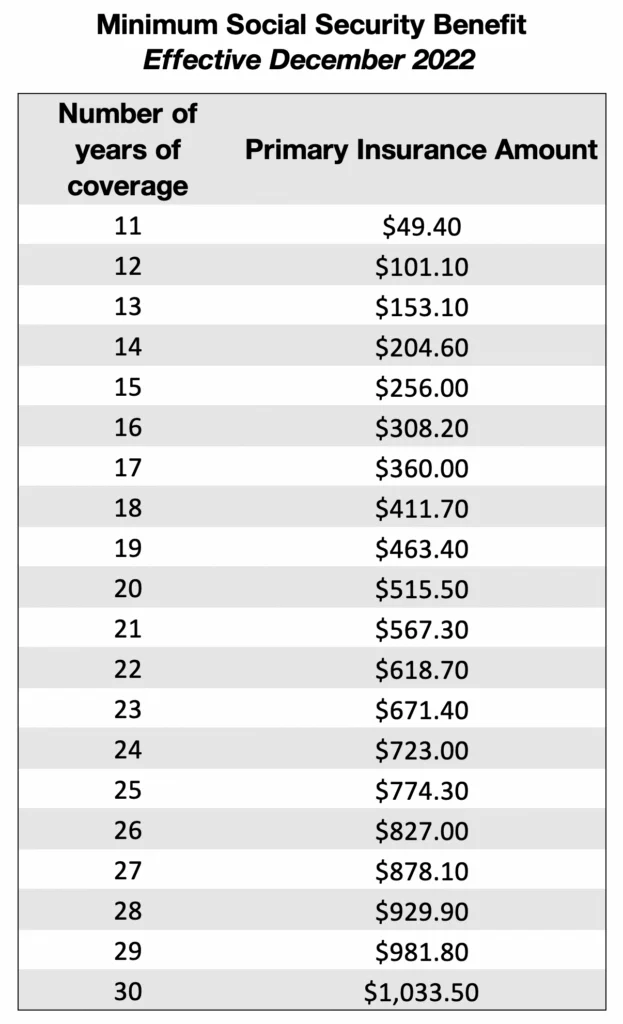
Once your AIME is established, the SSA applies a formula to find your Primary Insurance Amount (PIA). The PIA is the base amount you would receive if you retired exactly at your Full Retirement Age (FRA). This formula is “progressive,” meaning it replaces a higher percentage of income for lower-earning workers than for higher-earning ones. The formula uses “bend points”—specific dollar thresholds that change annually. For example, in 2024, the formula takes 90% of the first portion of your AIME, 32% of the middle portion, and 15% of the amount above the second bend point. This structure ensures a baseline of support while capping the maximum benefit for high earners.
Key Factors That Influence Your Monthly Benefit
While the math behind the AIME and PIA sets the foundation, your actual monthly check is heavily influenced by personal choices and economic shifts. The most significant variable is the timing of your claim.
The Impact of Claiming Age
You can begin receiving Social Security benefits as early as age 62, but doing so comes with a permanent reduction. For every month you claim before your Full Retirement Age (which is 67 for those born in 1960 or later), your benefit is reduced. Conversely, if you delay benefits beyond your FRA, you earn “delayed retirement credits.” These credits increase your benefit by 8% for every year you wait, up until age 70. This means a person claiming at 70 could receive up to 76% more per month than if they had claimed at 62. From a personal finance perspective, delaying is often the highest-guaranteed “return on investment” available to retirees.
Cost-of-Living Adjustments (COLA)
Social Security is one of the few retirement income sources that is indexed for inflation. Each year, the SSA evaluates the Consumer Price Index for Urban Wage Earners and Clerical Workers (CPI-W). If inflation has risen, the SSA applies a Cost-of-Living Adjustment (COLA) to benefits. This ensures that the purchasing power of your benefit does not erode as the price of goods and services increases. In years of high inflation, these adjustments can be substantial, providing a critical hedge for retirees on fixed incomes.
The Maximum Taxable Earnings Limit
It is also important to note that there is a ceiling on how much income is subject to Social Security taxes, and consequently, a ceiling on the maximum possible benefit. In 2024, the maximum taxable earnings limit is $168,600. Any income earned above this threshold is not taxed for Social Security purposes and does not count toward the calculation of your benefits. This is why even the highest earners in the country have a “cap” on their monthly Social Security check, regardless of how many millions they may earn annually.
Strategic Planning: How to Maximize Your Payout
Maximizing Social Security is about more than just waiting until age 70. It involves a holistic look at your household’s financial health and work history.

Optimizing the 35-Year Work Window
Because the SSA averages your top 35 years, individuals who took time off to raise children or change careers might have several “zero” or low-income years in their record. Working just a few more years later in life—when you are likely at your peak earning potential—can replace those zeros or low-earning years from your youth. This “replacement effect” can move the needle on your AIME more than most people realize, leading to a permanent increase in your monthly PIA.
Coordinating Spousal and Survivor Benefits
Married couples have unique opportunities to maximize their lifetime benefits. A lower-earning spouse is eligible for a “spousal benefit,” which can be up to 50% of the higher-earning spouse’s PIA. Furthermore, if one spouse passes away, the survivor is entitled to 100% of the deceased spouse’s monthly benefit if it is higher than their own. Strategies such as having the higher earner delay until age 70 can ensure that the surviving spouse has the largest possible monthly income for the remainder of their life. This coordination is a vital component of long-term estate and retirement planning.
The Impact of Taxes on Your Benefits
A common misconception is that Social Security benefits are always tax-free. In reality, depending on your total income, a significant portion of your benefits may be subject to federal income tax.
The “Combined Income” Threshold
The IRS uses a metric called “combined income” to determine if your benefits are taxable. Combined income is the sum of your Adjusted Gross Income (AGI), non-taxable interest (such as municipal bond interest), and one-half of your Social Security benefits. If this total exceeds $25,000 for individuals or $32,000 for couples filing jointly, up to 50% of your benefits may be taxed. If it exceeds $34,000 for individuals or $44,000 for couples, up to 85% of your benefits may be taxable.
State Taxes and Social Security
Beyond federal taxes, you must also consider state-level taxation. Currently, the majority of U.S. states do not tax Social Security benefits. However, a handful of states still apply some form of tax to these payments, though many offer exemptions based on age or income level. When choosing a retirement destination, the tax treatment of Social Security is a crucial factor in calculating your net spendable income.
Integrating Social Security into Your Total Portfolio
Social Security should not be viewed in a vacuum. It is one leg of the “three-legged stool” of retirement, alongside personal savings (like 401ks and IRAs) and traditional pensions.
Social Security as a Fixed-Income Proxy
In the world of investing, Social Security acts much like a government-backed annuity or a long-term bond. Because it is guaranteed by the federal government and adjusted for inflation, it provides a “floor” of safety. This allows retirees to potentially take more calculated risks with their investment portfolios, such as maintaining a higher equity allocation, knowing that their basic living expenses are covered by Social Security and other guaranteed sources.
Addressing the Solvency Question
There is frequent discussion regarding the long-term solvency of the Social Security Trust Funds. Current projections suggest that by the mid-2030s, the trust funds may be depleted, potentially leading to a reduction in benefits (to roughly 77-80% of scheduled amounts) if Congress does not act. While this is a serious concern, it is unlikely that the program will disappear entirely. Most financial planners recommend building a “margin of safety” into your retirement plan by assuming you might receive slightly less than currently promised, or by ensuring your personal savings are robust enough to cover any potential shortfall.

Final Thoughts on Managing Your Benefits
Determining “how much” your Social Security benefits will be is a dynamic process. It requires regular check-ins with your Social Security Statement (available online via the “my Social Security” portal) and a clear-eyed assessment of your health, longevity, and financial needs.
By understanding the mechanics of AIME and PIA, the importance of claiming age, and the nuances of spousal and tax rules, you can transform Social Security from a passive monthly check into a strategic asset. In the landscape of personal finance, knowledge is the most effective tool for ensuring that your retirement is not just funded, but secure. Focus on the variables you can control—your work history, your claiming age, and your tax planning—to maximize this vital component of your financial future.
aViewFromTheCave is a participant in the Amazon Services LLC Associates Program, an affiliate advertising program designed to provide a means for sites to earn advertising fees by advertising and linking to Amazon.com. Amazon, the Amazon logo, AmazonSupply, and the AmazonSupply logo are trademarks of Amazon.com, Inc. or its affiliates. As an Amazon Associate we earn affiliate commissions from qualifying purchases.