
Heisenberg’s Uncertainty Principle, a concept as profound as it is counterintuitive, stands as one of the most fundamental pillars of quantum mechanics. Often encountered in discussions about the bizarre world of subatomic particles, it challenges our everyday notions of certainty and predictability. But what exactly is this principle, and why does it hold such significant weight in our understanding of the universe at its smallest scales?
While the immediate association might be with complex physics equations and theoretical concepts, the implications of Heisenberg’s Uncertainty Principle ripple outwards, even influencing how we think about technology, branding, and even financial systems. This article will delve into the essence of this groundbreaking principle, explore its core ideas, and then connect its underlying logic to the practical realms of technology, brand perception, and the inherent uncertainties in the world of money.

The Quantum Realm: Where Certainty Takes a Backseat
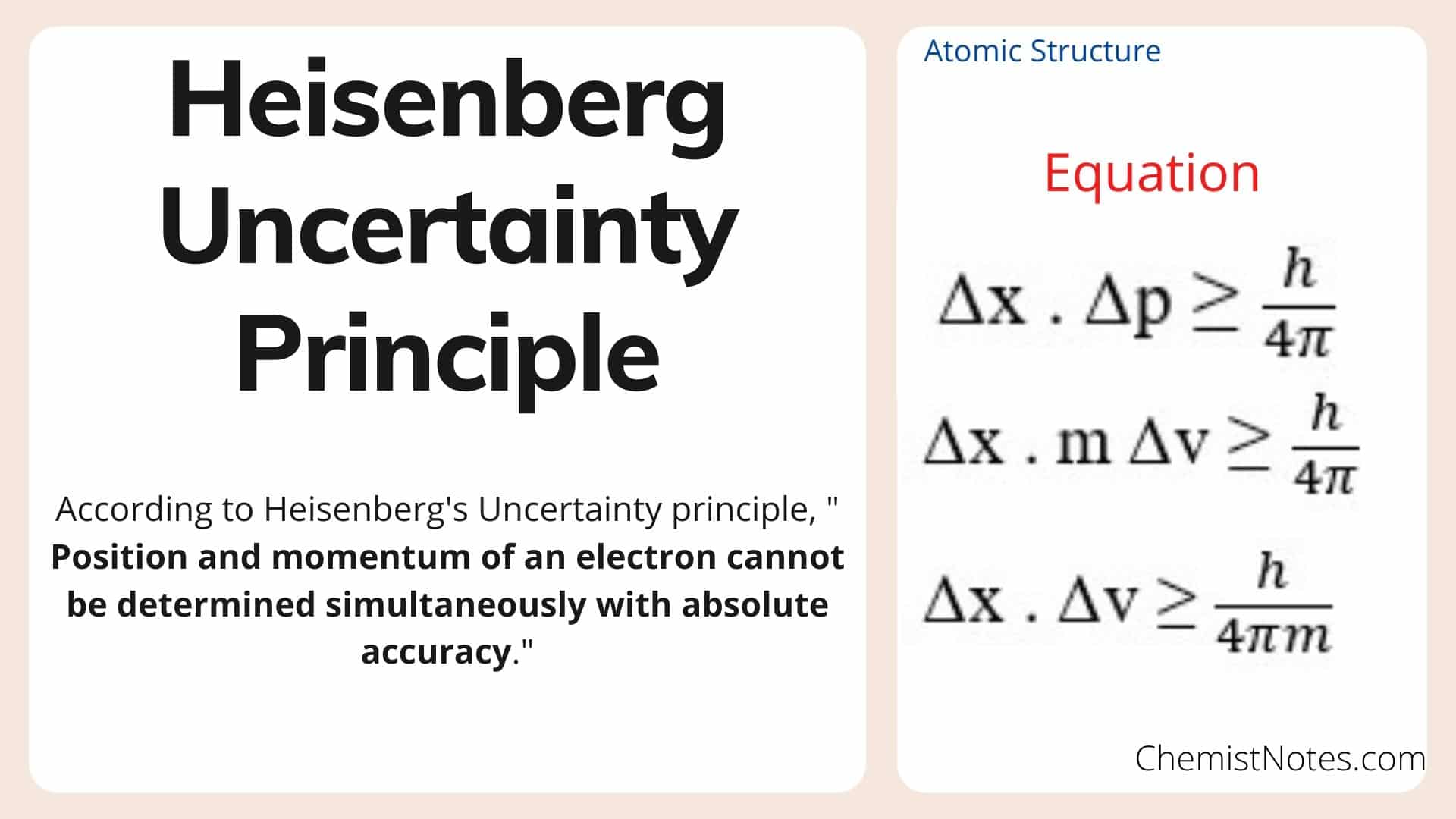
At its heart, Heisenberg’s Uncertainty Principle, formulated by the German physicist Werner Heisenberg in 1927, states that there is a fundamental limit to the precision with which certain pairs of physical properties of a particle, known as conjugate variables, can be known simultaneously. The most famous example of such a pair is position and momentum.
Position and Momentum: The Classic Uncertainty Pair
Imagine trying to locate a tiny, elusive particle, like an electron. To “see” it, you’d typically need to interact with it using some form of probe, like a photon of light. However, this act of observation isn’t passive. When a photon hits an electron to determine its position, it imparts a certain amount of energy and momentum to the electron, inevitably altering its existing momentum.
The more precisely you try to pinpoint the electron’s position (e.g., by using a high-energy photon with a very short wavelength), the more you disturb its momentum, making its future trajectory less predictable. Conversely, if you try to measure the electron’s momentum with high precision (e.g., by using a low-energy photon that causes less disturbance), the uncertainty in its position increases.
This isn’t a limitation of our measuring instruments; it’s an inherent property of the quantum world. The act of measurement itself fundamentally changes the state of the system being observed. It’s like trying to measure the temperature of a tiny drop of water with a large, hot thermometer – the thermometer itself will significantly alter the temperature you’re trying to measure.
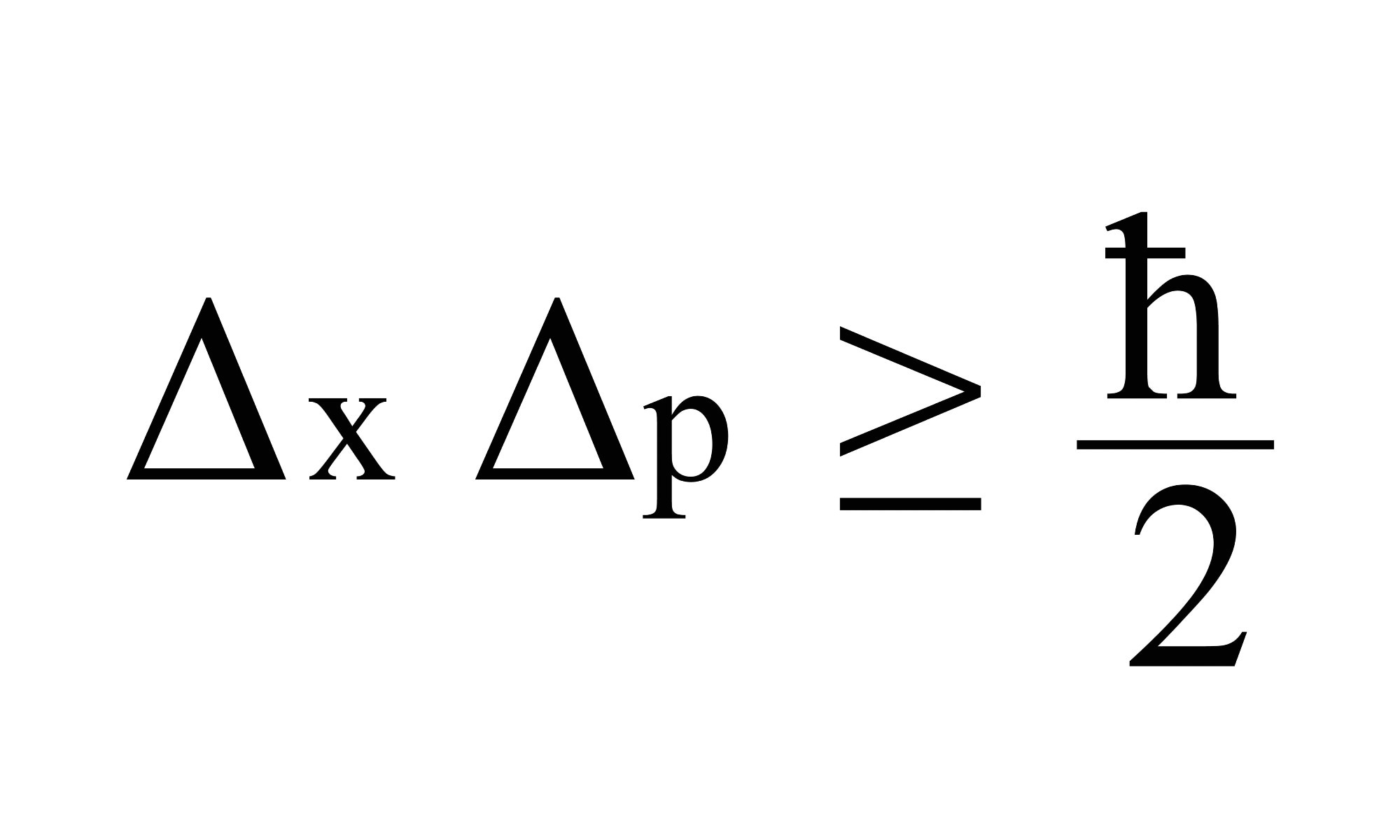
The mathematical formulation of this principle is often expressed as:
$$
Delta x cdot Delta p geq frac{hbar}{2}
$$
Where:
- $Delta x$ represents the uncertainty in position.
- $Delta p$ represents the uncertainty in momentum.
- $hbar$ (h-bar) is the reduced Planck constant, a very small but fundamental constant of nature.
This inequality tells us that the product of the uncertainties in position and momentum must be greater than or equal to a certain minimum value. If you make $Delta x$ very small (high precision in position), then $Delta p$ must be large (high uncertainty in momentum), and vice versa.
Beyond Position and Momentum: Other Conjugate Variables
The principle isn’t limited to just position and momentum. Other pairs of conjugate variables also exhibit this uncertainty relationship, such as:
- Energy and Time: The more precisely you know the energy of a system, the less precisely you can know the duration over which that energy is possessed, and vice versa. This has profound implications for understanding particle decay and virtual particles.
- Angular Position and Angular Momentum: Similar to linear position and momentum, these properties are also subject to the uncertainty principle.
The core takeaway is that in the quantum realm, there are inherent limits to what we can know about a system with absolute certainty. The more we “zoom in” on one aspect of reality, the blurrier another becomes.
Echoes of Uncertainty: Applying the Principle Beyond Physics
While Heisenberg’s Uncertainty Principle is a cornerstone of quantum physics, its underlying philosophy – the inherent trade-offs in knowledge and the impact of observation – resonates in various non-physical domains. Understanding these parallels can offer valuable insights into how we approach challenges in technology, branding, and finance.
Technology: Navigating the Trade-offs of Innovation
In the world of technology, the spirit of Heisenberg’s Uncertainty Principle can be seen in the constant trade-offs developers and users face. Every technological advancement, every new feature, every optimized algorithm involves a delicate balancing act.
The Precision vs. Scope Dilemma in Software and AI
Consider the development of Artificial Intelligence (AI) tools. When training an AI model, developers often face a choice between creating a highly specialized model that excels at a narrow task (high precision) or a more general-purpose model that can handle a wider range of inputs but might not be as accurate in any single instance (broader scope, less precision in specific outcomes).
- Hyper-Specialized AI (e.g., a medical diagnostic AI): This AI might be incredibly precise in identifying specific diseases from medical images. However, its ability to perform other tasks, like writing poetry or managing a business, would be extremely limited. You gain certainty in one domain at the cost of broad applicability. This mirrors the high precision in position leading to uncertainty in momentum – you know one thing perfectly, but other aspects become unpredictable.
- General-Purpose AI (e.g., large language models): These models can engage in a vast array of tasks, from answering questions to generating code. However, they might not always achieve the same level of accuracy or nuance as a hyper-specialized tool in a particular field. The broader scope introduces a degree of uncertainty in the precision of any single output.
This is analogous to Heisenberg’s principle: the more you try to constrain and refine a system for one specific outcome (position), the more you introduce unpredictability in its broader capabilities (momentum).
Gadgets and Productivity: The Feature Creep vs. Usability Trade-off
Even in the design of everyday gadgets and productivity apps, we see this principle at play. Adding too many features to a smartphone or a software application can make it incredibly powerful but also overwhelming and difficult to use. This “feature creep” introduces uncertainty in the user’s ability to quickly and effectively achieve their primary goal.
- Highly Customizable Apps: Offer immense flexibility (high potential for precise control over certain functions). However, the sheer number of options can lead to uncertainty in how to best utilize them, slowing down the user’s workflow.
- Simple, Streamlined Apps: Offer a clear, predictable path to achieving a specific task (high certainty in outcome for that task). But their limited functionality means they cannot be used for a wider range of purposes.
The constant pursuit of technological innovation often involves navigating these inherent trade-offs. Developers must decide where to focus their efforts – on achieving peak performance and precision in a specific area, or on creating a broader, more adaptable tool that might have slightly less certainty in its individual outputs.
Brand: The Perceived Certainty and the Evolving Identity
In the realm of branding, Heisenberg’s Uncertainty Principle offers a compelling metaphor for understanding how brands are perceived and how their identities evolve. A brand’s strength often lies in its perceived consistency and predictability, yet true growth and relevance require adaptability and evolution.
Brand Strategy and the Perceived vs. Actual Identity
A brand’s core identity, its promise to its customers, aims to create a sense of certainty. Customers want to know what to expect when they interact with a brand. This predictability builds trust and loyalty. However, the world is constantly changing, and businesses must adapt to remain relevant.
- A Highly Fixed Brand Identity: A brand that rigidly adheres to its original identity might be perceived as highly predictable and trustworthy in its core offerings. This offers a strong sense of certainty in its established domains. However, if the market shifts or customer needs evolve, this very rigidity can become a weakness. The brand might fail to adapt, leading to a decline in relevance. This is akin to precisely knowing one property (the brand’s core) while being uncertain about its ability to navigate new environments.
- An Adaptive Brand Identity: A brand that embraces evolution and innovation can stay ahead of the curve. This adaptability allows it to meet changing customer needs and market demands, creating new avenues of perceived certainty in evolving landscapes. However, rapid or frequent changes can also introduce uncertainty. Customers might become confused about what the brand truly stands for, questioning its core values and promises. The very act of adapting and growing (momentum) can introduce uncertainty in its precisely defined past (position).
The art of successful branding, therefore, involves carefully managing this tension. Brands need to establish a solid foundation of trust and consistency (positional certainty) while remaining flexible enough to adapt and grow (momentum). The challenge lies in evolving without losing the core essence that customers have come to rely on. Case studies of brands that have successfully reinvented themselves, like Apple moving from computers to consumer electronics and services, demonstrate this delicate balance.
Reputation Management: The Observer Effect in the Digital Age
In the digital age, a brand’s reputation is a dynamic entity, heavily influenced by public perception – the “observers.” The uncertainty principle’s concept of the observer affecting the observed is remarkably relevant here.
- Proactive Reputation Management: Brands that actively shape their narrative and engage with their audience attempt to influence how they are perceived. They aim to create a clear, positive “position” in the minds of consumers.
- The Unpredictable Nature of Social Media: However, in the vast, interconnected digital landscape, a single viral post, a negative review, or a public misstep can drastically alter a brand’s reputation. The “momentum” of public opinion can shift rapidly and unpredictably, introducing significant uncertainty into even the most carefully managed brand image. The very act of a brand trying to solidify its reputation can be disrupted by the collective, often unpredictable, observations of the online community.
Money: The Inherent Probabilities and the Pursuit of Certainty
The world of money, whether personal finance, investing, or business finance, is inherently filled with uncertainty. While we strive for predictability and security, the forces at play are often complex and subject to change, mirroring the probabilistic nature of the quantum world.
Investing and the Uncertainty of Future Returns
The fundamental principle of investing is that higher potential returns come with higher risk – a direct manifestation of uncertainty.
- High-Certainty Investments (e.g., government bonds): These investments offer a relatively predictable, albeit often modest, rate of return. You have a high degree of certainty about the future value of your principal and the interest you will earn. However, this certainty comes at the cost of lower growth potential, meaning you might be “uncertain” about achieving significant wealth accumulation.
- High-Uncertainty Investments (e.g., startup stocks, cryptocurrencies): These assets have the potential for explosive growth but also carry a significant risk of substantial loss. The “momentum” for these assets can be highly volatile. You gain the potential for high returns (high momentum), but the “position” of your investment’s future value is highly uncertain.
The uncertainty principle reminds us that we cannot simultaneously have absolute certainty about both the outcome and the risk of an investment. The more you seek guaranteed returns (positional certainty), the less growth potential you might unlock (momentum uncertainty). Conversely, chasing aggressive growth (momentum) inevitably introduces significant uncertainty into the final outcome. Financial tools and strategies often aim to manage and mitigate this uncertainty, but they cannot eliminate it entirely.
Personal Finance and the Unforeseen Expenses
On a personal level, financial planning is an ongoing battle against unforeseen circumstances. While we can budget and save with a certain degree of confidence about our regular income and expenses (positional certainty), life is replete with unpredictable events that can drastically alter our financial “momentum.”
- Job Loss: A sudden loss of income introduces immense financial uncertainty.
- Medical Emergencies: Unexpected health issues can lead to significant and unforeseen expenses.
- Economic Downturns: Broader economic shifts can impact savings, investments, and earning potential.
Effective personal finance management involves building resilience and contingency plans (e.g., emergency funds) to buffer against these uncertainties. The goal isn’t to eliminate all risk, but to reduce the impact of unpredictable events, allowing for a more stable financial “trajectory” even when unexpected forces come into play.
Conclusion: Embracing the Fuzzy Edges of Reality
Heisenberg’s Uncertainty Principle, at its core, is a profound statement about the limits of our knowledge and the interconnectedness of the universe at its most fundamental level. It teaches us that in certain realms, there are inherent trade-offs, and the act of measurement or observation itself can alter the reality we are trying to understand.
While originating in quantum physics, this principle offers a powerful lens through which to view challenges and opportunities in technology, branding, and finance. In technology, it highlights the constant innovation cycle of balancing precision with scope and features with usability. In branding, it underscores the delicate dance between consistent identity and necessary evolution, and the unpredictable nature of public perception. And in finance, it reminds us that while we strive for predictable outcomes, the inherent probabilities and unforeseen events demand a strategy of managing, rather than eliminating, uncertainty.
By understanding and embracing the inherent “fuzziness” at the edges of our knowledge, we can approach these complex domains with greater insight, adaptability, and ultimately, a more realistic appreciation for the dynamic nature of the world around us. The universe, from its smallest constituents to its most complex systems, operates with a degree of inherent uncertainty, and learning to navigate this is a key to progress and understanding.
aViewFromTheCave is a participant in the Amazon Services LLC Associates Program, an affiliate advertising program designed to provide a means for sites to earn advertising fees by advertising and linking to Amazon.com. Amazon, the Amazon logo, AmazonSupply, and the AmazonSupply logo are trademarks of Amazon.com, Inc. or its affiliates. As an Amazon Associate we earn affiliate commissions from qualifying purchases.