
For millions of Americans, Social Security represents the most significant component of their retirement income strategy. Yet, despite its importance, the methodology used to determine the monthly check remains a mystery to many. The Social Security Administration (SSA) does not simply pick a number; it employs a rigorous, multi-step mathematical formula designed to reflect an individual’s career earnings while maintaining a progressive structure that provides a higher “replacement rate” for lower-income earners.
Understanding how your benefit is calculated is not merely an academic exercise. It is a vital component of personal finance that allows for better tax planning, informed decisions regarding when to stop working, and a clearer picture of your long-term financial health. In this guide, we will break down the complex mechanics of the Social Security formula, from the indexing of historical wages to the impact of the timing of your claim.

The Core Foundation: AIME and Indexed Earnings
The journey to your Social Security check begins with your lifetime earnings history. However, because $20,000 in 1985 had significantly more purchasing power than $20,000 today, the SSA does not use raw dollar amounts. Instead, they use a process called “indexing” to bring past earnings into modern context.
Understanding Indexing Factors
Each year, the SSA calculates the national average wage index. When you reach age 60, the SSA looks at all your previous years of earnings and applies an indexing factor to each year. This factor ensures that your 1990 salary is adjusted to reflect the increase in general wage levels that has occurred since then. Earnings made after age 60 are taken at face value and are not indexed. This process ensures that the “value” of your work is consistent across your entire career when the final calculation is made.
The 35-Year Rule
The most critical number in the Social Security calculation is 35. The SSA identifies your 35 highest-earning, indexed years. These years are summed and then divided by 420 (the number of months in 35 years). The resulting figure is your Average Indexed Monthly Earnings (AIME).
It is important to note that if you have fewer than 35 years of covered earnings, the SSA will plug in “zeros” for the remaining years. This can significantly drag down your AIME. Conversely, if you work for 40 years, only the top 35 are used, meaning your five lowest-earning years are discarded. From a financial planning perspective, replacing a “zero” or a low-earning year from your youth with a high-earning year in your 60s is one of the most effective ways to boost your eventual benefit.
From AIME to PIA: The Progressive Formula
Once your AIME is established, the SSA applies a formula to determine your Primary Insurance Amount (PIA). The PIA is the base amount you would receive if you chose to begin benefits exactly at your Full Retirement Age (FRA). The formula used to transition from AIME to PIA is “progressive,” meaning it is designed to help lower-wage earners more than high-wage earners.
What is the Primary Insurance Amount (PIA)?
The PIA is the “magic number” that serves as the benchmark for all other Social Security decisions. Whether you take benefits early at a discount or late for a premium, everything is calculated as a percentage of this PIA. The formula is recalculated annually to account for inflation, ensuring that the system remains relevant to the current economic climate.
Navigating the “Bend Points”
The SSA applies three different percentages to your AIME to reach your PIA. These thresholds are known as “bend points.” For an individual reaching age 62 in 2024, the formula is:
- 90% of the first $1,174 of AIME.
- 32% of AIME between $1,174 and $7,078.
- 15% of AIME above $7,078.
This structure highlights why Social Security is often described as a safety net. A worker with a lower AIME sees 90% of their earnings replaced, while a high-income earner sees a much lower percentage of their total income replaced. For the savvy investor, this underscores the necessity of having supplementary retirement accounts, such as 401(k)s or IRAs, as Social Security is designed to be a foundation rather than a total replacement for high-income lifestyles.
The Impact of Timing: Early Retirement vs. Delayed Credits
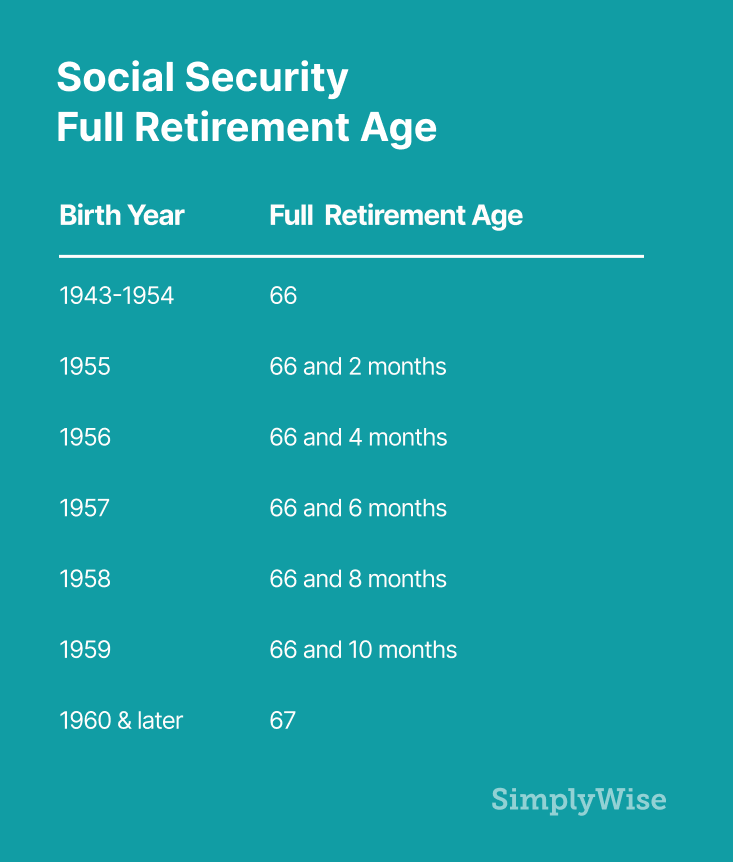
While the PIA tells you what you are entitled to at Full Retirement Age (which is 67 for anyone born in 1960 or later), you have the flexibility to claim as early as 62 or as late as 70. This decision has a permanent impact on the monthly amount you receive.
The Cost of Taking Benefits at 62
If you choose to claim benefits as soon as you are eligible at age 62, your monthly check will be permanently reduced. For those with an FRA of 67, claiming at 62 results in a 30% reduction in the monthly benefit. This reduction is calculated monthly; for every month you claim before your FRA, a small percentage is shaved off the PIA. While this provides immediate cash flow, it significantly reduces the “inflation-protected annuity” value of Social Security over a long retirement.
The Power of Delayed Retirement Credits (DRC)
On the opposite end of the spectrum, the SSA incentivizes waiting. For every year you delay claiming past your FRA (up until age 70), your benefit increases by approximately 8% per year in simple interest. This means that if your FRA is 67 and you wait until 70, your monthly check will be 124% of your PIA.
In the world of personal finance, a guaranteed 8% annual return is virtually unheard of, especially when it is backed by the federal government and adjusted for inflation. For those in good health with other assets to draw from, delaying Social Security is often the most mathematically sound strategy to maximize lifetime wealth.
Modern Variables: Taxes, Spousal Benefits, and COLA
The calculation of your benefit doesn’t end with your individual work history. There are external factors and family dynamics that can alter the final amount deposited into your bank account.
How Spousal and Survivor Benefits are Determined
Social Security is designed to support families, not just individuals. A spouse can receive up to 50% of the higher-earning spouse’s PIA, provided they are at their own FRA. If the higher-earning spouse passes away, the survivor is entitled to 100% of the deceased spouse’s actual benefit (including any delayed credits). This makes the decision of when the “primary breadwinner” claims benefits a crucial component of estate and legacy planning, as a higher benefit will persist for the life of the surviving spouse.
The Role of Cost-of-Living Adjustments (COLA)
To protect against the eroding power of inflation, Social Security benefits are subject to an annual Cost-of-Living Adjustment (COLA). This is based on the Consumer Price Index for Urban Wage Earners and Clerical Workers (CPI-W). When the cost of goods and services rises, the SSA increases the PIA of all beneficiaries. This feature makes Social Security one of the few retirement income sources that is effectively “inflation-proof,” providing a critical hedge against the rising costs of healthcare and housing in later life.
Strategic Planning for Maximum Payouts
Understanding the math behind Social Security allows you to treat it as a manageable asset rather than a mystery. Strategic planning can help you maximize the return on the payroll taxes you have paid throughout your career.
Managing Your “Top 35” Earnings Years
If you are nearing retirement and realize you have a few years of low or zero earnings in your 35-year window, continuing to work for even two or three more years can have a disproportionate impact on your benefit. By replacing a “zero” year with a high-earning year at the peak of your career, you increase your AIME, which in turn raises your PIA. For business owners and freelancers, this may involve adjusting how they take draws or salary from their business to ensure they are contributing enough to the system to optimize their future payout.

Tax Implications of Social Security Income
Finally, it is essential to consider the “provisional income” rule. Depending on your total income (including half of your Social Security benefits, plus other taxable income and tax-exempt interest), up to 85% of your Social Security benefits may be subject to federal income tax.
Sophisticated financial planning involves managing withdrawals from taxable accounts (like traditional IRAs) versus tax-free accounts (like Roth IRAs) to keep your provisional income below the thresholds where Social Security becomes taxable. By understanding that the “net” benefit is what matters, retirees can structure their portfolios to keep more of what the SSA calculates they are owed.
In conclusion, the calculation of Social Security benefits is a precise process that rewards longevity and high earnings while providing a safety net for all. By mastering the concepts of AIME, the 35-year rule, and the impact of claiming ages, you can transform Social Security from a passive monthly check into a dynamic tool for financial security.
aViewFromTheCave is a participant in the Amazon Services LLC Associates Program, an affiliate advertising program designed to provide a means for sites to earn advertising fees by advertising and linking to Amazon.com. Amazon, the Amazon logo, AmazonSupply, and the AmazonSupply logo are trademarks of Amazon.com, Inc. or its affiliates. As an Amazon Associate we earn affiliate commissions from qualifying purchases.