
In the realm of human experience, the “day of the week” is a simple cycle of seven names that dictates our social and professional rhythms. However, from a technological perspective, the day of the week is a complex data point that requires precise standardization, mathematical modeling, and sophisticated algorithmic handling. For developers, data scientists, and systems architects, “what is day of the week” is not just a question about the current date; it is a challenge of parsing temporal data across different locales, programming languages, and historical contexts.
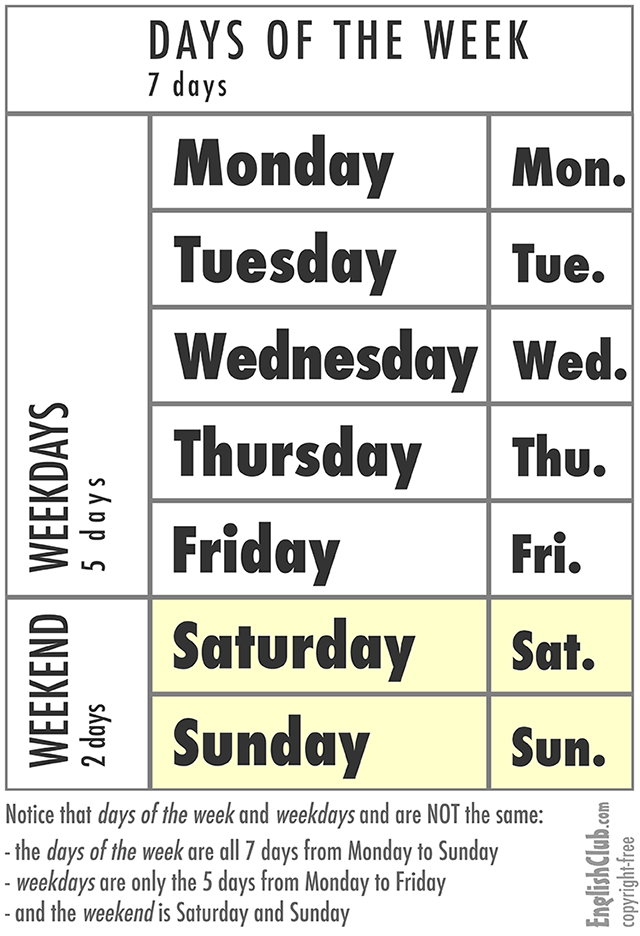
This article explores the technical foundations of day-of-the-week calculations, the standards that govern digital time, and the algorithms that allow machines to map any given date in history to its corresponding position in the seven-day cycle.
1. The Digital Standards of Temporal Data: ISO 8601 and Beyond
To a computer, a date is often just a string of integers or a timestamp representing seconds elapsed since a specific “epoch.” To translate these numbers into a human-readable day of the week, technology relies on international standards.
The ISO 8601 Standard
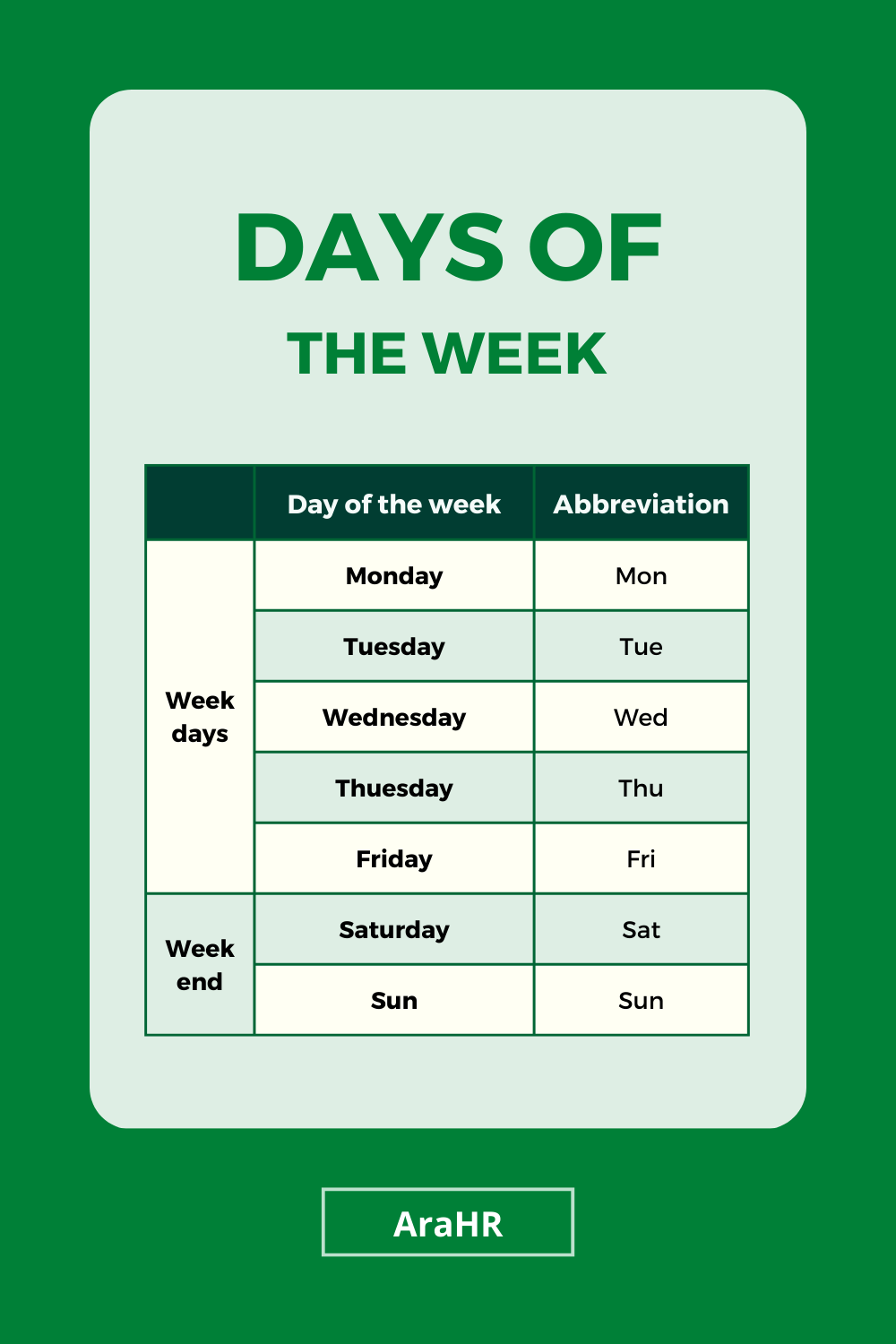
The most critical standard in the tech industry is ISO 8601. This international standard covers the exchange of date- and time-related data. According to ISO 8601, the week begins on Monday, which is represented by the integer 1. The days follow in sequence, ending with Sunday as 7.
Standardization is vital because different cultures have different starting points for the week. For instance, while the ISO standard and much of Europe treat Monday as the first day, systems designed in the United States or Canada often default to Sunday as day 0 or day 1. When building global software, failing to adhere to a specific standard like ISO 8601 can lead to significant bugs in scheduling software and data visualization.
Zero-Based vs. One-Based Indexing
In programming, the representation of the day of the week often depends on the language’s design philosophy.
- Zero-based indexing: Many languages, such as JavaScript (
getDay()) and Python’sdatetimemodule, use 0 to represent Sunday (or Monday, depending on the library). - One-based indexing: Relational databases like MySQL or spreadsheet software like Microsoft Excel often offer options for both, but frequently default to 1-7.
Understanding these underlying shifts is essential for “tech stack” compatibility. If a backend API sends a “3” representing Wednesday (1-indexed) but a frontend JavaScript framework interprets “3” as Thursday (0-indexed), the resulting user experience is compromised.
2. The Mathematics of Time: Algorithms for Calculating the Day of the Week
How does a computer know that July 4, 1776, was a Thursday? It doesn’t look at a digital calendar; it uses modular arithmetic. Several famous algorithms have been developed to solve this problem efficiently without requiring massive look-up tables.
Zeller’s Congruence
One of the most enduring methods is Zeller’s Congruence, an algorithm devised by Christian Zeller in the late 19th century. It is a formula that calculates the day of the week for any Julian or Gregorian calendar date.
The formula involves the day, month, and year, with a specific adjustment: January and February are treated as the 13th and 14th months of the previous year. This adjustment is necessary because of the varying length of February and the placement of leap years. For a programmer, implementing Zeller’s Congruence is a classic exercise in handling integer division and the modulo operator (%).
The Doomsday Algorithm
Developed by the late mathematician John Conway, the Doomsday Algorithm is another popular method used in computing and by mental calculators. It relies on the fact that certain dates (the “Doomsdays”) always fall on the same day of the week within a given year. For example, 4/4, 6/6, 8/8, 10/10, and 12/12 always fall on the same weekday.
In a tech context, the Doomsday algorithm is highly efficient for “low-power” computing or scenarios where a quick validation of a date’s weekday is required without importing heavy temporal libraries.
Sakamoto’s Algorithm
For developers working in C or C++, Sakamoto’s Algorithm is a favorite because it is incredibly concise and requires minimal computational overhead. It produces the day of the week in just a few lines of code, making it ideal for embedded systems or IoT devices where memory and processing power are at a premium.
3. Implementation in Modern Software Development
Modern software development has largely abstracted these mathematical formulas into powerful libraries. However, knowing how to leverage these tools is a core competency for any tech professional.
Handling Days in Python
Python’s datetime module is the gold standard for many data scientists. By using .weekday() or .isoweekday(), developers can instantly extract the day of the week from a date object.
weekday()returns 0 for Monday and 6 for Sunday.isoweekday()returns 1 for Monday and 7 for Sunday (adhering to ISO standards).
JavaScript and the Temporal API
Historically, JavaScript’s Date object has been a source of frustration for developers due to its idiosyncratic handling of months (0-11) and days. However, the new Temporal API proposal aims to bring more robust date-time handling to the web, allowing for easier manipulation of time zones and calendar systems, ensuring that “what is day of week” is answered consistently across different browsers.
SQL and Database Logic
In the world of Big Data and Backend engineering, determining the day of the week is crucial for “Time Series Analysis.” SQL functions like EXTRACT(DOW FROM date_column) or DATEPART allow businesses to aggregate data by day. For instance, a tech-driven retail company might use these queries to discover that their highest server load occurs every Tuesday, allowing them to scale cloud resources accordingly.
4. The Challenges of Historical Data and Edge Cases
Calculating the day of the week isn’t always a straightforward mathematical march. Technology must account for the “debt” of human history.
The Gregorian Transition
The biggest hurdle in temporal computing is the transition from the Julian calendar to the Gregorian calendar. In 1582, several days were skipped to correct a drift in the solar year. Different countries adopted this change at different times (the UK in 1752, Russia in 1918).
When a developer builds software for historians or genealogists, the “day of the week” logic must be “proleptic.” This means the software must account for the specific date a geographic region changed its calendar system. Most modern programming libraries use the Proleptic Gregorian Calendar, which extends the current calendar system backward in time, but this can lead to inaccuracies when cross-referencing actual historical documents.
Leap Seconds and Unix Epochs
While leap years are easily handled by the (year % 4 == 0) logic (with the 100/400-year exception), leap seconds are a different story. The Unix Epoch (seconds since January 1, 1970) does not account for leap seconds. While this rarely affects the “day of the week,” it is a reminder that digital time is a human-made approximation of celestial movement.
5. Day-of-the-Week Optimization in Automation and AI
In the current era of AI and automation, “what is day of the week” has moved from a simple display feature to a key variable in predictive modeling.
Algorithmic Scheduling and Cron Jobs
In DevOps, “Cron jobs” are scheduled tasks that run based on time intervals. Determining the day of the week is fundamental to server maintenance. A script might be written to run only on 0 0 * * 0 (every Sunday at midnight). Understanding the syntax of temporal expressions is vital for maintaining digital infrastructure and ensuring security patches are applied during low-traffic windows.
Machine Learning and Feature Engineering
For AI developers, the day of the week is a critical “feature” in machine learning models. If you are building a model to predict stock prices, electricity demand, or traffic patterns, the day of the week is often a primary indicator of behavior.
- One-Hot Encoding: Since days of the week are categorical data, tech professionals use “one-hot encoding” to turn “Monday” or “Friday” into a series of binary inputs (0 or 1) that a neural network can process.
- Cyclical Encoding: Advanced AI models treat the day of the week as a circle rather than a linear list. By using sine and cosine transformations, developers can show the AI that Sunday (6) and Monday (0) are actually close to each other, improving the accuracy of time-sensitive predictions.

Conclusion
The question “what is day of week” serves as a bridge between ancient human tradition and modern computational power. While we perceive the week as a simple cycle, the technology that supports our digital lives views it through a lens of ISO standards, modular arithmetic, and complex historical adjustments.
Whether it is a Python script parsing a CSV file, a global database syncing transactions across time zones, or an AI model predicting the next consumer trend, the day of the week remains one of the most fundamental units of data in the tech world. Mastering the algorithms and standards behind it is not just a coding skill—it is a requirement for building reliable, scalable, and globally-aware digital systems.
aViewFromTheCave is a participant in the Amazon Services LLC Associates Program, an affiliate advertising program designed to provide a means for sites to earn advertising fees by advertising and linking to Amazon.com. Amazon, the Amazon logo, AmazonSupply, and the AmazonSupply logo are trademarks of Amazon.com, Inc. or its affiliates. As an Amazon Associate we earn affiliate commissions from qualifying purchases.