
Understanding your annual income is the cornerstone of effective financial planning. Whether you are applying for a mortgage, creating a household budget, or negotiating a salary for a new job, knowing exactly how much you earn over a twelve-month period—and how that figure is derived—is essential. While it might seem as simple as looking at a paystub, the reality of annual income involves navigating various employment structures, tax implications, and supplementary revenue streams.
This guide provides a deep dive into the methodologies for calculating annual income across different career paths, the crucial distinction between gross and net earnings, and the strategic importance of these figures in building long-term wealth.
Understanding the Fundamentals: Gross vs. Net Annual Income
Before diving into the mathematics of your earnings, it is vital to distinguish between the two primary ways income is measured: Gross and Net. Confusing these two can lead to significant errors in budgeting and financial forecasting.
Defining Gross Annual Income
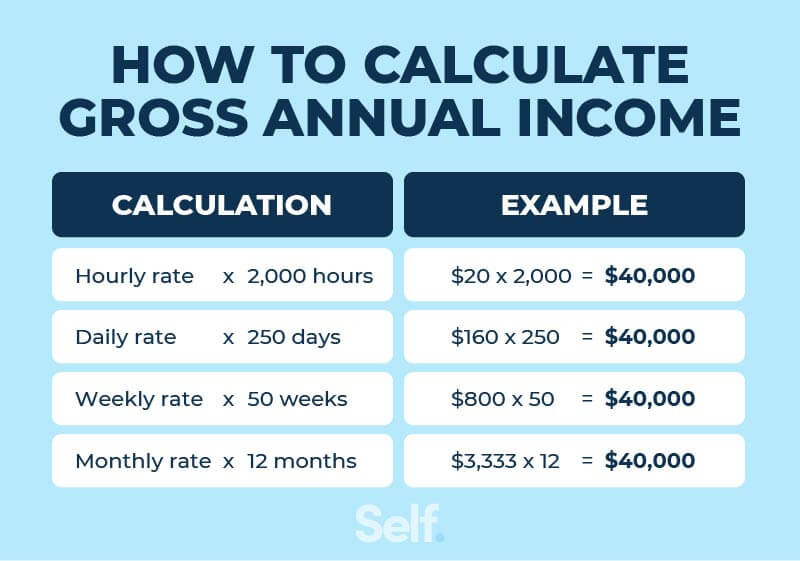
Gross annual income is the total amount of money you earn in a year before any taxes or deductions are taken out. For a salaried employee, this is typically the “sticker price” of their compensation package. For an hourly worker, it is the sum of all hours worked multiplied by their hourly rate, plus any overtime or bonuses.
Gross income is the figure most lenders use when determining your debt-to-income ratio for loans. It represents your total earning power in the eyes of the financial system. It includes not just your base pay, but also commissions, tips, investment dividends, and any rental income you might receive.
Decoding Net Annual Income (Take-Home Pay)
Net annual income, often referred to as “take-home pay,” is the amount of money that actually lands in your bank account after all deductions. These deductions include federal, state, and local income taxes, Social Security and Medicare contributions (FICA), and voluntary deductions like health insurance premiums or 401(k) contributions.
While gross income is a measure of your value in the marketplace, net income is the reality of your lifestyle. It is the only figure that should be used when creating a monthly budget, as it represents the actual liquid capital available to cover your expenses and savings goals.
Why the Distinction Matters for Your Financial Health
Focusing solely on gross income can lead to “lifestyle creep” and overextension. If you earn $100,000 a year (gross), you might feel like you can afford a high-end apartment. However, if you live in a high-tax state and contribute heavily to a retirement fund, your net income might only be $65,000. Understanding both figures allows you to plan for the future (using gross income for investment targets) while managing the present (using net income for daily expenditures).
Step-by-Step Calculation Methods for Every Employment Type
The method you use to figure out your annual income depends largely on how you are compensated. The calculation for a corporate executive differs significantly from that of a freelance graphic designer or a retail worker.
Calculating Income for Salaried Employees
For those with a fixed salary, the calculation is the most straightforward. If your offer letter states you earn $75,000 per year, that is your gross annual income. However, to find your monthly or bi-weekly gross, you simply divide that total by the number of pay periods (12 for monthly, 26 for bi-weekly).
To determine your net annual income as a salaried employee, the most effective method is to aggregate your year-to-date (YTD) net pay from your final December paystub. If you are mid-year, you can estimate by taking your most recent “net pay” amount and multiplying it by the remaining pay periods in the year.
The Formula for Hourly Workers
Hourly calculations require a bit more data. The standard work year for a full-time employee (40 hours per week) consists of approximately 2,080 work hours (40 hours x 52 weeks).
- Standard Calculation: Hourly Rate × Hours per Week × 52 Weeks = Gross Annual Income.
- The “Double It” Rule of Thumb: A quick way to estimate annual income from an hourly wage is to double the hourly rate and add three zeros. For example, if you earn $25/hour, $25 x 2 = 50, which translates to roughly $50,000 per year.

However, hourly workers must also account for fluctuations. If your hours vary, it is more accurate to average your last three months of income and extrapolate that over the year, or review your previous year’s W-2 form.
Navigating Variable Income: Freelancers and Small Business Owners
For the self-employed, “income” is a more complex term. You must distinguish between “Gross Revenue” (all money coming into the business) and “Net Profit” (what remains after business expenses).
To figure out your annual income as a freelancer:
- Calculate Total Revenue: Sum all invoices paid within the calendar year.
- Subtract Business Expenses: Deduct costs for software, home office, equipment, and marketing.
- Account for Self-Employment Tax: Unlike W-2 employees, freelancers must pay both the employer and employee portions of FICA taxes (15.3% in the U.S.).
For those with variable monthly income, it is best to look at a two-year average to determine a reliable “annual” figure for loan applications or long-term planning.
Accounting for Bonuses, Commissions, and Side Hustles
Annual income is rarely just a base salary. You must also include:
- Bonuses: Calculate the average bonus received over the last two years if the amount is not guaranteed.
- Commissions: Essential for sales professionals; use a conservative estimate based on past performance.
- Side Hustles: Income from apps like Uber, Etsy, or consulting should be calculated separately and added to your primary income. Remember that this income is often “gross” and will require a portion to be set aside for taxes.
Common Pitfalls and Key Deductions to Consider
When calculating your annual income, many people overlook the “hidden” factors that can significantly alter their financial picture. Accuracy in these areas is what separates a basic estimate from a professional financial plan.
The Impact of Federal and State Taxes
The United States uses a progressive tax system, meaning your “marginal” tax rate is higher than your “effective” tax rate. When your annual income increases, you aren’t taxed at the higher rate for the entire amount—only for the portion that falls within the new bracket. Understanding this helps you predict how much of a raise will actually end up in your pocket. Furthermore, state and local taxes vary wildly; earning $100,000 in Texas (no state income tax) results in a much higher net income than earning $100,000 in New York or California.
Pre-tax vs. Post-tax Contributions
Deductions are not all created equal. Pre-tax deductions, such as contributions to a traditional 401(k) or a Health Savings Account (HSA), lower your taxable income. This means that while your “net pay” decreases, you are actually saving money on taxes.
Post-tax deductions, like Roth 401(k) contributions or certain life insurance premiums, do not lower your tax bill today but provide benefits later. When calculating your annual “wealth-building” income, you should count these contributions as part of your realized gains, even if they aren’t in your checking account.
Handling Non-Monetary Benefits and Perks
While not “income” in the sense that you can spend it at the grocery store, employer benefits like health insurance subsidies, gym memberships, or company cars have a “cash equivalent” value. When comparing job offers or assessing your total compensation, you should calculate the “Total Reward.” If Employer A offers $80,000 with no benefits and Employer B offers $75,000 with fully paid health insurance, Employer B is often providing a higher annual value.
Why Knowing Your Annual Income is Crucial for Long-Term Wealth
The exercise of figuring out your annual income is not just a mathematical curiosity; it is a vital diagnostic tool for your financial life.
Qualifying for Loans and Mortgages
Lenders use your Gross Annual Income to calculate your Debt-to-Income (DTI) ratio. Most mortgage lenders prefer a DTI of 36% or lower. If you don’t have an accurate grasp of your gross income—including all secondary streams—you might underestimate your borrowing power or, conversely, apply for a loan you cannot realistically afford.
Strategic Budgeting and Debt Management
A successful budget is built on the foundation of your Net Annual Income. By breaking down your annual net pay into monthly segments, you can apply the 50/30/20 rule: 50% for needs, 30% for wants, and 20% for savings and debt repayment. Without an accurate annual figure, it’s easy to let one-off bonuses or “five-paycheck months” lead to undisciplined spending.

Assessing Career Growth and Negotiation Leverage
Knowing your annual income allows you to track your “earnings velocity.” Are you earning 5% more each year? Is your income keeping pace with inflation? When you enter a salary negotiation, having a clear breakdown of your current annual compensation—including bonuses and benefits—gives you the data needed to advocate for your market value. It allows you to move away from “I need a raise” to “My total annual compensation is currently X, while the market rate for my role is Y.”
In conclusion, figuring out your annual income is a multi-layered process that requires looking beyond the base salary. By mastering the nuances of gross versus net, accounting for variable streams, and understanding the impact of deductions, you gain a powerful lens through which to view your financial world. This clarity is the first step toward achieving financial independence and making informed decisions that will secure your future.
aViewFromTheCave is a participant in the Amazon Services LLC Associates Program, an affiliate advertising program designed to provide a means for sites to earn advertising fees by advertising and linking to Amazon.com. Amazon, the Amazon logo, AmazonSupply, and the AmazonSupply logo are trademarks of Amazon.com, Inc. or its affiliates. As an Amazon Associate we earn affiliate commissions from qualifying purchases.