
In the world of finance, numbers are the language of progress. However, raw figures—like having $1,000 in a savings account or earning a $5,000 bonus—rarely tell the full story. To truly understand the health of your financial life, you must look past the nominal values and master the concept of the percentage. Whether you are calculating the return on an investment, determining the interest on a loan, or setting a monthly budget, asking “what is a percentage of” is the first step toward financial literacy.
Percentages provide the necessary context to compare different financial scenarios. A $100 profit on a $1,000 investment is excellent (10%), but a $100 profit on a $1,000,000 investment is negligible (0.01%). By shifting your mindset from absolute dollars to percentages, you gain a scalable framework for managing wealth, regardless of whether you are just starting your career or managing a multi-million dollar portfolio.
The Foundational Role of Percentages in Personal Finance
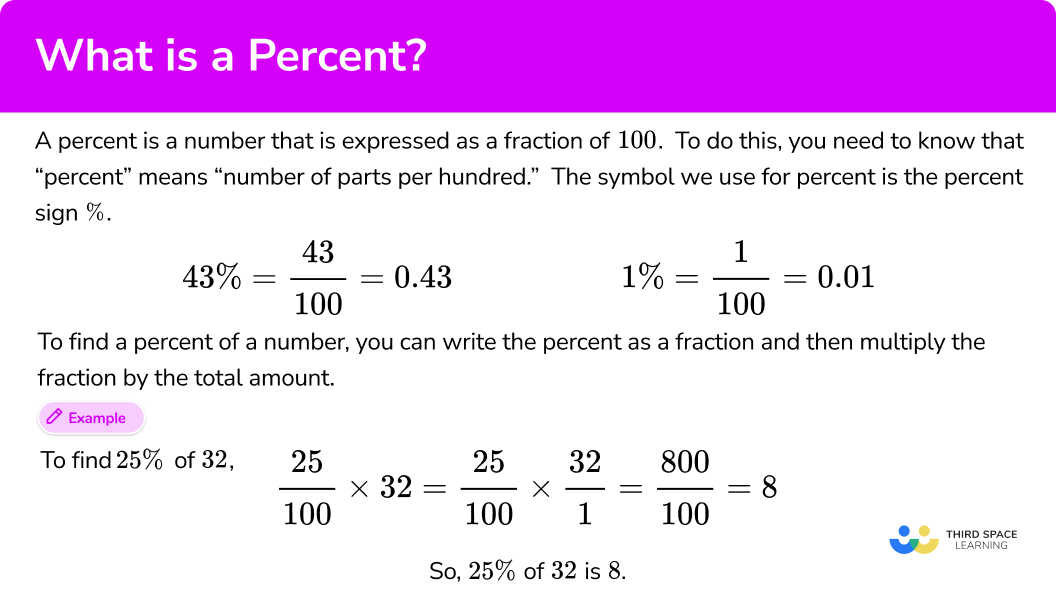
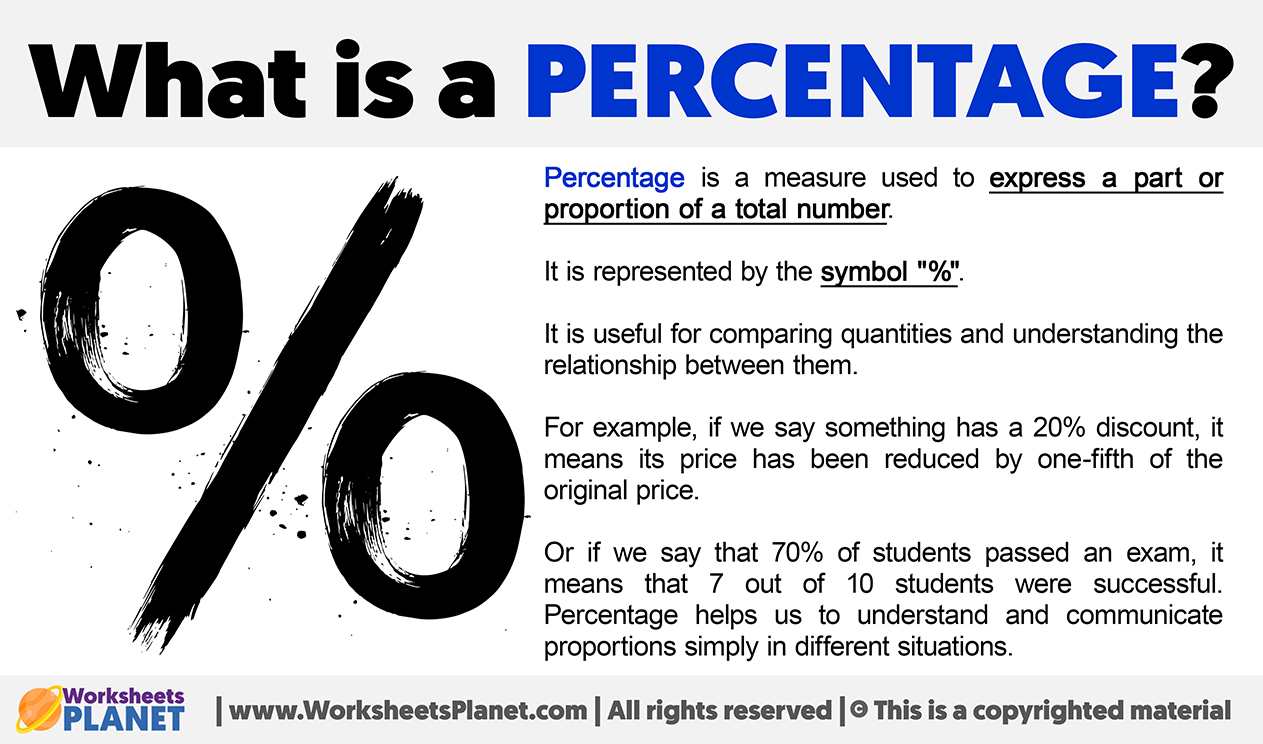
At its core, a percentage is a ratio expressed as a fraction of 100. In personal finance, this “fraction” represents the portion of your total resources allocated to a specific purpose. Understanding this relationship is vital for maintaining a balanced financial life and ensuring that no single category of spending or saving overwhelms your long-term goals.
Decoding the “What is a Percentage of” Equation in Real Life
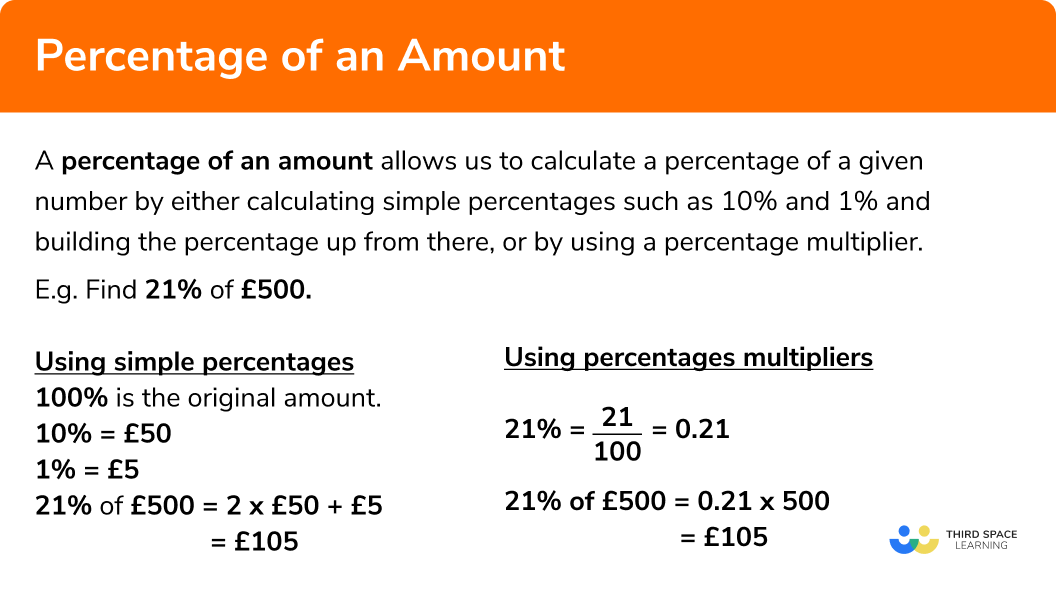
The mathematical formula for finding a percentage is simple: (Part / Whole) x 100. While this might seem elementary, its application in daily money management is profound. For instance, if you want to know what percentage of your income is going toward housing, you divide your monthly rent or mortgage by your total take-home pay.
If your rent is $2,000 and your income is $6,000, your housing cost is 33.3% of your income. This percentage is a vital diagnostic tool. Financial experts often suggest that housing should not exceed 30% of your gross income. By calculating this percentage, you can immediately identify if you are “house poor” and need to adjust your lifestyle or seek higher income to bring your financial ratios back into a healthy range.
The 50/30/20 Rule: Percentages as a Budgeting Blueprint
One of the most effective ways to apply percentages to money management is the 50/30/20 rule. This framework moves away from meticulous line-item tracking and instead focuses on the percentage of total income allocated to three broad categories:
- 50% for Needs: This includes essential costs like housing, groceries, utilities, and insurance.
- 30% for Wants: This covers discretionary spending, such as dining out, travel, and hobbies.
- 20% for Savings and Debt Repayment: This is the most critical percentage for wealth building, focusing on retirement accounts, emergency funds, and paying down high-interest debt.
By viewing your budget through these percentages, you create a flexible yet disciplined approach to money. If your income increases, your spending doesn’t just “happen” to grow; you intentionally allocate the new dollars according to these predefined percentages, preventing “lifestyle creep.”
Evaluating Investment Performance Through Percentages
In the realm of investing, percentages are the ultimate equalizer. They allow an investor to compare the performance of a small-cap stock to a large-cap index or a high-yield savings account to a real estate venture. Without understanding the percentage of return, it is impossible to gauge the efficiency of your capital.
ROI: Measuring the Success of Your Capital
Return on Investment (ROI) is perhaps the most famous application of percentages in the financial world. It is calculated by taking the net profit of an investment, dividing it by the original cost, and multiplying by 100.
A sophisticated investor doesn’t just ask, “How much money did I make?” They ask, “What was the percentage return relative to the risk taken?” For example, if you invested $10,000 in a startup and three years later it is worth $15,000, your total ROI is 50%. However, if you could have earned a 10% annual return in a diversified index fund with much lower risk, the “what is a percentage of” question helps you evaluate if the extra risk of the startup was worth the potential reward.
Compound Interest: The Percentage That Builds Wealth
The “Eighth Wonder of the World,” as Albert Einstein famously called it, is compound interest. Compounding is essentially the process of earning a percentage on your previous percentages. When you earn interest on an investment, that interest is added to the principal, and in the next period, you earn interest on that new, larger total.
Consider the “Rule of 72,” a quick mental math shortcut to see how long it takes to double your money based on a fixed annual percentage rate of return. By dividing 72 by your annual interest rate, you get the approximate number of years for your investment to double. At a 6% return, your money doubles in 12 years. At a 10% return, it doubles in just 7.2 years. This illustrates why even a 1% or 2% difference in investment fees (which are also expressed as percentages) can result in hundreds of thousands of dollars in lost wealth over a 30-year career.
Debt and Interest: When Percentages Work Against You
Just as percentages can accelerate wealth creation through investing, they can also accelerate financial ruin through debt. Understanding the cost of borrowing is entirely dependent on understanding interest rates as percentages of the principal balance.
Understanding APR and APY in Lending
When you borrow money—whether through a credit card, an auto loan, or a mortgage—the cost of that capital is expressed as the Annual Percentage Rate (APR). The APR represents the yearly interest rate you pay on the amount borrowed. However, to truly understand the impact on your wallet, you must also look at the Annual Percentage Yield (APY), which accounts for how often the interest is compounded.
For a borrower, a high APR is a “reverse investment.” If you carry a balance on a credit card with a 24% APR, you are essentially paying the bank a 24% return on their money. In the world of finance, it is nearly impossible to find an investment that consistently returns 24% annually. Therefore, mathematically, the best “investment” any individual can make is often paying off high-interest debt, as it provides a guaranteed “return” equal to the interest percentage saved.
The Impact of High-Interest Debt on Long-Term Net Worth
The danger of debt lies in the “what is a percentage of” calculation regarding your future income. If a significant percentage of your monthly income is dedicated to paying interest on past consumption, you are effectively stealing from your future self.
For example, on a $10,000 credit card balance at 20% interest, you are paying $2,000 a year just for the privilege of carrying that debt. This $2,000 represents a percentage of your labor that earns you zero utility and builds zero equity. Wealthy individuals focus on keeping the percentage of their income dedicated to interest payments as close to zero as possible, while maximizing the percentage of their income that earns interest.
Business and Entrepreneurial Finance: Margin Analysis
For business owners and entrepreneurs, percentages are the vital signs of a company. Revenue is often referred to as the “top line,” but the health of a business is found in its margins—which are simply percentages of revenue.
Gross vs. Net Profit Margins
A business might generate $1 million in sales, but if its expenses are $950,000, it is in a much more precarious position than a business that generates $500,000 in sales with $200,000 in expenses.
- Gross Profit Margin: This is the percentage of revenue remaining after deducting the cost of goods sold (COGS). It indicates how efficiently a company produces its products.
- Net Profit Margin: This is the “bottom line” percentage—the portion of each dollar of revenue that remains as profit after all expenses, taxes, and interest have been paid.
By focusing on these percentages, a business owner can identify where the company is “leaking” money. If the net profit margin is shrinking even as revenue grows, it indicates that expenses are scaling faster than income, a trend that can lead to bankruptcy if not corrected.
Using Percentages for Scalability and Growth Projections
When a business seeks to scale, it relies on “unit economics,” which are heavily based on percentages. If an e-commerce brand knows that its customer acquisition cost (CAC) is consistently 20% of the average order value, they can confidently project how much they need to spend on marketing to reach a specific revenue goal.
Furthermore, investors look at a company’s “growth percentage” year-over-year. A company that grows by 50% for three consecutive years is often valued much more highly than a company with higher total revenue but a stagnant 2% growth rate. In the world of business finance, the rate of change (the percentage) is often more important than the current state (the dollar amount).
Conclusion: The Strategic Advantage of a Percentage-Based Mindset
Ultimately, the question “what is a percentage of” is about perspective. It allows you to strip away the emotional weight of large numbers and see the underlying efficiency of your financial decisions. Whether you are allocating your paycheck, evaluating a stock, or managing a corporate P&L, percentages provide the clarity needed to make informed choices.
By mastering the math of money, you move from being a passive observer of your bank balance to an active architect of your wealth. You begin to see that a 1% decrease in investment fees or a 5% increase in your savings rate are not just small adjustments—they are the powerful levers that, over time, determine the trajectory of your financial freedom. In the end, wealth is not just about how many dollars you have; it is about the percentages you keep, the percentages you grow, and the percentages you protect.
aViewFromTheCave is a participant in the Amazon Services LLC Associates Program, an affiliate advertising program designed to provide a means for sites to earn advertising fees by advertising and linking to Amazon.com. Amazon, the Amazon logo, AmazonSupply, and the AmazonSupply logo are trademarks of Amazon.com, Inc. or its affiliates. As an Amazon Associate we earn affiliate commissions from qualifying purchases.