
The term “communism” often conjures up images of historical regimes, political manifestos, and economic theories debated for centuries. At its core, understanding communism requires delving into its foundational principles, its historical manifestations, and its enduring, albeit often contentious, influence on global thought. While the website’s primary focus lies in the dynamic realms of Tech, Brand, and Money, exploring the definition of communism can offer surprisingly relevant insights, particularly when viewed through the lenses of resource allocation, societal organization, and the pursuit of collective well-being – concepts that resonate in various contemporary discussions within these fields.
Understanding the Core Tenets of Communism
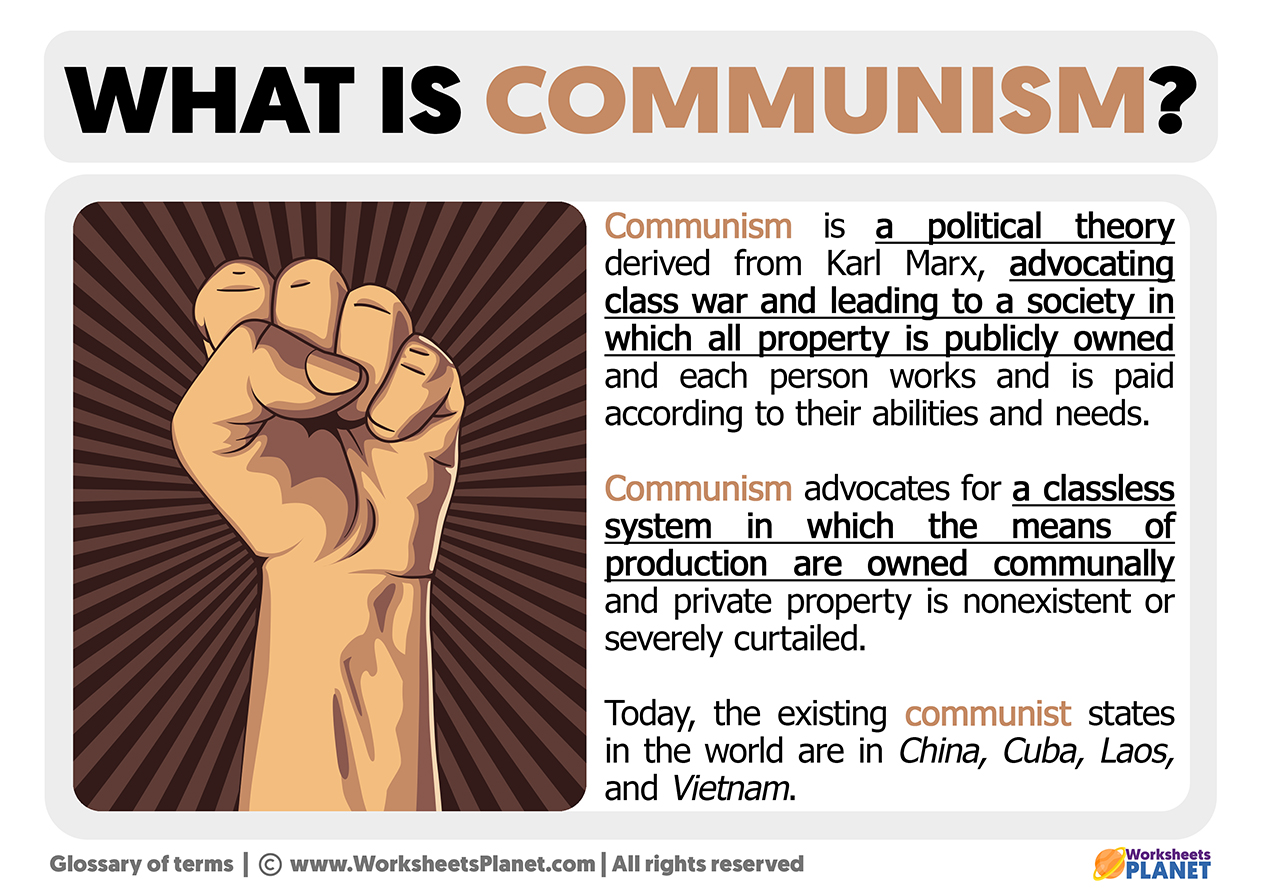
At its most basic, communism is a political and economic ideology that advocates for a classless society in which all property and wealth are communally owned and controlled. This vision, famously articulated by Karl Marx and Friedrich Engels in their Communist Manifesto, emerged as a critique of capitalism’s inherent inequalities and perceived exploitation of the working class. The ultimate goal of communism, in theory, is to create a society where the needs of all individuals are met, eliminating poverty, alienation, and the power imbalances inherent in private ownership.
From each according to his ability, to each according to his need.
This famous dictum encapsulates the ideal distribution system envisioned by communist theory. It suggests that individuals should contribute to society based on their capabilities, and in return, receive resources and support based on their genuine needs. This principle stands in stark contrast to capitalist models, where distribution is largely determined by market forces, individual purchasing power, and the ownership of capital.
The Abolition of Private Property
A cornerstone of communist ideology is the abolition of private property, particularly the means of production – factories, land, and machinery. Instead of private individuals or corporations owning these resources, they would be collectively owned by the community or the state, acting on behalf of the people. This aims to prevent the concentration of wealth and power in the hands of a few and to ensure that the benefits of production are shared by all.
The Dictatorship of the Proletariat
Marx and Engels posited that a transitional phase, often termed the “dictatorship of the proletariat,” would be necessary to overthrow the existing capitalist order and establish a communist society. This phase would involve the working class seizing political power and dismantling bourgeois institutions. Historically, this has often been interpreted and implemented as a single-party state, leading to authoritarian rule in practice.
The Withering Away of the State
Paradoxically, the ultimate aim of communism, according to Marx and Engels, is the eventual “withering away of the state.” Once a truly classless and equitable society is established, the need for coercive state apparatuses would diminish and eventually disappear, leaving behind a self-governing community. This theoretical endpoint stands in stark contrast to the historical reality of communist states, which often became highly centralized and powerful.
Historical Manifestations and Critiques of Communism
While the theoretical underpinnings of communism paint an idealistic picture of equality and shared prosperity, its historical implementations have been fraught with challenges and have often diverged significantly from the original vision. The 20th century witnessed the rise of several states that identified as communist, most notably the Soviet Union, China, and various Eastern European nations.
The Soviet Experiment and its Legacy
The establishment of the Soviet Union in 1917 marked the first major attempt to create a communist state. Under leaders like Lenin and Stalin, the Soviet Union implemented widespread nationalization of industries, collectivization of agriculture, and a centrally planned economy. While the Soviet Union achieved industrialization and played a significant role in global politics, its economic system was often characterized by inefficiency, shortages, and a lack of individual freedoms. The collapse of the Soviet Union in 1991 is often seen as a testament to the inherent difficulties of implementing a centrally planned communist economy on such a large scale.
China’s Path: From Revolution to Market Socialism
China’s communist revolution, led by Mao Zedong, resulted in the establishment of the People’s Republic of China in 1949. Similar to the Soviet Union, China initially pursued a path of centralized planning and collectivization. However, in recent decades, China has undergone significant economic reforms, embracing market mechanisms while maintaining the political dominance of the Communist Party. This hybrid model, often referred to as “socialism with Chinese characteristics” or “market socialism,” has led to unprecedented economic growth but also raises questions about the true adherence to communist principles.
Critiques and Challenges

Communism has faced numerous critiques throughout its history. A primary concern is the potential for authoritarianism and suppression of individual liberties. The historical concentration of power in the hands of a ruling party has often led to the curtailment of freedom of speech, assembly, and economic choice.
Economically, critics point to the inefficiencies and lack of innovation inherent in centrally planned economies. Without the price signals and competitive pressures of free markets, resource allocation can be suboptimal, leading to surpluses of some goods and shortages of others. The absence of profit motive and private ownership can also stifle entrepreneurial spirit and technological advancement.
Furthermore, the concept of “from each according to his ability, to each according to his need” has been debated regarding incentives and motivation. Critics argue that without the reward of private gain, individuals may lack the motivation to work diligently or to innovate. The practical implementation of determining and meeting everyone’s “needs” also presents a complex and potentially bureaucratic challenge.
Communism in the Context of Today’s Tech, Brand, and Money Landscapes
While the direct application of historical communist models may seem distant, the underlying principles and critiques of communism offer valuable perspectives on contemporary issues within Tech, Brand, and Money.
Tech: Open Source, Data Ownership, and Digital Commons
The realm of technology, particularly in its open-source movements, echoes some of the collaborative and shared principles of communism. Open-source software development, where code is freely available for anyone to use, modify, and distribute, embodies a spirit of communal contribution and shared access to intellectual property. This contrasts with proprietary software models where ownership and control are vested in a single entity.
Discussions around data ownership and privacy also touch upon communist-adjacent themes. As vast amounts of personal data are collected and utilized by tech giants, questions arise about who truly owns this data and how its benefits should be distributed. The concept of a “digital commons,” where data is managed and utilized for the collective good, is gaining traction, reflecting a desire for more equitable control over digital resources.
Furthermore, the development and deployment of AI tools raise concerns about the concentration of power and potential for exploitation. If AI development is solely controlled by a few powerful corporations, it could exacerbate existing inequalities. Conversely, a more open and collaborative approach to AI development, with a focus on ethical guidelines and public benefit, could be seen as a step towards a more equitable technological future.
Brand: Collective Identity, Social Responsibility, and Shared Value
In the world of branding and marketing, the idea of collective identity can be observed in community-driven brands or movements that foster a strong sense of belonging among their consumers. While not a communist ideal, it highlights the power of shared purpose and mutual identification.
Moreover, the growing emphasis on Corporate Social Responsibility (CSR) and Environmental, Social, and Governance (ESG) initiatives can be seen as a response to the perceived failures of unfettered capitalism to address societal needs. Companies are increasingly being held accountable for their impact beyond profit margins, reflecting a societal desire for businesses to contribute to the collective well-being, a notion loosely aligned with the communist aim of societal benefit.
The concept of brand reputation is also intrinsically linked to how a company is perceived by the wider community. A negative reputation, often stemming from perceived exploitation or unethical practices, can significantly impact its success, suggesting that even in a capitalist framework, public perception and a sense of shared societal values play a crucial role.
Money: Universal Basic Income, Decentralized Finance, and Financial Inclusion
The financial landscape is also fertile ground for exploring communist-influenced ideas, albeit in modern, often technologically enabled forms. The concept of Universal Basic Income (UBI), which proposes providing every citizen with a regular, unconditional sum of money, shares a lineage with the communist ideal of meeting everyone’s basic needs. While UBI is typically discussed within a capitalist framework as a means of poverty reduction and economic security, its underlying principle of universal provision resonates with communist aspirations for equitable distribution.
Decentralized Finance (DeFi), powered by blockchain technology, aims to create financial systems that are not controlled by central authorities like banks. This can be seen as a move towards a more distributed and potentially more equitable distribution of financial power and access, challenging traditional hierarchies.
Furthermore, the push for financial inclusion – ensuring that everyone has access to and can effectively use financial services – addresses the inequalities inherent in many monetary systems. By bringing marginalized populations into the formal financial system, it aims to create a more level playing field, echoing the communist desire to eliminate disparities.
Conclusion: Enduring Relevance in a Changing World
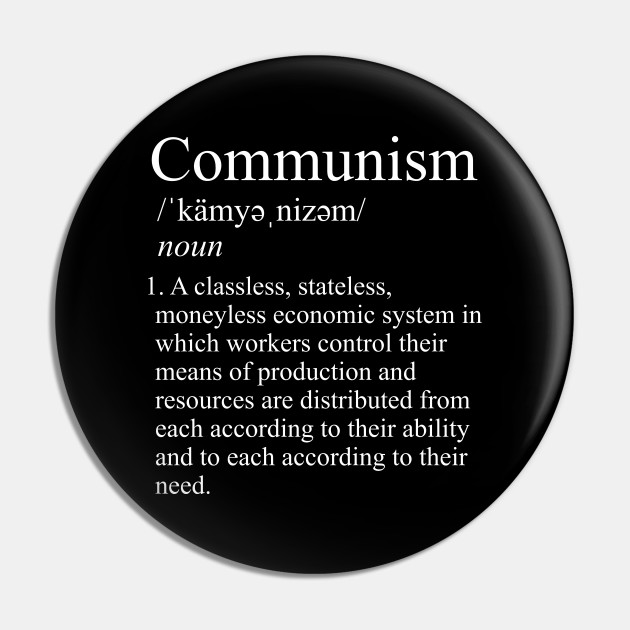
In conclusion, while the historical and political realities of communism are complex and often controversial, understanding its foundational definition – a classless society with communal ownership – offers valuable lenses through which to examine contemporary challenges and aspirations. The core principles of equitable distribution, collective well-being, and the critique of unchecked power resonate in discussions across Tech, Brand, and Money.
From the collaborative spirit of open-source development to the growing demand for corporate social responsibility, and the exploration of novel economic models like UBI, the ghost of communist ideals, in its pursuit of a more just and equitable society, continues to subtly influence and shape our modern world. While the direct implementation of historical communist states may be largely a thing of the past, the questions they raised about fairness, equality, and the distribution of resources remain profoundly relevant in navigating the complexities of the 21st century.
aViewFromTheCave is a participant in the Amazon Services LLC Associates Program, an affiliate advertising program designed to provide a means for sites to earn advertising fees by advertising and linking to Amazon.com. Amazon, the Amazon logo, AmazonSupply, and the AmazonSupply logo are trademarks of Amazon.com, Inc. or its affiliates. As an Amazon Associate we earn affiliate commissions from qualifying purchases.