
The phrase “Catch-22” has permeated our lexicon, often used to describe frustrating, illogical, or inescapable situations. But what does this enduring concept truly mean, and how does it resonate within the dynamic spheres of technology, branding, and finance? The novel by Joseph Heller, published in 1961, introduced us to a darkly comedic yet profoundly insightful exploration of bureaucracy, war, and the absurdities of human systems. While set during World War II, its core themes remain remarkably relevant, offering a lens through which to examine the complexities we face today in our digital lives, our professional identities, and our pursuit of financial well-being.

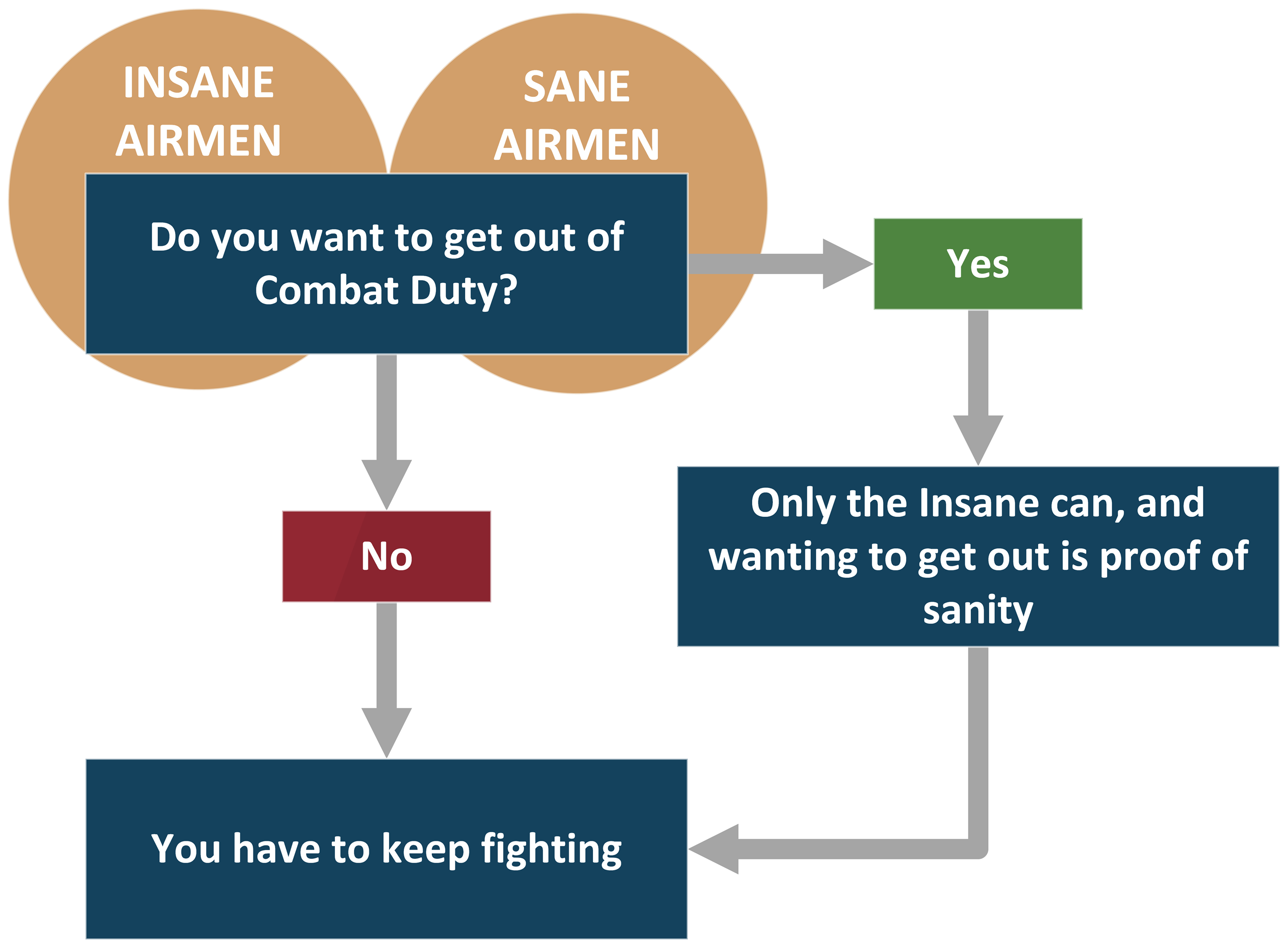
At its heart, Catch-22 is a military rule that states a pilot is considered insane if he willingly continues to fly dangerous combat missions, and therefore should be grounded. However, if a pilot requests to be grounded, it proves that he is sane, and therefore must continue flying. This circular logic, this inescapable trap, is the essence of the Catch-22. It’s a paradoxical situation where the only way to escape a predicament is to accept the very conditions that perpetuate it, leaving individuals trapped in a system of their own making, or more accurately, a system that has made them.
The novel’s brilliance lies in its unflinching portrayal of how systems, often created with the best intentions, can become so rigid and self-serving that they lose touch with reality and human welfare. This is a phenomenon we witness constantly in the modern world, especially within the fast-paced and ever-evolving landscapes of Tech, Brand, and Money.
The Digital Double Bind: Catch-22 in the Tech Landscape
The technology sector, characterized by its relentless innovation and disruption, is a fertile ground for Catch-22 scenarios. From the latest AI tools promising to revolutionize productivity to the ever-present concerns of digital security, we find ourselves navigating a complex web of interconnected dependencies and conflicting imperatives.
The AI Paradox: Efficiency vs. Efficacy
Consider the proliferation of Artificial Intelligence tools. On one hand, AI promises unprecedented levels of efficiency. We have AI-powered writing assistants that can churn out content in seconds, code generators that accelerate software development, and predictive analytics that can optimize business processes. The allure is undeniable: streamline workflows, reduce human error, and achieve more with less.
Yet, a subtle Catch-22 emerges. To truly leverage these AI tools effectively, one often needs a significant understanding of their underlying mechanisms, their limitations, and their potential biases. The more complex and powerful the AI, the more sophisticated the user needs to be. This creates a situation where those who need AI the most – perhaps individuals or small businesses lacking technical expertise – may struggle to utilize it optimally, while those who can use it effectively might already be operating at a high level of efficiency, thus benefiting from the tool in a less transformative way. The promise of universal empowerment through AI can, in practice, create a new digital divide, where access and understanding become the gating factors, turning a tool for liberation into another form of entrapment.
The Security Scramble: Protection vs. Accessibility
Digital security presents another classic Catch-22. The more robust the security measures implemented by software and apps, the more complex and often intrusive the user experience becomes. Multi-factor authentication, for instance, is a vital layer of protection against unauthorized access. However, the more factors required, and the more convoluted the verification process, the more friction it introduces for the legitimate user. This can lead to frustration, abandoned transactions, and a reluctance to adopt the very security measures designed to protect us.
Conversely, if security protocols are too lax or too easily bypassed, the system becomes vulnerable, leading to data breaches and identity theft. Users are then criticized for their lack of vigilance or blamed for falling victim to sophisticated cyberattacks. The Catch-22 here is that the very act of seeking greater security can inadvertently hinder usability and accessibility, while a focus on ease of use can compromise the very safety it’s meant to safeguard. We are caught between the need for impenetrable digital fortresses and the desire for seamless, intuitive online interactions.
The App Ecosystem: Innovation vs. Information Overload
The app marketplace is a testament to technological innovation, offering solutions for nearly every conceivable need. From productivity apps that organize our lives to niche software for specific hobbies, the variety is astounding. However, this abundance can quickly devolve into an overwhelming deluge of choices. Users face the Catch-22 of needing an app for every task, but then struggling to find the right app, manage multiple subscriptions, and keep up with updates and new releases. The sheer volume of options can paralyze decision-making, leading to a state of perpetual research and comparison, rather than actual utilization and productivity.
Building a Brand in a Paradoxical World
Brand strategy and personal branding are deeply intertwined with the concept of Catch-22. In an era where reputation is currency and perception is reality, navigating the creation and maintenance of a strong brand requires a delicate balancing act.
The Authenticity Audit: Being True vs. Being Marketable
Personal branding, in particular, often grapples with the Catch-22 of authenticity. The advice is consistent: be true to yourself. However, the act of “branding” oneself inherently involves curating and presenting a specific image to the public. This can lead to a situation where the pressure to be marketable and appealing conflicts with the desire to be genuinely authentic. If you present a perfectly polished, aspirational version of yourself, are you truly being authentic, or are you just creating a facade?
Conversely, if you are too raw and unfiltered, you might alienate potential followers, clients, or employers. The Catch-22 lies in the fact that the very act of trying to authentically represent yourself in a public sphere often necessitates a degree of conscious curation, creating a subtle disconnect. The ideal is to be both genuine and engaging, a challenging balance to strike consistently. Many individuals find themselves caught between projecting an image that resonates with their target audience and maintaining a core sense of self that feels true.
The Reputation Repercussion: Transparency vs. Control
Corporate identity and reputation management are also susceptible to Catch-22s. In today’s transparent digital age, consumers and stakeholders demand openness from brands. Companies are encouraged to be transparent about their practices, their supply chains, and their values. However, this transparency can be a double-edged sword.
If a company is completely transparent about its internal processes, it might inadvertently reveal vulnerabilities, expose proprietary information, or create opportunities for criticism. The Catch-22 is that the more open a company tries to be, the more susceptible it becomes to scrutiny and potential damage to its reputation. Conversely, if a company attempts to tightly control its narrative and maintain a carefully guarded image, it risks being perceived as opaque, untrustworthy, or even deceptive, which can be equally damaging. The modern brand is caught in a bind: striving for openness while simultaneously needing to protect its image and its bottom line.
The Marketing Maze: Reaching the Audience vs. Being Ignored
Marketing and design, while crucial for brand visibility, also present paradoxical challenges. The imperative is to reach a target audience effectively. However, the modern consumer is bombarded with marketing messages from every conceivable channel. This leads to the Catch-22 of needing to be pervasive enough to be noticed, but not so pervasive that you become intrusive and are actively ignored.
If a brand’s marketing is too subtle, it might not cut through the noise and fail to make an impact. If it’s too aggressive or ubiquitous, it risks alienating the very people it’s trying to reach, leading to ad fatigue and a negative perception. The optimal strategy lies in finding that elusive sweet spot, a challenge made more complex by constantly evolving consumer behaviors and the ever-increasing saturation of the marketplace. Brands are perpetually trying to be seen without being a nuisance, a subtle yet pervasive Catch-22 in the world of brand communication.
The Financial Tightrope: Navigating Money’s Inescapable Loops
Personal finance, investing, and business finance are perhaps the most tangible arenas where Catch-22s manifest in our daily lives. The pursuit of financial security and growth is often fraught with paradoxes that can leave individuals feeling stuck.
The Investing Enigma: Risk vs. Reward
The fundamental principle of investing is that higher returns typically come with higher risk. This creates a core Catch-22 for many individuals. To achieve significant wealth growth, one often needs to embrace risk. However, the fear of losing money, a very rational concern, can lead to a reluctance to invest or a preference for overly conservative strategies, which in turn limits the potential for substantial returns.
The individual trying to build wealth is caught between the desire for greater financial security and the inherent uncertainty that comes with investing. If you invest too aggressively, you risk significant losses. If you invest too conservatively, you risk stagnating financially and not keeping pace with inflation or your financial goals. The ideal of financial freedom often requires taking calculated risks, but the psychological barrier to doing so can be a powerful Catch-22.
The Debt Dilemma: Escaping Debt vs. Needing Credit
Personal finance often involves navigating the treacherous waters of debt. The goal is typically to escape debt, particularly high-interest debt like credit cards. However, to improve one’s financial standing, often an excellent credit score is required. And how does one build or maintain a good credit score? By using credit responsibly, which often means taking on some form of debt.
This creates a Catch-22: to escape debt, you need good credit, but to get good credit, you often need to engage in responsible debt management, which can involve having some debt. For individuals struggling to get out of debt, the inability to secure new loans or credit lines for beneficial purposes (like a mortgage for a home that could increase in value) can trap them in a cycle of limited financial options. Similarly, businesses seeking to secure funding for expansion might find themselves needing a strong financial history (which implies successful past financial management) to get the very loans that would enable that future success.
The Income Impossibility: Earning More vs. Needing Time and Skills
The pursuit of online income and side hustles is a modern testament to the desire for financial flexibility. However, even these avenues are not immune to Catch-22s. To earn more, one often needs to invest time and acquire new skills. But if one is already working a demanding job or dealing with significant financial pressures, the time and energy required to learn new skills or build a lucrative side hustle can be scarce.
The Catch-22 here is that the very financial necessity that drives the desire for extra income can make it incredibly difficult to acquire the means to achieve it. Individuals are caught between the aspiration for greater financial freedom and the immediate demands on their time and resources. The promise of easy online income often belies the reality that building a sustainable and profitable venture requires significant upfront investment in learning, time, and effort.

Conclusion: Embracing the Absurdity
Joseph Heller’s Catch-22 is more than just a novel; it’s a timeless commentary on the human condition and the systems we inhabit. While the novel’s setting of war might seem distant, its portrayal of illogical bureaucracy, circular reasoning, and the struggle against overwhelming systems resonates profoundly in our contemporary world.
In the realms of Tech, Brand, and Money, we are constantly encountering our own versions of Catch-22s. We strive for efficiency but get lost in complexity. We seek authenticity but feel compelled to curate. We desire security but fear risk. Understanding these paradoxical loops is the first step towards navigating them. It requires critical thinking, a willingness to question the prevailing logic, and a degree of resilience in the face of frustrating, seemingly inescapable situations. While we may not always be able to break free from every Catch-22, recognizing them allows us to approach them with a clearer understanding, a strategic mindset, and perhaps, a touch of that darkly comedic wisdom that makes Heller’s work endure.
aViewFromTheCave is a participant in the Amazon Services LLC Associates Program, an affiliate advertising program designed to provide a means for sites to earn advertising fees by advertising and linking to Amazon.com. Amazon, the Amazon logo, AmazonSupply, and the AmazonSupply logo are trademarks of Amazon.com, Inc. or its affiliates. As an Amazon Associate we earn affiliate commissions from qualifying purchases.