
In the realm of high-definition displays, precision photography, and immersive virtual reality, the term “astigmatism” has migrated from the optometrist’s office into the core vocabulary of optical engineering and digital hardware development. While most people recognize astigmatism as a common vision condition caused by an irregularly shaped cornea, in the technology sector, it refers to a specific type of optical aberration that can degrade image quality, limit the effectiveness of sensors, and break the immersion of wearable tech.
As we push the boundaries of what is possible with silicon and glass, understanding astigmatism is no longer just for doctors—it is a critical requirement for engineers, developers, and tech enthusiasts. From the lenses on a smartphone to the sophisticated laser systems used in fiber optics, managing this distortion is the key to achieving the “perfect” digital representation of reality.
The Physics of Astigmatism in Digital Imaging
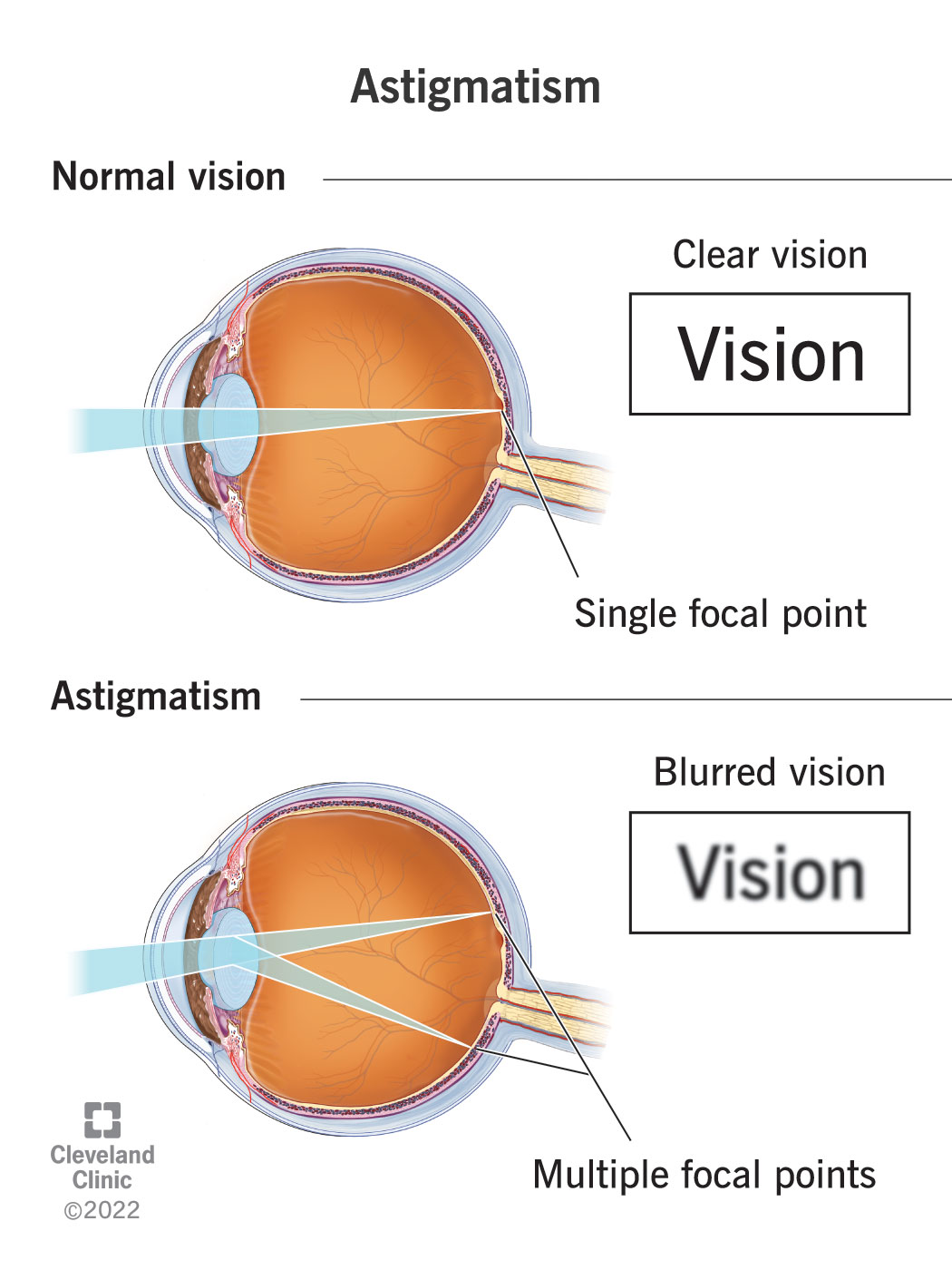
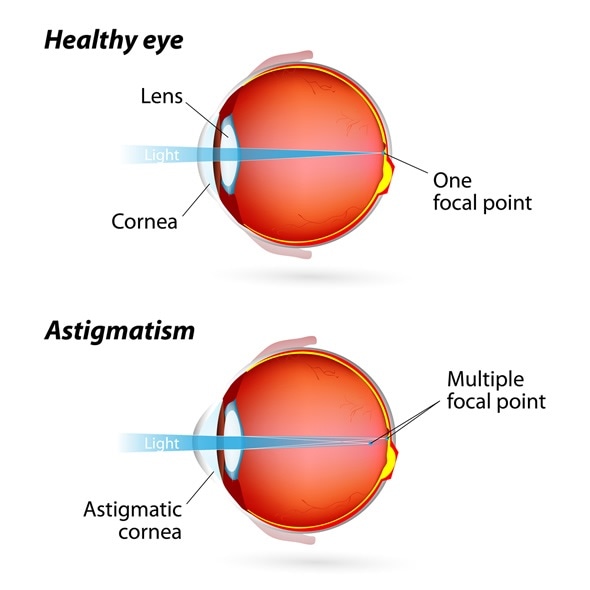
At its fundamental level, astigmatism in technology occurs when an optical system—such as a camera lens or a projector—fails to focus light rays from a single point into a single, sharp image on a sensor or screen. Instead of a point, the light is spread into a blurred line or an elliptical shape. This happens because the lens has different focal lengths in two perpendicular planes.
Defining Seidel Aberrations in Lens Design
In the field of optical design, astigmatism is classified as one of the five primary “Seidel aberrations.” When light enters a lens at an angle (off-axis), the vertical and horizontal components of the light wave may converge at different distances behind the lens. In a high-end DSLR or a smartphone camera, this manifests as “smearing” at the edges of the frame.
Engineers must account for this by utilizing complex lens elements. In the past, this meant adding more glass, which increased weight and cost. Today, sophisticated computer modeling allows for the creation of optical paths that cancel out these aberrations before the light ever hits the sensor. However, as sensors become more dense with pixels, even the slightest hint of astigmatism becomes glaringly obvious, necessitating a constant arms race between glass quality and sensor resolution.
The Impact of Image Blur on High-Resolution Sensors
Modern image sensors, such as the 200-megapixel units found in flagship smartphones, require an incredible level of optical precision. If a lens suffers from astigmatism, the “circle of confusion” (the area where a point of light is focused) becomes distorted. This results in a loss of fine detail that no amount of digital sharpening can fully recover.
For tech professionals in the field of computer vision and autonomous driving, this distortion is more than an aesthetic issue. If an AI-powered camera on a self-driving car experiences astigmatism at the periphery of its vision, it might misidentify a distant object or fail to read a road sign accurately. Precision in hardware is the foundation upon which the accuracy of software is built.
Correcting Astigmatism in Hardware and Software
To combat the physical limitations of light, the tech industry employs a two-pronged strategy: advanced hardware engineering and sophisticated computational photography. The goal is to produce a “flat field” where every pixel from the center to the corner is equally sharp.
Aspherical Lenses and Advanced Optical Coatings
The most effective way to eliminate astigmatism at the source is through the use of aspherical lens elements. Unlike traditional spherical lenses, which have a constant curvature, aspherical lenses have complex surfaces that change shape across the glass. This allows the lens to redirect light rays more accurately, ensuring they all meet at a singular focal point regardless of the angle at which they enter.
Furthermore, the tech industry has seen a massive leap in thin-film coatings. These microscopic layers applied to the lens surfaces help manage light transmission and reduce internal reflections that can exacerbate the appearance of aberrations. In high-end gadgets like the latest mirrorless cameras or professional-grade drones, these hardware interventions are the “silent heroes” that allow for ultra-slim designs without sacrificing image clarity.
Digital Post-Processing and Computational Photography
When hardware reaches its physical limit, software takes over. This is particularly evident in the smartphone industry. Because phones are too thin to house the massive glass elements required for perfect optics, they rely on “computational photography.”
Modern Image Signal Processors (ISPs) are programmed with “lens profiles.” These profiles are digital maps of a specific camera’s optical flaws, including its astigmatism patterns. When you take a photo, the phone’s AI instantly analyzes the image and applies a reverse distortion to correct the blur. By identifying the directional smear caused by astigmatism, algorithms can re-align the pixels to simulate a much higher-quality lens than what is physically present in the device.
Astigmatism in Modern VR and AR Hardware
The most challenging frontier for optical engineers today is the development of Virtual Reality (VR) and Augmented Reality (AR) headsets. In these devices, the lenses are positioned inches away from the user’s eyes, making any optical defect, especially astigmatism, instantly noticeable and physically uncomfortable.
The Challenge of Fresnel Lenses in Headsets
To keep headsets lightweight, many manufacturers use Fresnel lenses—lenses that are essentially “flattened” using a series of concentric grooves. While efficient, Fresnel lenses are notorious for producing optical artifacts, including “god rays” and astigmatism-like blurring.
When a user moves their eyes to look at the edge of the virtual display, the light passes through the lens at an extreme angle. If the hardware does not account for astigmatism, the text becomes unreadable, and the world looks warped. This distortion is one of the primary causes of “sim sickness,” as the brain struggles to reconcile the blurred visual input with the movement of the head. To solve this, companies like Meta and Apple are investing heavily in “pancake optics,” which use multiple lens layers to fold the light path and eliminate these distortions in a much smaller form factor.
Eye-Tracking and Dynamic Distortion Correction
The next generation of tech involves “foveated rendering” paired with active optical correction. By using internal cameras to track exactly where a user is looking, a VR headset can dynamically adjust the digital image to compensate for the specific aberrations of the lens at that exact angle.
If the system knows the user is looking through a portion of the lens where astigmatism is most prevalent, it can pre-distort the image in the opposite direction in real-time. This synergy between hardware tracking and software rendering represents the peak of modern optical tech, providing a clear view that feels natural to the human eye.
The Future of Precision: AI-Driven Optical Correction
As we look toward the future, the definition of astigmatism in tech is shifting from a problem to be “fixed” to a variable to be “managed” by artificial intelligence. We are entering an era where the lens and the processor are no longer separate entities but a unified system.
Machine Learning Models for Deblurring
The future of digital security, satellite imaging, and medical tech lies in neural networks trained to recognize specific patterns of optical failure. AI models are now being developed that can “deconvolve” an image—essentially reversing the physics of a blurred lens. By feeding a machine learning model millions of examples of sharp vs. astigmatic images, researchers can create software that “guesses” the missing data with startling accuracy. This allows for high-quality imaging in environments where perfect lenses are impossible to deploy, such as in deep-space telescopes or microscopic medical sensors.

The Evolution of Nano-Optics and Metalenses
Perhaps the most exciting tech trend on the horizon is the move away from traditional glass entirely. “Metalenses” are flat surfaces covered in nanostructures smaller than a wavelength of light. These structures can be engineered to manipulate light in ways that were previously thought impossible, including the total elimination of astigmatism in a lens no thicker than a human hair.
These nano-optical systems could revolutionize everything from smart glasses to the sensors on our smartphones. By eliminating the physical bulk required to correct aberrations, technology will become more invisible, more integrated, and more precise than ever before.
In conclusion, while astigmatism began as a biological concept, its role in the tech world is a testament to our obsession with clarity and precision. Whether it is through the grind of a high-precision aspherical lens, the complex calculations of a mobile ISP, or the cutting-edge world of metalenses, the tech industry’s battle against optical distortion is what allows us to see the digital world with perfect 20/20 vision.
aViewFromTheCave is a participant in the Amazon Services LLC Associates Program, an affiliate advertising program designed to provide a means for sites to earn advertising fees by advertising and linking to Amazon.com. Amazon, the Amazon logo, AmazonSupply, and the AmazonSupply logo are trademarks of Amazon.com, Inc. or its affiliates. As an Amazon Associate we earn affiliate commissions from qualifying purchases.