
The term “nervous system” often conjures images of intricate biological networks, a marvel of natural engineering that governs every thought, feeling, and action. But what if we looked at it through the lens of the digital age? What if we considered the nervous system as the ultimate biological technology, a sophisticated network that processes information, executes commands, and adapts with unparalleled efficiency? This is precisely the perspective we’ll explore as we delve into the fascinating world of the nervous system, drawing parallels to the technological advancements that shape our modern lives.

Just as a complex software system relies on hardware components, and a successful brand hinges on robust infrastructure, the nervous system is a symphony of specialized cells and intricate pathways working in concert. It’s the body’s central command center, its internal communication highway, and its learning engine, all rolled into one. Without it, life as we know it would be impossible.
The Hardware of Thought: Neurons and Their Networks
At the core of the nervous system are the neurons, the fundamental building blocks responsible for transmitting information. Think of neurons as the microscopic microprocessors of your body. These specialized cells are designed to receive, process, and transmit electrochemical signals. Each neuron consists of a cell body (soma), dendrites (branching extensions that receive signals), and an axon (a long projection that transmits signals to other neurons or target cells).
The sheer scale and interconnectedness of these neural networks are breathtaking. A single human brain contains an estimated 86 billion neurons, each capable of forming thousands of connections (synapses) with other neurons. This creates a network of trillions of connections, far surpassing the complexity of any artificial intelligence network we’ve managed to build to date.
These connections, the synapses, are where the magic of communication happens. When a neuron is activated, it sends an electrical impulse down its axon. At the end of the axon, this electrical signal triggers the release of chemical messengers called neurotransmitters into the synaptic cleft, the small gap between neurons. These neurotransmitters then bind to receptors on the dendrites of the next neuron, either exciting or inhibiting its activity.
The way these neurons and synapses are organized forms the basis of everything we experience. From the simple reflex of pulling your hand away from a hot surface to the complex cognitive processes involved in strategic planning or artistic creation, it all originates from the intricate dance of electrical and chemical signals within these neural networks.
Analogy to Technology: Consider the analogy of a vast computer network. Neurons are like individual computer terminals or servers, each with its processing power. Dendrites are the input ports, axons are the output cables, and synapses are the network connections where data is exchanged. The speed and efficiency of this biological network, particularly the ability of neurotransmitters to quickly transmit signals across the synaptic cleft, are a testament to nature’s design.
The Central Command and the Peripheral Network: A Hierarchical Structure
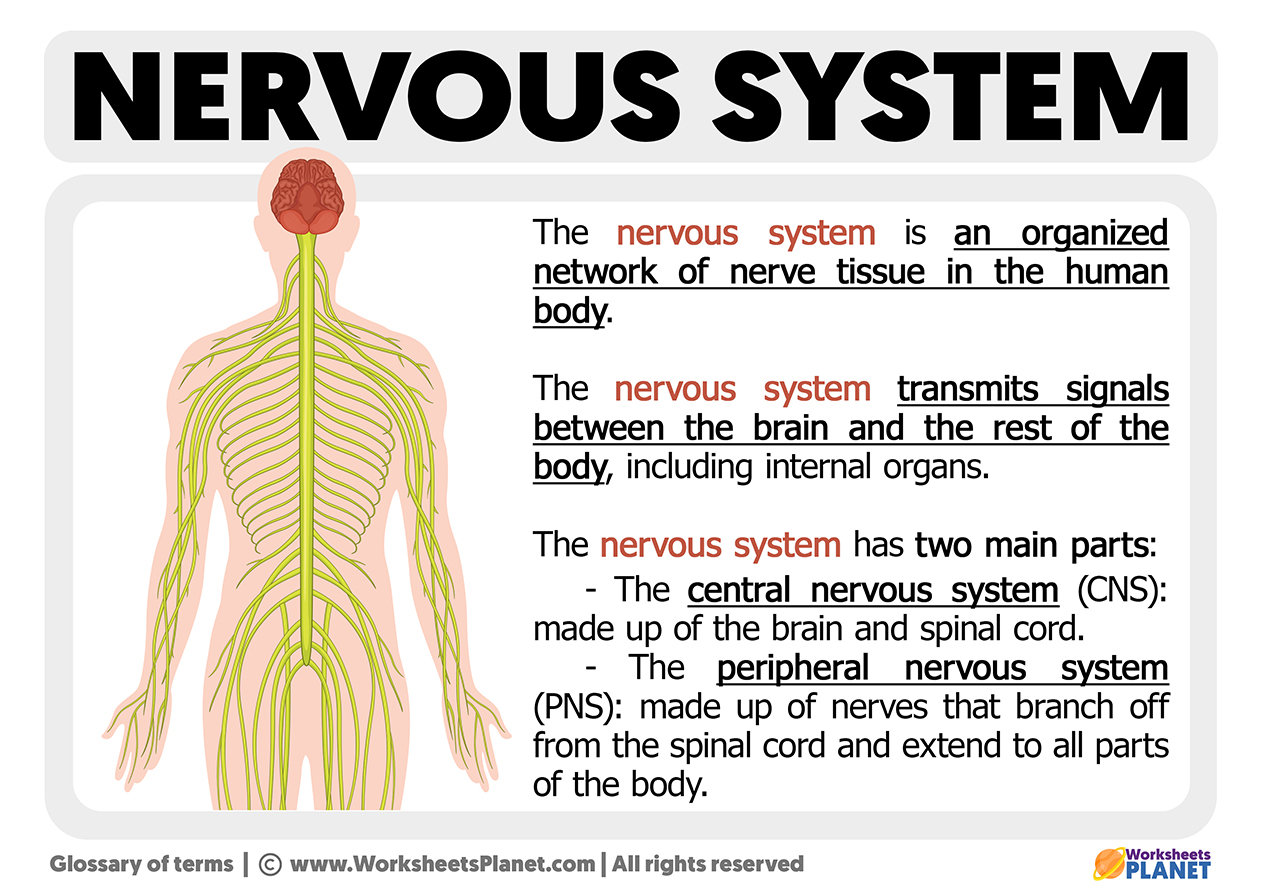
The nervous system is broadly divided into two main parts: the Central Nervous System (CNS) and the Peripheral Nervous System (PNS). This division mirrors the organizational structures found in sophisticated technological systems, with a central processing unit and a network of sensors and actuators.
The Central Nervous System: The Brain and Spinal Cord
The Central Nervous System (CNS) comprises the brain and the spinal cord. It’s the ultimate processing and control center.
-
The Brain: Often referred to as the “hardware” of consciousness, the brain is responsible for higher-level functions like thought, memory, emotion, learning, and voluntary movement. It’s a marvel of parallel processing, with different regions specialized for distinct tasks:
- The cerebrum is the largest part, responsible for complex cognitive functions.
- The cerebellum coordinates movement and balance.
- The brainstem controls vital autonomic functions like breathing, heart rate, and sleep-wake cycles.
-
The Spinal Cord: This long, cord-like structure extends from the brainstem down through the vertebral column. It acts as the primary communication pathway between the brain and the rest of the body. It also plays a crucial role in processing reflexes, allowing for rapid responses to stimuli without direct input from the brain, much like a pre-programmed macro or shortcut in software.
Analogy to Technology: The CNS is akin to the powerful central server of a large corporation or a cloud computing infrastructure. The brain is the main server, housing the core operating system and critical applications, while the spinal cord is the primary network backbone, ensuring seamless data flow.
The Peripheral Nervous System: The Body’s Information Superhighway

The Peripheral Nervous System (PNS) consists of all the nerves that extend outside the CNS, connecting it to the rest of the body. It’s the vast network of sensors and effectors that gather information from the environment and relay commands to muscles and glands. The PNS is further divided into:
-
The Somatic Nervous System: This voluntary division controls skeletal muscles, allowing us to consciously move our limbs and interact with our environment. Think of it as the interface through which our conscious decisions are executed.
-
The Autonomic Nervous System (ANS): This involuntary division regulates essential bodily functions that we don’t consciously control, such as heart rate, digestion, respiration, and glandular secretions. It operates largely behind the scenes, much like background processes in a computer. The ANS itself has two opposing branches:
- The Sympathetic Nervous System: This is the “fight-or-flight” response system. When faced with stress or danger, it mobilizes the body for action, increasing heart rate, blood pressure, and energy availability. It’s the body’s emergency protocol.
- The Parasympathetic Nervous System: This is the “rest-and-digest” system. It conserves energy and promotes relaxation, slowing heart rate, stimulating digestion, and reducing blood pressure. It’s the system that brings the body back to a baseline state.
Analogy to Technology: The PNS can be compared to the network of sensors, input devices (like keyboards and mice), and output devices (like printers and speakers) connected to a central computer. The somatic nervous system is like the input/output devices you directly interact with, while the autonomic nervous system is like the background services and sensors that monitor and manage system resources automatically. The sympathetic and parasympathetic divisions are like different operating modes, such as “high performance” and “power saving.”
The Nervous System as a Learning and Adaptive System: Building and Rebuilding Connections
One of the most remarkable aspects of the nervous system is its ability to learn and adapt. This phenomenon, known as neuroplasticity, allows the brain to reorganize itself by forming new neural connections throughout life. This is a core principle in how we acquire new skills, form memories, and recover from brain injuries.
When we learn something new, such as playing a musical instrument or mastering a new software program, the neural pathways involved in that activity become strengthened. Repeated practice and reinforcement lead to more efficient communication between neurons, making the skill feel more automatic and effortless over time. This is akin to how software is optimized through updates and patches, or how a brand evolves its messaging based on consumer feedback.
Analogy to Technology and Brand Building:
-
Software Updates and Learning Algorithms: Neuroplasticity is like the continuous learning and adaptation capabilities of modern AI algorithms. Just as an AI can be retrained with new data to improve its performance, our brains can be rewired through experience. Think of it like downloading a software update that enhances functionality or learning a new programming language that opens up new possibilities.
-
Brand Evolution and Customer Experience: In the realm of Brand strategy, understanding and adapting to customer needs is paramount. Similarly, the nervous system constantly adapts to its environment. Just as a successful brand listens to its audience and refines its product or message, the nervous system refines its internal communication pathways based on sensory input and experience. A strong personal brand is built on consistent, reinforced actions and a clear identity, much like strong neural pathways are built through repeated stimulation.
-
Investment in Skills and Financial Growth: From a Money perspective, investing in skills and knowledge is akin to strengthening neural pathways. The more you learn and practice a skill, the more valuable it becomes, potentially leading to new income streams or career advancements. This is a direct parallel to how investing in financial markets, with consistent contributions and informed decisions, can lead to significant long-term growth. The “return on investment” in our own neural development is often immeasurable.
The Nervous System’s Role in Digital Security and Productivity
While the nervous system is a biological marvel, its underlying principles have profound implications for the digital world.
-
Digital Security: The concept of Digital Security often involves building robust defenses to protect sensitive information. The nervous system, in its own way, has built-in security mechanisms. For instance, the brain filters out irrelevant sensory information, focusing only on what is important, a form of biological firewall. Understanding how the brain processes threats and makes decisions can inform the design of more intuitive and secure digital systems. Furthermore, our own attentiveness, a function of our nervous system, is a key defense against social engineering attacks.
-
Productivity: Enhancing Productivity in the digital realm often involves optimizing workflows, leveraging efficient tools, and minimizing distractions. The nervous system’s ability to focus, prioritize, and automate tasks is a powerful model for this. Techniques like mindfulness and focused work sessions, which train our brains to concentrate, are essentially leveraging our nervous system’s innate capabilities for peak performance. The efficiency of information processing in the nervous system – transmitting signals rapidly and making complex decisions in milliseconds – is the ultimate benchmark for digital productivity.
Conclusion: The Biological Blueprint for Innovation
The nervous system, far from being just a biological curiosity, serves as a fundamental blueprint for understanding information processing, communication networks, and adaptive learning – concepts that are central to our technological advancements and the strategies that drive brands and financial success. By appreciating its intricate design and remarkable capabilities, we gain not only a deeper understanding of ourselves but also invaluable insights into how to build more intelligent, efficient, and adaptable systems in the digital age. Whether we’re developing cutting-edge AI, crafting compelling brand narratives, or managing our personal finances, the principles of the nervous system offer a powerful and enduring source of inspiration. It is, in essence, the ultimate biological technology, a constant reminder of the extraordinary potential that lies within complex, interconnected systems.
aViewFromTheCave is a participant in the Amazon Services LLC Associates Program, an affiliate advertising program designed to provide a means for sites to earn advertising fees by advertising and linking to Amazon.com. Amazon, the Amazon logo, AmazonSupply, and the AmazonSupply logo are trademarks of Amazon.com, Inc. or its affiliates. As an Amazon Associate we earn affiliate commissions from qualifying purchases.