
In the landscape of personal finance, few skills are as deceptively simple yet fundamentally impactful as understanding how to calculate and leverage “percentages off.” While it may seem like a basic arithmetic task relegated to middle school classrooms, the ability to fluently navigate discounts, interest rate reductions, and price fluctuations is a cornerstone of financial literacy. Whether you are navigating a seasonal clearance sale, negotiating a lower interest rate on a credit card, or analyzing a dip in the stock market, mastering the “percentage off” calculation allows you to make data-driven decisions that protect your capital and accelerate your path to wealth.

The Fundamentals of Percentage Calculations in Personal Finance
To effectively manage your money, you must move beyond a reliance on calculator apps and develop an intuitive understanding of how percentages interact with your balance sheet. At its core, calculating a “percentage off” is the process of determining the reduction in value of an asset or a liability.
The Mental Math Shortcut: The 10% Rule
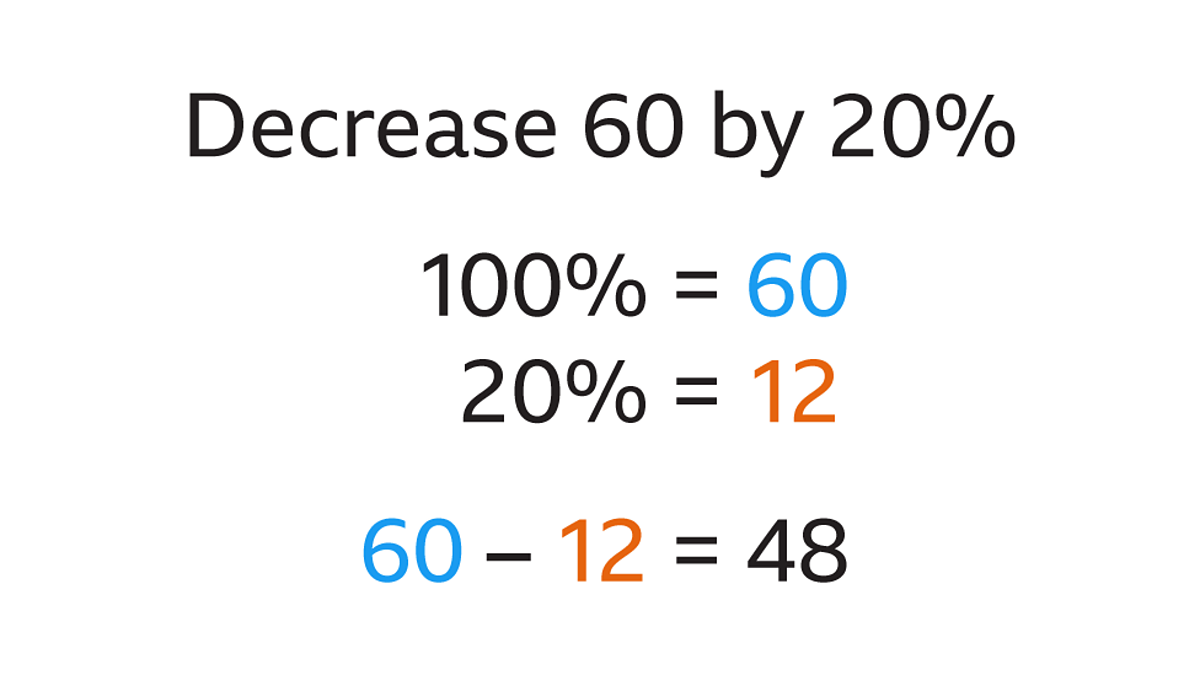
The most efficient way to calculate discounts on the fly is the “10% Rule.” Since our monetary system is base-10, finding 10% of any number is as simple as moving the decimal point one place to the left. For example, 10% of $150.00 is $15.00.
Once you have this baseline, you can calculate almost any common discount:
- To find 20% off: Double the 10% figure ($15.00 x 2 = $30.00).
- To find 5% off: Halve the 10% figure ($15.00 / 2 = $7.50).
- To find 15% off: Add the 10% and the 5% figures together ($15.00 + $7.50 = $22.50).
Mastering this mental shortcut ensures that you are never caught off guard by “limited time” offers. It allows you to immediately quantify the value of a deal, helping you decide if the purchase aligns with your financial goals before the psychological pressure of marketing takes hold.
Using Financial Tools for Precise Calculations
While mental math is excellent for quick decisions, precision is required when dealing with larger financial instruments like mortgage points or investment drawdowns. The standard formula for a percentage reduction is:
Price × (Percentage / 100) = Discount Amount.
Original Price – Discount Amount = Final Price.
Alternatively, you can use the subtraction method for a one-step calculation:
Original Price × (1 – Discount Rate) = Final Price.
For instance, if a high-end laptop costing $2,000 is 15% off, you multiply $2,000 by 0.85 (which is 1 – 0.15) to get the final price of $1,700. Utilizing financial calculators or spreadsheet software like Excel and Google Sheets allows you to model these percentages across multiple variables, such as comparing different loan offers or evaluating the impact of management fees on a retirement portfolio.
Strategic Shopping: Beyond the Initial Discount
In the context of personal finance, a “percentage off” is only a win if it results in a net gain for your net worth. Consumers often fall into the trap of believing they are “saving” money when they are, in fact, spending money they hadn’t planned to. To truly master percentages in the marketplace, one must look at the “real” final price.
Calculating the Opportunity Cost
Every dollar spent—even at a 50% discount—carries an opportunity cost. This is the value of the next best alternative use of that money. If you buy a pair of designer shoes for $200 (originally $400), you haven’t “saved” $200; you have “spent” $200.
From a wealth-building perspective, if that $200 were instead placed into an index fund with an average annual return of 7%, it would be worth approximately $774 in twenty years. When you look at “percentages off” through the lens of opportunity cost, the calculation shifts from a simple subtraction problem to a long-term investment decision. Ask yourself: Is the utility of this discounted item worth the percentage of future wealth I am sacrificing?
Sales Tax and the “Real” Final Price
One of the most common mistakes in budgeting for discounts is forgetting that percentages are often applied sequentially, not cumulatively. If an item is 20% off and your local sales tax is 8%, the final price is not simply 12% off the original.

Sales tax is usually calculated on the discounted price. For a $100 item:
- $100 – 20% = $80.
- $80 + 8% tax ($6.40) = $86.40.
Understanding how these percentages stack is vital for precise cash flow management. It prevents the “register shock” that occurs when a seemingly great deal ends up being higher than anticipated due to taxes, shipping fees, or service charges that are calculated after the percentage off has been applied.
Applying Percentage Reductions to Debt and Savings
While retail discounts are the most visible form of “percentages off,” applying this logic to your debt and savings is where the real financial transformation happens. A small percentage reduction in an expense or an interest rate can compound into thousands of dollars of extra wealth over time.
The Impact of Interest Rate Reductions
In the world of money, interest is the price you pay for using someone else’s capital. Getting a “percentage off” your interest rate is one of the most effective ways to increase your discretionary income.
Consider a $30,000 auto loan at 7% interest over five years. If you can refinance that loan or negotiate a rate that is 2% lower (bringing it to 5%), your monthly payment drops, but more importantly, your total interest paid over the life of the loan decreases significantly. On a larger scale, such as a 30-year mortgage, a 1% reduction in the interest rate can save a homeowner upwards of $100,000 in interest payments. This is the ultimate “percentage off” deal because it reduces a recurring cost without requiring a change in lifestyle.
The Power of Percentage-Based Budgeting
Rather than budgeting with fixed dollar amounts, which can feel restrictive and fail to scale as your income grows, financial experts often recommend percentage-based budgeting. The most famous of these is the 50/30/20 rule:
- 50% of income to Needs (housing, utilities, groceries).
- 30% of income to Wants (entertainment, dining out, hobbies).
- 20% of income to Savings and Debt Repayment.
When you learn to view your finances in percentages, you become more resilient to inflation and lifestyle creep. If you get a raise, the “20% to savings” automatically increases in dollar value. Conversely, if you need to cut costs, you can look for “percentages off” your fixed expenses—such as negotiating a 10% discount on your insurance premiums or reducing your utility usage by 15%—to maintain your savings ratio.
Avoiding the “Discount Trap” for Long-term Wealth
The psychology of “percentages off” is often used by marketers to trigger a fear of missing out (FOMO). From a financial standpoint, maintaining discipline during sale seasons is critical to long-term wealth preservation.
Needs vs. Wants in a Sale Season
A discount is only a financial benefit if it is applied to a “Need” or a “Planned Want.” If you were already planning to spend $1,000 on a necessary home repair and you find a way to get 20% off the materials, you have successfully optimized your capital. However, if you buy a $500 television just because it is 40% off, you have experienced a $300 outflow of capital that was not in your financial plan.
To avoid the discount trap, practice the “Wait Rule.” For any item on sale, wait 24 to 48 hours. During this time, calculate the “percentage off” and then compare it to your current financial goals. Often, the desire to “save” disappears once the immediate thrill of the percentage reduction fades, leaving you with more money in your brokerage account.
Tracking Annualized Savings
To turn the habit of seeking “percentages off” into a professional financial strategy, start tracking your annualized savings. If you negotiate a 15% discount on a monthly subscription service that costs $100, you aren’t just saving $15 today; you are saving $180 a year.
By aggregating these small percentage wins across your entire financial life—from grocery coupons to credit card APR negotiations—you can create a significant “yield” on your management of money. Professional investors look for a 7-10% return on their capital annually; by consistently finding “percentages off” your cost of living, you are essentially creating a guaranteed return on your income that is immune to market volatility.
In conclusion, knowing “how to do percentages off” is far more than a simple math trick. It is a fundamental tool for wealth management. By mastering the mental calculations, understanding the strategic implications of discounts, and applying percentage reductions to debt and budgeting, you transform from a passive consumer into an active manager of your financial future. In the game of money, every percentage point counts, and the ability to calculate those points accurately is the first step toward lasting financial independence.
aViewFromTheCave is a participant in the Amazon Services LLC Associates Program, an affiliate advertising program designed to provide a means for sites to earn advertising fees by advertising and linking to Amazon.com. Amazon, the Amazon logo, AmazonSupply, and the AmazonSupply logo are trademarks of Amazon.com, Inc. or its affiliates. As an Amazon Associate we earn affiliate commissions from qualifying purchases.