
The dissolution of Yugoslavia in the early 1990s was a seismic event, not just for the Balkan region but for the global geopolitical landscape. What was once a unified, multi-ethnic socialist federal republic, led by the charismatic Josip Broz Tito, fractured into several independent nation-states. The question, “What did Yugoslavia become?” is therefore not about a single entity, but rather a complex tapestry of new countries, each grappling with its own unique legacy, economic transition, and path towards integration into the wider European and global order. While the initial implosion was marked by tragic conflict, the subsequent decades have seen these successor states navigate a period of profound transformation, influenced by technological advancements, evolving brand identities, and the perennial pursuit of economic prosperity.

The Echoes of a Dissolved State: New Nations, Old Legacies
The immediate aftermath of Yugoslavia’s collapse was defined by the painful birth of new sovereign states. The breakup was not a peaceful separation but a violent unravelling, fueled by simmering ethnic tensions, nationalist aspirations, and external influences. This led to a series of brutal wars that scarred the region and left a deep and lasting impact on the collective memory of its people.
The Birth of the Successor States
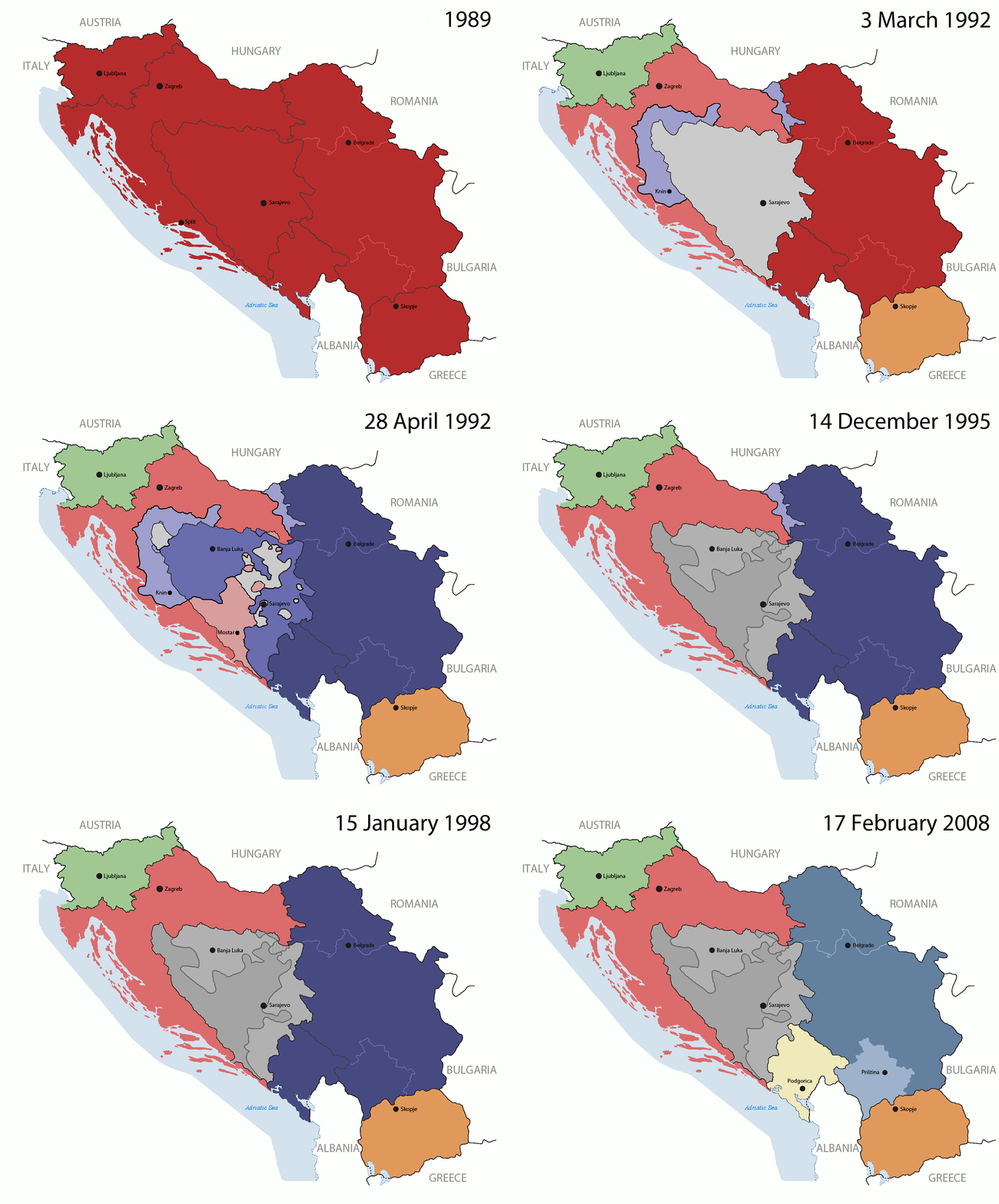
The federal republic of Yugoslavia was composed of six constituent republics: Slovenia, Croatia, Bosnia and Herzegovina, Serbia, Montenegro, and North Macedonia (which at the time was known as the Socialist Republic of Macedonia). The dissolution process, however, was not uniform.
- Slovenia and Croatia: These two republics were the first to declare independence in 1991, triggering immediate armed conflict, particularly in Croatia. Slovenia’s war of independence was relatively brief, allowing it to quickly establish its sovereignty. Croatia’s path was more protracted and bloody, culminating in significant territorial changes and immense human cost.
- Bosnia and Herzegovina: The declaration of independence by Bosnia and Herzegovina in 1992 plunged the country into a devastating civil war that lasted until 1995. This conflict was characterized by ethnic cleansing and widespread atrocities, resulting in hundreds of thousands of deaths and millions displaced. The Dayton Agreement, brokered in late 1995, brought an end to the war but left the country with a complex and deeply fractured political structure.
- Serbia and Montenegro: Initially forming the Federal Republic of Yugoslavia (FRY) in 1992, these two entities continued to bear the brunt of international sanctions and isolation, particularly under Slobodan Milošević’s leadership. Montenegro eventually declared independence in 2006, leaving Serbia as the successor state to the FRY, inheriting its complex geopolitical position and economic challenges.
- North Macedonia: Declared independence peacefully in 1991. While not involved in the major conflicts, the country faced its own internal challenges and external naming disputes, particularly with Greece over the use of the name “Macedonia.”
The emergence of these new states meant that the question of “What did Yugoslavia become?” transformed into a series of distinct inquiries about the trajectory of each individual nation. Their paths forward were shaped by their historical narratives, their economic foundations, and their aspirations for the future.
Navigating the Digital Frontier: Technology’s Role in Modern Balkan Identity
The world has been irrevocably transformed by technology since the fall of Yugoslavia. For the successor states, embracing these advancements has been crucial in rebuilding their economies, fostering innovation, and connecting with the global community. The influence of tech trends, AI tools, software development, and the ubiquitous presence of apps and gadgets has become a defining characteristic of their modern identities.
Embracing Digital Transformation and Innovation
In the post-Yugoslav era, many of these nations recognized that their future prosperity lay in harnessing the power of the digital revolution. This has manifested in several key areas:
- Software Development and IT Services: Countries like Serbia and Croatia have emerged as significant hubs for software development and IT outsourcing. Talented engineers and developers, often educated in the socialist era’s strong technical traditions, have found global opportunities. The availability of skilled labor, coupled with competitive operating costs, has attracted international investment and fostered the growth of local tech companies. These firms are not just building custom software; they are increasingly developing their own innovative AI tools and applications for diverse sectors, from fintech to healthcare.
- Startup Ecosystems and Digital Entrepreneurship: Across the region, a burgeoning startup scene is taking root. Incubators, accelerators, and venture capital funds are supporting young entrepreneurs who are leveraging technology to solve local problems and create global solutions. This entrepreneurial spirit is vital for job creation and for fostering a culture of innovation that can compete on the international stage. Think of the rise of mobile apps for local tourism, e-commerce platforms connecting small businesses to wider markets, or even AI-driven solutions for optimizing agricultural yields.
- Digital Security and Privacy: As societies become more digitized, the importance of digital security and data privacy grows. Governments and businesses in the former Yugoslav republics are increasingly investing in cybersecurity measures, recognizing the threats posed by cybercrime and espionage. Educating the public about digital security best practices, promoting the use of secure software, and developing robust data protection frameworks are all ongoing priorities.
- Productivity and Efficiency: The integration of productivity tools, from cloud-based collaboration platforms to advanced project management software, has become essential for businesses and public institutions alike. These technologies are helping to streamline operations, enhance efficiency, and improve the overall functioning of economies and governance. The adoption of digital tools is not merely about adopting new gadgets; it’s about fundamentally rethinking how work is done and how services are delivered in a rapidly evolving world.
The technological landscape in the former Yugoslavia is not a monolithic entity. Each country is charting its own course, but the overarching trend is one of enthusiastic adoption and a growing recognition of technology as a fundamental driver of progress and national development.
Crafting New Narratives: Brand Building in the Post-Yugoslav Landscape
The collapse of Yugoslavia also necessitated a profound re-evaluation of national and corporate identities. The old, unifying narrative of Yugoslavism was replaced by a multitude of emerging national narratives, each seeking to define its own unique brand. This process has extended beyond national identity to encompass the branding strategies of individual companies and even personal branding for professionals.
Reimagining National and Corporate Identities
The creation and promotion of distinct national brands have been crucial for these newly independent nations in establishing their place on the global stage. This involves more than just flags and anthems; it encompasses how they are perceived economically, culturally, and politically.
- National Branding and Tourism: Countries are actively working to cultivate specific brand images to attract foreign investment and tourism. Slovenia, for instance, has positioned itself as a green, sustainable destination with a focus on outdoor activities and a high quality of life. Croatia has successfully leveraged its stunning coastline and historical cities to become a major tourist hotspot. Serbia has been working to redefine its image beyond the conflicts of the 1990s, highlighting its vibrant cultural scene and burgeoning tech industry. These efforts involve sophisticated marketing campaigns, investment in cultural heritage, and the development of compelling narratives that resonate with international audiences.
- Corporate Identity and Market Positioning: Businesses operating in the post-Yugoslav space have had to forge new corporate identities, often shedding the vestiges of state-owned enterprises and embracing modern branding principles. This includes developing strong visual identities, crafting clear marketing messages, and understanding their target markets. Case studies of successful companies often highlight how they have adapted to new economic realities, embraced innovation, and built strong reputations based on quality and customer service.
- Personal Branding in a Globalized World: As individuals increasingly compete in a globalized job market, personal branding has become an indispensable skill. Professionals in the former Yugoslav republics are actively developing their personal brands through online presence, networking, and the strategic articulation of their skills and expertise. This is particularly evident in sectors like tech and finance, where individual talent is highly valued and easily showcased.
The success of these branding efforts is directly linked to the ability of these nations and their enterprises to adapt, innovate, and present a clear, compelling, and positive image to the world. It’s a continuous process of storytelling and reputation management in an increasingly interconnected world.
The Quest for Prosperity: Economic Repercussions and Financial Futures
The economic transition from a socialist planned economy to market-oriented systems has been one of the most significant and challenging aspects of what Yugoslavia became. The path to economic prosperity has been marked by privatization, foreign investment, and the ongoing pursuit of financial stability.

Economic Restructuring and Financial Integration
The economic landscape of the former Yugoslavia is diverse, with each nation facing unique challenges and opportunities in its journey towards economic development and financial integration.
- Privatization and Market Reforms: The dismantling of state-owned enterprises and the transition to private ownership was a cornerstone of economic reform across the region. This process, while often necessary, was frequently fraught with challenges, including corruption, social dislocation, and a loss of previously guaranteed employment. However, it also paved the way for increased competition, efficiency, and the attraction of foreign direct investment.
- Foreign Investment and Economic Growth: Attracting foreign investment has been a critical strategy for economic growth. Countries have worked to create more favorable business environments, offering incentives and streamlining bureaucratic processes. This investment has brought capital, technology, and expertise, contributing to job creation and the development of new industries.
- Personal Finance and Investing: For individuals, the shift to market economies has brought about a new focus on personal finance. Understanding concepts like budgeting, saving, investing, and managing debt has become increasingly important. The rise of online income opportunities, side hustles, and the development of local financial tools and services are all reflections of this evolving financial landscape. The aspiration for financial independence and wealth creation is a common thread across the successor states.
- Business Finance and Entrepreneurship: For businesses, navigating the complexities of business finance – from securing loans to managing cash flow and understanding tax regulations – is paramount. The growth of entrepreneurship, supported by business incubators and financial institutions, is a vital engine for economic diversification and innovation. The development of robust financial tools and access to capital are essential for small and medium-sized enterprises to thrive.
- Integration into Global Financial Systems: A significant goal for many of these nations has been to integrate into global financial systems, including aspiring for membership in the European Union and adopting international financial standards. This has involved economic reforms, fiscal discipline, and the development of stable monetary policies.
The economic narratives of the former Yugoslav republics are still being written. While the scars of war and the challenges of transition remain, there is also a palpable sense of progress, a drive towards modernization, and a determined effort to build prosperous futures for their citizens, increasingly shaped by global economic trends and technological opportunities.
In conclusion, “What did Yugoslavia become?” is a question with a multifaceted answer. It became a collection of independent nations, each with its own distinct journey. These journeys are increasingly defined by their embrace of technological innovation, their strategic efforts to build compelling national and corporate brands, and their ongoing quest for economic prosperity and financial integration. The legacy of Yugoslavia is not one of a single entity, but of diverse trajectories, each navigating the complexities of the modern world with a blend of historical context and future aspirations.
aViewFromTheCave is a participant in the Amazon Services LLC Associates Program, an affiliate advertising program designed to provide a means for sites to earn advertising fees by advertising and linking to Amazon.com. Amazon, the Amazon logo, AmazonSupply, and the AmazonSupply logo are trademarks of Amazon.com, Inc. or its affiliates. As an Amazon Associate we earn affiliate commissions from qualifying purchases.