
In the world of personal and business finance, the ability to calculate a “percentage off” is far more than a basic arithmetic skill learned in middle school. It is a fundamental tool for wealth preservation, strategic budgeting, and professional decision-making. Whether you are a consumer trying to maximize your purchasing power during a seasonal sale, an entrepreneur setting promotional pricing, or an investor analyzing market drawdowns, understanding the mechanics of discounts is essential.
This guide moves beyond simple subtraction to explore the strategic application of percentage calculations within the “Money” niche, helping you navigate the complexities of discounts, margins, and financial growth.

The Fundamentals of Discount Math: Beyond the Basic Formula
To master your finances, you must first master the numbers. Calculating a percentage off is the process of determining the difference between the original value of an asset or service and its reduced price. While modern smartphones have made us reliant on calculators, understanding the underlying logic allows for quicker decision-making and better financial intuition.
The Standard Calculation Method
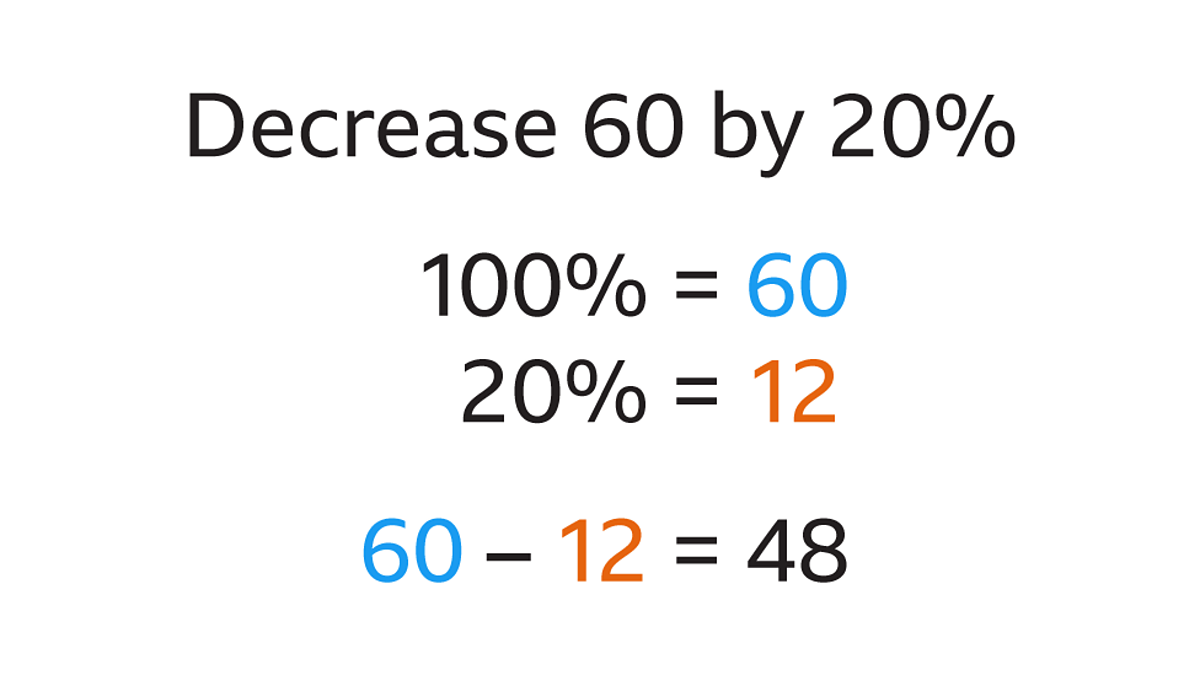
The most straightforward way to calculate a discount involves a two-step process. First, you determine the “discount amount” by multiplying the original price by the percentage (expressed as a decimal). Second, you subtract that amount from the original price.
- Formula: $Original Price times (Discount Percentage / 100) = Savings$
- Final Price: $Original Price – Savings = Sale Price$
For example, if a high-end laptop originally priced at $1,200 is offered at 15% off, you calculate $1,200 times 0.15 = $180$. Subtracting $180 from $1,200 leaves you with a final price of $1,020.
The “Remainder” Shortcut
For those looking to streamline their financial calculations, the “remainder” method is often more efficient. Instead of calculating the discount and subtracting it, you calculate the percentage you are actually paying. If an item is 30% off, you are paying 70% of the original price.
- Formula: $Original Price times (1 – Discount Decimal) = Sale Price$
In our previous example: $1,200 times 0.85 = $1,020$. This one-step method is preferred by financial analysts and retail buyers who need to process multiple price points rapidly.
The Reverse Percentage: Finding the Original Price
In many financial scenarios, particularly in auditing or business expense tracking, you may know the discounted price and the percentage off, but you need to find the original value. This is crucial for understanding the true cost of goods sold (COGS) or verifying tax deductions.
- Formula: $Sale Price / (1 – Discount Decimal) = Original Price$
If you bought a piece of office equipment for $400 at a 20% discount, the original price was $400 / 0.80 = $500. Being able to work backward ensures transparency in financial reporting and helps in assessing whether a “sale” was genuinely a good deal.
Strategic Consumerism: Using Percentage Calculations to Optimize Your Budget
In the context of personal finance, understanding how to calculate percentage off is a defensive strategy. Retailers often use psychological pricing to encourage spending; being able to strip away the marketing and see the raw numbers is key to maintaining a healthy savings rate.
Understanding the “Real” Value of a Sale
Financial literacy involves recognizing that a discount is only a “saving” if the purchase was already planned. If you save 40% on a $500 item you didn’t need, you didn’t save $200; you spent $300.
Calculating the percentage off allows you to compare the “opportunity cost.” For instance, if you are choosing between a $1,000 item at 20% off and an $850 item at 5% off, the math reveals that the more expensive item becomes $800, making it the more cost-effective choice despite the higher initial price tag.

Avoiding the “False Discount” Trap
One of the most common pitfalls in consumer finance is the “anchor price” trap. Some retailers inflate the “original price” to make a 50% discount look substantial. By calculating the percentage off and comparing it across different platforms or historical price data, you can determine if the discount is authentic or a marketing gimmick. This level of scrutiny is what separates a savvy budgeter from an impulsive spender.
Compounding Discounts: How to Layer Savings
In advanced personal finance, “stacking” discounts can lead to significant wealth preservation. This occurs when you apply a percentage-off coupon to an already discounted item. It is a common mistake to add the percentages together (e.g., 20% off plus an additional 10% off is not 30% off).
- Correct Calculation: If a $100 item is 20% off, it becomes $80. If you then apply a 10% coupon to that $80, it becomes $72 ($80 – $8).
- Result: The total effective discount is 28%, not 30%. Understanding this prevents errors in your monthly budget forecasting.
The Business Perspective: Calculating Percentage Off for Profitability and Growth
For business owners and freelancers, calculating percentages is not just about saving money; it’s about generating it. Discounts are a powerful tool for customer acquisition, but if calculated incorrectly, they can erode profit margins and threaten the solvency of the enterprise.
Margin vs. Markup: The Entrepreneur’s Dilemma
Many new business owners confuse markup with margin. If you buy a product for $80 and sell it for $100, you have a 25% markup but only a 20% profit margin. If you then offer a “20% off” sale to attract customers, you aren’t breaking even—you are likely losing money once overhead and transaction fees are considered.
Calculating the percentage off must always be done with a clear view of the Net Profit Margin. A business must calculate the “Breakeven Discount Point” to ensure that a promotional campaign increases volume enough to offset the lower price per unit.
Dynamic Pricing and Seasonal Discounts
In business finance, percentage calculations are used to manage inventory. Slow-moving stock represents “dead capital.” By calculating a tiered percentage-off strategy (e.g., 10% off in month three, 30% off in month six), a business can liquidate assets to improve liquidity. This cash can then be reinvested into higher-yielding opportunities, illustrating how a simple percentage calculation feeds into broader capital allocation strategies.
Customer Acquisition Cost (CAC) and Promotional ROI
When a company offers a “percentage off” to first-time subscribers, they are essentially investing in a customer. To determine if the discount is sustainable, the finance team calculates the Return on Investment (ROI) of that discount.
If a 20% discount ($20 off a $100 service) acquires a customer who stays for twelve months, the $20 “loss” is weighed against the lifetime value (LTV) of that client. Professional financial planning requires this granular approach to percentage-based promotions.
Advanced Financial Applications: Percentage Changes in Investing and Wealth Building
Beyond the retail counter and the business ledger, the math of “percentage off” plays a critical role in investment strategy and wealth management. In the markets, a “discount” is often referred to as a “correction” or a “drawdown.”
Portfolio Performance and Drawdowns
Investors must understand the “Math of Loss Recovery.” This is a crucial concept in risk management. If your investment portfolio experiences a 20% “percentage off” (a market correction), you do not need a 20% gain to get back to even.
- The Reality: If a $100,000 portfolio drops 20%, it is worth $80,000. To return to $100,000, you need a gain of $20,000. $20,000 is 25% of $80,000.
- The Rule: The larger the percentage drop, the exponentially higher the percentage gain required to recover. This is why calculating and managing downside risk is the most important skill in investing.
The Impact of Inflation on Purchasing Power
Inflation is essentially a “percentage off” the value of your currency. If inflation is at 5%, your $100 has roughly 5% less purchasing power than it did the previous year. Financial planning requires calculating these annual percentage decreases to determine the “real” rate of return on your investments. If your savings account pays 3% interest but inflation is 5%, you are effectively losing 2% of your wealth annually.
Tax Efficiency and Effective Tax Rates
Finally, understanding percentages is vital for tax planning. When you contribute to a traditional 401(k) or IRA, you are essentially getting a “percentage off” your taxable income. If you are in a 24% tax bracket, every $1,000 you contribute “saves” you $240 in immediate taxes. Calculating these percentages allows you to optimize your contributions to lower your effective tax rate, which is one of the fastest ways to increase your net worth over time.
Conclusion: The Wealth-Building Power of Percentages
Calculating a percentage off is more than a tool for shopping; it is a fundamental language of money. From the simple act of checking a grocery receipt to the complex world of investment drawdowns and business margins, the ability to manipulate and understand these figures is a hallmark of financial literacy.
By mastering these calculations, you gain the ability to see through marketing smoke and mirrors, protect your business’s bottom line, and make informed decisions about your investment portfolio. In the quest for financial independence, the “math of money” is your most reliable ally. Whether you are saving a dollar today or investing a million for tomorrow, it all begins with the simple question: “How do I calculate the percentage?”
aViewFromTheCave is a participant in the Amazon Services LLC Associates Program, an affiliate advertising program designed to provide a means for sites to earn advertising fees by advertising and linking to Amazon.com. Amazon, the Amazon logo, AmazonSupply, and the AmazonSupply logo are trademarks of Amazon.com, Inc. or its affiliates. As an Amazon Associate we earn affiliate commissions from qualifying purchases.