
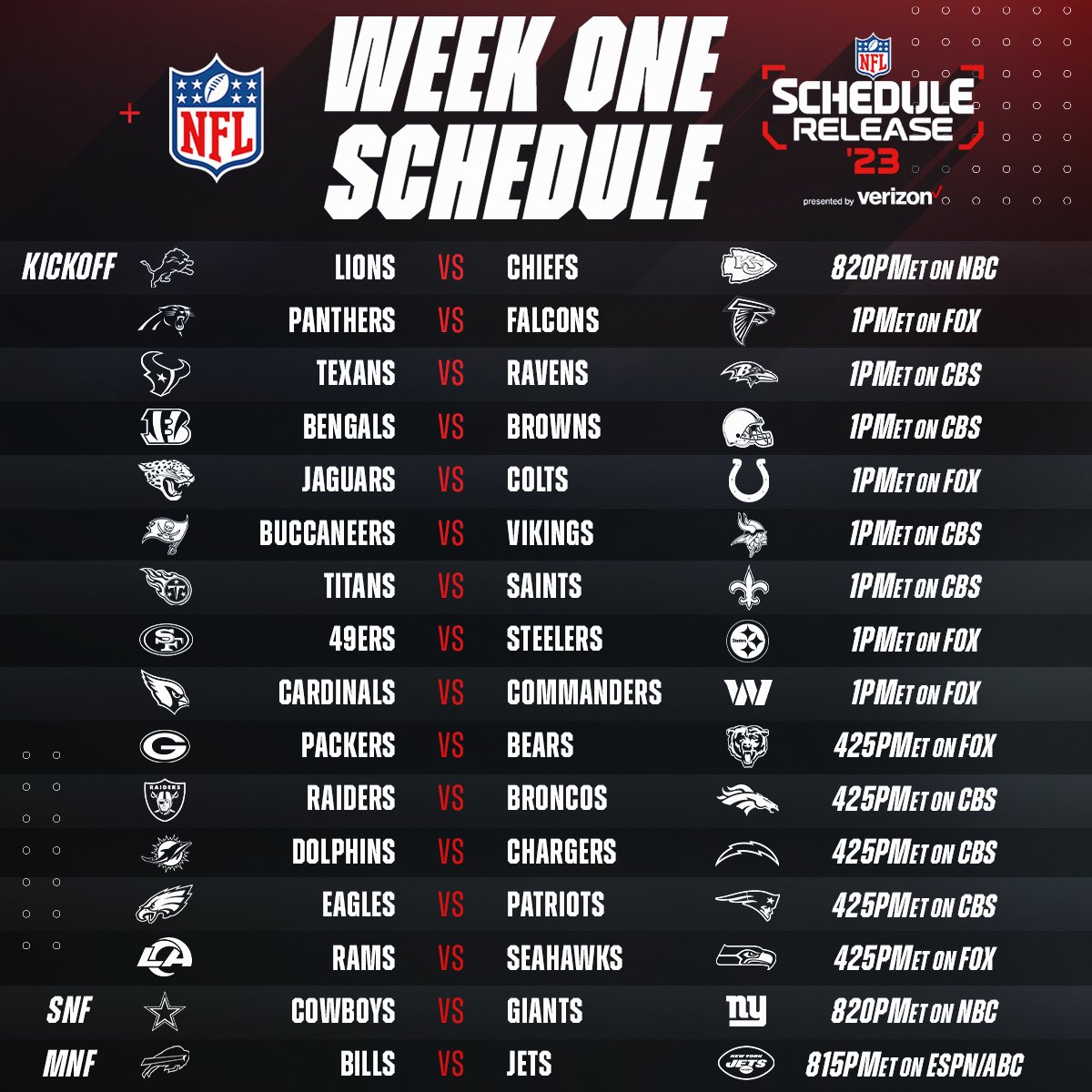
The quintessential question for any NFL fan on game day, or indeed throughout the week, is often a simple yet profound one: “What’s the NFL schedule today?” In an era dominated by instant information and digital connectivity, the quest for the NFL schedule is no longer about flipping through dense newspaper sports sections or patiently waiting for televised announcements. Today, finding out which teams are playing, when, and where is an exercise in leveraging cutting-edge technology. From sophisticated data aggregation to intelligent voice assistants and immersive streaming platforms, the journey from question to answer is a testament to how profoundly technology has reshaped our interaction with live sports. This article dives deep into the technological infrastructure that ensures every fan is just a tap, click, or voice command away from the latest NFL schedule, exploring the tools, trends, and innovations that define our modern sports information landscape.

The Digital Revolution of Sports Information: From Print to Pixels
The way sports information, particularly schedules, is consumed has undergone a seismic shift, fundamentally altering fan expectations and engagement. What was once a static, manually updated commodity has transformed into a dynamic, real-time data stream, thanks entirely to technological advancements.
From Print Guides to Instant Updates
For decades, the ritual of finding the NFL schedule involved a trip to the newsstand for the morning paper or waiting for a weekly sports magazine to arrive. Schedules were static, printed guides, often planned weeks or months in advance, and any last-minute changes due to weather, venue issues, or broadcast alterations meant frantic searches for updated information. The information flow was largely one-way and delayed.
The advent of the internet in the late 20th century marked the beginning of this digital revolution. Early sports websites, like ESPN.com and NFL.com, offered a revolutionary step: dynamic, searchable schedules that could be updated in real-time. This eliminated the lag inherent in print media and provided a central, authoritative source for fans to “pull” information as needed. The ability to refresh a page and see immediate changes was a game-changer, but this was merely the precursor to an even more personalized and pervasive information environment.
The Rise of Mobile Apps and Dedicated Platforms
The true acceleration of sports information delivery arrived with the proliferation of smartphones and high-speed mobile internet. Suddenly, a powerful computing device capable of accessing vast amounts of data was in every fan’s pocket. This gave birth to a thriving ecosystem of mobile applications and dedicated digital platforms designed specifically for sports consumption.
Official NFL apps, alongside titans like ESPN, Bleacher Report, Yahoo Sports, and countless others, became indispensable tools. These apps transformed the simple schedule into an interactive experience. Users could customize schedules to highlight their favorite teams, set reminders for game start times, access live scores and statistics, read real-time news updates, and even integrate fantasy football rosters directly with game data. Push notifications became a standard feature, proactively alerting fans to kickoff times, scoring plays, or critical injury reports, effectively turning information retrieval from a “pull” activity into a “push” experience. This convenience and personalization established a new baseline expectation for sports fans: immediate, comprehensive, and tailored information, accessible anywhere, anytime.
Key Technologies Delivering Real-Time NFL Schedules
Behind the seamless experience of checking the NFL schedule on your device lies a complex web of interconnected technologies working in harmony. These aren’t just simple websites but sophisticated systems engineered for speed, accuracy, and broad distribution.
Data Aggregation and APIs: The Backbone of Information Delivery
At the core of all real-time sports information, including the NFL schedule, are data aggregation techniques and Application Programming Interfaces (APIs). Data aggregation involves collecting raw data – game times, venues, broadcast channels, team rosters, and scores – from multiple authoritative sources, such as the NFL itself, individual teams, stadiums, and official broadcast partners. This raw, often disparate data is then processed, standardized, and structured into a coherent format.
APIs serve as the crucial communication channels, allowing different software applications to talk to each other. Specialized sports data providers, like Sportradar or Stats Perform, act as central hubs. They license official NFL data, aggregate it, and then offer their own APIs. Any sports app, website, or fantasy platform that displays the NFL schedule will typically tap into one of these APIs. When the NFL makes a schedule change or a game starts, this information is updated in the central data provider’s system, and then instantly pushed out via APIs to all subscribed clients. This ensures consistency and near-instantaneous updates across thousands of platforms, making real-time information delivery not just possible, but highly reliable.
Streaming Services and Integrated Guides
The consumption of live sports has increasingly shifted from traditional cable to digital streaming platforms. This transition has naturally led to the integration of schedule information directly into the streaming experience, creating a more cohesive and user-friendly environment. Services like NFL+, Amazon Prime Video, YouTube TV, Hulu Live, and Peacock not only broadcast games but also embed comprehensive schedules within their user interfaces.
This integration means that fans can browse upcoming games, set reminders, and often even launch the live broadcast directly from the schedule page within the same application. The digital evolution of the Electronic Program Guide (EPG) allows users to filter by sport, team, or time, providing a highly personalized viewing roadmap. This convergence of content delivery and information display eliminates the need to switch between multiple apps or websites, streamlining the journey from “what’s on?” to “watching now.” It represents a powerful technological synergy that enhances the overall fan experience.
AI and Predictive Analytics in Sports Scheduling and Display
While the core NFL schedule is determined by a human league office, Artificial Intelligence (AI) and predictive analytics are playing an increasingly sophisticated role in optimizing various aspects surrounding schedule delivery and consumption. For broadcast networks, AI algorithms can analyze historical viewership data, demographic trends, and even social media sentiment to recommend optimal game times that maximize audience engagement and advertising revenue. This influences when major games are scheduled.
For fans, AI contributes to a more personalized discovery process. AI-driven recommendation engines, similar to those found on streaming services, can analyze a user’s past viewing habits, favorite teams, and fantasy league interests to highlight relevant games on the schedule they might otherwise overlook. Furthermore, AI powers the sophisticated search algorithms that quickly sift through vast amounts of data to answer specific schedule queries. Beyond simple listings, AI is increasingly used in fantasy football platforms to analyze schedule strength for players, predict game outcomes, or even generate personalized alerts about player performance relative to upcoming matchups, all of which enhance the informational value derived from the raw schedule data.
Your Toolkit for Staying Updated: Practical Tech for Every Fan
With such a rich technological landscape, fans have an array of practical tools at their fingertips to instantly answer the question, “What’s the NFL schedule today?” These tools range from official league resources to smart home integrations and comprehensive third-party aggregators.

Official NFL Apps and Website Portals
The most authoritative and often feature-rich sources for the NFL schedule are the official league platforms: NFL.com and the NFL mobile app. These portals serve as the central hub for all things NFL, offering not just the complete, up-to-the-minute schedule but also a wealth of supplementary content. Users can delve into detailed team pages, read official news and analysis, access live game scores and statistics, and manage their NFL Fantasy Football teams directly within the ecosystem.
The official app, in particular, leverages push notification technology to keep fans constantly informed. Users can opt-in to receive alerts for game start times, score changes, breaking news, injury updates, and more, ensuring they never miss a crucial moment or a critical piece of information. The seamless integration of schedule information with streaming options like NFL+ further solidifies these official platforms as the go-to resources for dedicated fans seeking the most accurate and comprehensive overview.
Smart Assistants and Voice Commands
Perhaps the most intuitive and immediate way to get the NFL schedule today is through smart assistants and voice commands. Devices like Amazon Alexa, Google Assistant, and Apple’s Siri have revolutionized information retrieval by making it conversational and hands-free. A simple query like, “Hey Google, what’s the NFL schedule today?” or “Alexa, when do the [Team Name] play next?” can instantly retrieve the desired information, often spoken aloud directly by the assistant.
This functionality is powered by sophisticated Natural Language Processing (NLP) and vast knowledge graphs that understand context and can parse complex requests. The integration of these assistants into smart home devices, smart speakers, and even televisions means that schedule information is always just a vocalization away, whether you’re cooking, driving, or relaxing on the couch. This frictionless access epitomizes the modern expectation for immediate, on-demand data.
Third-Party Sports Aggregators and Fantasy Platforms
Beyond official sources and smart assistants, a vibrant ecosystem of third-party sports aggregators and fantasy platforms provides equally robust access to the NFL schedule, often with added layers of analysis and community features. Major sports media outlets like ESPN, Yahoo Sports, CBS Sports, and The Athletic offer comprehensive apps and websites that compile schedule data alongside extensive news coverage, expert analysis, and statistical breakdowns. These platforms often allow for more personalized content feeds, catering to specific team loyalties or fantasy league interests.
For many fans, fantasy football platforms such as DraftKings, FanDuel, and Yahoo Fantasy are indispensable for schedule information. The NFL schedule is the very backbone of fantasy gameplay, dictating matchups, player availability, and strategic decisions. These platforms not only display the schedule but often augment it with features like “strength of schedule” analyses, injury reports directly linked to game times, and real-time player statistics that update alongside the ongoing games. These aggregators and fantasy platforms showcase how raw schedule data is transformed into actionable intelligence for different segments of the fan base.
Beyond Today: The Future of Schedule Discovery
The technological journey of finding “what’s the NFL schedule today” is far from over. Emerging technologies promise an even more personalized, immersive, and predictive experience for sports fans, pushing the boundaries of how we interact with and understand game information.
Personalized Schedules and AI Recommendations
The future will likely see a significant leap from generalized schedules to hyper-personalized, AI-driven recommendations. Imagine a system that, based on your viewing history, betting patterns, fantasy team performance, and even social media interactions, not only tells you the schedule but proactively highlights games you are most likely to care about. AI will be able to predict your interests, perhaps suggesting an obscure game because it features a player from your fantasy team, or a rivalry game you often watch, before you even think to look it up.
This level of personalization could extend to proactive calendar integration, automatically adding games involving your favorite teams to your personal digital calendar, complete with streaming links and reminder alerts. The goal is to anticipate what you need before you ask, creating a truly intelligent, adaptive schedule experience that evolves with your preferences and habits.
Augmented Reality and Immersive Fan Experiences
Augmented Reality (AR) and Virtual Reality (VR) hold immense potential to transform how fans discover and engage with the NFL schedule. Picture pointing your smartphone at a blank wall and seeing a holographic, interactive NFL schedule projected onto it, complete with live scores, animated team logos, and real-time player statistics popping up as you select a game. AR overlays on live broadcasts could provide dynamic “next up” game information, allowing you to seamlessly transition from one game to the next.
Further down the line, VR experiences could transport fans into a virtual stadium lobby where schedules are displayed on immense, interactive screens, allowing for a more communal and engaging way to browse upcoming games. These immersive technologies promise to make schedule discovery less about finding data on a screen and more about an experiential journey within a digital sports universe.
The Blockchain and Data Integrity in Sports
While perhaps less directly about finding the schedule, blockchain technology presents a fascinating future for ensuring the integrity and transparency of sports data, including schedules. Blockchain’s decentralized and immutable ledger system could be used to create an unalterable, verifiable record of all official NFL schedule data. Every game time, venue change, and broadcast assignment could be timestamped and permanently recorded on a blockchain.
This would create an indisputable source of truth for all schedule information, enhancing trust and preventing potential manipulation or errors. For data aggregators and official platforms, it could streamline verification processes. While still largely conceptual for mainstream sports data, the principles of decentralization and cryptographic security offered by blockchain technology could one day provide an unprecedented level of confidence in the accuracy and authenticity of the information powering our game day experiences.
Conclusion
The simple question, “What’s the NFL schedule today?” has become a powerful lens through which to view the extraordinary advancements in technology that permeate our daily lives. From the quaint reliance on print media to the instantaneous updates delivered by sophisticated APIs and the intelligent predictions of AI, our journey to access sports information has mirrored the broader digital revolution.
Today, fans are equipped with an unparalleled toolkit: official league apps, comprehensive third-party aggregators, and intuitive smart assistants, all working in concert to provide real-time, personalized, and easily accessible schedule information. Looking ahead, the integration of AI for hyper-personalization, the immersive potential of AR/VR, and the foundational security of blockchain promise an even richer, more integrated, and perhaps even predictive future for schedule discovery. Ultimately, technology has not just answered the question of “what’s on today,” but has profoundly transformed the entire fan experience, making the world of NFL football more immediate, engaging, and personal than ever before.
aViewFromTheCave is a participant in the Amazon Services LLC Associates Program, an affiliate advertising program designed to provide a means for sites to earn advertising fees by advertising and linking to Amazon.com. Amazon, the Amazon logo, AmazonSupply, and the AmazonSupply logo are trademarks of Amazon.com, Inc. or its affiliates. As an Amazon Associate we earn affiliate commissions from qualifying purchases.