
The stock market has long been the primary engine for wealth creation in the modern world. For generations, it has allowed individuals to transition from being mere consumers of products to becoming partial owners of the companies that produce them. However, for the uninitiated, the prospect of investing in shares can feel like stepping into a high-stakes casino or a complex labyrinth of jargon and fluctuating numbers.
Investing in the stock market is neither a game of luck nor an exclusive club for the financial elite. It is a disciplined practice rooted in patience, research, and strategic planning. By understanding how to navigate this landscape, you can harness the power of compounding interest and corporate growth to secure your financial future. This guide provides a detailed roadmap for those ready to move from the sidelines into the world of equity investing.

1. Understanding the Foundations of Stock Market Investing
Before deploying your hard-earned capital, it is essential to understand exactly what occurs when you “buy a stock.” At its core, a share represents a unit of ownership in a corporation. When you purchase a share, you are acquiring a claim on a portion of that company’s assets and its future earnings.
The Mechanics of Equity Ownership
Companies issue shares to the public to raise capital. This capital is used to expand operations, research new products, or pay down debt. In exchange for your money, the company grants you equity. As the company grows more profitable and valuable, the value of your shares typically increases—this is known as capital appreciation. Furthermore, many established companies distribute a portion of their profits directly to shareholders in the form of dividends, providing a stream of passive income.
The Role of the Stock Exchange
Stocks are traded on exchanges, such as the New York Stock Exchange (NYSE) or the Nasdaq. These platforms act as secondary markets where buyers and sellers meet. The price of a stock at any given moment is determined by supply and demand, which are influenced by everything from company earnings reports to global geopolitical events. Understanding that the market is a “voting machine” in the short term but a “weighing machine” in the long term—as famously stated by Benjamin Graham—is crucial for maintaining a professional investment mindset.
The Power of Compounding
The greatest ally of the individual investor is time. Compounding is the process where the returns on your investment earn their own returns. Over decades, even modest annual growth can transform a small initial sum into a significant fortune. The key to successful share investing is not timing the market perfectly, but rather “time in the market.”
2. Setting Your Investment Strategy and Risk Profile
Success in the stock market is rarely accidental. It is the result of a clearly defined strategy that aligns with your personal financial goals and your psychological ability to handle market volatility.
Defining Your Financial Goals
Why are you investing? Are you building a retirement nest egg for thirty years from now, or are you looking to generate income for a house deposit in five years? Your “time horizon” is the single most important factor in determining how you should invest. Longer time horizons allow you to withstand short-term market crashes, whereas shorter horizons require a more conservative approach to protect your principal.
Assessing Risk Tolerance
Every investor likes the idea of high returns, but not every investor can stomach a 20% dip in their portfolio value. Risk tolerance is a combination of your financial capacity to lose money and your emotional reaction to market swings. Professional investors categorize themselves into three buckets:
- Conservative: Focuses on capital preservation and dividends; prefers “Blue Chip” companies.
- Moderate: Seeks a balance between growth and stability; often uses a mix of individual stocks and index funds.
- Aggressive: Prioritizes high growth; invests in emerging sectors, tech startups, and volatile markets.
Active vs. Passive Investing
A fundamental strategic choice is whether you want to be an active or passive investor. Passive investing involves buying index funds or Exchange-Traded Funds (ETFs) that track the entire market (like the S&P 500). This approach requires minimal effort and historically outperforms most professional stock pickers. Active investing involves researching and selecting individual companies in an attempt to “beat the market.” While more time-consuming and riskier, it offers the potential for significantly higher rewards.
3. The Step-by-Step Process of Buying Your First Shares
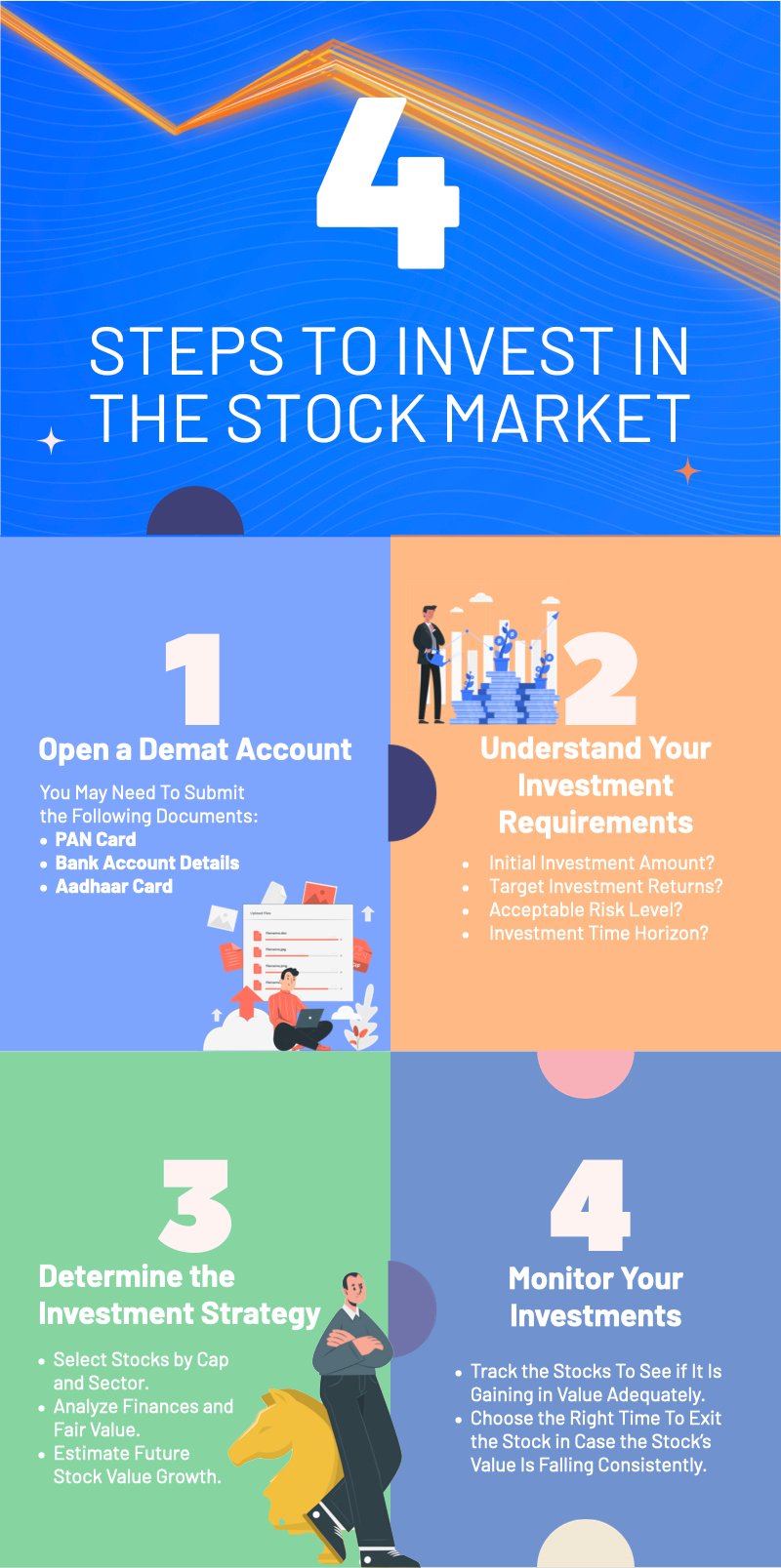
Once your strategy is set, you need the infrastructure to execute your trades. The digital age has democratized access to the stock market, making it possible to start with as little as a few dollars.
Choosing the Right Brokerage Account
To buy shares, you need a brokerage account. There are several types to consider:
- Full-Service Brokers: Provide personalized advice and research but charge high commissions.
- Discount/Online Brokers: Platforms like Vanguard, Fidelity, or Charles Schwab that offer low-to-zero commissions and robust digital tools.
- Robo-Advisors: Automated platforms that manage your portfolio for you based on an algorithm (ideal for hands-off investors).
Funding Your Account and Order Types
After opening an account, you must transfer funds from your bank. When you are ready to buy, you will encounter different order types. A “Market Order” instructs the broker to buy the stock immediately at the best available current price. A “Limit Order” allows you to set a specific price at which you are willing to buy; the trade only executes if the stock hits that price. Using limit orders is generally considered a more professional way to control your entry points.
The Importance of Liquidity
When starting out, focus on “liquid” stocks—those that are traded in high volumes. Liquidity ensures that you can enter or exit a position quickly without significantly affecting the stock price. Most large-cap stocks on major exchanges are highly liquid, providing a safer environment for new investors.
4. Analyzing Stocks: Fundamental vs. Technical Analysis
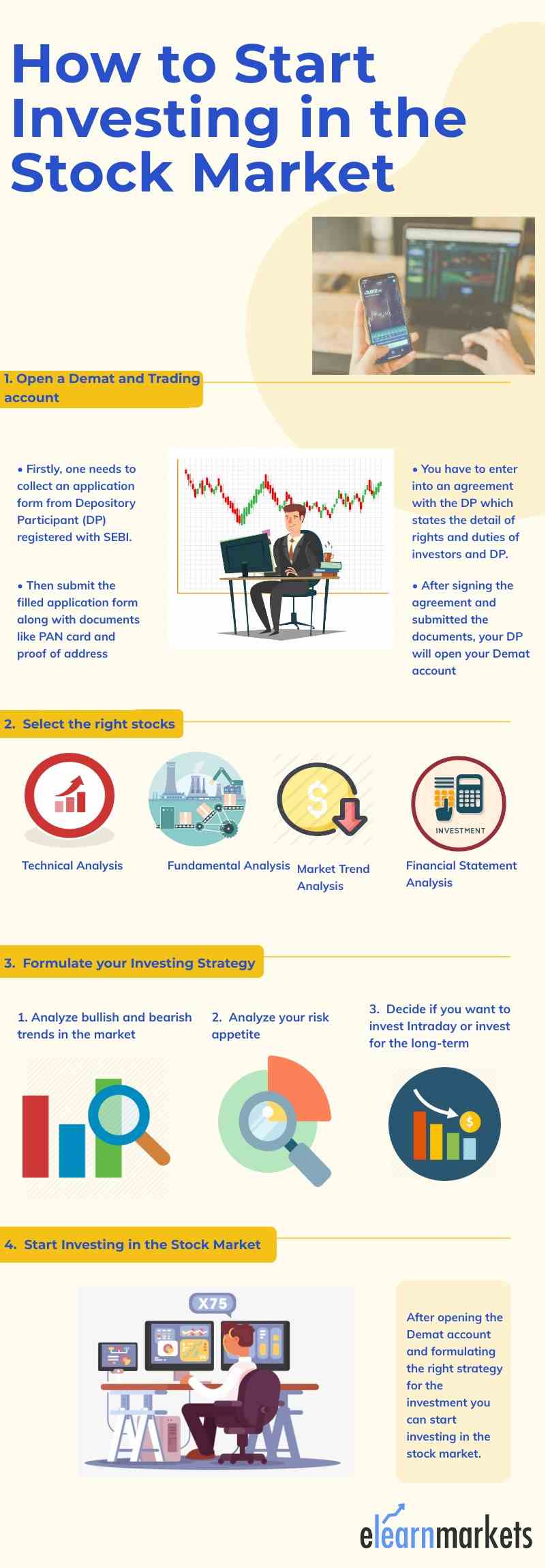
How do you know if a stock is a “good” investment? Professionals generally use two primary lenses to evaluate potential purchases: fundamental and technical analysis.
Fundamental Analysis: Looking Under the Hood
Fundamental analysis is the study of a company’s financial health and economic environment. The goal is to determine the “intrinsic value” of a stock. Key metrics include:
- Earnings Per Share (EPS): The portion of a company’s profit allocated to each outstanding share.
- Price-to-Earnings (P/E) Ratio: A valuation ratio of a company’s current share price compared to its per-share earnings. It tells you how much investors are willing to pay for $1 of profit.
- Debt-to-Equity Ratio: A measure of a company’s financial leverage.
- Competitive Moat: A term coined by Warren Buffett to describe a company’s sustainable competitive advantage (e.g., brand loyalty, patents, or cost advantages).
Technical Analysis: Studying the Charts
Technical analysis ignores the company’s business model and focuses entirely on price movements and trading volume. Practitioners look for patterns in charts—such as “Head and Shoulders” or “Support and Resistance” levels—to predict future price movements. While controversial among long-term value investors, technical analysis is a vital tool for short-term traders looking to optimize their entry and exit timing.
Qualitative Factors
Beyond the numbers, you must consider the “story” of the company. Who is the CEO? Is the industry growing or shrinking? Does the company have a culture of innovation? A company with great financials but a dying product line (like film cameras in the early 2000s) is rarely a good long-term investment.
5. Building and Managing a Diversified Portfolio
The final stage of investing is the ongoing management of your assets. Buying shares is just the beginning; maintaining a healthy portfolio requires discipline.
The Golden Rule: Diversification
The most common mistake novice investors make is “putting all their eggs in one basket.” If you invest 100% of your money in one tech stock and that sector crashes, your wealth vanishes. Diversification involves spreading your investments across different sectors (tech, healthcare, energy, consumer goods) and asset classes. This ensures that a downturn in one area is offset by stability or growth in another.
Rebalancing Your Portfolio
Over time, some of your stocks will grow faster than others, causing your portfolio to become “tilted.” For example, if you wanted 50% tech and 50% energy, but tech performs exceptionally well, your portfolio might become 70% tech. Rebalancing is the process of selling some winners and buying more of the underperformers to return to your original target allocation. This forces you to follow the most important rule of investing: “Buy low, sell high.”
The Psychology of Staying the Course
The stock market is a rollercoaster of emotions. During a “Bull Market,” everyone feels like a genius. During a “Bear Market,” fear can lead to panic selling. Professional investors maintain a long-term perspective. They view market downturns not as disasters, but as “sales” where they can buy high-quality shares at a discount. By automating your investments through techniques like Dollar-Cost Averaging—investing a fixed amount of money every month regardless of the price—you remove emotion from the equation and build wealth consistently.
In conclusion, investing in the stock market is a journey of continuous learning. By mastering the fundamentals, choosing a strategy that fits your life, and maintaining the discipline to stay invested through market cycles, you transform the stock market from a source of anxiety into a powerful tool for financial freedom. The best time to start was ten years ago; the second best time is today.
aViewFromTheCave is a participant in the Amazon Services LLC Associates Program, an affiliate advertising program designed to provide a means for sites to earn advertising fees by advertising and linking to Amazon.com. Amazon, the Amazon logo, AmazonSupply, and the AmazonSupply logo are trademarks of Amazon.com, Inc. or its affiliates. As an Amazon Associate we earn affiliate commissions from qualifying purchases.