
A business plan is often described as a roadmap for a company’s journey, but in the world of high-stakes commerce and professional investing, it is more accurately described as a financial blueprint. While ideas are the seeds of an enterprise, capital and cash flow are the soil and water that allow it to grow. To create a business plan that moves the needle, one must look beyond mere descriptions of products or services and dive deep into the mechanics of wealth creation, risk mitigation, and fiscal sustainability.
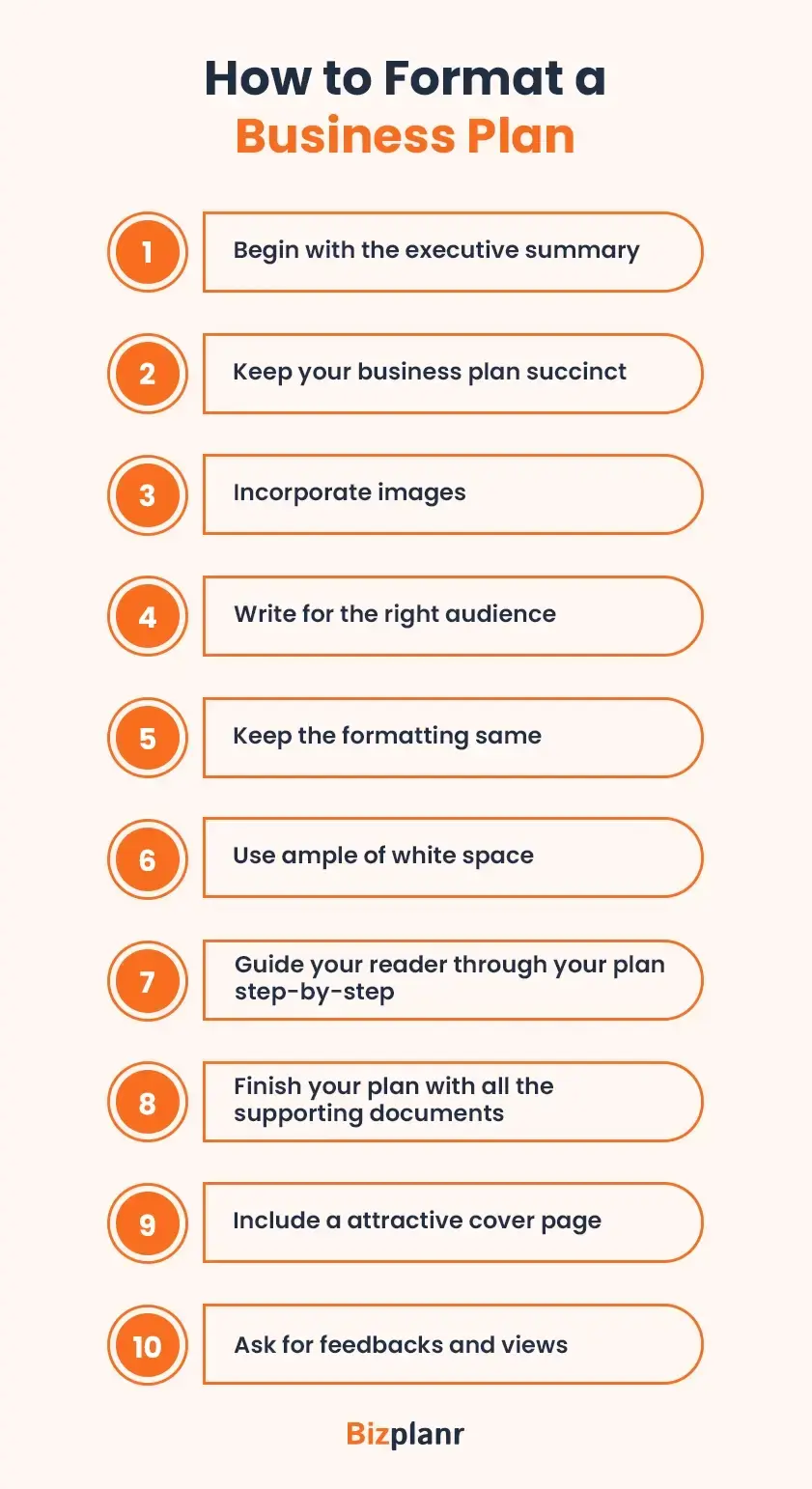
When you ask, “How do you make a business plan?” from a financial perspective, you are essentially asking how to build a model that proves an idea can generate a return on investment (ROI). Whether you are seeking a venture capital injection, a bank loan, or simply trying to ensure your side hustle doesn’t drain your personal savings, the following structure provides the rigorous financial framework necessary for success.
The Strategic Foundation: Why Business Plans are Financial Blueprints
Before diving into spreadsheets, a business plan must establish its economic logic. Every successful business solves a problem in a way that allows it to capture value. From a “Money” niche perspective, the beginning of your plan must articulate your “Economic Moat”—the competitive advantage that protects your profit margins from competitors.
Defining Your Economic Moat
A business plan is a waste of time if the business model is easily replicated by others with deeper pockets. Your plan should identify whether your profitability is protected by high barriers to entry, proprietary cost-saving processes, or unique access to low-cost capital. Investors look for “unit economics” that make sense: if it costs you $10 to acquire a customer who only spends $8, your business is a liability, not an asset. Your plan must demonstrate how your moat ensures that the Lifetime Value (LTV) of a customer significantly outweighs the Customer Acquisition Cost (CAC).
Translating Vision into Financial Objectives
Professional business plans bridge the gap between abstract goals and concrete fiscal milestones. Instead of saying, “We want to be the market leader,” your plan should state, “We aim to achieve a 15% market share within 36 months, resulting in an annual recurring revenue (ARR) of $2 million.” This shift from qualitative to quantitative language is what separates a hobbyist’s dream from a professional’s prospectus. Every operational goal mentioned in the plan must be tied to a financial outcome, ensuring that every action the company takes is an investment toward the bottom line.
Building the Revenue Model: Forecasting Growth with Precision
The revenue model is the engine of your business plan. It explains exactly how money will flow into the company. A common mistake in business planning is being overly optimistic without supporting data. To build a credible plan, you must use sophisticated forecasting methods that reflect the realities of the marketplace.
Bottom-Up vs. Top-Down Forecasting
Experienced financiers often ignore “top-down” forecasts—the kind where a founder says, “The market is $100 billion, and if we just get 1%, we’ll make $1 billion.” This is speculative. A professional business plan utilizes “bottom-up” forecasting. This starts with the smallest units of sale: How many sales calls can one representative make per day? What is the conversion rate? What is the average order value? By building your revenue projections from these granular truths, you create a budget that is defensible during a rigorous financial audit.
Identifying Scalable Revenue Streams
Not all revenue is created equal. In your business plan, you must categorize your income. Is it one-time transactional revenue, or is it recurring? Subscription-based models are highly valued because they provide predictable cash flow, making it easier to manage debt and reinvest in growth. Your plan should also explore “ancillary” revenue—secondary streams like service fees, warranties, or data monetization—that can bolster your margins and provide a buffer against fluctuations in your primary product line.
Seasonal Fluctuations and Market Volatility
No business grows in a perfectly straight line. A sophisticated business plan accounts for seasonality and economic cycles. If you are launching a retail-based venture, your plan should show higher cash inflows in Q4 and lower inflows in Q1. By identifying these cycles early, you can plan your “working capital” requirements, ensuring you have enough cash on hand to pay your bills during the lean months.
Mastering the Expense Structure: Cost Management and Margin Protection

Generating revenue is only half the battle; the other half is keeping it. A business plan must provide a transparent look at the “burn rate”—the rate at which the company spends its capital before reaching profitability. Mastering the expense structure is about understanding the levers you can pull to protect your margins.
Fixed vs. Variable Costs
Your plan must clearly distinguish between fixed costs (rent, salaries, insurance) and variable costs (raw materials, shipping, commissions). High fixed costs create “operating leverage,” which means that once you cross the break-even point, profits grow very quickly. However, high fixed costs also increase risk. A lean business plan often looks for ways to turn fixed costs into variable ones—for example, by using third-party logistics instead of owning a warehouse—to maintain flexibility during the startup phase.
The Importance of the Burn Rate
For startups, the burn rate is the most critical metric. Your business plan should calculate exactly how many months of “runway” you have based on your current cash reserves. This transparency is vital for attracting investors; they want to know exactly when the next round of funding will be required or when the company will become “cash-flow positive.” A plan that ignores the burn rate is a plan that ignores the possibility of bankruptcy.
Calculating Your Break-Even Point
Every business plan must answer one fundamental question: How much do we need to sell to stop losing money? The break-even analysis is a cornerstone of business finance. By identifying the exact volume of sales required to cover all costs, you provide yourself and your stakeholders with a clear “line in the sand.” This figure informs your sales targets and your marketing budget, ensuring that every dollar spent is focused on moving the company past the point of vulnerability.
The Core Financial Statements: The Heart of Your Business Plan
The “Financials” section is the part of the business plan that banks and investors flip to first. It consists of three primary documents that provide a 360-degree view of the company’s economic health. These are not just accounting exercises; they are the proof that your business model works.
The Income Statement (P&L)
The Profit and Loss statement (P&L) shows your performance over a specific period. It subtracts the Cost of Goods Sold (COGS) and operating expenses from your total revenue to arrive at your Net Profit. In a business plan, you typically provide a “pro forma” P&L, which is a projection of what you expect to happen over the next three to five years. It demonstrates the path from initial losses to long-term profitability.
Cash Flow Projections: The Lifeblood of the Venture
It is a common saying in finance that “Profit is an opinion, but Cash is a fact.” Many profitable companies go bankrupt because their cash is tied up in inventory or unpaid invoices while their bills are due today. Your business plan must include a monthly cash flow statement. This tracks the actual movement of currency into and out of your bank account. It is the most important tool for ensuring the company remains solvent and can meet its payroll and debt obligations.
The Balance Sheet: Assessing Long-Term Health
The balance sheet provides a snapshot of what the company owns (assets) versus what it owes (liabilities) at a specific point in time. For a new business, the balance sheet shows how much “Equity” the founders and investors have. As the business matures, a strong balance sheet with high liquidity and low debt-to-equity ratios becomes a powerful tool for negotiating better interest rates and attracting institutional capital.
Capital Strategy: Pitching for Investment and Loan Approval
The final stage of making a business plan is determining how much money you need to get started and where that money will come from. This is your capital strategy, and it requires a deep understanding of the different tiers of business finance.
Determining Capital Requirements
Don’t just guess how much money you need. Use your cash flow projections to identify the “trough”—the point where your cash balance is at its lowest before the business becomes self-sustaining. Your funding request should be this amount, plus a 20% “margin of safety” for unexpected expenses. Requesting too little capital is a frequent cause of failure, as it forces founders to spend all their time fundraising instead of building the business.
Debt vs. Equity: Choosing the Right Funding Path
Your business plan should specify whether you are seeking “Equity” (selling a piece of the company) or “Debt” (taking a loan). Equity is expensive in the long run but carries no monthly repayment obligation, making it ideal for high-growth, high-risk tech startups. Debt is cheaper and allows you to keep full ownership, but it requires steady cash flow to service the interest payments. A sophisticated plan evaluates the Weighted Average Cost of Capital (WACC) to choose the most efficient way to fund growth.

Risk Mitigation and Sensitivity Analysis
Finally, every professional business plan includes a “Sensitivity Analysis,” often called a “What-If” analysis. What if sales are 20% lower than expected? What if the cost of materials rises by 10%? By showing that you have planned for these scenarios, you demonstrate a level of financial literacy that builds immense trust with lenders and investors. It proves that you aren’t just an optimist—you are a disciplined financial manager prepared for the complexities of the real world.
aViewFromTheCave is a participant in the Amazon Services LLC Associates Program, an affiliate advertising program designed to provide a means for sites to earn advertising fees by advertising and linking to Amazon.com. Amazon, the Amazon logo, AmazonSupply, and the AmazonSupply logo are trademarks of Amazon.com, Inc. or its affiliates. As an Amazon Associate we earn affiliate commissions from qualifying purchases.