
Determining the exact percentage of your paycheck that should be directed toward savings is one of the most pivotal decisions in a person’s financial journey. While the question seems simple, the answer is often a blend of mathematical frameworks, personal life stages, and long-term aspirations. Saving is not merely the act of hoarding cash; it is the process of deferred gratification to ensure future security, facilitate major life purchases, and ultimately achieve financial independence.
In a modern economy characterized by fluctuating inflation and shifting job markets, a disciplined approach to saving is no longer optional—it is a necessity. To navigate this, one must move beyond “saving what is left over” and transition into a strategy of “paying yourself first.” This article explores the optimal savings benchmarks, the factors that influence individual needs, and the strategic hierarchy of where those savings should be placed.
The 50/30/20 Rule: A Foundation for Balanced Budgeting
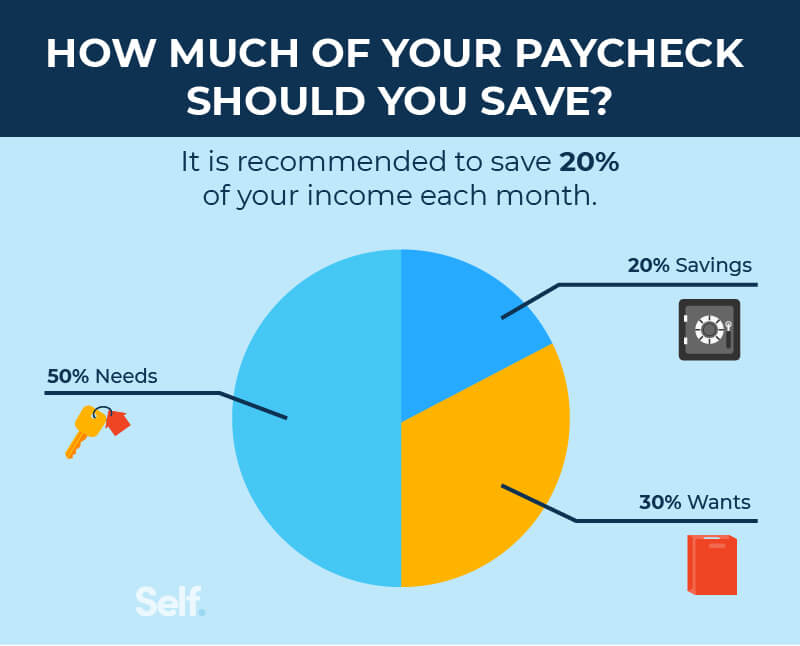
The most widely recognized benchmark in personal finance is the 50/30/20 rule. Popularized by Senator Elizabeth Warren in her book All Your Worth, this framework provides a clear, scalable template for anyone looking to organize their income. It balances the necessities of today with the goals of tomorrow without ignoring the importance of enjoying the present.
Understanding the 50%: Essential Needs
The first half of your take-home pay should be dedicated to “needs.” These are the non-negotiable expenses that you must pay to maintain a basic standard of living. This includes housing (rent or mortgage), utilities, groceries, transportation, insurance, and minimum debt payments. If your needs exceed 50% of your income, it is a signal that you may be “house poor” or “car poor,” meaning your fixed costs are so high they are cannibalizing your ability to save or enjoy life.
Defining the 30%: Lifestyle Wants
Human beings are not machines; we require recreation and personal fulfillment. The 30% category is reserved for “wants”—the things that enhance your lifestyle but are not strictly necessary for survival. This includes dining out, streaming subscriptions, travel, hobbies, and luxury shopping. Many financial experts suggest that if you are behind on your savings goals, the 30% category is the first place to find “found money” to redirect toward your future.
The Critical 20%: Savings and Debt Repayment
The final 20% is the engine of your financial growth. According to this rule, at least one-fifth of your paycheck should be allocated to savings, investments, and debt repayment beyond the minimum requirements. This includes contributions to retirement accounts, building an emergency fund, and making extra payments on high-interest credit cards or student loans. For most Americans, hitting this 20% mark is the threshold between financial stagnation and true wealth building.
Factors That Influence Your Personal Savings Rate
While the 50/30/20 rule is an excellent starting point, it is not a universal law. Your specific savings rate should be adjusted based on your unique circumstances, age, and professional trajectory. A one-size-fits-all approach often ignores the nuances of different life stages.
Life Stages and Time Horizons
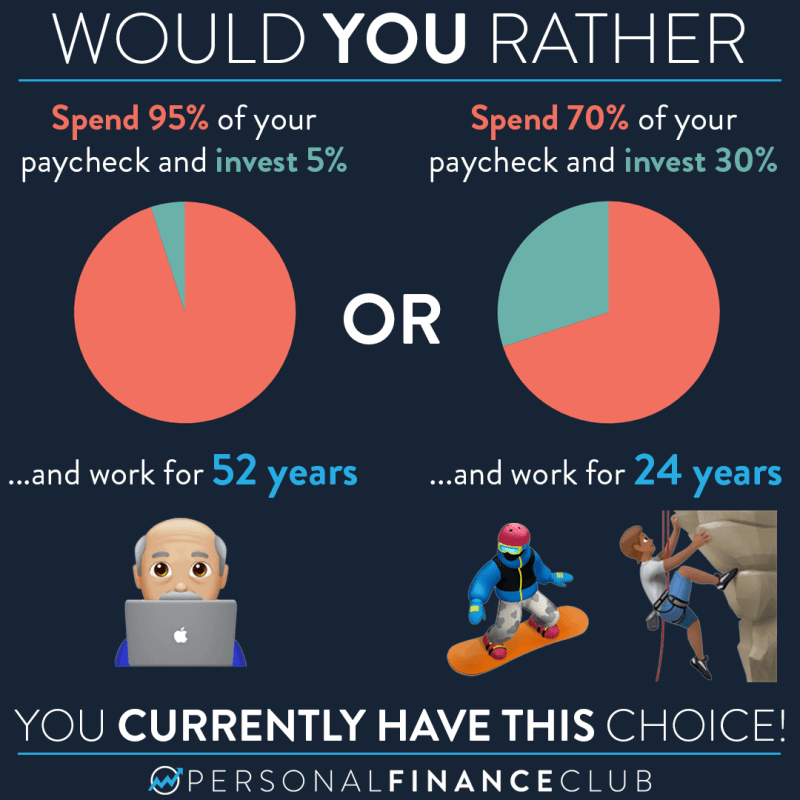
Your age is perhaps the most significant factor in determining how much you should save. A professional in their early 20s has the incredible advantage of time; thanks to compounding interest, a lower savings rate started early can outperform a higher rate started later. Conversely, someone in their 40s or 50s who is just beginning to save for retirement may need to save 30% to 40% of their income to catch up. The closer you are to your goal (like retirement or a house down payment), the more aggressive your savings rate must become.
The Impact of High-Interest Debt
You cannot effectively save for the future if you are being drained by high-interest debt in the present. If you have credit card debt with an interest rate of 20% or higher, paying that down is mathematically equivalent to achieving a 20% guaranteed return on your money. In this scenario, your “savings” rate should be almost entirely diverted to debt elimination until those high-interest burdens are cleared. Once the debt is gone, that same monthly amount should be immediately pivoted into investment vehicles.
Geographic Cost of Living (COL)
The reality of personal finance is that $100,000 goes much further in the Midwest than it does in Manhattan or San Francisco. In high-cost-of-living areas, “needs” (specifically housing) often consume 60% or 70% of a paycheck. In these cases, the individual must either significantly reduce their “wants” or find ways to increase their income to protect that 20% savings buffer. Flexibility is key; your savings rate should be a reflection of your reality, not just a theoretical percentage.
Prioritizing Your Savings Buckets: Where Does the Money Go?
Once you have decided how much to save, the next challenge is deciding where to put it. Not all savings accounts are created equal, and the order in which you fund your goals can significantly impact your long-term net worth.
The Emergency Fund: Your Financial Shield
Before you invest a single dollar in the stock market or a high-yield bond, you must establish an emergency fund. This is a liquid pool of cash, typically held in a High-Yield Savings Account (HYSA), intended to cover three to six months of essential living expenses. This fund protects you from life’s unpredictability—job loss, medical emergencies, or major home repairs—and prevents you from having to take on high-interest debt during a crisis.
Retirement Accounts and the “Employer Match”
If your employer offers a 401(k) or 403(b) with a matching contribution, this is your highest priority after the emergency fund. An employer match is effectively a 100% return on your investment. For example, if your company matches up to 6% of your salary, you should contribute at least that amount. Beyond the match, utilizing tax-advantaged accounts like a Roth IRA or a traditional IRA can help your savings grow tax-free or tax-deferred, providing a massive boost to your ending balance.
Sinking Funds for Mid-Term Goals
Savings shouldn’t only be for the distant future. Sinking funds are targeted savings accounts for specific, expected expenses in the next one to five years. This might include a down payment for a home, a wedding, or a new vehicle. By allocating a portion of your monthly savings to these specific “buckets,” you avoid the stress of trying to find large sums of money when these events arise.
Advanced Strategies for Accelerating Wealth
For those who have mastered the basics, increasing the savings rate beyond 20% can lead to “Financial Independence, Retire Early” (FIRE). This requires a more surgical approach to income management and lifestyle choices.
Controlling Lifestyle Inflation
As your career progresses and your income increases, the most dangerous trap is “lifestyle inflation”—the tendency to increase your spending at the same rate as your raises. To accelerate wealth, you should aim to maintain your current standard of living even as your paycheck grows. If you receive a 10% raise, consider living on your old salary and directing the entirety of that 10% toward your investments. This drastically shortens the time required to reach your financial goals.
The Power of Automation
The greatest enemy of saving is human psychology. We are wired to spend what we see in our checking accounts. To counteract this, you should automate your savings. Set up your payroll system to direct a portion of your paycheck into a separate savings or investment account before it ever reaches your primary spending account. When you “remove the choice” to save, it becomes a permanent habit rather than a monthly struggle of willpower.
Tax Optimization and Asset Allocation
High earners should look beyond simple savings accounts toward tax-efficient investing. This involves understanding the difference between capital gains taxes and ordinary income taxes, utilizing Health Savings Accounts (HSAs) as a stealth retirement vehicle, and ensuring your asset allocation (the mix of stocks, bonds, and real estate) aligns with your risk tolerance. At this level, saving is no longer just about the amount—it is about the efficiency of every dollar.
Conclusion
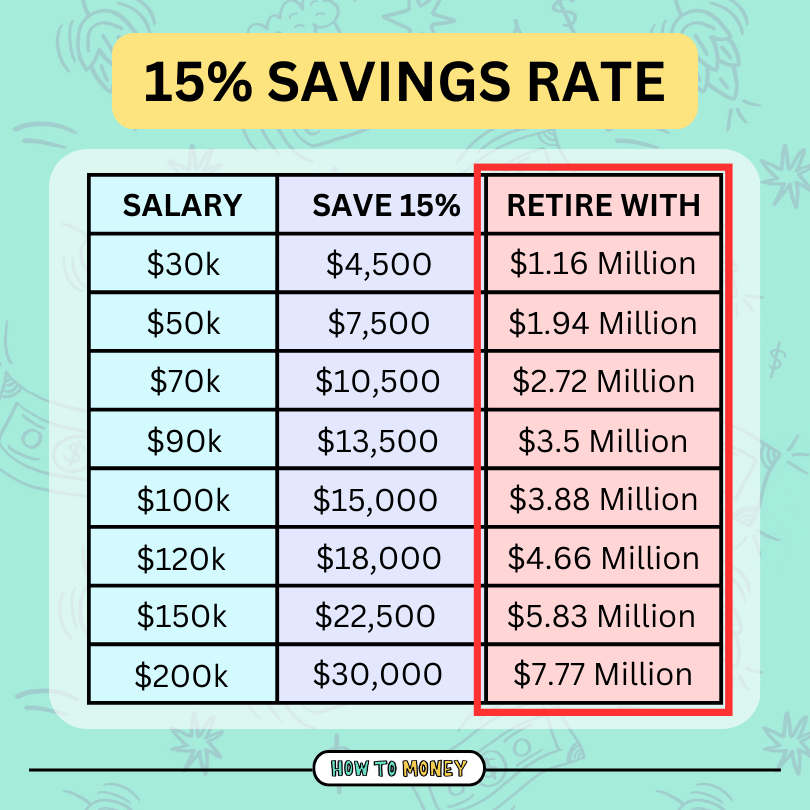
How much of your paycheck you should save is a question that evolves as you do. While the 20% benchmark remains the “gold standard” for the average earner, the true answer lies in your personal goals. If you desire a life of moderate comfort and a standard retirement, 15% to 20% is sufficient. If you seek to retire decades early or build a significant legacy, that number may need to climb to 40% or higher.
The most important step is not the specific percentage you choose today, but the commitment to the habit of saving itself. By prioritizing your future self, automating your contributions, and staying disciplined through different life stages, you turn your paycheck from a mere survival tool into a powerful engine for long-term freedom. Wealth is rarely the result of a single windfall; it is the cumulative result of what you choose to keep from every paycheck you earn.
aViewFromTheCave is a participant in the Amazon Services LLC Associates Program, an affiliate advertising program designed to provide a means for sites to earn advertising fees by advertising and linking to Amazon.com. Amazon, the Amazon logo, AmazonSupply, and the AmazonSupply logo are trademarks of Amazon.com, Inc. or its affiliates. As an Amazon Associate we earn affiliate commissions from qualifying purchases.