
The rapid evolution of Artificial Intelligence (AI) has consistently pushed the boundaries of what machines can perceive, process, and produce. From rule-based systems to complex neural networks, each generation of AI has brought us closer to a more intuitive and integrated interaction with technology. Among the pantheon of transformative AI models, OpenAI’s GPT series has consistently stood out, not just for its impressive linguistic capabilities but for its relentless pursuit of more human-like intelligence. Building upon the foundational success of its predecessors, OpenAI unveiled GPT-4o, a model that signals a significant leap forward, redefining multimodal AI interaction with an unprecedented blend of speed, versatility, and naturalness.
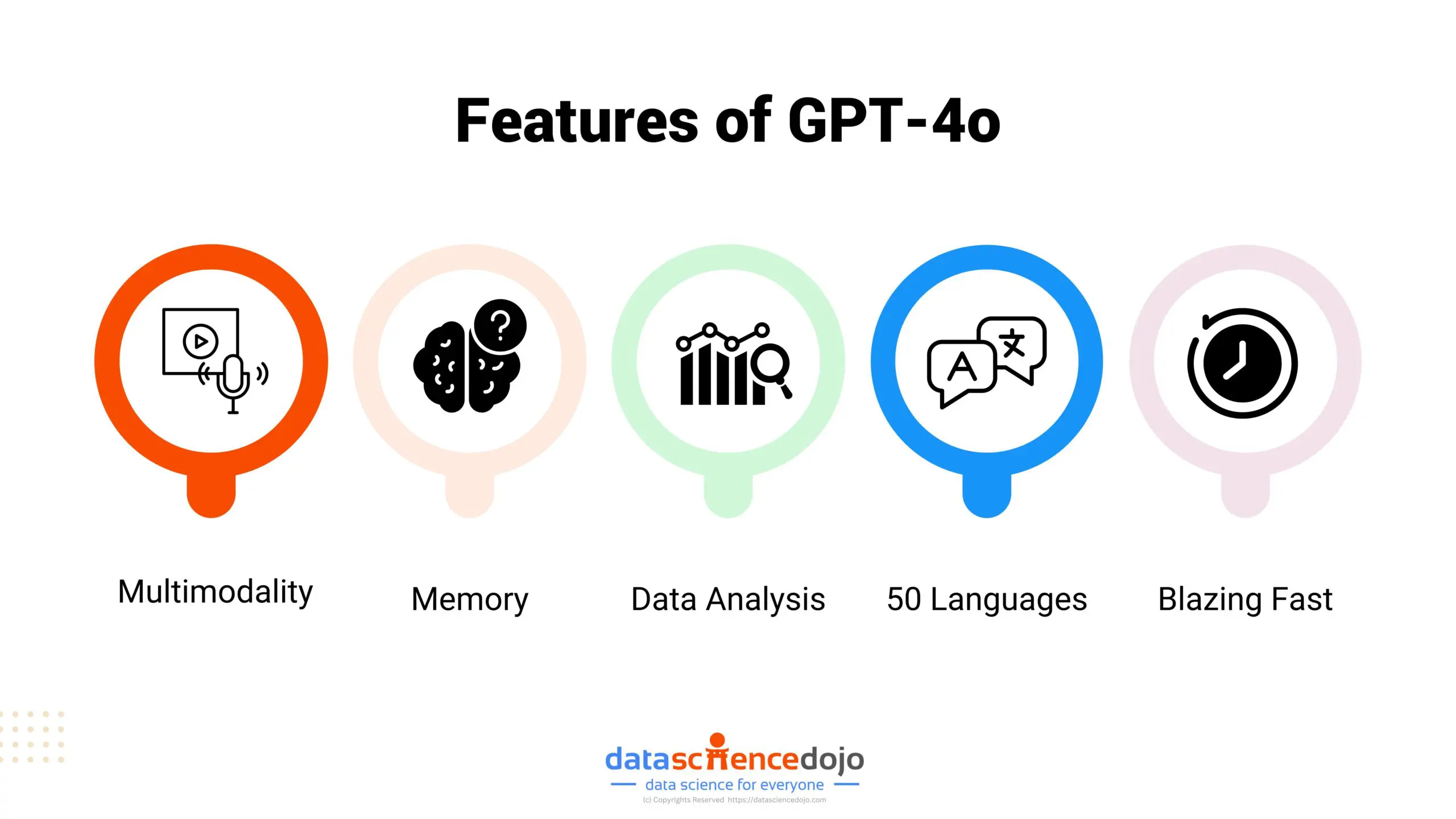
GPT-4o, where the “o” stands for “omni,” is not merely an incremental update but a fundamental rethinking of how an AI model can interact with the world. Unlike earlier models that often processed different modalities (text, audio, vision) through separate components or in a sequential, often clunky manner, GPT-4o is designed as a truly “omnimodal” system. This means it can natively process and generate information across text, audio, and visual inputs and outputs within a single, unified neural network. This architectural innovation allows for a level of seamless, real-time communication that blurs the lines between human and machine interaction, paving the way for a more intuitive and powerfully integrated AI experience.
Introducing GPT-4o: OpenAI’s Omnimodel Breakthrough
GPT-4o represents a pivotal moment in the development of artificial intelligence, heralding a new era where AI agents can perceive and communicate with a fluidity previously confined to science fiction. Its designation as an “omnimodel” is not just a marketing term; it reflects a profound architectural shift that enables it to break down the silos between different data types.
A New Era of AI Interaction
For years, AI models excelled in specific domains. Large Language Models (LLMs) mastered text, computer vision models interpreted images, and speech recognition systems transcribed audio. While efforts were made to combine these capabilities, the integration often felt cobbled together, involving multiple distinct models passing information back and forth. This invariably led to latency, loss of context, and a less cohesive user experience. GPT-4o shatters this paradigm. By training a single, end-to-end neural network across all modalities, it processes voice, text, and video inputs and generates responses in any of these forms with remarkable coherence and speed. This unified approach makes interactions feel dramatically more natural and less like conversing with a series of disparate algorithms.
Defining “Omni”: Beyond Multimodal
The term “multimodal” has been used to describe AI systems capable of handling multiple types of data. However, GPT-4o’s “omnimodal” nature takes this concept to its logical extreme. Instead of separate “experts” for vision, audio, and text, GPT-4o is a singular entity that “sees,” “hears,” and “speaks” through the same underlying neural pathways. This allows it to understand the subtle nuances and intricate relationships between modalities. For instance, if you show it a math problem on a whiteboard and ask it to solve it aloud, it doesn’t just convert the image to text, solve the text, and then convert the solution to speech. Instead, it processes the visual information, understands the mathematical context, and generates an audible explanation directly, maintaining context and tone throughout the entire interaction. This integrated understanding is crucial for truly intelligent, human-like responses.
OpenAI’s Vision for Human-Computer Symbiosis
GPT-4o is a tangible manifestation of OpenAI’s long-standing vision: to build AI that is not just powerful but also beneficial and universally accessible. By making AI interactions more natural and instantaneous, GPT-4o aims to lower the barrier to entry for complex AI applications, democratizing access to advanced intelligence. The goal is to create AI that can seamlessly integrate into daily life, acting as a true companion, assistant, or collaborator rather than a mere tool. This moves beyond simple task execution towards a more symbiotic relationship, where AI augments human capabilities in ways that feel intuitive and effortless.
The Multimodal Revolution: Capabilities Beyond Text
The true power of GPT-4o lies in its unprecedented ability to process and generate information across various modalities simultaneously and seamlessly. This opens up a spectrum of new possibilities, making AI interactions feel significantly more human-like and versatile.
Real-time Audio Processing with Emotional Nuance
Perhaps one of the most striking demonstrations of GPT-4o’s prowess is its real-time audio capabilities. Previous voice assistants often struggled with latency, understanding complex accents, or detecting emotional tone. GPT-4o responds to audio inputs in as little as 232 milliseconds—an average of 320 milliseconds—which is comparable to human conversation speed. This allows for fluid, uninterrupted dialogue where the AI can be interrupted, detect emotion in the user’s voice, and even respond with appropriate emotional intonation. Imagine telling GPT-4o a bedtime story, and it can adjust its tone and pace based on your reactions, or getting live coding assistance where it understands your vocalized frustration and offers more empathetic guidance. This capability moves beyond simple speech-to-text and text-to-speech, offering true conversational AI.
Advanced Vision Understanding and Interaction
GPT-4o’s visual perception is equally transformative. It can “see” and interpret the world through images and live video streams. This means you can show it an object, a diagram, a screenshot, or even a live feed of your surroundings, and it can understand, analyze, and discuss what it perceives in real-time. For example, a user could point their phone camera at a complex equation on a whiteboard and ask GPT-4o to explain it step-by-step, or show it a foreign menu and have it translate and explain dishes. Its ability to infer context from visual cues, such as a user’s facial expression or gestures, further enhances its interactive capabilities, making it a powerful tool for visual problem-solving, learning, and accessibility.
Enhanced Text Generation and Comprehension
While the “o” emphasizes its omnimodal nature, GPT-4o’s text capabilities are also significantly enhanced. It retains the powerful reasoning, generation, and summarization abilities of its predecessors, but with improved speed, accuracy, and efficiency. It can handle more complex prompts, maintain longer contexts, and generate more coherent and nuanced text across a variety of styles and purposes. This makes it an even more potent tool for content creation, research assistance, coding, and intricate logical reasoning, ensuring that its core text-based strengths remain at the forefront.
Seamless Integration Across Modalities
The true magic of GPT-4o lies in how these individual capabilities are seamlessly interwoven. It’s not just that it can do audio, vision, and text; it’s that it does them together. A single input could be a video of you gesturing while speaking about a diagram on your screen, and GPT-4o would process all these streams of information simultaneously to form a holistic understanding and generate a coherent, context-aware response. This integrated processing is what allows for genuinely intuitive and versatile interactions, breaking down the artificial barriers between how we naturally perceive and communicate and how machines have traditionally been designed to interact.
Technical Architecture and Underlying Innovation
The breakthrough capabilities of GPT-4o are not simply a result of more data or computational power, but stem from a fundamental shift in its underlying technical architecture. This “omnimodel” design is the cornerstone of its unprecedented performance.
The Omnimodel Approach: A Unified Network
At the heart of GPT-4o’s innovation is the concept of a single, unified neural network that directly processes all input modalities (text, audio, vision) and generates all output modalities. In previous multimodal architectures, different expert models were often chained together: an audio model would transcribe speech, an LLM would process the text, and then a text-to-speech model would synthesize a response. This serial processing introduced latency, increased complexity, and limited the ability to capture nuanced cross-modal correlations.
GPT-4o, by contrast, is trained from the ground up to understand all inputs as raw data within the same neural space. When it “hears” a sound, “sees” an image, or “reads” text, these are all fed into the same foundational network. This allows the model to develop a deep, intrinsic understanding of how different modalities relate to each other, improving coherence and contextual awareness across the board. For example, the same internal representation that helps it understand the meaning of spoken words can also inform its interpretation of a visual scene, leading to more robust and accurate responses.

Speed and Efficiency: A Leap in Responsiveness
The unified architecture contributes significantly to GPT-4o’s remarkable speed and efficiency. By eliminating the need for multiple model handoffs and complex data conversions, the processing pipeline is drastically streamlined. As mentioned, it can respond to audio inputs in mere hundreds of milliseconds, making voice conversations feel natural and uninterrupted. This low latency is not just a convenience; it’s a critical factor in enabling truly interactive applications, from real-time translation to conversational tutoring. The model is optimized for real-time performance, allowing it to handle complex multimodal tasks quickly without compromising on accuracy or depth of understanding.
Training Data and Computational Prowess
Developing a model of GPT-4o’s scope and capability requires immense computational resources and vast, diverse datasets. OpenAI has undoubtedly leveraged massive quantities of multimodal data—encompassing paired audio-visual recordings, extensive text corpora, and image datasets—to train this unified network. The sheer scale of parameters and the complexity of the training process demand cutting-edge AI supercomputing infrastructure. This investment in data and compute power is what allows the model to learn the intricate patterns and relationships across different modalities, enabling its sophisticated understanding and generation capabilities.
Safety and Alignment Considerations
With increased capabilities come increased responsibilities. OpenAI has emphasized its commitment to building safety into GPT-4o from its inception. Given its ability to process and generate nuanced human-like interactions across modalities, the potential for misuse (e.g., generating convincing deepfakes, spreading misinformation, or engaging in manipulative interactions) is significant. OpenAI implements various safety measures, including extensive red-teaming, content moderation tools, and the development of robust ethical guidelines, to mitigate these risks. The goal is to ensure that GPT-4o’s power is harnessed for beneficial purposes, prioritizing user safety and ethical deployment.
Real-World Applications and Transformative Impact
GPT-4o’s omnimodal capabilities are not merely technical feats; they unlock a vast array of practical applications that promise to transform various industries and aspects of daily life. Its ability to interact naturally across text, audio, and vision will redefine how we leverage AI for productivity, communication, and learning.
Revolutionizing Personal Productivity and Assistance
Imagine a personal AI assistant that can genuinely understand your context. GPT-4o can do more than just schedule appointments; it can watch you brainstorm on a whiteboard and offer real-time suggestions, help you debug code by interpreting both your screen and your verbal questions, or even serve as a language tutor engaging in natural conversation, correcting your pronunciation and grammar on the fly. For professionals, it can summarize long meetings by listening and analyzing presentations, generate reports from disparate visual and textual data, or help manage complex projects through intuitive voice commands and visual cues. This level of integrated assistance can significantly boost individual efficiency and creativity.
Elevating Customer Service and Support
The customer service industry stands to be profoundly transformed. GPT-4o can power next-generation AI agents that not only understand customer queries through natural language but can also interpret emotional cues in their voice, analyze shared screen content for technical support, and respond with empathy and precision across various channels. This can lead to more satisfying customer experiences, reduced resolution times, and more efficient allocation of human resources for complex cases. The ability to handle nuanced conversations and offer multimodal explanations (e.g., showing a user how to fix a problem on screen while explaining it verbally) represents a significant leap from current chatbot limitations.
Advancing Education and Creative Industries
In education, GPT-4o can act as a personalized, infinitely patient tutor. It can explain complex concepts by drawing diagrams, walk students through problem-solving steps vocally, and assess understanding based on their verbal and written responses. For creative professionals, it can be a powerful co-creator. A graphic designer could describe a concept, show inspirational images, and receive real-time visual suggestions. A musician could hum a melody and have GPT-4o suggest harmonies or generate backing tracks. The model’s ability to seamlessly bridge between artistic vision and execution will empower creators to explore new frontiers.
Breaking Language Barriers and Fostering Global Communication
GPT-4o’s real-time multimodal translation capabilities are truly groundbreaking. Picture engaging in a live conversation with someone speaking a different language, with GPT-4o translating in real-time, preserving intonation and nuance for both speakers. This extends beyond voice: it can translate text in images, helping travelers navigate foreign environments, or facilitate communication in diverse workforces. By lowering language barriers, GPT-4o has the potential to foster greater understanding and collaboration on a global scale, making the world feel a little smaller and more connected.
Addressing Challenges and Future Outlook
While GPT-4o represents an incredible leap forward for AI, its deployment and ongoing development are not without significant challenges and considerations. Responsible innovation and a clear-eyed view of its limitations are crucial as we navigate its future trajectory.
Ethical Imperatives and Responsible Deployment
The advanced capabilities of GPT-4o, particularly its human-like voice and visual interactions, bring ethical considerations to the forefront. The potential for generating highly convincing deepfakes, spreading sophisticated misinformation, or even engaging in manipulative conversations is a serious concern. Safeguards against misuse, such as watermarking AI-generated content, robust content moderation, and clear disclosure of AI interaction, become paramount. Furthermore, issues of bias amplification from training data, privacy implications of processing sensitive multimodal inputs, and the responsible management of job displacement due to automation must be continuously addressed through collaborative efforts between developers, policymakers, and society.
Computational Demands and Accessibility
Developing and running a model of GPT-4o’s scale and complexity demands extraordinary computational resources. This translates to high operational costs and significant energy consumption, raising questions about the environmental impact and the accessibility of such cutting-edge AI. While OpenAI aims for broad accessibility, the full power of GPT-4o might initially be limited by economic and infrastructure constraints. Efforts to optimize the model for efficiency, develop lighter versions, and explore distributed computing solutions will be vital to ensure that its benefits can be broadly shared across diverse user bases and regions.
The Road Ahead: Towards AGI and Beyond
GPT-4o is a significant step on the long road towards Artificial General Intelligence (AGI)—AI that can understand, learn, and apply intelligence across a wide range of tasks at a human level. Its unified multimodal architecture brings us closer to how humans naturally perceive and interact with the world, laying groundwork for more sophisticated reasoning and learning capabilities. Future iterations may see even greater integration with physical robotics, allowing AI to not just perceive and communicate, but also to physically interact with its environment. The ongoing research will focus on enhancing its reasoning depth, improving its common-sense understanding, and expanding its knowledge base to tackle even more complex, open-ended problems.
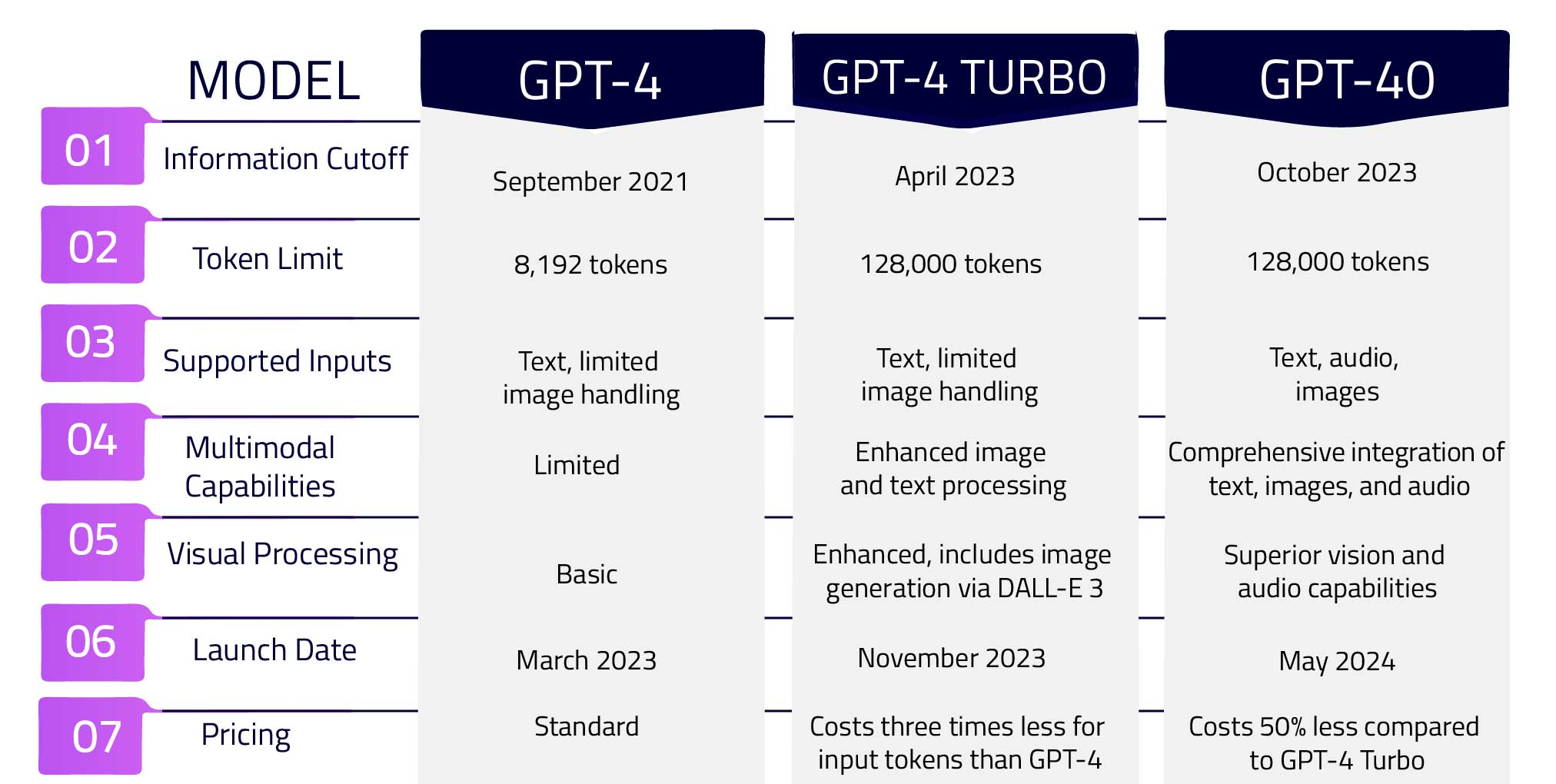
The Human Element: Augmentation, Not Replacement
Ultimately, AI tools like GPT-4o are designed not to replace human intelligence but to augment it. They excel at processing vast amounts of information, identifying patterns, and performing repetitive tasks with speed and accuracy. This frees up human creativity, problem-solving, and critical thinking for higher-level pursuits. The future with GPT-4o is one where humans and AI work in tandem, each bringing their unique strengths to the table. By embracing this symbiotic relationship, we can unlock unprecedented levels of innovation, productivity, and understanding, shaping a future where technology truly empowers humanity. GPT-4o stands as a powerful testament to this vision, offering a glimpse into an interconnected world where communication between humans and machines is as natural and intuitive as thought itself.
aViewFromTheCave is a participant in the Amazon Services LLC Associates Program, an affiliate advertising program designed to provide a means for sites to earn advertising fees by advertising and linking to Amazon.com. Amazon, the Amazon logo, AmazonSupply, and the AmazonSupply logo are trademarks of Amazon.com, Inc. or its affiliates. As an Amazon Associate we earn affiliate commissions from qualifying purchases.